AI and the new mutation of capitalism
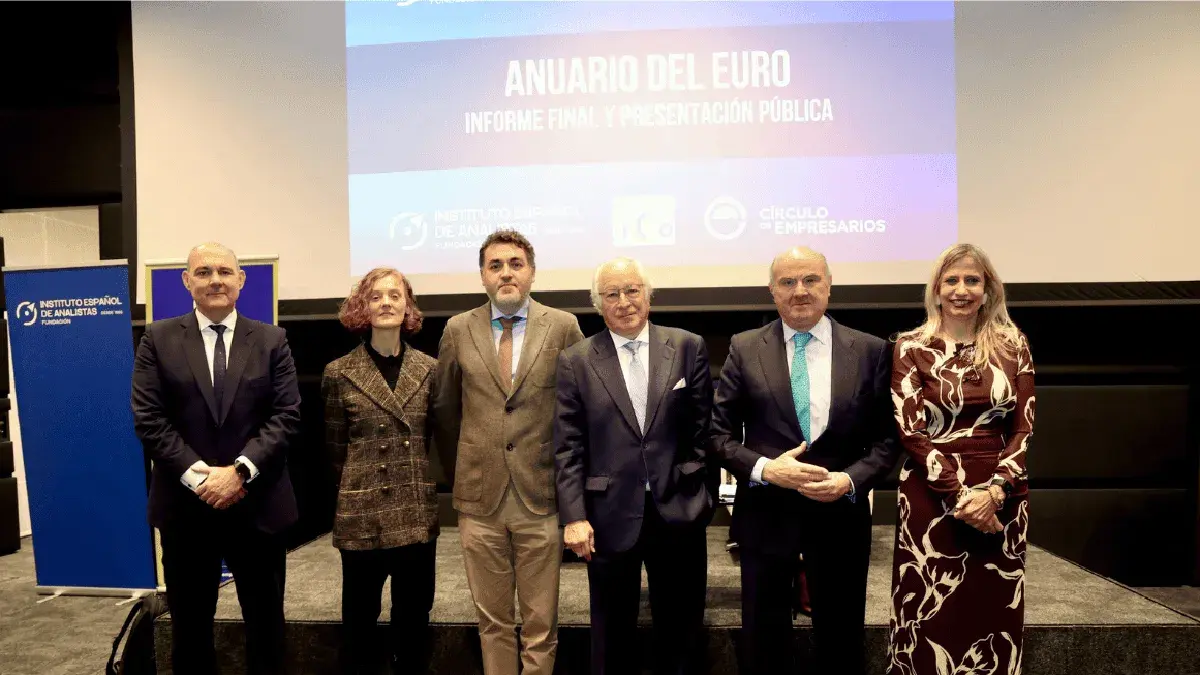

"Artificial Intelligence (AI) will precipitate a new mutation of capitalism, with significant changes in the socio-economic system, mainly through productivity gains, deflationary forces and the reorganisation of employment. It will lead to changes in power and international governance, the emergence of more powerful companies than ever before and a new social organisation. An extraordinarily difficult challenge for an EU that is not prepared."
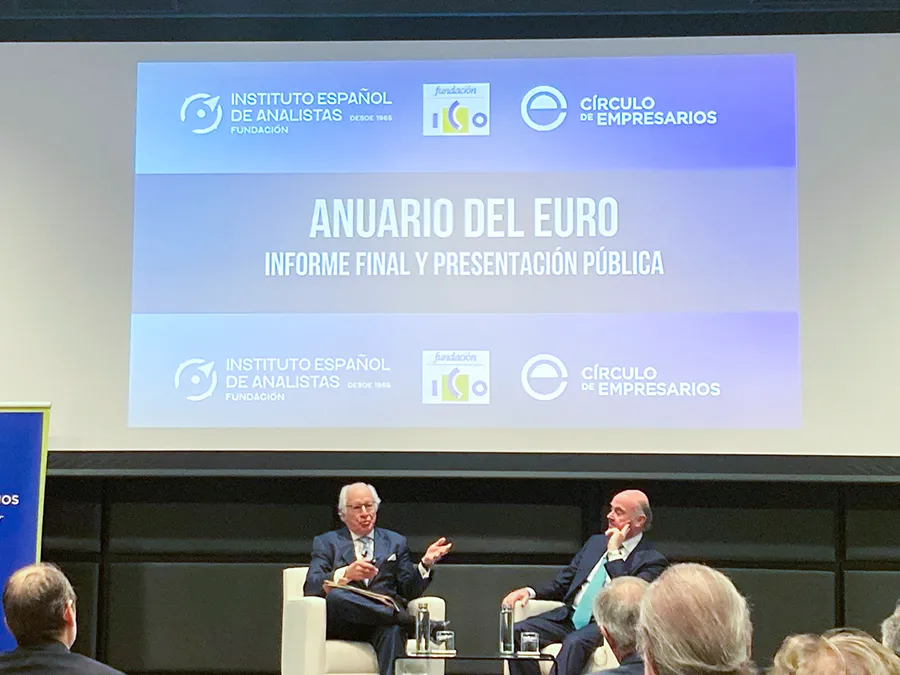
This forceful statement comes from Juan María Nin, president of the Círculo de Empresarios. He made it during a dialogue with the vice-president of the European Central Bank, Luis de Guindos, on the occasion of the public presentation of the Euro 2025 Yearbook, a carefully researched volume of diagnoses and possible courses of action and solutions, produced by the Spanish Institute of Analysts in collaboration with the Círculo de Empresarios itself and the Official Credit Institute (ICO).
- Geopolitics, markets and paradigm shift
- European dilemma: fragmentation or cooperation
- Euro Yearbook 2025: roadmap and call to action
Geopolitics, markets and paradigm shift
De Guindos, in turn, highlighted ‘the growing disconnect between geopolitics and the behaviour of financial markets’ and stressed the difficulties markets face in gradually discounting geopolitical risks, which tend to go from zero to infinity. He also focused on the paradigm shift reflected in phenomena such as tariffs, banking regulation and the new approach to crypto-assets in the United States.
Against this backdrop, Europe faces a clear choice between fragmentation or greater cooperation to strengthen its strategic autonomy. The ECB Vice-President defended the need to increase investment in defence and to move forward with common projects, such as the digital euro, in order to ‘reduce dependencies and strengthen European economic sovereignty’.

European dilemma: fragmentation or cooperation
This dialogue was also joined by MEP and coordinator of the S&D group in the European Parliament's Committee on Economic and Monetary Affairs, Jonás Fernández, who called for the urgent completion of the Single Market and the creation of common tools to finance European priorities and strengthen the resilience of the Economic and Monetary Union (EMU) in an environment of fragmentation.
All these interventions served to underline and enrich the analysis of the aforementioned Euro Yearbook, a prestigious publication now in its twelfth edition, edited by Professor Fernando Fernández Méndez de Andrés. The roadmap proposed for the EU in the coming years focuses on three areas: raising productivity, applying credible fiscal rules and moving towards more competitive financial regulation.
Euro Yearbook 2025: roadmap and call to action
In this regard, Francisco Uría, Director of Studies and Analysis at the Spanish Institute of Analysts, pointed out that ‘consolidating the EMU means completing the pillars of the EU: single market, capital union and more effective common frameworks’. In his view, this is the way for Europe to grow, invest and withstand the shocks we are already seeing without relying on improvised responses.
In short, the Euro Yearbook 2025 makes a conclusive call for urgent action to move from diagnosis to action: open strategic autonomy without protectionism, a productivity agenda that incorporates AI and demographics, credible fiscal rules and regulatory simplification that integrates competitiveness without sacrificing stability.