Morocco and Russia sign strategic cooperation agreement on maritime fisheries
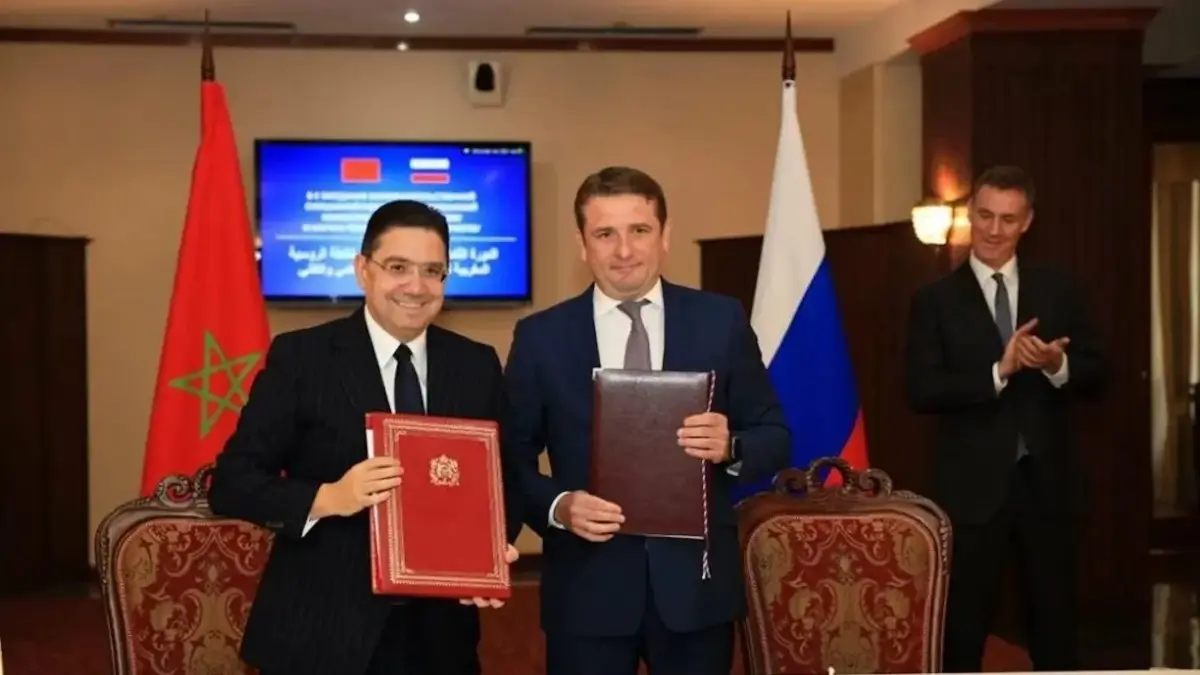
The signing took place within the framework of the 8th Morocco-Russia Joint Intergovernmental Commission, co-chaired by Nasser. Bourita and the Deputy Prime Minister of the Russian Federation, Dmitry Patrushev, one day after the meeting with his Russian counterpart, Sergei Lavrov, who, among other geostrategic issues, expressed his willingness to support Morocco's Autonomy Plan for the Moroccan Sahara, under certain conditions and under the supervision of the United Nations.
In recent hours, a draft resolution on the Sahara drawn up by the United States has been circulating, in which the proposal for autonomy under Moroccan sovereignty is presented as the only solution to be negotiated, and presented to the other four permanent members of the Security Council for debate and approval, where Russia's role will be decisive.

This new fisheries instrument, valid for four years, replaces the previous agreement, which expired on December 31, 2024. It establishes the legal framework and practical arrangements allowing Russian vessels to fish in the Kingdom's Atlantic waters, in accordance with current Moroccan regulations.
The agreement sets an annual catch quota that vessels cannot exceed, strictly regulates the areas authorized for fishing along the entire Moroccan Atlantic coast, and regulates the biological rest periods established in the areas concerned for the conservation of fish stocks.
In line with the Kingdom's environmental commitments, the text emphasizes the protection of the marine ecosystem, the prevention of overfishing, and the fight against illegal, unreported, and unregulated (IUU) fishing.
It also strengthens scientific and technical cooperation between the National Institute for Fisheries Research (INRH) and its Russian counterpart through joint programs for research and monitoring of the marine ecosystem and the dynamics of fishery resources.
On the economic front, the agreement should contribute to the dynamism of the Moroccan fishing sector, generating direct impacts on the economy both nationally and in the regions concerned.
In particular, it promotes the employment of Moroccan seafarers on board Russian vessels, as well as the development of related activities, especially in the southern ports of the Kingdom, thus consolidating their role as regional economic hubs.
The agreement also provides for cooperation in maritime training, with the award of scholarships and internships to Moroccan students and executives in specialized Russian centers, which will help strengthen national expertise in the field of fisheries.
This new cooperation agreement on maritime fisheries illustrates the shared desire of Morocco and Russia to pursue mutually beneficial, responsible cooperation that is concerned with the preservation of marine resources and the environment, in the service of sustainable development and the strengthening of historical relations between the two countries in the field of fisheries.