Morocco leads a green water revolution

- Integrated solutions and an ecological vision
- A national priority under royal guidelines
- Turning challenge into opportunity
- A historic investment program
- Water for territorial justice
- Morocco 2030: regional powerhouse in water and energy security
Integrated solutions and an ecological vision
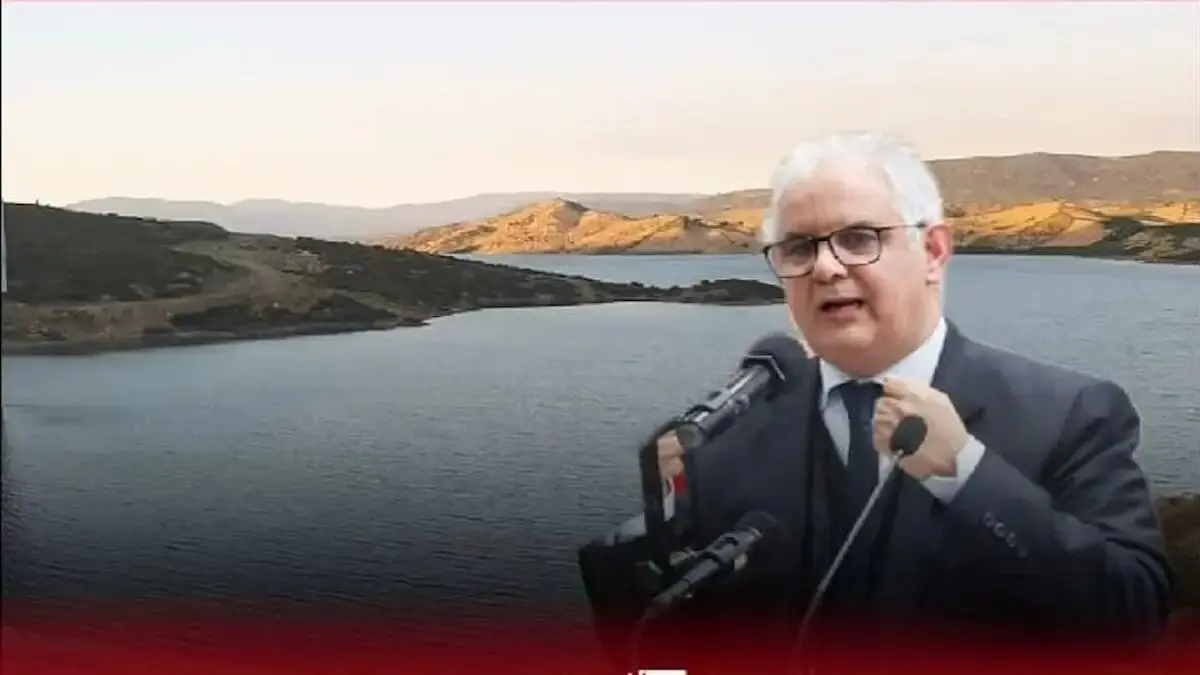
Despite facing seven consecutive years of drought and an increasingly adverse climate scenario, Morocco has opted for a proactive strategy: transforming the crisis into an opportunity by building an integrated water model that combines water security, social justice, and environmental protection. The plan by the Minister of Equipment and Water, Nizar Baraka, to build 155 new dams over the next three years is the backbone of this genuine green water revolution.

A national priority under royal guidelines
In his speech at Istiqlal Youth University, Baraka stressed that His Majesty the King's guidelines set two essential goals: to guarantee universal access to drinking water and to cover 80% of irrigation needs. More than just technical indicators, these objectives represent a national project that places human beings and territorial justice at the center of public policy.
Turning challenge into opportunity
The unequal distribution of water resources—53% of rainfall is concentrated in just 7% of the territory—is not an obstacle for Morocco but an incentive to innovate. The scarcity and reduction of water available per capita have led the country to invest heavily in renewable energy-powered desalination, wastewater reuse, and the interconnection of basins to strengthen water solidarity between regions.
The national strategy includes the construction of large and small dams, mobile desalination stations, extensive reforestation programs, and anti-sedimentation barriers to protect infrastructure. All of this is linked to the energy transition: treatment and desalination plants are powered by solar and wind energy, reducing carbon emissions and reinforcing the Kingdom's commitment to international climate agreements.
A historic investment program
These measures are part of the 2020-2027 National Program for Drinking Water Supply and Irrigation, with a budget of 143 billion dirhams. It includes 16 large dams under construction, four medium-sized dams, and 92 small dams between 2025 and 2027. The effort is coordinated between the Ministries of the Interior, Equipment and Water, and Economy and Finance, prioritizing the most vulnerable areas with the greatest water deficits.
Water for territorial justice
For Baraka, this water policy is the realization of the King's call to overcome the “two-speed Morocco,” providing peripheral regions with the essential infrastructure to attract agricultural and industrial investment and integrate them into the dynamics of national growth. Water is no longer just a natural resource: it has become an instrument of equity and a lever for balanced development.
Morocco 2030: regional powerhouse in water and energy security
If it stays on this course, Morocco will be at the regional forefront of water and energy resource management by 2030. The combination of dams, desalination, and clean energy will ensure water resilience even in years of severe drought, boosting the competitiveness of domestic agriculture and industry. In addition, the country will strengthen its role in Africa as an exporter of knowledge in water security and energy transition, making water and renewable energy pillars of its economic and environmental sovereignty.