Rare Earths: The Achilles Heel of the West

Introduction
In 1992, the leader of the Asian giant, Deng Xiaoping, commented: ‘The Middle East has oil, China has rare earths.’ At 88 years of age, no one outside his country's borders paid any attention to him. Since the late 1970s, Western technological advances had created an insurmountable strategic gap, contributing to the collapse of the Soviet Union.
But today, unlike the Soviet Union, China can fight back by imposing controls on rare earths and mineral processing technology. In the first week of the conflict between Iran and Israel in June this year, approximately 800 missiles were exchanged. Each contained between 2 and 20 kilograms of rare earths, including two, dysprosium and terbium, now subject to Chinese export controls. According to conservative estimates based on limited available data, this means that between 1.6 and 16 metric tons of rare earths were vaporised in that conflict in seven days.
The United States' need for rare earths
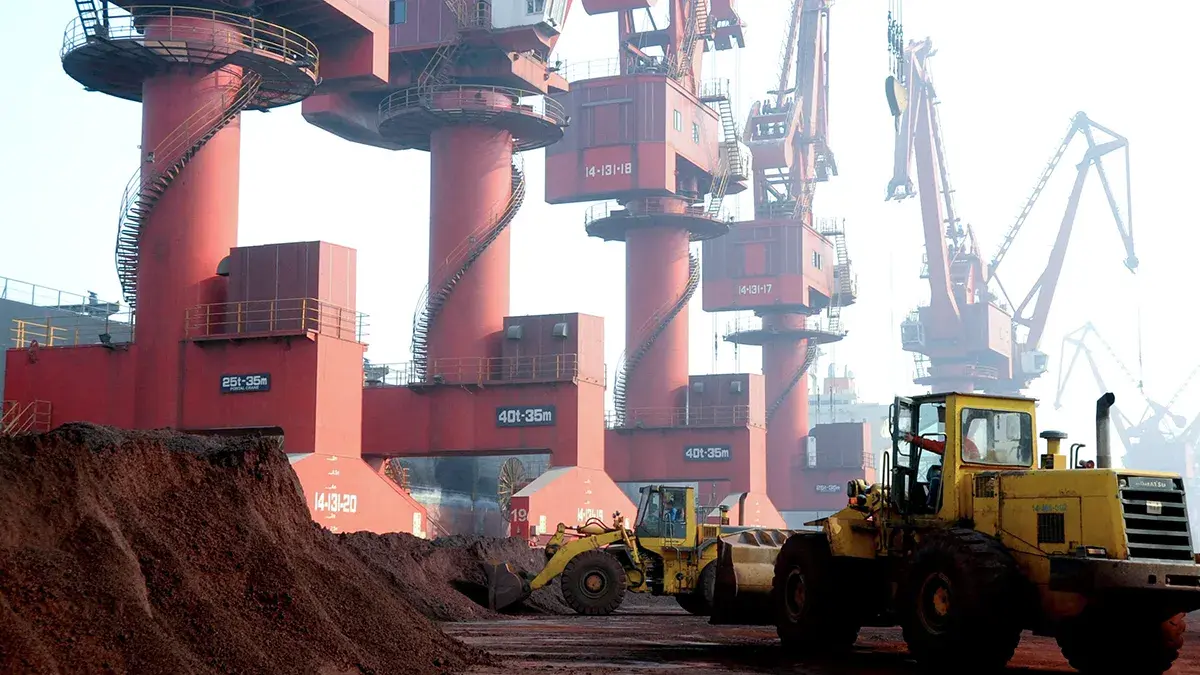
A few weeks ago, China published a document, ‘Announcement No. 62 of 2025,’ which shook the tariff truce between China and the US. The announcement reported new restrictions on its rare earth exports, to reinforce Beijing's control over this supply, perhaps to remind Trump of his dependence on China ahead of the planned meeting at the end of the month to agree on a trade deal, due to its quasi-monopoly on the processing of rare earths, which are crucial for the production of everything from smartphones to F-35s. Under the new regulations, foreign companies will need Chinese government approval to export products containing even a small amount of rare earths and must declare their intended use.
In response, Trump threatened to impose an additional 100% tariff on Chinese products and put export controls on key software. Trump and President Xi Jinping are expected to meet at the aforementioned meeting scheduled for later this month, and this regulation means that China will have the upper hand.
It is estimated that a single F-35 requires more than 400 kg (881.8 lb) of rare earths for its stealth coatings, engines, radars and other components. China's rare earth exports also account for about 70% of the global supply of metals used for magnets in electric vehicle motors. Although Australia, with its large rare earth deposits, has emerged as a potential rival to China, its production infrastructure is still underdeveloped, making processing more expensive.
Even if the United States and all its allies made rare earth processing a national project, it would take at least five years to catch up with China. Although the latest official figures from China show that exports of critical minerals fell by more than 30% in September compared to last year, analysts believe it is unlikely that the Chinese economy will be affected by the drop in exports, as rare earths account for only 0.1% of China's $18.7 trillion annual economy, even though their strategic value is enormous. The document issued by China ahead of the summit will serve to raise the stakes in negotiations with the United States at the end of the month.

Europe's dependence on rare earths
The European Union has identified 34 critical raw materials (CRMs). Of these, 17 are classified as strategic raw materials (SRMs). This list includes materials such as cobalt, copper, tungsten, lithium and nickel. Critical raw materials are of great importance to the EU economy. There is a high risk of supply disruption: their sources are highly concentrated and there are no good substitutes. Some of these elements are virtually irreplaceable or have a high cost. SRMs should not be confused with rare earths.
Rare earths are a group of 17 chemical elements, mostly metals, and some are not even that rare. The group includes elements such as cerium, europium, erbium and yttrium. All rare earths are part of the EU's CRM list. The problem lies more in the relationship between extraction costs and market prices.
The Commission expects demand for EU lithium batteries, which power electric vehicles and energy storage, to increase 12-fold by 2030 and 21-fold by 2050, compared to current figures. Demand for rare earth metals in the EU, used in wind turbines and electric vehicles, is expected to increase five to sixfold by 2030 and six to sevenfold by 2050.

There is currently no rare earth mining in Europe, although some deposits are known to exist. Portugal has the largest lithium reserves (CRM) in Europe, the eighth largest in the world, and is the only significant producer in the EU, but its extraction has been questioned by local Portuguese communities. Spain is also among the countries with the greatest potential for the extraction of key raw materials and is the second largest producer of copper and manganese in the EU. However, once again, extraction is meeting with resistance from local populations, who are concerned about the disruption and environmental impact of these projects, particularly in relation to their high water consumption and the use of chemicals to recover metals from the subsoil.
Currently, the EU obtains most of its critical raw materials from outside the continent. For example, Turkey supplied 98% of the EU's boron in 2024, and China supplied a whopping 100% of the EU's heavy rare earths, such as europium, terbium and yttrium. South Africa, for its part, is responsible for supplying 71% of the EU's platinum needs. Another important supplier is the Democratic Republic of Congo: 63% of the world's cobalt, used in batteries and high-strength light alloys for the defence and aerospace sectors, comes from this war-torn state. The EU has tried hard to diversify its sources, but with mixed results. Despite keen interest in the minerals and raw materials found in Greenland's mountains and bays, the country remains largely untapped, and its minerals are seen as a potential springboard to independence, a goal supported by most of the island's 57,000 inhabitants. Administrative challenges, difficult Arctic conditions and Greenland's limited infrastructure, among other factors, make raw material extraction difficult to make profitable.
Looking further east, the Commission has described Ukraine as ‘a potential source of more than twenty critical raw materials’. The country produces three crucial minerals: manganese, titanium and graphite, which are essential for electric batteries. Ukraine's subsoil is expected to hold reserves of several billion tonnes of rare earths, as well as other strategic materials such as graphite and lithium. However, much of these deposits are located in the eastern region of the country, which is controlled by Russia.

Ukraine's extraordinary role in its drone war against the Russian invasion depends almost entirely on electronics and magnets imported from China. Ukraine is now less concerned about the timeliness of European arms shipments and more concerned about the flow of technology imports from China. Over the past 30 years, China has become the world leader in processing most of the 54 raw minerals that the US Geological Survey classifies as critical to US industry, including the defence sector.
Europe is the biggest loser in the rare earth wars between the United States and China. Its dual dependence on US digital services and Beijing's crucial mineral processing industry leaves it highly vulnerable. European companies pioneered solar and wind power, while electric vehicles are gradually increasing their share of the automotive industry. But now China dominates all three industries, along with lithium-ion battery production.
While the United States is slowly rebuilding its rare earth industry and exerting influence over producers of other critical minerals, such as South America's vast lithium reserves, Europe is barely participating in the race. EU investment in key high-tech industries is paltry compared to the trillions of dollars that China and the United States are investing in the sector. If Brussels fails to mobilise member states soon, the EU will be permanently dependent on China, the United States, or both.

Conclusions
Although the US has the tools, in peacetime, to negotiate exchanges of various technologies for rare earths with China, it is clear that, in the event of conflict with China, it will have difficulty maintaining its war production. This, combined with its lack of shipbuilding capacity, which is essential for reaching the conflict zone, reduces the US's chances of victory.
Europe, although it has rare earths, its companies are reluctant to exploit them, which, combined with the fact that it depends to a very high degree on foreign supplies of rare earths, means that it must urgently implement its policy of seeking resources on other continents, or it will become a beggar pariah in the coming centuries of the producing countries, especially China and the United States.