Spain and Morocco consolidate their leadership in the Mediterranean and African regions
- Spain and Morocco: leaders in the Mediterranean and African region
- Inter-industrial and intra-industrial bilateral trade
- Logistics and port infrastructure: levers of economic competitiveness
- Smart and decarbonised Moroccan logistics
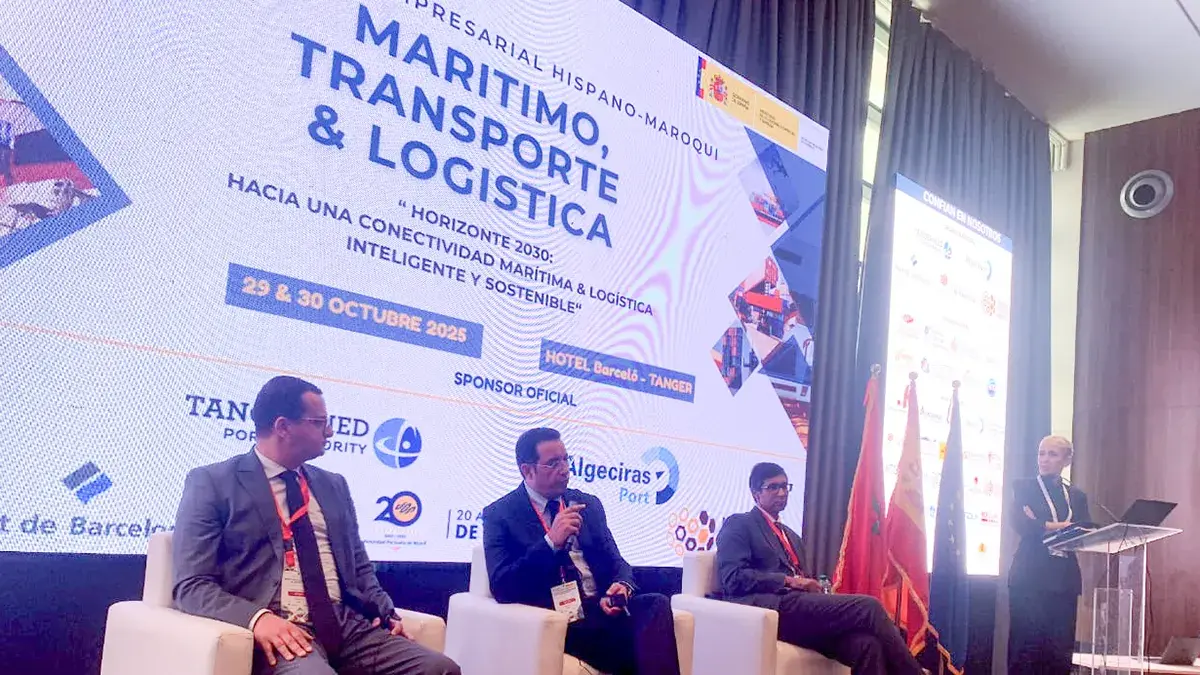
Under the slogan ‘Towards smart and sustainable maritime connectivity and logistics’, the Spanish Chamber of Commerce in Tangier organised its 11th edition of the Spanish-Moroccan Business Meeting, whose main theme was logistics and maritime transport in the service of sustainable trade between Morocco and Spain.
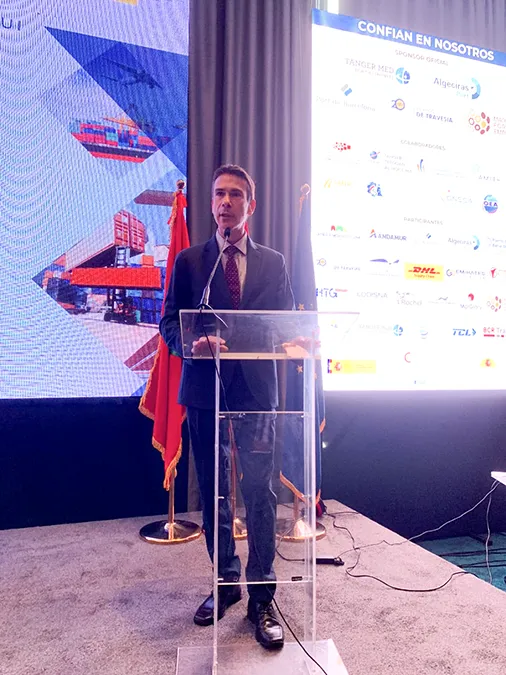
In his opening speech, the Spanish ambassador in Rabat, Enrique Ojeda Vila, pointed out that ‘we are all very aware of the privileged position our two countries occupy and how Spain and Morocco must be able to jointly face the challenges posed by the logistics and transport sector in order to take advantage of the opportunities that this geographical situation offers us’.
‘This important, fundamental technology will allow us to continue to be leaders in the sector, and through the actions that each of us takes in our own field, we continue to build and strengthen the relationship between Spain and Morocco, which is characterised by enormous diversity and complexity,’ said Ojeda Vila.
Spain and Morocco: leaders in the Mediterranean and African region
The president of the Spanish Chamber of Commerce in Morocco, José Estévez Martínez, stated that ‘Spain and Morocco now have the necessary instruments and actions to consolidate their leadership in the Mediterranean and African region’.
‘This special meeting for Moroccans in the maritime, transport and logistics sector marks a new step towards an exemplary alliance between Spain and Morocco in the field of maritime solidarity, transport and logistics,’ added Martínez, underlining the continued commitment of both countries to a modern, competitive and sustainable maritime and logistics ecosystem capable of responding to the challenges of energy transition, digitalisation and multimodal integration.
The president of the Chamber clarified how ‘the 2030 horizon invites us to think about mobility, human capital training and sustainable logistics as vectors of competitiveness,’ highlighting the importance of sharing experiences and visions of business leaders, sector associations and prominent representatives of the ports of Tangier Med, Algeciras, Motril and Barcelona.
Inter-industrial and intra-industrial bilateral trade
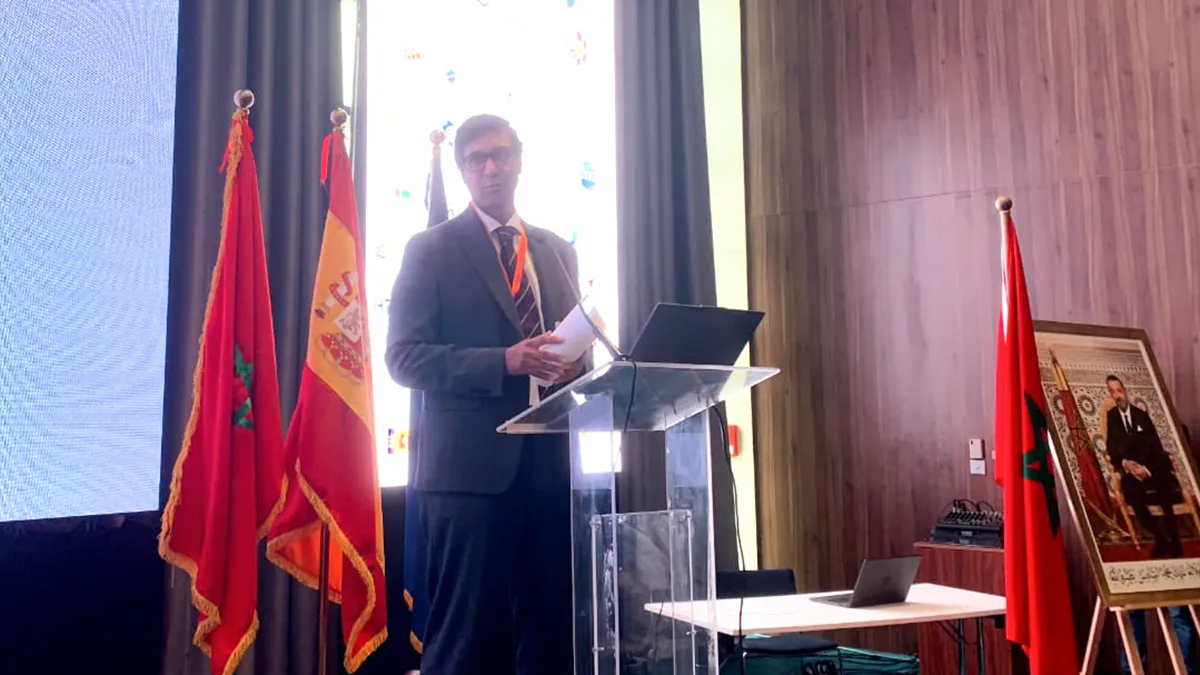
Javier Sanz Muñoz, the economic and commercial counsellor at the Spanish Embassy in Morocco, recalled last year's total bilateral trade between Spain and Morocco, which reached 23 billion euros. This represents a truly intense evolution that continues to grow at the same pace, according to data available for the first half of 2025.
Muñoz highlighted the importance of bilateral trade between the two countries, describing it as ‘extraordinarily complex’. According to him, it is divided into inter-industrial trade between countries, where one country sells to the other what the other country does not have and buys what that country can provide; and intra-industrial trade, including products that enter Morocco, for example, and then leave again for Spain after a transformation process (automotive and textile).
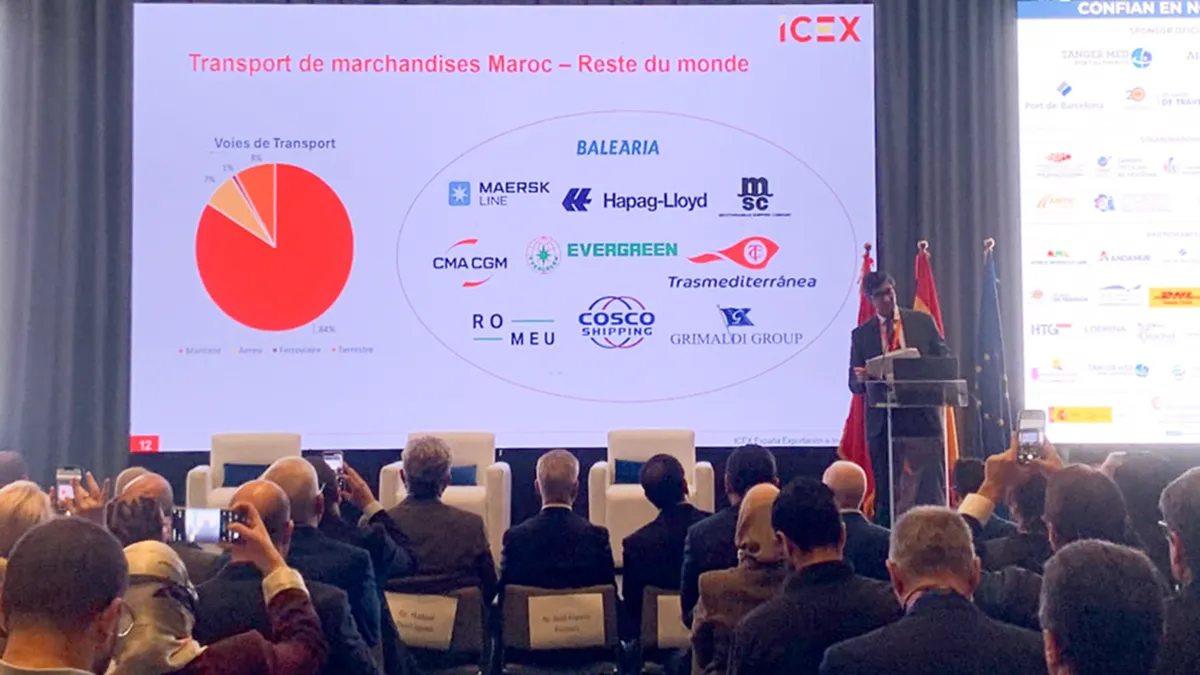
In this regard, the economic advisor explained that 'the way to invest in the future should be through the Morocco-Spain platform as a joint alternative that supports competitiveness and integration, taking into account the great challenge of logistics and transport, with only 30% of the exchange of goods between the two countries being carried out by sea, compared to 84% of Morocco's international transport with the rest of the world.'
This joint Spain-Morocco platform offers Rabat a market of more than 700 million consumers in the European Union, while allowing Madrid access to a market of 1.4 billion consumers across Africa, thanks to its extensive network of trade agreements with African countries.
Logistics and port infrastructure: levers of economic competitiveness
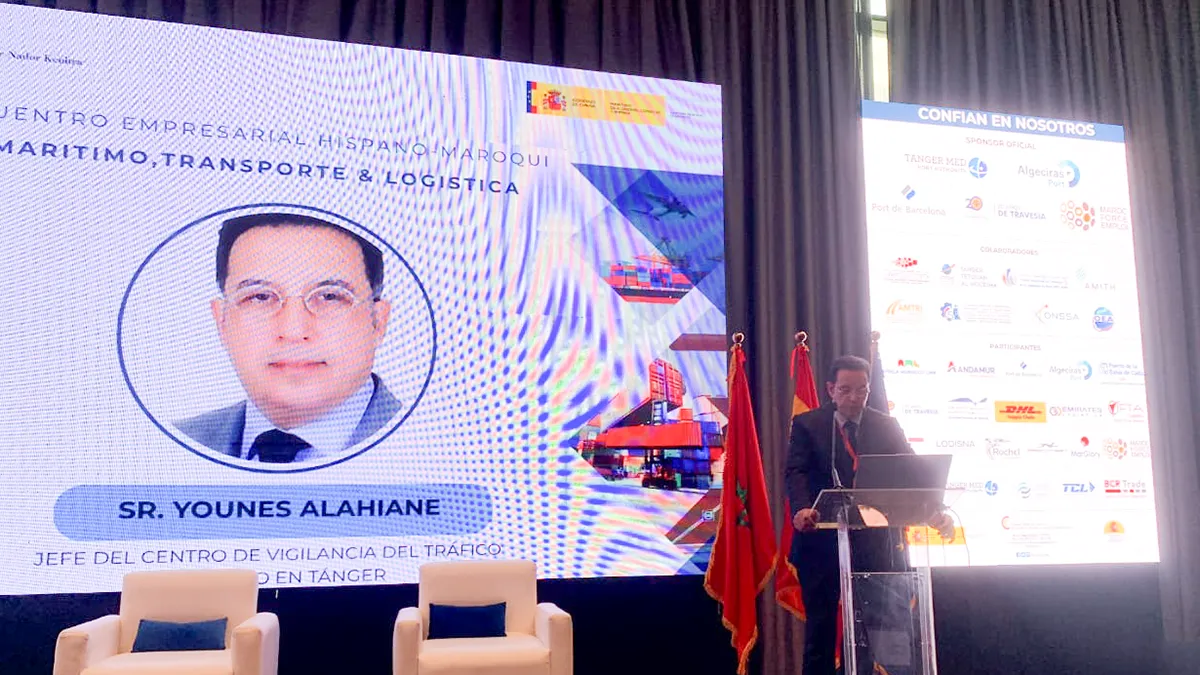
Younes Alahiane, head of the Maritime Traffic Monitoring Centre in Tangier, argued that the Kingdom of Morocco plays a strategic role in the relationship between Europe and Africa, with more than 95% of economic exchanges taking place by sea.
‘Maritime transport, logistics and port infrastructure are levers of economic competitiveness, sovereignty and regional development,’ Alahiane emphasised, noting that "Morocco has initiated port, maritime and logistics strategies to become a major player in maritime transport, thanks to its strategic geographical position.
The representative of the Ministry of Transport and Logistics mentioned that between 2021 and 2024, global freight traffic in Moroccan ports increased from 192 million tonnes to 240 million tonnes, representing an increase of 15%.
In accordance with the guidelines of King Mohammed VI, on the 48th anniversary of the Green March, Morocco aspires to a sustainable, competitive fleet that is aligned with energy, ecological and digital challenges. The aim is to strengthen maritime and economic sovereignty and stimulate economic and social growth through Moroccan players.
At the same time, Younes Alahiane highlighted the importance of promoting a fair and equitable transition, particularly for developing countries, by financing research, development and deployment of zero- or near-zero-emission fuel and energy source technologies, developing maritime infrastructure and equipment, the exchange of information on technology transfer, training and technical cooperation, and the renewal and modernisation of the fleet, taking into account the disproportionate negative impacts on some States, particularly on food security.
Smart and decarbonised Moroccan logistics
Houssam el Amrani, Director of Operators and Logistics Chains at the Moroccan Logistics Development Agency (AMDL), stressed that the decarbonisation of maritime transport is no longer an option but an urgent necessity, given Morocco's commitment to this global trend towards environmental protection.
In this regard, logistics and transport stakeholders in Morocco and Spain are called upon to join forces to tackle the challenges of climate change together, restore the competitiveness of both economies and build more environmentally friendly, efficient and sustainable logistics.
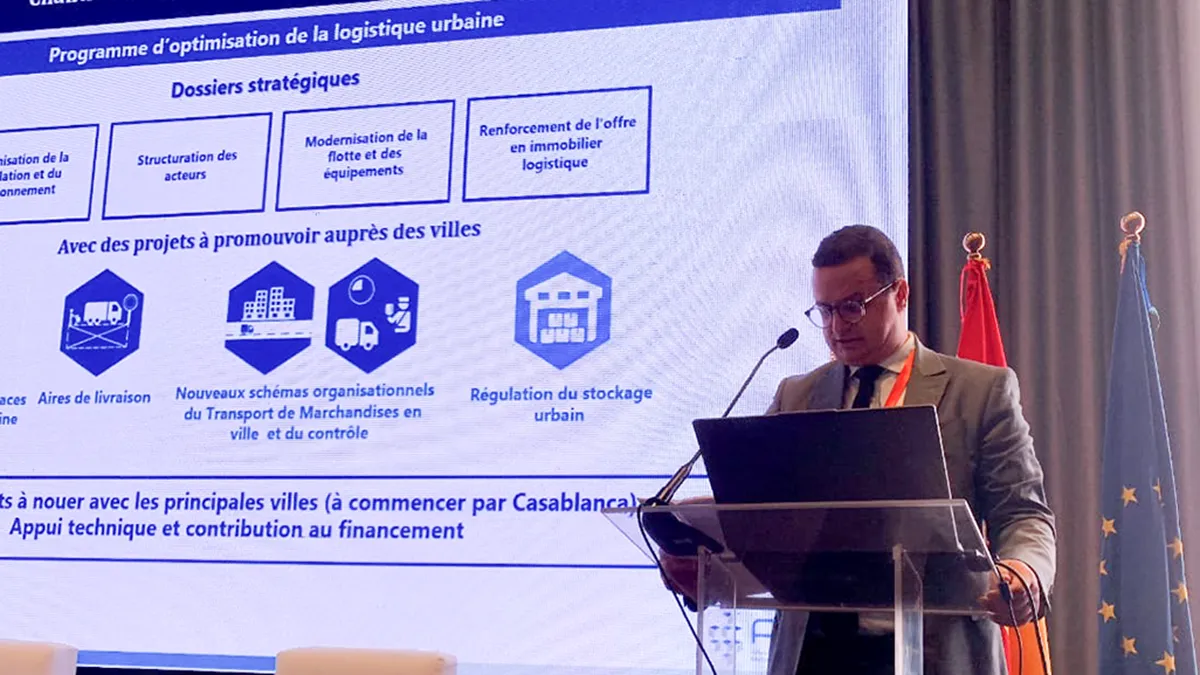
The representative of the Moroccan Logistics Development Agency insisted on the point of promoting sustainable development through a reduction of around 35% in CO2 emissions from road freight transport.
In this regard, the national programme offers an integrated range of solutions covering three areas: improving performance through logistics financing and continuing training projects; access to digital information through the financing of studies prior to the acquisition or deployment of digital solutions; and environmental transition through the financing of studies related to logistics support and assistance for businesses.