The automotive sector, the driving force behind Morocco's economic growth
Morocco's automotive industry has experienced tremendous growth in recent decades and has become the country's flagship industry, boosting the economy and becoming the driving force behind development
- Platform of excellence
- A growing sector
- Own ecosystems
- The role of Tanger Med
- Commitment to the future
- Workforce and training
It all began in the 60s of the last century, when the first car assembly line was set up in Morocco. More than half a century later, the automotive industry has become the most dynamic in the country, leading the continent, becoming the leading exporter to Europe and hosting numerous facilities of some of the world's leading brands.
This situation has been achieved thanks to a carefully thought-out and executed strategic plan, laying the necessary foundations to attract manufacturers and develop the industry. These foundations include a very stable political and economic environment; world-class infrastructure; access to a potential market of 2.5 billion consumers; a young, diverse and motivated workforce; leadership in energy transition and renewable energies; and an execution-oriented sector.
All this, combined with the facilities and favourable environment created by the approval of the Investment Charter, has led to the establishment of various car manufacturers and hundreds of international suppliers in Morocco.
Platform of excellence
Over the last decade, the Moroccan automotive industry has shown continuous growth in terms of export profits, integration rate, number of companies established and job creation.
Today, the sector benefits from highly skilled human resources, world-class infrastructure and the government's commitment to supporting its development.
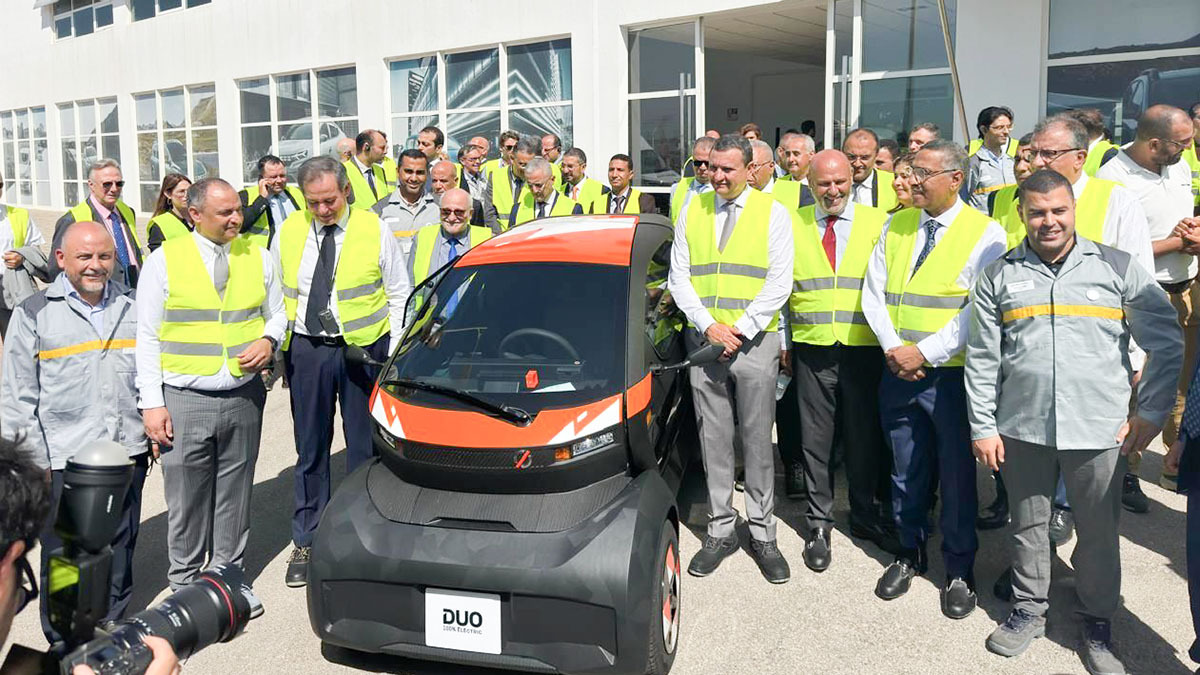
The data speaks for itself: Morocco has become the leading car manufacturer on the African continent, ahead of South Africa and Egypt, and 28th in the world. It has three original equipment manufacturers (Renault, Stellantis and NEO Motors Morocco) as well as more than 270 suppliers, spread across six of the Kingdom's regions. This infrastructure gives it a production capacity of 960,000 vehicles per year. The local content rate is 69%.
To get an idea of its magnitude, it should be noted that in 2022, Morocco's automotive parts industry was worth more than 5 billion dollars, while in 2023, the total value of exports in the sector (cars and parts) was 14.1 billion dollars.
A growing sector
The sector's growth has increased exponentially since 2012, when the Renault plant in Tangier was inaugurated. Between 2011 and 2019, the sector's average annual growth rate was 31%.
The Renault plant in Tangier was joined by the Somaca plant in Casablanca, also owned by the Renault Group. This plant was created by the Moroccan State in 1959 under the name Société Marocaine de Construction Automobile (Moroccan Automobile Construction Company) and privatised in 2003.
A few years later, in 2019, the Stellantis Group also established itself in Kenitra. Considering that Stellantis' car production figures are set to double to 450,000 units (400,000 combustion engines and 50,000 electric vehicles); that Somaca's production will increase from 100,000 to 160,000 units per year; and that Renault produces 340,000 units per year at its plant in Tangier, Morocco will reach a production of close to one million vehicles per year.

The contribution of the Moroccan firm NEO Motors Morocco is also noteworthy for its strategic importance. Created in 2018, its production is still limited to around 5,000 vehicles per year, but it has achieved important milestones such as the manufacture of the first electric car made entirely in Morocco, at its plant in Aïn El Aouda.
The main objective of the Moroccan automotive sector is to double production to two million vehicles per year by 2030, achieve an integration rate of 80% and commit to the use of renewable energies and decarbonisation.
More than 75% of this production is destined for export. Morocco has become the leading exporter of vehicles to Europe, surpassing major Asian powers such as China, Japan and India.
Own ecosystems
The two major manufacturers present in Morocco, Renault and Stellantis, have increased their presence and production figures to such an extent that they need their own ecosystems to maintain their growth figures.
Thus, the Renault Group in Morocco launched a major automotive ecosystem project in 2016, with the aim of increasing the group's local integration rate to 65% and its turnover to €1.5 billion by 2023. The creation of this ecosystem enabled the number of first-tier suppliers to increase from 26 to 76.
In 2021, Renault announced a new phase of this ecosystem, targeting 80% local integration and a long-term turnover target of 3 billion euros.
Thanks to the strategic location of the Renault ecosystem, suppliers to these factories can also come from other areas of Morocco such as the Souss Massa region, Fès-Meknès, Casablanca-Settat (Midparc), Rabat-Salé-Kenitra (Technopolis) and the Tangier-Tetouan-Al Hoceima region (Tangier Free Zone and Tangier Automotive City).
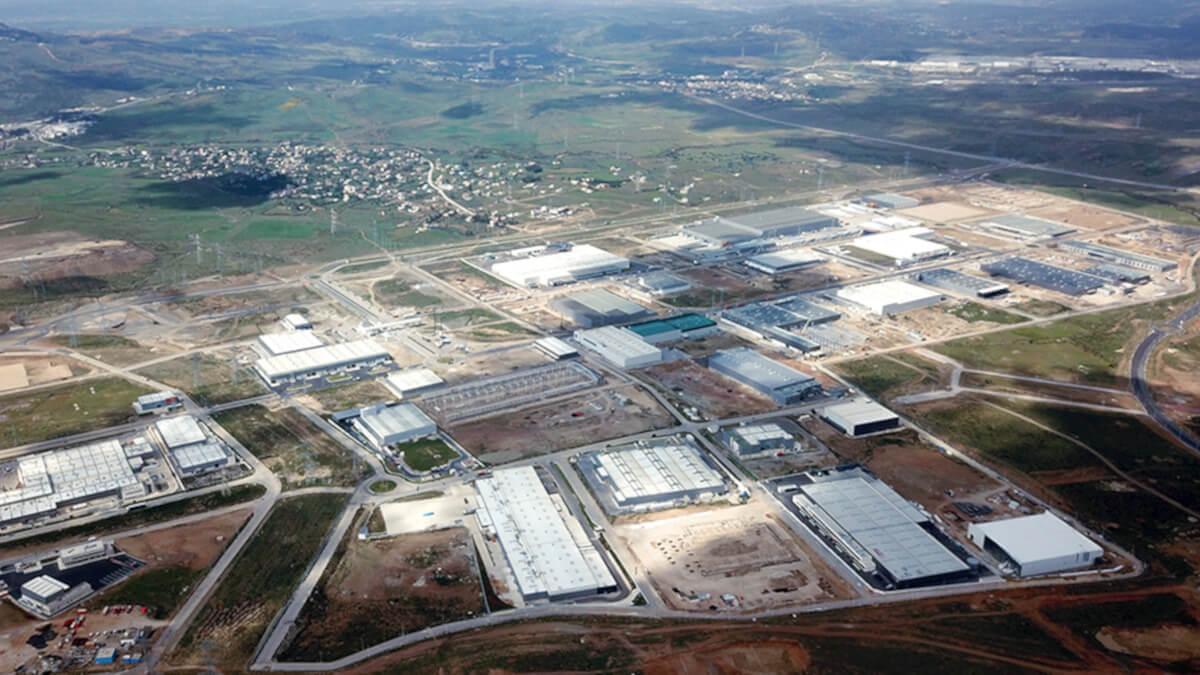
For its part, Stellantis signed an agreement with Morocco in 2015 to establish an industrial complex, with an investment of 6 billion dirhams (€550 million), starting vehicle production in 2019.
In 2021, the latest agreement was signed between the Ministry of Industry and Stellantis, in which the company committed to achieving local supply figures of 2.5 billion euros in 2023 and 3 billion in 2025. In addition, it proposed the creation of 3,000 engineering and technical positions in 2022 through its Africa Technical Centre, adding to the 2,500 jobs already in place.
The role of Tanger Med
World-class infrastructure, such as the port of Tanger Med, which has boosted the country's economy, plays a decisive role in this export drive. Vehicles produced in Tangier, Kenitra and Casablanca are transported by rail to the port facilities, from where they are shipped to more than 70 countries around the world.
The use of this logistics platform, Tangier Med, the leading port in the Mediterranean and on the African continent, is a competitive advantage for the Moroccan automotive sector in terms of exports.
Tangier Med has connections to 184 ports in more than 70 countries. Its annual handling capacity is 9.5 million containers and 700,000 lorries, a figure that has already been reached, so further expansion is being considered. This allows goods to be shipped throughout Spain within 24 hours, to France within 48 hours, and to the rest of Europe within 72 hours.

The growth in exports in this industry has led to the need to expand the ports of departure for production, with the new port of Kenitra scheduled to come into service in 2030.
It should be noted that Morocco has access to a potential market of up to 2.5 billion consumers, thanks to the free trade agreements signed by the government with more than fifty countries.
Commitment to the future
Aware of the importance of adapting to the sector's continuous evolution towards a more efficient and zero-emission future, Morocco has committed to the development of facilities dedicated to engineering and R&D in the automotive sector.
Among these new facilities, the following stand out:
- Africa Technical Centre: a Stellantis regional R&D centre that develops activities associated with the regional production plan and local integration.
- UTAV CERAM & FEV: an automotive testing and development centre that will enable Morocco to become autonomous in terms of the approval of parts and vehicles (electric, hybrid and internal combustion), certifying actual emissions.
- CETIEV 2.0: a testing centre for the vehicle equipment industry, with high-tech technical facilities for physical testing related to the development of automotive industry activities.
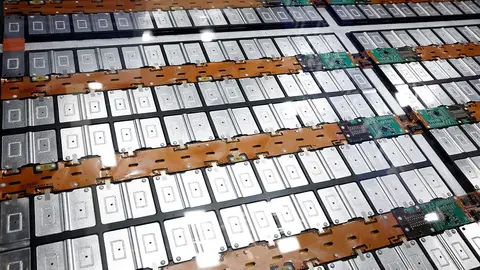
With a view to the transition to clean energy, Morocco is building one of the world's most powerful battery ecosystems, with investments in future projects worth billions of dollars and focused on three areas: Tangier, Kenitra and Jorf Lasfar. This ecosystem covers all stages of the battery supply chain:
- Production of copper, cobalt, sulphates and manganese.
- Lithium conversion and cathode material processing.
- Production of cathode and anode materials, NMS precursors.
- Production of battery cell packs.
- Original equipment manufacturers.
- Recycling.
Workforce and training
Another competitive advantage of the Moroccan automotive sector is the country's workforce, characterised by its youth and training. Morocco has a very young population and is gearing its training towards the needs of various economic sectors:
- Average age of 29, compared to 38.5 in the United States and 44 in Europe.
- More than 180,000 university graduates per year.
- 19,000 engineering graduates per year, 42% of whom are women.
- 55,000 technicians and specialists in the mechanical and automotive industries.
- 44% of young people aged 15 to 25 speak English at a high level.

To ensure the training of future workers in the sector, Morocco has created a specific institution for the automotive sector. This is the Automotive Industry Vocational Training Institute (IFMIA), created in 2013 to offer training tailored to the needs of the industry.
IFMIA has three institutes, located in the main automotive manufacturing centres: Tangier, Kenitra and Casablanca, as well as a specific centre in collaboration with Renault.
Graduates from this institute enjoy a 98% employment rate in multinational companies operating in the country. The Institute has collaboration agreements with the two major brands present in Morocco: training and skills development for more than 50,000 Stellantis workers to prepare them as future trainers; and training of personnel for possible recruitment by Renault.
It also has programmes specifically designed and operated by original equipment manufacturers and subsidised by the Government.