The Matinées de l'Industrie promote a new era of collaboration between Morocco and Spain
- The 8th Matinées de l'Industrie in Barcelona
- Importance of industrial cooperation between Morocco and Spain
- Interventions by key industry leaders
- Political representation and roadmap for investment in Morocco
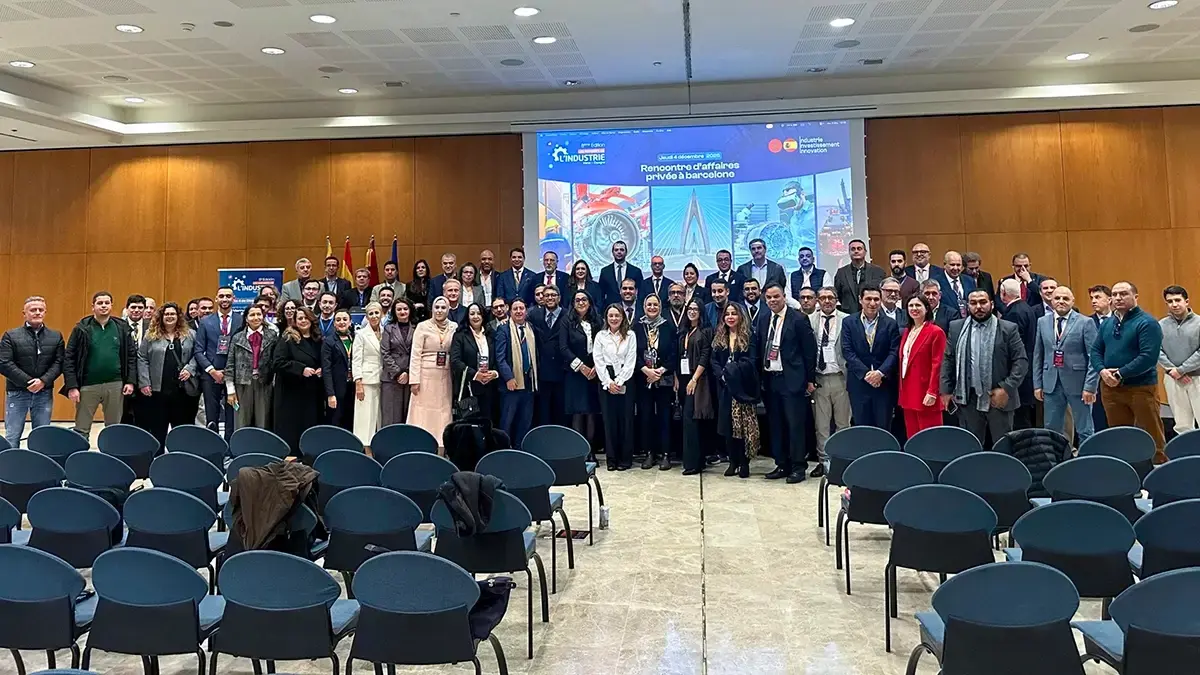
The 8th Matinées de l'Industrie in Barcelona
The 8th Matinées de l'Industrie, organised by Industrie du Maroc Magazine, in collaboration with the Spanish Chamber of Commerce in Morocco: Tangier-Nador-Kenitra-, was held for the first time outside Morocco, at the World Trade Centre in Barcelona, under the slogan ‘Promoting industrial development between Morocco and Spain’. This edition, which coincided with the 13th Morocco-Spain High Level Meeting in Madrid, highlighted the strength of relations between Madrid and Rabat and the excellent coordination and willingness between both parties.
The event began with a debate on the importance of cooperation between countries in the industrial sector, emphasising investments to increase the value, if you will pardon the redundancy, of value chains. Spain, and in this case Barcelona, were presented as a ‘platform of visibility’ for Moroccan investments in Spain and Europe.
Importance of industrial cooperation between Morocco and Spain
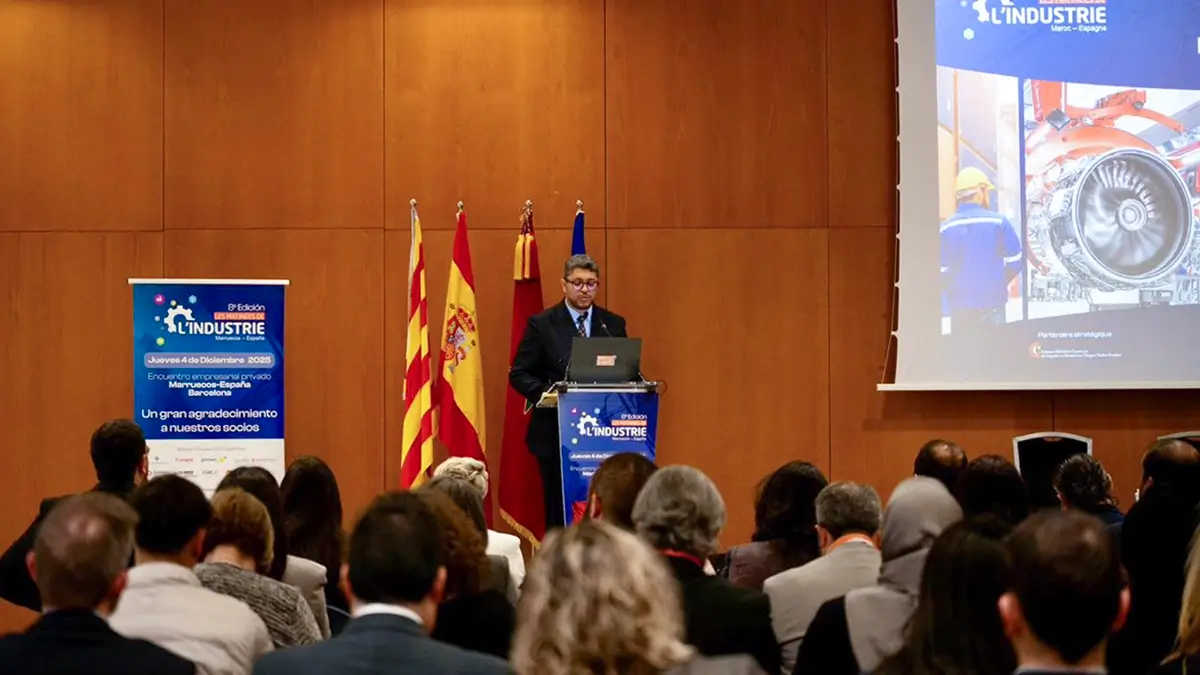
Hicham Rahioui Idrissi, CEO of Industricom and president of the Forum, began his speech by highlighting ‘the strength of the Moroccan-Spanish partnership in strategic sectors such as the automotive, renewable energy and textile industries’.
He also highlighted the value of commercial agreements between companies in the sector which, in his words, generate ‘a Euro-Mediterranean industrial corridor’ that aims to link the city of Barcelona with the most important economic hubs in the African country: Kenitra, Tangier and Casablanca.
For her part, José Estevez, president of the Spanish Chamber of Commerce in Morocco: Tangier-Nador-Kenitra-,, recalled the importance of the Moroccan industrial sector in Catalonia, which was established in the 1980s with a special emphasis on the textile sector. Since then, Sonia pointed out, Moroccan industry has expanded into other sectors such as logistics and automotive, now ranking as the main Spanish partners in both areas.
Finally, José Estévez stated that the Chamber of Commerce will continue and increase its support for Moroccan companies that require its services.
Interventions by key industry leaders
Kenza Khalil and the development of industrial hubs
Kenza Khalil, Secretary General of AMDIE, emphasised the importance of Moroccan industry and the development of industrial hubs in the country thanks to a rapid reindustrialisation process promoted by the public and private sectors. Khalil added that trade between Spain and Morocco exceeded 20 billion euros last year and that there are more than 300 Spanish companies operating on Moroccan soil.
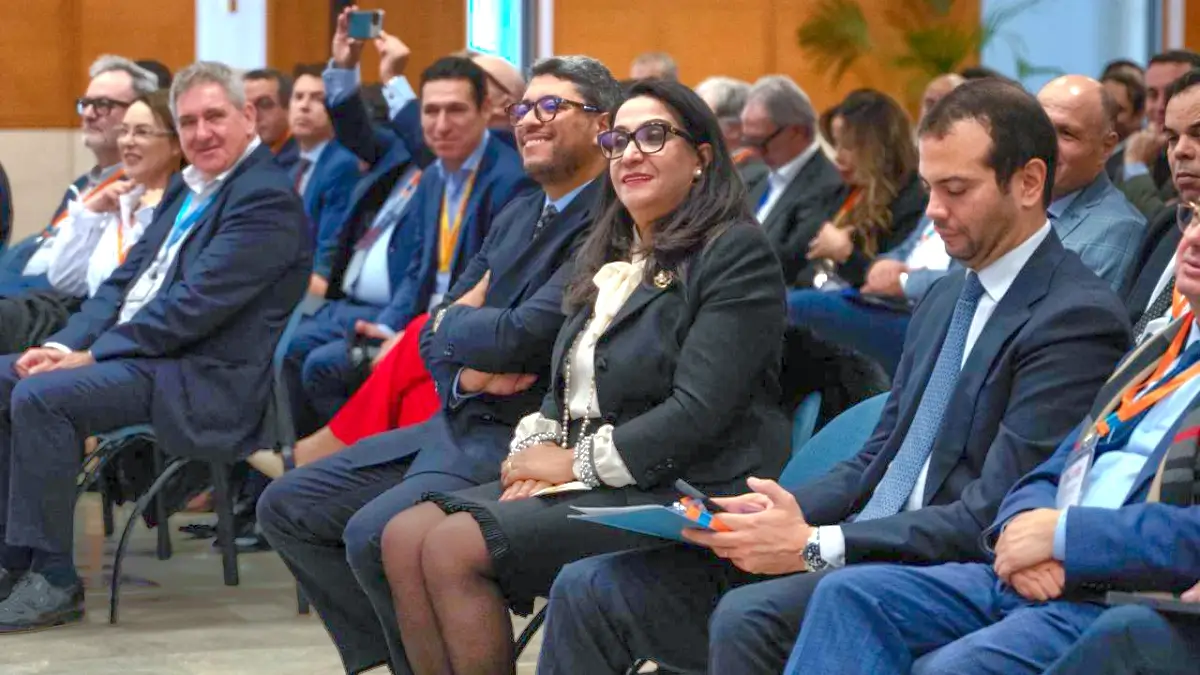
In conclusion, Kenza Khalil pointed out that the future of cooperation between Spain and Morocco will be marked by regulations and investments in the renewable energy sectors, and in particular green hydrogen, a sector in which Morocco exports technology and added value to many countries in Africa and Europe.
Yassine Tazi and the strategy of the CRI Tangier-Tetouan-Al Hoceima
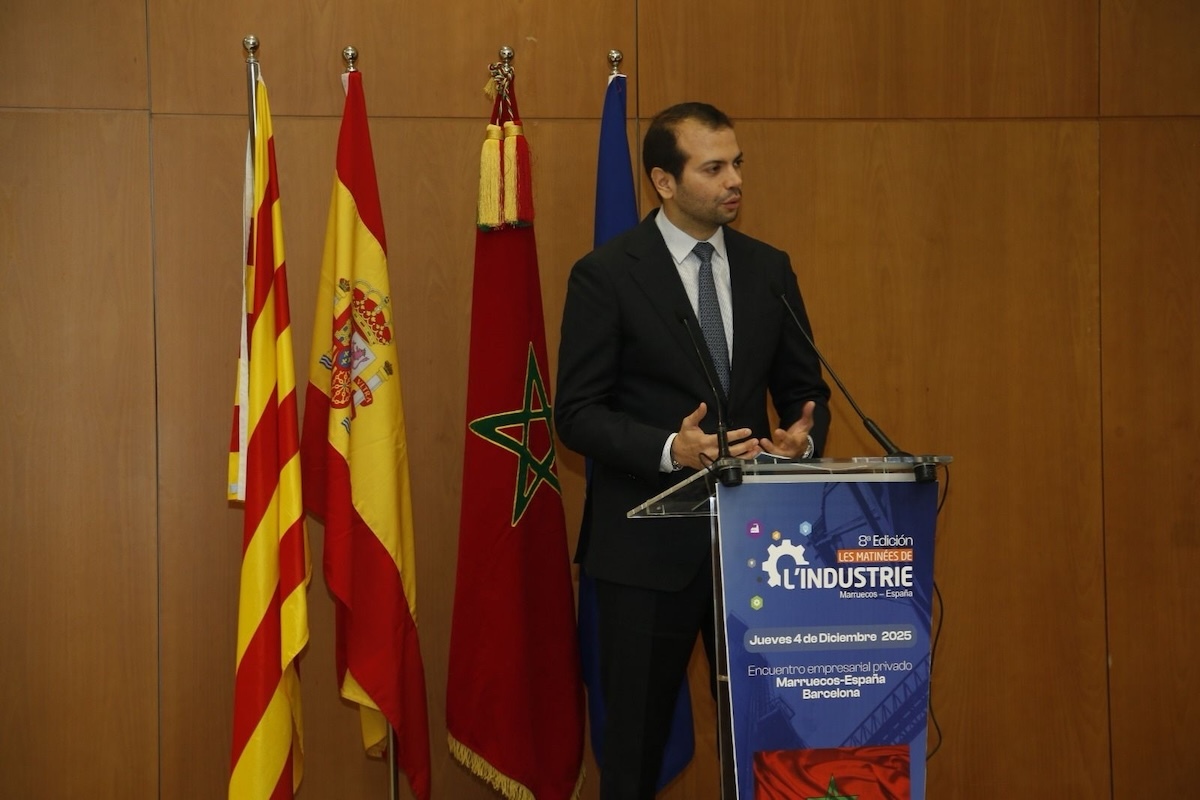
For his part, Yassine Tazi, Director General of the Tangier-Tetouan-Al Hoceima Regional Investment Centre (CRI-TTA), presented his region as ‘the central engine of Moroccan industrialisation, the country's second industrial hub and the first choice for foreign investment’, highlighting the strategic importance of Tanger Med.
Tazi went on to announce the availability of more than 5,000 hectares of industrial land supported by the Regional Development programme, and took the opportunity to announce the launch of the NordDev fund, designed to support up to 30% of investment in the TTA region.
Political representation and roadmap for investment in Morocco
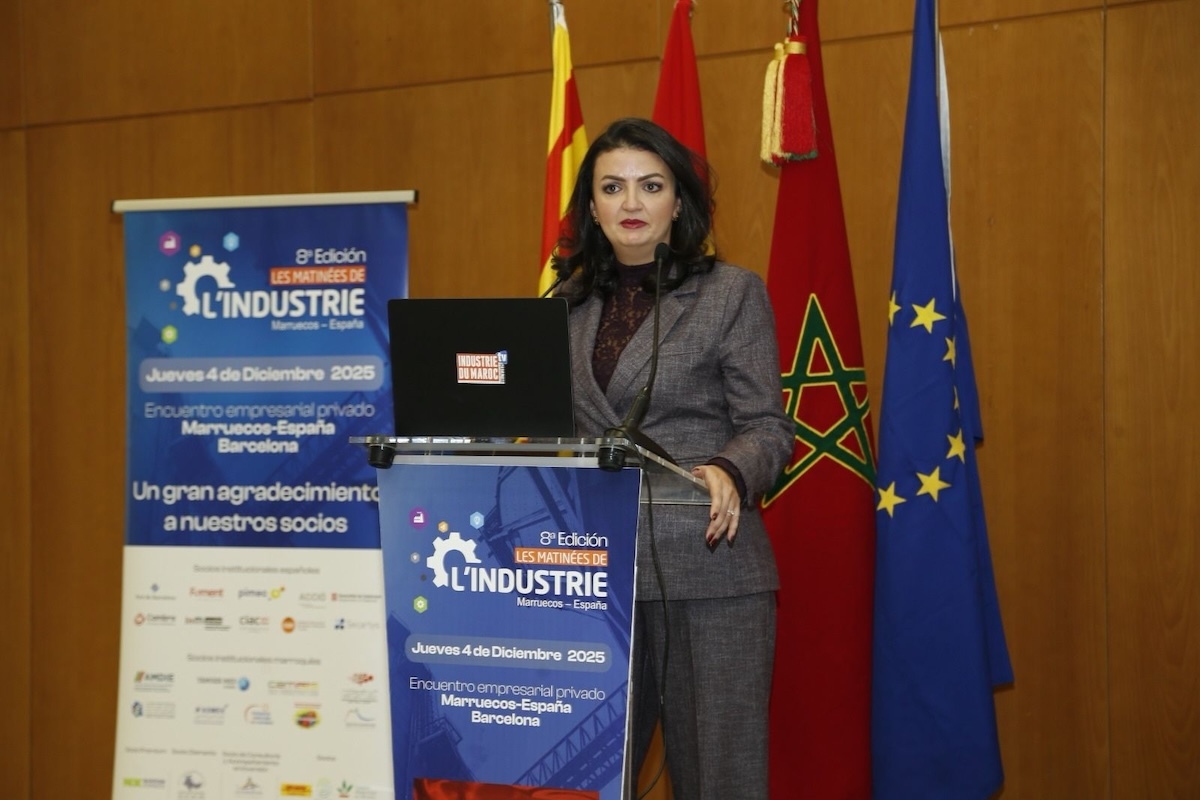
Finally, with regard to political representation, the Consul General of Morocco in Barcelona, Nezha Attahar, highlighted Morocco's roadmap for investment based on three pillars: stability, first-class infrastructure and leadership. To close the event, Attahar acknowledged the important role played by young Moroccans and young Catalans who go to Morocco to grow and train with the best guarantees.