Gustavo de Arístegui: Geopolitical Analysis 19 January
- Introduction
- Trump threatens massive tariffs on eight European countries over Greenland standoff; Brussels prepares €93 billion retaliation
- Iran: Khamenei acknowledges thousands of deaths and blames Trump and Israel for the bloodiest uprising since 1979.
- Syria: Damascus army advances in the northeast and integration agreement with Kurdish forces
- Russia launches a massive wave of drones and guided bombs against Ukraine, striking energy infrastructure again in the middle of winter.
- Portugal: Ventura (Chega) advances to the second round of the presidential election against the socialist Seguro in a vote that confirms the rise of right-wing populism.
- Trump's ‘Board of Peace’ for Gaza: Rubio, Blair, Kushner and other controversial names in a plan questioned for its ‘neo-colonial’ character.
- Venezuela: months of contacts between the Trump administration and Diosdado Cabello revealed before the operation to capture Maduro
- Deepening strategic erosion of the US, Russia and China in a 2026 marked by ‘frantic military positioning’
- Continued economic punishment: Gulf markets under pressure and volatility due to geopolitical tensions and Trump's statements
- Escalation of the internal debate in the West on the response to Russia, Iran and populism
- Media rack
- Editorial commentary
Introduction
The international stage is entering a phase of permanent friction where, rather than isolated crises, we are witnessing a chain of clashes: Washington is tightening its economic grip on Europe and redrawing the map of power in the Middle East; Moscow intensifies its punishment of Ukrainian civilian infrastructure; Tehran responds to the largest wave of protests in its recent history with massive repression; and Latin America returns to the centre of the strategic radar following the capture of Nicolás Maduro and discreet manoeuvres with the hard core of Chavismo.
Europe, caught between the tariff pressure of a United States that no longer hides its policy of force and the brutality of Russian aggression, is now reacting with the only language that Trump's White House seems to understand: that of figures and high-calibre trade reprisals. At the same time, the so-called ‘global South’ is becoming a battleground between revisionist powers—China, Russia, Iran—and a West that is late, fragmented, and with a left more concerned with woke catechism than with the defence of representative liberal democracy.
In this context, the risk card is coloured red on three fronts: the war in Ukraine, explosive instability in the Middle East and the advance of authoritarianism—whether Bolivarian, Islamist or populist—in areas where the rule of law is fragile. The rest, from the Houthi attacks (Iranian proxies) in the Red Sea to political fragmentation in the EU, is part of the same narrative: that of global strategic disorder and the suicidal renunciation by certain Western elites of defending, without complexes, the order of freedoms that made the West the benchmark for the free world.
Trump threatens massive tariffs on eight European countries over Greenland standoff; Brussels prepares €93 billion retaliation
Facts
Eight European countries have issued a joint statement denouncing Washington's new tariff threats as ‘intimidation’ if they block Trump's strategy on Greenland and strategic Arctic resources.
The EU is considering a package of retaliatory measures worth around €93 billion in tariffs, in a climate in which leaders such as Emmanuel Macron and Keir Starmer are openly talking about a ‘dangerous spiral’ for transatlantic relations.
Implications
Trump maintains a policy of strength consistent with his vision: defending US strategic interests above multilateral consensus, especially in raw materials, energy and geo-economic control of sensitive areas such as the Arctic. From an Atlanticist perspective, the problem is not firmness, but the risk of a rift with natural allies.
The European response is late and lacks real political coordination: Brussels resorts to the instrument it masters—trade—but still lacks a security and defence strategy commensurate with the challenge, while the European radical left dreams of unarmed ‘strategic autonomy’.
Outlook and scenarios
Scenario 1 (likely): controlled escalation of measures and countermeasures, followed by technical negotiations that mitigate the impact without resolving the underlying disagreement over Greenland, the Arctic and European green industrial policy.
Scenario 2 (risk): a deeper rift with Trump convinced that certain European governments are acting as a brake on US power, which could push Washington towards an even more transactional policy with Moscow and Beijing on other fronts.
Scenario 3 (opportunity): if European capitals finally accept that the Atlantic link requires more defence spending and a firmer stance towards China and Russia, the tariff crisis could paradoxically become a spur for a more mature and less rhetorical Atlanticism.

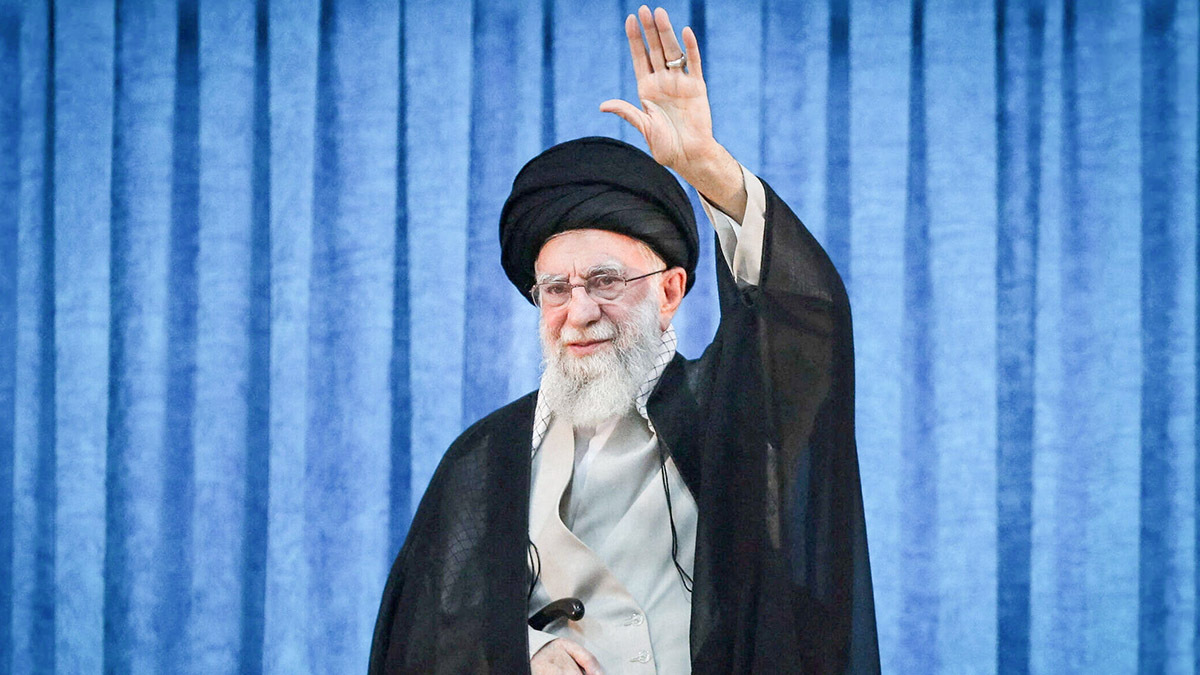
Iran: Khamenei acknowledges thousands of deaths and blames Trump and Israel for the bloodiest uprising since 1979.
Facts
Supreme Leader Ali Khamenei has publicly acknowledged that ‘thousands’ of Iranians have died in the protests that began on 28 December, while NGOs such as Human Rights Activists in Iran are already reporting more than 3,000 verified deaths and other sources put the figure much higher.
Khamenei directly accuses the United States and Israel of orchestrating the uprising, brands the protesters ‘enemies of God’ and issues an unequivocal threat: the ‘criminals’ will not go unpunished.
Implications
The Tehran regime is laying itself bare: there is no possibility of reform, only a theocratic power willing to massacre its people in order to survive. The narrative of ‘manipulated protests’ is the usual excuse to justify mass crimes against the civilian population.
The repression will strengthen the most hardline elements—the Revolutionary Guards, the Basij, the intelligence services—and exacerbate the logic of exporting crises abroad: more activism from Hezbollah, more aggression from the Houthis, more covert operations in Iraq, Syria and the Sahel.
Outlook and scenarios
Scenario 1: temporary freeze on protests due to sheer fear and fatigue, but with a further deterioration of the regime's internal legitimacy, which will increasingly depend on organised terror and oil revenues conditioned by sanctions.
Scenario 2: increased international pressure with a greater focus on crimes against humanity, but without any real correlation in terms of effective sanctions, due to European ambiguities and the cynical calculations of Russia and China.
Scenario 3 (medium term): if the rift between elites deepens—particularly between technocrats and the security apparatus—a cycle of internal struggles could begin, weakening Tehran's ability to support its proxies, which is vital for the security of Israel, the Gulf and Europe.
Syria: Damascus army advances in the northeast and integration agreement with Kurdish forces
Events
Forces loyal to President Ahmed al-Sharaa have advanced rapidly towards eastern Aleppo, taking towns under the control of the Syrian Democratic Forces (SDF), a Kurdish-Arab coalition that was the West's main ally against ISIS.
At the same time, a ‘broad’ integration agreement between Kurdish units and the Syrian army has been announced, recognising Kurdish as a ‘national language’ and restoring citizenship to stateless Kurds, formally putting an end to recent clashes.
Implications
The move can be interpreted in two ways: on the one hand, it prevents ISIS cells from filling the power vacuum in the north-east; on the other, it dilutes Kurdish autonomy under structures controlled by Damascus — and, by extension, by Moscow and Tehran — responding to Ankara's anti-Kurdish obsessions.
A real weakening of the SDF would be a disaster for the fight against terrorism: it is the SDF that guards thousands of Al Qaeda and Daesh detainees who, if released or escaped, could reconfigure the jihadist map of the Middle East and Europe itself.
Prospects and scenarios
Scenario 1: partial and supervised integration of Kurdish forces with minimum guarantees to prevent reprisals, maintaining their role in guarding prisoners and in operations against ISIS, with Russian supervision and limited involvement from Iran.
Scenario 2 (high risk): a gradual operation to strip the Kurds of real power, satisfying Turkey, weakening the actor that has fought DAECH the most and increasing the risk of mass escapes and terrorist regrouping.
Scenario 3: reactivation of Western involvement in north-eastern Syria with a clearer mandate — something unlikely at present — to secure facilities where jihadist prisoners are held and prevent Syria from once again becoming the epicentre of global terrorism.

Russia launches a massive wave of drones and guided bombs against Ukraine, striking energy infrastructure again in the middle of winter.
Facts
In the last week, Russia has launched more than 1,300 attack drones, some 1,050 guided aerial bombs and around 30 missiles of various types against Ukrainian targets, concentrating on critical energy and logistics hubs.
Last night alone, more than 200 drones attacked the regions of Sumy, Kharkiv, Dnipro, Zaporizhia, Khmelnytskyi and Odesa, causing at least two deaths, dozens of injuries and further power cuts in the midst of a cold snap.
Implications
Moscow continues to use energy as a weapon of terror against the civilian population: it is “weaponising winter” to break Ukrainian resistance morale, in flagrant violation of international humanitarian law.
The cost of rebuilding the electricity and energy infrastructure is skyrocketing, placing Ukraine in even greater dependence on Western aid, while certain European sectors are calling for a peace of capitulation that would only reward Russian aggression.
Outlook and scenarios
Scenario 1: intensification of Western aid in air defence and interception capabilities, along with more sanctions targeting the Russian drone and missile industry, including the supply of components by third countries such as Iran or North Korea.
Scenario 2: If support erodes—especially in some European countries with weak governments or those tempted by appeasement—Russia could consolidate a frozen conflict that keeps Ukrainian territories occupied and projects a constant threat to the rest of Europe.
Scenario 3: prolongation of the “strategic stalemate” with a resistant but exhausted Ukraine and a Russia that fails to achieve a decisive victory, opening the door to more aggressive hybrid operations against NATO allies on the eastern flank.
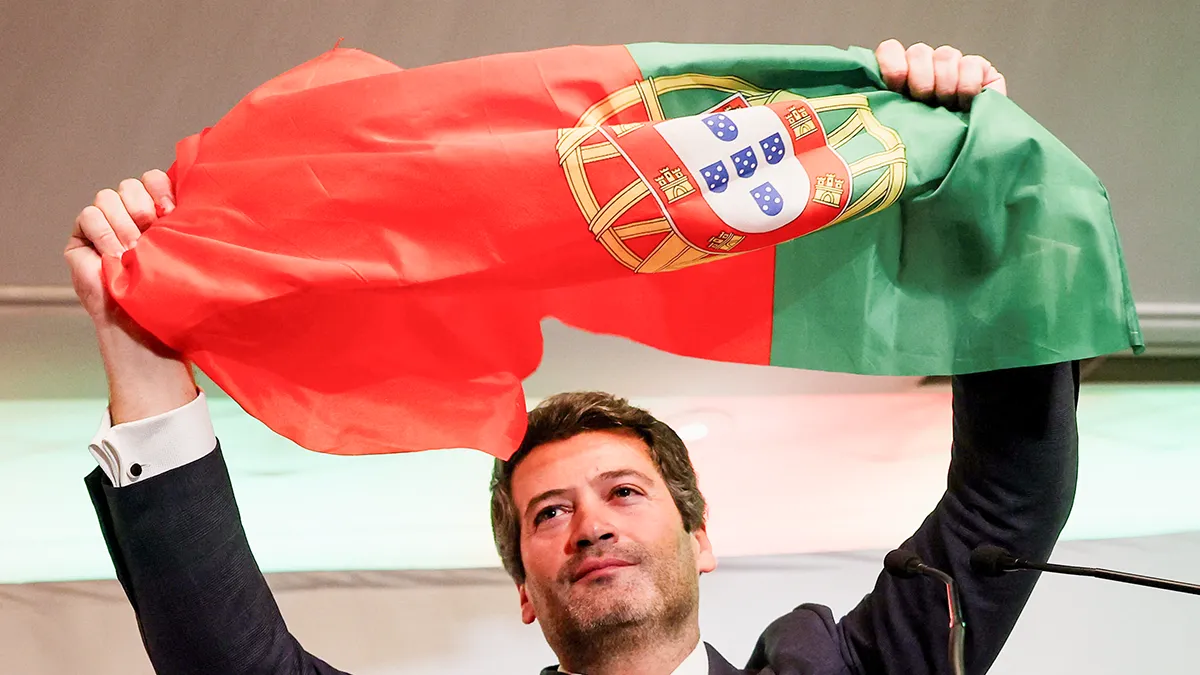
Portugal: Ventura (Chega) advances to the second round of the presidential election against the socialist Seguro in a vote that confirms the rise of right-wing populism.
Facts
In the first round of the Portuguese presidential election, socialist António José Seguro won the most votes—around 31%—followed by André Ventura, leader of the right-wing populist party Chega, with around 24%, qualifying him for the second round on 8 February.
This is one of the closest contests in recent decades and the first time in 40 years that the Portuguese president has not been decided in the first round.
Implications
Ventura's progress confirms the continental trend: discontent with traditional elites and weariness with the identitarian and fiscally irresponsible left are fuelling populist options which, in many cases, present a discourse that is partly compatible with the centre-right, but with risks of radicalisation.
The result puts pressure on the fragmented non-socialist space and forces moderate centre-right parties to decide whether to compete or cooperate with a populist alternative whose relationship with the classic values of Atlantic and European liberalism is, at best, ambivalent.
Outlook and scenarios
Scenario 1 (most likely): Seguro wins in the second round with a broad ‘anti-fascist’ front, reinforcing the narrative of a cordon sanitaire that, however, does not resolve the root causes of social unrest.
Scenario 2: a much closer result than expected, normalising Chega as a key player and opening the door to future right-wing government coalitions, forcing the liberal centre-right to redefine its identity.
Scenario 3 (long term): if moderate forces do not reclaim the banner of order, security and defence of the middle classes, the protest vote will continue to reinforce options ranging from Euroscepticism to liberalism.
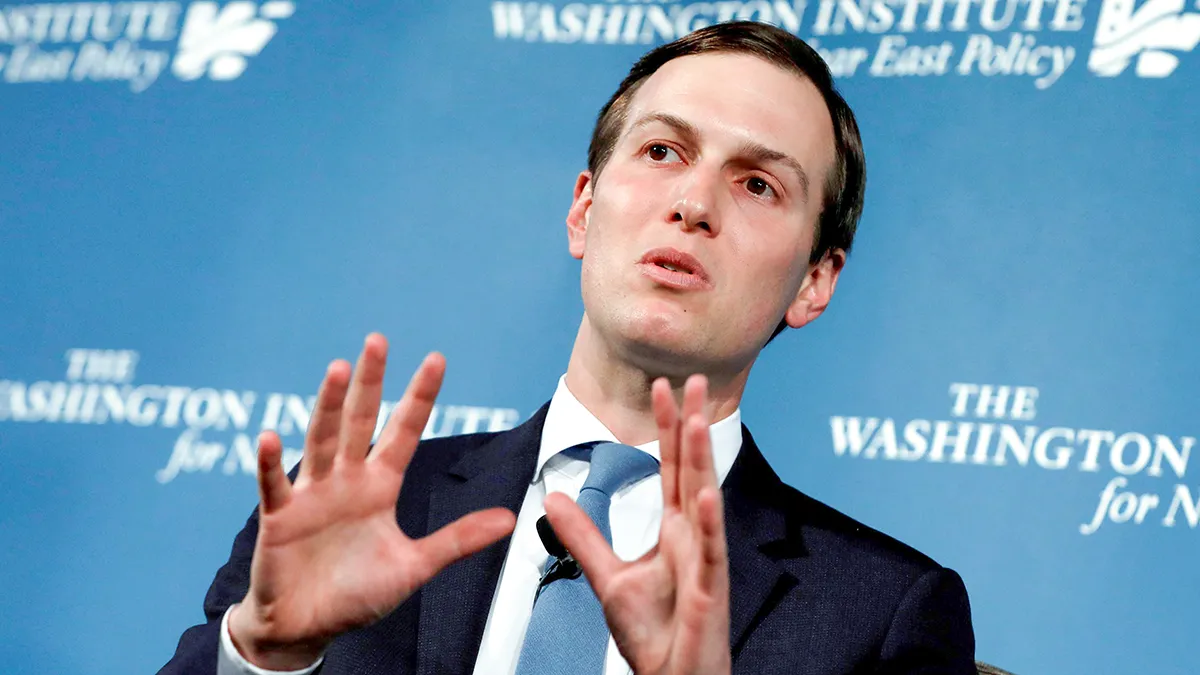
Trump's ‘Board of Peace’ for Gaza: Rubio, Blair, Kushner and other controversial names in a plan questioned for its ‘neo-colonial’ character.
Facts
The White House has announced the members of the new ‘Board of Peace’ responsible for overseeing the transitional administration of Gaza, chaired for life by Donald Trump and composed of, among others, Secretary of State Marco Rubio, Special Envoy Steve Witkoff, former British Prime Minister Tony Blair and Jared Kushner.
The plan, which envisages a Palestinian technocratic body supervised by this international body, has been formally accepted by Israel and Hamas, but so far lacks clearly identified Palestinian representatives on the council itself.
Implications
The Arab world and part of international public opinion denounce a scheme of ‘new generation colonialism’: a foreign leader presiding over the governance of a territory central to the Palestinian cause, accompanied by very Western figures such as Blair, with the symbolic weight of Iraq and the British imperial legacy.
However, in the face of decades of immobility, Trump's pragmatic approach—which has yielded results in other regional disputes—could offer a window of stability if the representation deficits are corrected and if the technocratic body enjoys real management capacity, not just a facade.
Prospects and scenarios
Scenario 1: Tactical acceptance of the plan by regional powers—especially Egypt and Jordan—who see the council as a way to curb both Hamas and Iranian expansion, provided that respected Palestinian figures are included.
Scenario 2: popular opposition in the Arab world, fuelling the rhetoric of Iran, Hezbollah and the most radical sectors, who will present the plan as a US-Israeli “protectorate” over Gaza.
Scenario 3: if the ‘Board of Peace’ becomes an effective instrument for rebuilding Gaza, ensuring security and improving the lives of civilians, it could set an uncomfortable precedent for those who thrive on perpetual conflict, from Islamist extremists to certain sectors of the Western far left.
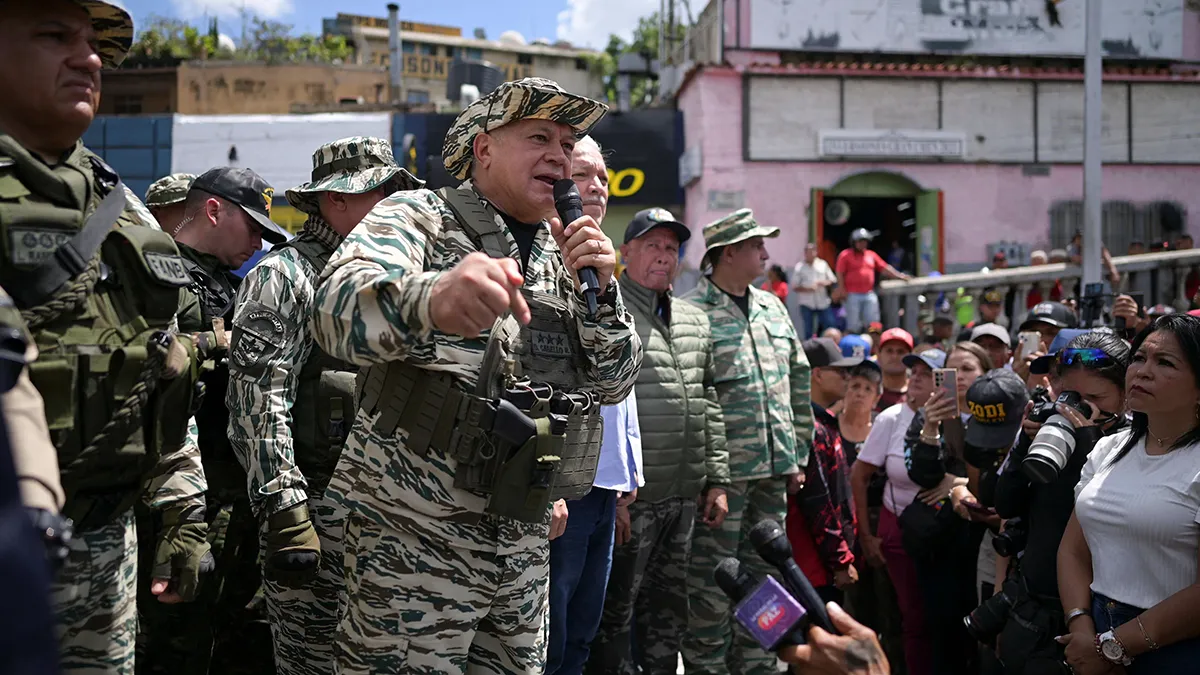
Venezuela: months of contacts between the Trump administration and Diosdado Cabello revealed before the operation to capture Maduro
Facts
Sources cited by Reuters reveal that Trump administration officials maintained discreet contacts with Venezuelan Interior Minister Diosdado Cabello — one of the toughest men in Chavismo — months before the US commando operation that captured Nicolás Maduro on 3 January.
Washington warned Cabello not to use the PSUV's security apparatus and militias to repress the opposition and also discussed the sanctions regime against him, despite the fact that he is named in the same drug trafficking indictment that justified Maduro's arrest.
Implications
The operation demonstrates once again the military effectiveness of the United States and, at the same time, its willingness to negotiate with sinister figures if it serves greater strategic objectives: dismantling a narco-dictatorship and avoiding bloodshed in the transition.
Chavismo, like any mafia organisation, can survive without a godfather, but not without a system: as long as the security, intelligence and illicit economy network remains intact, Venezuela will continue to be a source of narco-instability for Latin America and Europe.
Outlook and scenarios
Scenario 1: Cabello presents himself as the guarantor of a “revolutionary” internal order without Maduro, gradually negotiating his own legal survival in exchange for limited reforms and economic concessions to Washington.
Scenario 2: Internal fracture of Chavismo between sectors willing to negotiate and more radical groups linked to drug trafficking and the military apparatus, with the risk of episodes of intra-regime violence.
Scenario 3: If the democratic opposition and the international community do not act with unity and pragmatism, the window of opportunity for an orderly transition may close and be replaced by a new version of the same system with different faces.
Deepening strategic erosion of the US, Russia and China in a 2026 marked by ‘frantic military positioning’
Facts
Recent analyses highlight that 2026 has begun with a succession of large-scale displays of military force: US precision strikes against targets in Iran and Venezuela, Russian tests of systems capable of reaching European cities in ten minutes, and growing Chinese industrial preparedness for a prolonged conflict.
The Trump White House combines displays of force with a narrative of clear ‘red lines’ — for example, preventing Iran from obtaining nuclear weapons — and short-term surgical operations to theoretically avoid endless wars.
Implications
The world is entering an era of hard deterrence in which three major players—the US, Russia, and China—are testing their capabilities and limits, while re-armed regional allies and partners (Saudi Arabia, the Emirates, Turkey) wage their own proxy wars.
For Europe, the message is clear: there will be no ‘free protection’ indefinitely. NATO remains vital, but American commitment cannot replace European responsibility to invest in defence and bear a political cost that many leaders avoid for purely electoral reasons.
Outlook and scenarios
Scenario 1: consolidation of a global “armed peace” with multiple limited conflicts, but no direct clash between major powers thanks to mutual fear of escalation.
Scenario 2: accident or miscalculation – in the Baltic, the South China Sea or the Gulf – triggering a major crisis, testing the crisis management capabilities of increasingly polarised political elites.
Scenario 3: if the West strengthens its military muscle and internal cohesion, it can contain Russia, deter China and curb Iranian adventurism; if not, the vacuum will be filled by autocracies and armed non-state actors.

Continued economic punishment: Gulf markets under pressure and volatility due to geopolitical tensions and Trump's statements
Facts
The main Gulf markets are mixed, affected by a fall of more than 3% in the price of oil following Trump's statements on the repression of protesters in third countries and widespread concern about regional escalation.
The perception of risk is heightened by the combination of war in Ukraine, the Iranian threat, Houthi attacks on shipping and doubts about the strength of global demand.
Implications
The Gulf, once merely a supplier of crude oil, has become a geopolitical barometer: any spark in Iran, Yemen, Iraq or the Levant immediately affects stock market indices and investor confidence.
The Gulf economies are diversifying into the financial, technology and tourism sectors, but remain vulnerable to price shocks, risk perception and the political instrumentalisation of energy by producers and consumers.
Outlook and scenarios
Scenario 1: if relative stability is consolidated around the Gaza conflict and Iranian adventurism is contained, markets could quickly recover, supported by large sovereign investment plans.
Scenario 2: A major attack on energy facilities or an open escalation between Iran and its regional enemies would trigger a risk premium and reopen the debate on ‘energy security’ in Europe and Asia.
Scenario 3: The Gulf monarchies consolidate their position as key diplomatic players—between Washington, Moscow and Beijing—using their energy and financial position as leverage for global influence.

Escalation of the internal debate in the West on the response to Russia, Iran and populism
Facts
While Ukraine suffers the most serious campaign of attacks on civilian infrastructure in months, the gap widens between those who demand maintaining and increasing military support and those who, from the comfort of certain European and American salons, call for ‘territorial concessions’ in the name of an illusory peace.
At the same time, the reaction to the massacre in Iran and the rise of populism in Europe (as in Portugal) reveals a double standard: theocratic repression is condemned, but authoritarian regimes continue to be courted when it suits certain economic interests.
Implications
The battle is not only geopolitical: it is cultural and moral. In the face of jihadism, Bolivarianism, Putinism and Chinese expansionism, part of the West seems more concerned with ‘microaggressions’ and pronouns than with the defence of fundamental rights and collective security.
If the liberal centre-right—Atlanticist, pro-European, defender of the market economy and a sustainable welfare state—does not lead the response, the vacuum will be filled by both the far right and the far left, both equally destructive to liberal democracy.
Outlook and scenarios
Scenario 1: consolidation of an Atlantic bloc—the US, the UK, Central and Northern Europe—that understands the nature of the challenge and acts accordingly, albeit with inevitable fissures.
Scenario 2: advance of illiberal forces, either under the banner of right-wing populism or under the guise of “progressivism”, eroding institutions, judicial independence and press freedom, facilitating the work of Moscow, Beijing and Tehran.
Scenario 3: if citizens perceive that only the reformist centre offers security, stability and responsible prosperity, the political landscape may be rebalanced, but it will be necessary to abandon ambiguity in the face of the declared enemies of democracy.
Media rack
Generalist Anglo-Saxon media (NYT, Washington Post, BBC, CNN, CBS, AP, Reuters)
Predominant focus on the erosion of Ukraine, the magnitude of Iranian repression and the architecture of the ‘Board of Peace’ for Gaza, with emphasis on its exceptional nature and ‘neo-colonial’ criticism.
Economic and financial press (FT, WSJ, Economist, Bloomberg, CNBC)
Attention to the US-EU tariff clash, risks to supply chains, and volatility in energy and Gulf markets, highlighting the growing use of trade policy as an instrument of power.
Leading European media (Le Monde, Le Figaro, FAZ, Die Welt, Die Zeit, Corriere, El País, Clarín, etc.)
Focus on the fragility of European leadership in the face of Trump and Putin, alarm at the rise of populism in Portugal and concern about the repressive drift in Iran, with editorials divided between realism and impotent moralism.
Israeli and Arab media (Haaretz, Jerusalem Post, Al-Jazeera, Al-Arabiya, Asharq Al-Awsat, Gulf press)
Maximum attention to the ‘Board of Peace’ and its impact on the regional security equation, as well as the activity of Iranian proxies and the sensitivity of energy markets to any gesture from Tehran.
Latin American media (Clarín, El Mercurio, Reforma, etc.)
Intense coverage of Maduro's capture, Washington's contacts with Cabello and the uncertainty about the future of Chavismo, with analyses ranging from hope for a transition to fear of new forms of camouflaged authoritarianism.
Editorial commentary
The free world is undergoing a crisis of confidence that stems not only from its external enemies — Moscow, Beijing, Tehran, the Bolivarian cartels of the 21st century — but above all from a dangerous moral and strategic anaemia within our own societies. While Russia is destroying civilian infrastructure in Ukraine and the Iranian regime is killing thousands of protesters, part of the Western elite is devoting more energy to superficial cultural battles than to the defence of liberal democracy, the market economy and the rule of law.
The case of Venezuela is paradigmatic: a narco-dictatorship that has turned an immensely rich country into a failed state, exporting misery, crime and destabilisation. Maduro's capture is not the end of Chavism, but the first significant crack in a mafia structure that still controls weapons, money and propaganda. If the international community — and in particular Europe and the United States — does not accompany this episode with a determined strategy of support for democratic forces and intelligent pressure on the hard core of the regime, the script will be repeated: the visible face will fall, but the system will survive.
In the Middle East, the ‘Board of Peace’ for Gaza embodies the permanent tension between pragmatism and legitimacy. That a US president—Trump—should assume such a prominent and lifelong role in the governance of such a sensitive territory may seem excessive, but no one should forget that immobility and empty rhetoric have failed miserably for decades. The question is not whether the plan is perfect – it is not – but whether it offers a real opportunity to curb Hamas, contain Iran and improve the lives of Gazans. That opportunity exists, provided that the deficits in Palestinian representation are corrected and that the council does not become a club of egos, but rather an instrument of order and reconstruction.
Europe, for its part, remains caught between its best tradition—that of the Spanish transition, Franco-German reconciliation, and the patient construction of a Union based on freedom and shared prosperity—and a recent drift toward chronic guilt, fiscal populism, and a fascination with magic solutions that never involve personal and political responsibility. The response to Trump ranges from reflexive anti-Americanism to tacit submission, without articulating a mature, demanding Atlanticism that combines loyalty to NATO with its own ambition.