Gustavo de Arístegui: Geopolitical Analysis 2 December
- General introduction
- Russian strategy in Ukraine: war of attrition to impose a ‘peace’ of defeat
- Pokrovsk and Vovchansk: Russian advances on the front and high-risk diplomacy
- Minnesota: possible channel for public funds to Al Shabab and the disaster of identity radicalism
- Honduras: technical tie between conservatives and strategic pardon for Juan Orlando Hernández
- National Security Council and attacks on drug-trafficking boats: legality, legitimacy and Maduro's mask
- Potential escalation in Venezuela: military build-up and the doctrine of total deterrence
- Expiring patents and obesity drugs: a health and economic time bomb
- France promises ‘full support’ to Ukraine: the battle for European centrality
- The 100 km traffic jam in Siberia: the real Russia under the snow
- Ukraine, corruption and institutional resilience: cleaning house in the midst of war
- Media rack
General introduction
The international system is entering a phase of structural disorder in which almost nothing is sustained by the force of norms, but rather by the naked will of states and, increasingly, by the corrosive power of transnational criminal actors. While democracies argue, fragment and become entangled in suicidal cultural wars, revisionist powers and mafia regimes advance with determination.
In the last 24 hours, we have seen this with disturbing clarity:
- Russia boasts of having taken Pokrovsk and Vovchansk, part of a coherent strategy that seeks to redraw the European map by force.
- Ukraine is trying to negotiate its survival without surrendering its dignity, while Europe risks being reduced to a mere extra in a bilateral agreement between Washington and Moscow.
- In Minnesota, in the heart of the United States, there are signs that public funds may have been used to finance, albeit indirectly, Al Shabab, a Somali jihadist organisation linked to Al Qaeda, in a political context marked by the identity radicalism of Ilhan Omar's entourage.
- In Honduras, two conservative candidates are fighting vote by vote for the presidency, while the radical left is out of the second round and reacting with its usual fury. At the same time, the announced pardon for former President Juan Orlando Hernández is linked to sensitive information about cooperation between drug traffickers and Maduro's regime.
- In the Caribbean and Venezuela's surroundings, the White House defends before a divided public opinion the legality and legitimacy of attacks against alleged drug boats linked to the Chavista narco-state, including second attacks that some try to falsely present as excessive.
- The pharmacological revolution of GLP-1 and tirzepatide enters the political phase: the WHO endorses their use to treat obesity, while key patents are coming to an end, which will make access cheaper and reshape the health economy.
- In Siberia, up to 100 km of traffic jams on the Baikal motorway, with temperatures as low as -30 °C, serve as a reminder that the real Russia is nothing like the image of an all-powerful superpower projected by the Kremlin.
In this context, the editorial line guiding this report is clear and unambiguous:
- Absolute condemnation of Russian aggression and any attempt to reward the conquest of territories by force.
- Decisive support for Ukraine, even when some allies grow weary or are seduced by the false peace of exhaustion.
- Total firmness against the Venezuelan narco-state and clear defence of operations against drug-trafficking boats.
- Direct criticism of Ilhan Omar and the radical wing of the Democratic Party for their irresponsibility and tolerance of dynamics that facilitate Islamist infiltration.
- Only moderate criticism of Trump in the chapter on negotiations with Russia; in all other respects, explicit recognition of the logic of a hard line against drug trafficking and terrorism.
On this basis, we develop the ten key news items of the day.
Russian strategy in Ukraine: war of attrition to impose a ‘peace’ of defeat
Facts:
Since 2022, the Russian strategy has combined three vectors:
- Systematic destruction of critical Ukrainian infrastructure, with a special focus on energy and logistics.
- A war of attrition, in which the life of the Russian soldier is a expendable resource, while Ukraine's capacity for mobilisation is exhausted.
- Diplomatic pressure on the West to force a ‘peace’ that consolidates territorial gains and humiliates Kiev, sending an unequivocal message to Eastern Europe: Moscow rules, and the rest adapt.
In recent months, Putin has ramped up military production, intensified cooperation with Iran, North Korea and, more sophisticatedly, with China, and exploited every crack in the Western political front, including the fatigue of certain public opinions and the electoral calculations of some governments.
Implications:
Russia is not seeking a just peace, but a peace of defeat for Ukraine and humiliation for Europe. It wants to impose the idea that the use of force to change borders is acceptable if done with sufficient brutality and patience.
To accept this would be to blow up the European security architecture built after 1945. It would mean telling all revisionists that the international community gets indignant for a few months, imposes sanctions, but ends up swallowing the fait accompli.
Europe must understand once and for all that its security is at stake in Ukraine, not some distant conflict. If Putin's partial victory is enshrined, the next scenario will be Moldova, the Baltic or even the Balkans. The current war is the first battle in a longer war for the future of the continent.
Pokrovsk and Vovchansk: Russian advances on the front and high-risk diplomacy
Facts:
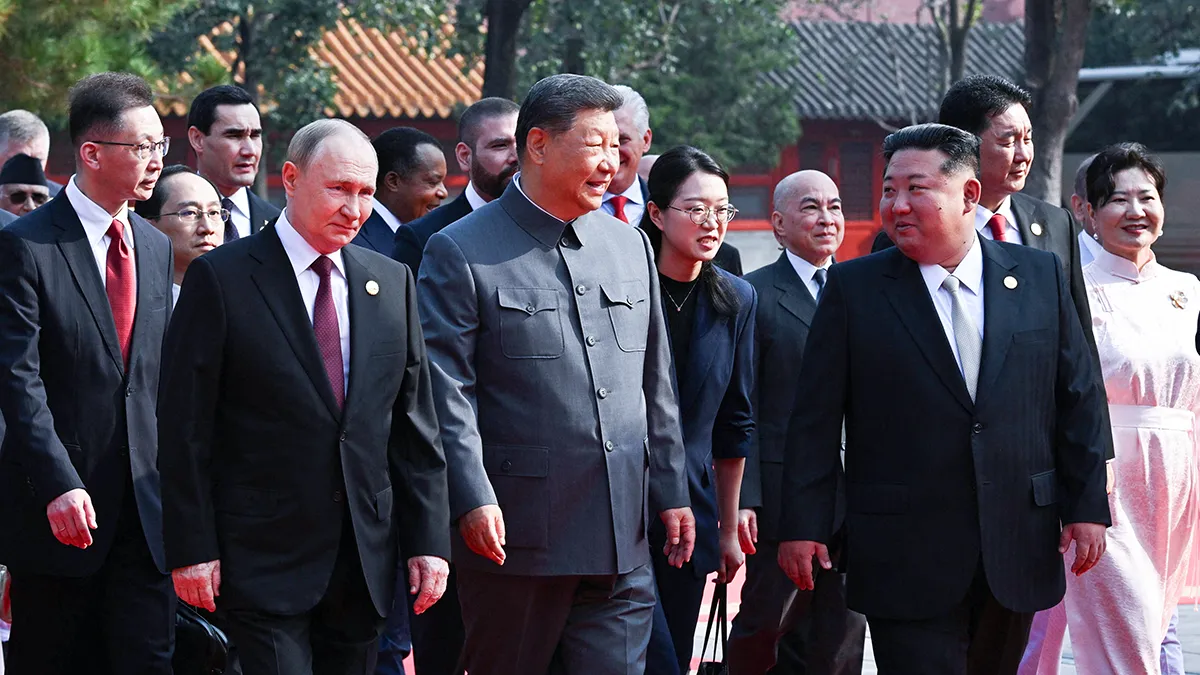
In this context, Russia's announcement of the capture of Pokrovsk, a key logistics hub in Donbas, and Vovchansk, in the Kharkiv region, fits into this logic of attrition warfare. Military commanders have informed Putin of these alleged successes, while Kyiv insists that urban fighting is still ongoing.
At the same time, Zelensky is meeting with Emmanuel Macron in Paris to seek European support at a critical moment, while US envoy Steve Witkoff is preparing to travel to Moscow to discuss the peace plan promoted by Washington.
Implications:
Russia is trying to come to the table with as much territory under its control as possible, in order to turn the negotiations into a division of spoils. It is the old Soviet tactic with a modern twist: advance as far as possible on the ground, then freeze the situation with an agreement that legitimises the fait accompli.
The concern is twofold: that Moscow will present Pokrovsk and Vovchansk as proof that ‘the West has already lost’; and that some in Washington and Europe will be tempted to accept a kind of ‘Koreanisation’ of the conflict: a dividing line, ambiguous guarantees and time for international attention to shift elsewhere.
Our criticism of Trump here must be precise, not inflammatory: it is legitimate for him to seek an end to the war; what he cannot do is force Ukraine to accept territorial amputations or a drastic reduction in its armed forces in exchange for a precarious peace. Any attempt to do so would be a moral and strategic mistake.

Minnesota: possible channel for public funds to Al Shabab and the disaster of identity radicalism
Facts:
In Minnesota, a federal investigation has been opened into a social programme fraud ring that has already become the biggest food aid corruption scandal in the state's history.
Now, an investigation published by the think tank City Journal and expanded upon by various conservative media outlets suggests that some of the embezzled money may have ended up, directly or indirectly, in the hands of networks associated with Al Shabab, the Somali branch of Al Qaeda. Republican lawmakers have formally requested a thorough federal investigation, and the Treasury Department has announced that it will examine whether funds from housing programmes and other services have been used as a conduit to structures linked to terrorism.
All this is happening in the state that is, symbolically, the political fiefdom of Ilhan Omar, an icon of the radical wing of the Democratic Party, whose rhetoric has been characterised by aggressive identity victimhood, the demonisation of almost all security policies as ‘Islamophobic’ and a notorious hostility towards Israel and classic US counter-terrorism policy.
Implications:
If it is confirmed that taxpayer funds have ended up in the hands of a jihadist organisation, we would be facing a monumental failure of the state and its political class. And part of that responsibility is political, though not criminal:
- A climate has been created in which any attempt to apply rigorous controls to programmes affecting certain communities is automatically branded as racist.
- The message has been sent that oversight is suspect and that identity politics takes precedence over national security.
The result is devastating: Al Shabab may have benefited from the weakness of a system that was afraid to confront radicalism for fear of being accused of discrimination.
Our position is clear: Ilhan Omar and the radical wing of the Democratic Party represent an irresponsible drift that disarms the state in the face of Islamist extremism. It is not a question of stigmatising entire communities, but of remembering the obvious: terrorism infiltrates precisely where ideology prevents realistic controls.
Europe would do well to view this case as a warning mirror: the same patterns are being seen in certain neighbourhoods of Paris, Brussels, London and Stockholm.
🚨 BREAKING: ABSOLUTE INSANITY… AL-SHABAB – THE SOMALIAN TERROR GROUP – JUST ISSUED A PRESS RELEASE DEFENDING MINNESOTA SOMALIANS AGAINST TRUMP
— Dr. Vuu (@ProfGeesinimo) November 29, 2025
Dated Nov 27, 2025: “We categorically reject these baseless accusations… aimed at maligning the entire Somalian community.”
They… pic.twitter.com/tkZvi06InI
Honduras: technical tie between conservatives and strategic pardon for Juan Orlando Hernández
Facts:
In the Honduran general election, with just over half of the votes counted, the provisional results show a technical tie between the two conservative candidates:
- Nasry Asfura, openly backed by Donald Trump, with around 41%.
- Salvador Nasralla, slightly behind, with around 39%.
Left-wing candidate Rixi Moncada, linked to former president Xiomara Castro and the Bolivarian sphere, is in third place, out of the second round.
At the same time, the announcement that Trump will grant a pardon to former President Juan Orlando Hernández (JOH) has been interpreted as part of a strategy to obtain key information about the Central American drug trafficker's cooperation with the Maduro regime and the Cartel de los Soles.
Implications:
The first thing that must be said bluntly is that we are not dealing with a ‘hijacked’ democracy, but with the ferocity of a radical left that refuses to accept defeat. The immediate reaction of sectors linked to Moncada has been to insinuate fraud, although the results reflect a majority preference for candidates presented as a bulwark against the Bolivarian model.
As for the pardon granted to JOH, this is not a moral absolution, but a political decision based on the strategic value of the information he can provide. If his statements make it possible to dismantle part of the network of collaboration between Central American cartels and the Chavista leadership, the geopolitical impact will be enormous.
In this context, Trump's intervention in openly supporting Asfura is perfectly legitimate. Leaders around the world signal their preferences in elections in allied countries; only when a hard-line US president does so against drug traffickers does the usual wave of selective outrage arise.
Honduras has become a crucial chessboard: either it consolidates a government determined to cooperate seriously with the United States against drug trafficking, or it slips into the orbit of regimes that have made drug trafficking a way of life for the state.
La narcoizquierda fue derrotada en Honduras. El chavismo no pudo ni meter las manos! Su candidata quedó en un lejano 3er lugar.
— México Libertario 🐍 (@Mex_Libertario) December 1, 2025
Los hondureños entendieron antes que mexicanos que sacar a la izquierda del poder es el requisito para hacer países libres, prósperos y democráticos. pic.twitter.com/SqcaWIUgB6
National Security Council and attacks on drug-trafficking boats: legality, legitimacy and Maduro's mask
Facts:
In Washington, the National Security Council has discussed the next phase of the campaign against drug trafficking from Venezuelan ports and the Caribbean. It is part of a strategy that has already destroyed more than twenty suspicious vessels since September, with a death toll of at least dozens.
The White House maintains that these attacks are part of a legitimate defence operation against a direct threat to US security, and has even defended so-called ‘second strikes’ on vessels that had already been neutralised but continued to pose a risk.
The Maduro regime, as expected, denounces a ‘massacre of civilians’ and presents the narco-boats as innocent vessels, while trying to stir up fear of a US invasion to rally its base and divert attention from the true nature of its regime: a mafia and narco-terrorist organisation.
Implications:
There is no room for neutrality here:
- Drug boats are not ‘fishermen’ or ‘defenseless civilians.’ They are instruments of criminal networks associated with the Cartel of the Suns and other groups that have turned Venezuela into a narco-state.
- The attacks are part of a policy of armed countermeasures against organisations that send poison to the streets of the United States and Europe.
What is striking is the reaction of certain European sectors, quick to condemn these operations but strangely silent when, for years, other administrations carried out selective drone strikes in sovereign countries. This double standard is morally untenable.
Our position is unequivocal: we support the hard-line policy against drug boats and consider the multiple pressure against Maduro's regime to be perfectly legitimate, provided that the basic principles of international humanitarian law are respected.
What is not acceptable is Maduro's attempt to present himself as a victim when, in reality, his regime acts as an organised crime syndicate with a flag and a seat at the UN.
Potential escalation in Venezuela: military build-up and the doctrine of total deterrence
Facts:
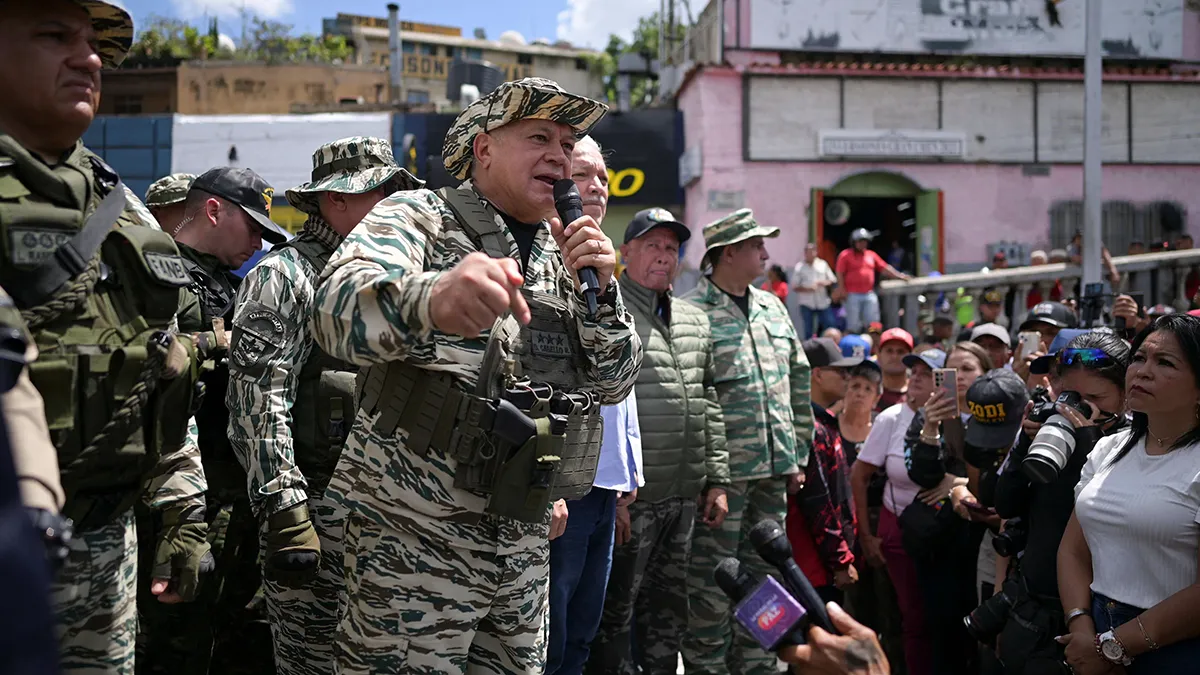
While defending the attacks on drug smuggling boats, the Trump administration is overseeing a military build-up in the Caribbean and in the vicinity of Venezuela: naval presence, reinforced air capacity and the deployment of intelligence and surveillance resources.
Various leaks and statements by the president himself suggest that ‘all options are on the table,’ including limited operations on Venezuelan territory targeting critical drug trafficking infrastructure. Trump has even spoken of the possibility of action ‘very soon’ against the logistical bases of cartels operating under Chavismo's protection.
Implications:
A ground operation, even if limited and targeted, would represent a qualitative leap in the confrontation with the Maduro regime. It would involve:
- The risk of confrontation with regular Venezuelan forces and armed militias.
- A possible asymmetric reaction against US and European interests in the region.
- A strong impact on energy markets if oil infrastructure is affected.
However, it must also be said what many are silent about: passivity in the face of a narco-state of this size is even more dangerous in the long term. Venezuela has been allowed to become a sanctuary for:
- Latin American cartels.
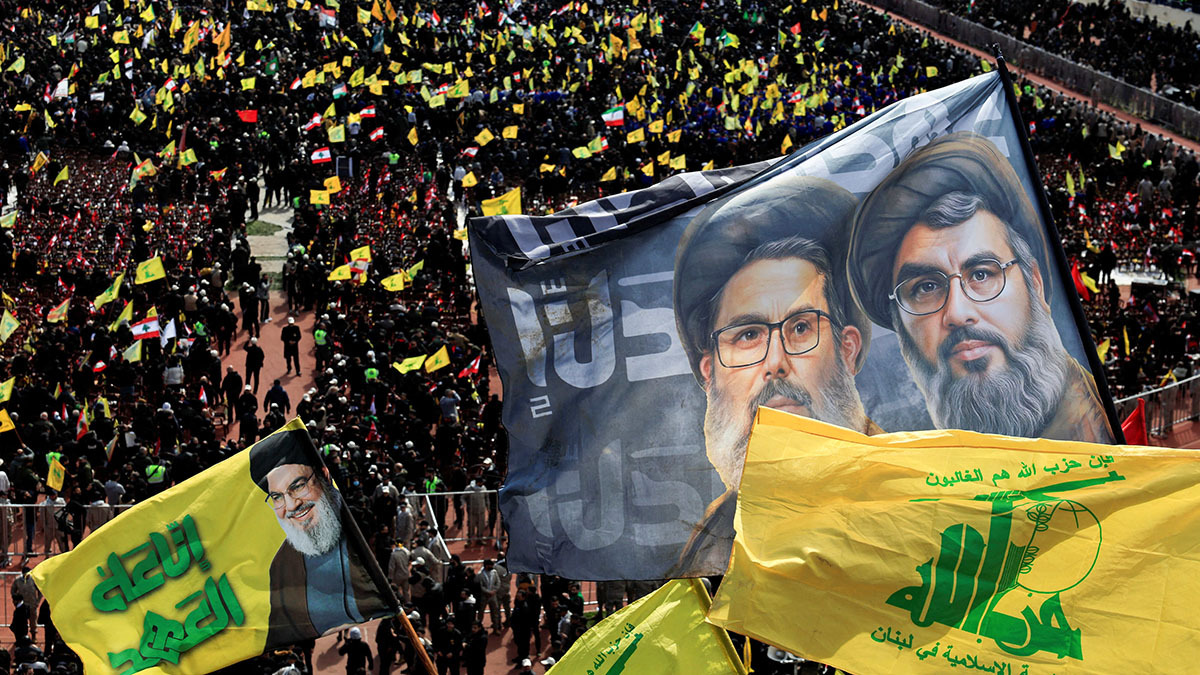
- Groups affiliated with Hezbollah.
- Money laundering networks with ramifications on three continents.
Trump, with all his rhetorical excesses, has understood something essential: the threat of the Venezuelan narco-state cannot be resolved with statements, but with a combination of diplomatic pressure, economic suffocation and credible military deterrence. Our criticism, if anything, should focus on ensuring that any action respects proportionality and avoids mistakes that could be exploited for propaganda purposes. But the bottom line is clear: it must be done.
Expiring patents and obesity drugs: a health and economic time bomb
Facts:
Parallel to this geopolitical turmoil, a silent but colossal transformation is taking place in the field of health:
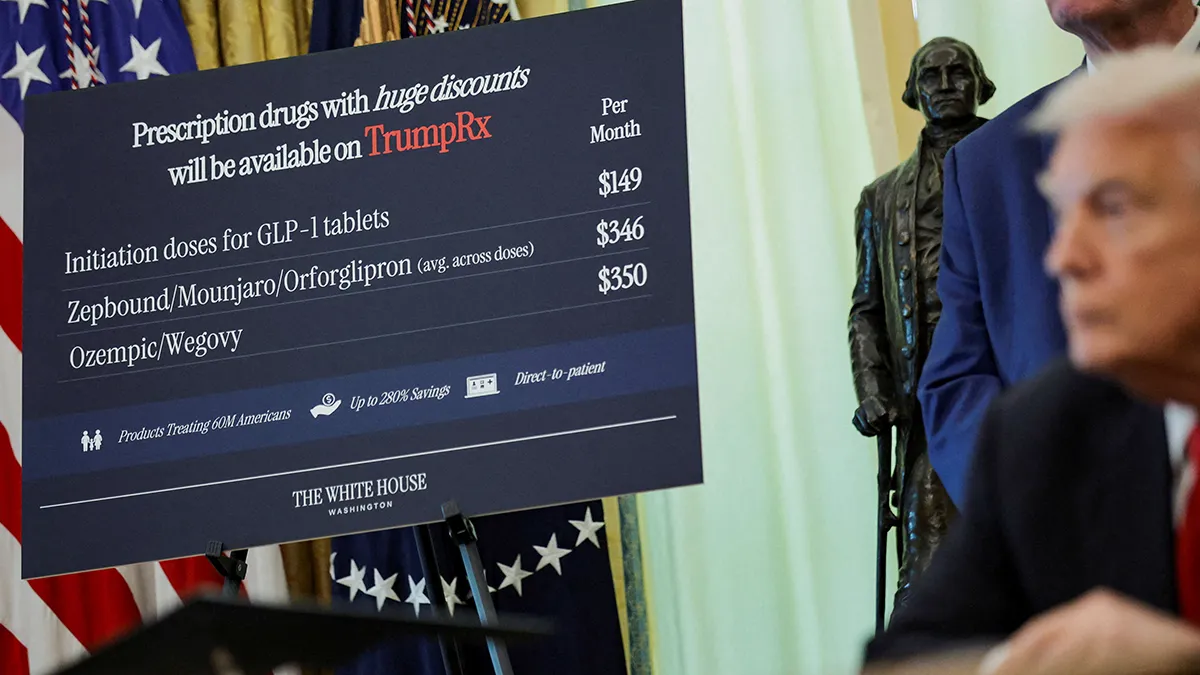
- The WHO has published guidelines for the first time supporting the use of GLP-1-based therapies to treat obesity in adults with a BMI over 30, always as part of a comprehensive approach involving diet and exercise.
- Semaglutide, the active ingredient in Ozempic and Wegovy, is beginning to lose patent protection in markets such as China and India from 2026, while in Europe and the United States exclusivity extends to around 2031-2032.
- Tirzepatide, the basis of Mounjaro and Zepbound, retains strong patents until 2036 and beyond in several jurisdictions, although a race to develop competitors and generics is already anticipated when its ‘patent cliff’ arrives.
These molecules, initially designed for type 2 diabetes, have become global bestsellers, capable of causing weight loss of 15-22% in clinical trials.
Implications:
The geopolitical and socio-economic consequences are enormous:
If prices fall substantially as they lose exclusivity and generics or biosimilars enter the scene, healthcare systems will be able to finance treatments on a larger scale that are currently prohibitive for most people. This could translate into:
- Fewer cases of type 2 diabetes.
- Fewer heart diseases and cardiovascular accidents.
- Lower hospital expenditure in the medium and long term.
- Risk of ‘total medicalisation’ of the problem
The obvious danger is that society will adopt a ‘quick fix’ mentality and give up on addressing the structural causes:
- Ultra-processed diets.
- Sedentary lifestyles.
- Urban planning that is hostile to active living.
The WHO has rightly pointed out that these drugs are not a magic wand, but a tool that must be integrated into a comprehensive health strategy.
Industrial and technological battle:
European pharmaceutical companies have lost ground to giants such as Novo Nordisk and Eli Lilly. The loss of exclusivity will offer an opportunity for generic manufacturers, especially in Asia, to break into a market worth hundreds of billions of dollars.
Political dimension:
The decision on how much, how and to whom to finance these drugs will not only be technical, but deeply political. There is a real risk of creating new gaps in inequality: mass access for elites and the upper middle classes, limited access for the most vulnerable.
In short, we are facing a change that will affect the economy, demographics and health policy of the entire developed world. The question is not whether these drugs will become widespread, but under what conditions and under what rules.
France promises ‘full support’ to Ukraine: the battle for European centrality
Facts:
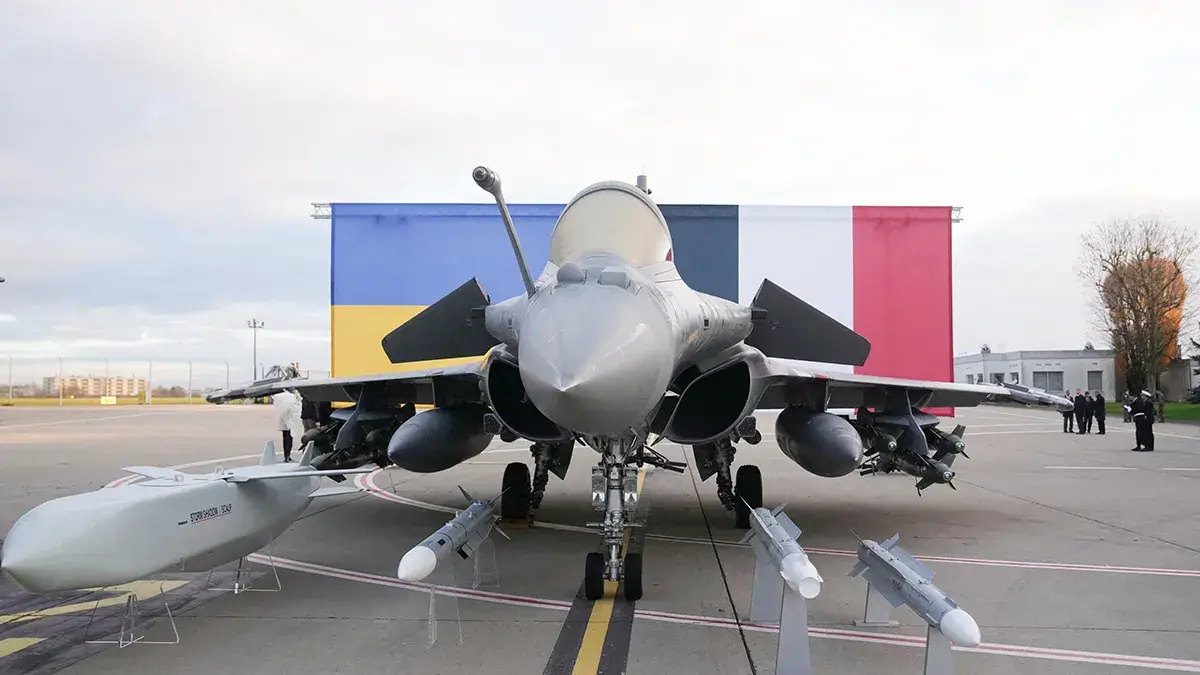
In Paris, Emmanuel Macron and Volodymyr Zelensky have once again demonstrated France's commitment to the Ukrainian cause. The French president has insisted that ‘peace must be serious, respectful of international law and sustainable’, and has stressed that any agreement must have Kiev's consent and guarantee its long-term security.
France, together with the United Kingdom, is promoting the so-called ‘Coalition of the Willing’, which aims both to increase military support and, in due course, to set up a Multinational Force - Ukraine with stabilisation functions following a possible agreement.
Implications:
Macron seeks to rescue France's role as a balancing power in Europe, but he has to deal with several tensions:
- The perception in Eastern Europe that Paris has been ambiguous too many times.
- The fear of some partners that French ‘strategic autonomy’ will become a euphemism for distancing itself from the United States.
- The suspicion that, despite the tough rhetoric, Europe remains completely dependent on the US umbrella.
However, this time there is an important difference: France, Germany, the United Kingdom and other partners have made it clear that borders cannot be changed by force and that any peace that legitimises Russian aggression is unacceptable.
If that line is maintained, Europe can still emerge from this crisis with some dignity and the possibility of rebuilding its own strategic role. If it is diluted, the message to Moscow and other authoritarian powers will be devastating.
The 100 km traffic jam in Siberia: the real Russia under the snow
Facts:
While Putin presents himself as the master of the geopolitical chessboard, the real Russia has once again been exposed by a phenomenon that repeats itself almost every winter: a colossal traffic jam on one of its major arteries.
On the Baikal motorway, part of the Trans-Siberian axis, thousands of vehicles have been stuck for hours and, in some cases, days, in a queue that has stretched for up to 100 km, with temperatures close to -30 °C. The authorities acknowledge that there were coordination problems, accidents due to violations of basic rules and families with children who were beginning to run out of fuel, water and food.
Implications:
The image is powerful and symbolic: while the Kremlin talks of ‘great power’ and dreams of revived empires, its state is unable to guarantee basic services to its population on a strategic artery.
This is not an isolated accident. It is the result of:
- Decades of corruption in infrastructure.
- Chronic disinvestment in public services.
- An absolute priority for military spending over any other consideration.
For the Russian population, these episodes fuel a diffuse unease: the feeling that the state only appears as a repressive apparatus or propaganda machine, but not as a guarantor of well-being. We will not see an immediate ‘Russian spring’, but we will see a slow erosion of the regime's internal legitimacy, especially if the war in Ukraine is increasingly perceived as a black hole for resources.
Traffic worsened after several truckers violated road rules, causing accidents that further blocked the highway, officials said.https://t.co/1ZdfGjYXhJ
— The Moscow Times (@MoscowTimes) December 1, 2025
Ukraine, corruption and institutional resilience: cleaning house in the midst of war
Facts:
While fighting on the front lines and negotiating with its allies, Ukraine is also attempting to do what has been demanded of it for years and what many believed it would never do: clean up its own system.
In recent months, corruption scandals have rocked the political and military elites, forcing high-level resignations and investigations that would have been blocked in the past. Zelensky has had to balance the need to present an image of institutional cleanliness to his allies with the risk of destabilising a political structure under existential pressure.
Implications:
Paradoxically, these scandals are also proof that Ukraine is trying to break with the post-Soviet pattern. This is not a perfect country, far from it; it is a country that, in the midst of war, dares to touch untouchable interests.
For the European Union and the United States, this should be an argument for maintaining support, not an excuse for withdrawing it. If Ukraine wins the war but loses the battle against corruption, it will be a wounded and fragile state. If it manages to advance on both fronts, it will become an uncomfortable example for many neighbours, starting with Russia itself.
Media rack
Anglosphere (NYT, Washington Post, AP, Reuters, The Economist, CBS, PBS)
They give extensive coverage to the capture of Pokrovsk and Vovchansk, highlighting the seriousness of the military situation and the delicate balance of the negotiations led by Washington. In the Minnesota scandal, the press closest to the Democratic power group is moving slowly, while conservative media are focusing on the role of Ilhan Omar and the rise of identity radicalism that hinders the fight against terrorism.
European press (Le Monde, FAZ, Die Welt, Corriere, El País, FT)
They insist on the need for a ‘just’ peace in Ukraine, but there are internal tensions between those who want to keep up the pressure on Moscow and those who long for a quick agreement, even at the expense of Kiev. Relatively timid coverage of the Minnesota scandal and very divided on the attacks on drug smugglers.
Latin American media (Reforma, El Mercurio, Clarín, Honduran media)
They focus on the Honduran elections, the emergence of the Trump factor in the campaign and the debate over the pardon of Juan Orlando Hernández. In Venezuela, the line is more ambiguous: the US military build-up is described with concern, but more and more media outlets are talking about Chavismo for what it is, a runaway narco-state.
Middle Eastern press (Al Jazeera, Al Arabiya, Arab News, Asharq Al Awsat)
They observe with concern the possible destabilisation of energy markets if the Venezuelan crisis escalates, while closely following the negotiations surrounding Ukraine, more for their global repercussions than out of empathy with Kiev.
Russian media (TASS, RT, aligned press)
They present Pokrovsk and Vovchansk as a historic victory, highlight the ‘confusion’ of the West and downplay the chaos on Siberian roads. The Baikal traffic jam is barely mentioned, and when it is, it is to boast about the authorities' response, despite evidence of collapse.
Ukrainian media (Ukrainska Pravda, Kyiv Independent)
They combine a serious and combative tone: they denounce Russian aggression, warn of the risk of a bad agreement and, at the same time, report openly on internal corruption scandals as proof that the system, although imperfect, is alive.