Gustavo de Arístegui: Geopolitical Analysis 7 January

In the last 24 hours, geopolitics has entered one of those stretches of road without a shoulder where reality surpasses rhetoric and rhetoric, in turn, attempts to rewrite reality. The epicentre remains Venezuela, but the seismic waves are already reaching the Arctic, Atlantic cohesion, energy markets and the Ukrainian chessboard, just as Europe is trying to secure a possible ceasefire with serious guarantees and not with worthless pieces of paper.
The capture of Nicolás Maduro, his court appearance in New York and the dispute over his immunity are not an isolated Latin American episode: they are a test case of how much the ‘rule-based order’ is worth in 2026 when a superpower decides to act as if the Western Hemisphere were its own chessboard. At the same time, they are also a historic opportunity—if handled with a cool head—to dismantle a criminal structure entrenched in a state and open up a transition that is not merely cosmetic.
In parallel, Donald Trump is raising the bar—Greenland included—with a diplomacy of maximum pressure that mixes negotiation and threats. That may produce results, yes. But it can also break alliances or, worse, turn them into instruments of fear. And fear, once it takes hold, takes its toll.

Top stories from the last 24 hours
A) Facts
1) Arrest and trial of Nicolás Maduro following the US operation.
Maduro appeared before a federal court in Manhattan, pleaded not guilty, and his defence is preparing a legal offensive: it questions the arrest as ‘abduction’ (kidnapping) and raises the bigger issue of head-of-state immunity.
2) The question of legitimacy: Washington insists that Maduro was not president, which puts pressure on his immunity.
The United States argues that, following a disputed election in 2018, Maduro should not be treated as the legitimate president; this argument is significant because it erodes the umbrella of immunity. At the same time, it should be remembered that more than 50 countries did not recognise him as head of state, reinforcing the interpretation of ‘de facto presidency’ (effective power without full legitimacy).
3) The ‘Cartel de los Soles’ returns to centre stage: state, corruption and organised crime.
Washington maintains that the ‘Cartel of the Suns’ is a network embedded in the Venezuelan elite; Reuters recalls that the United States has linked this network to Maduro and senior officials, although specialist analysts warn against simplification: rather than a ‘classic cartel’, it would be a system of corruption where the military and politicians profit from drug trafficking.
4) Formal designation as a Foreign Terrorist Organisation and its time frame.
The designation of the ‘Cartel de los Soles’ as a Foreign Terrorist Organisation takes effect, according to the official record, on 24 November 2025 (not 25 November). This detail is important because it sets the framework for sanctions and associated ‘material support’ offences.
5) Confirmation and debate on the charges: narco-terrorism, cocaine and the evidentiary problem.
The federal charges include narco-terrorism, conspiracy and drug offences, and the trial is expected to be a complex battle: experts cited by Reuters point out that the prosecution must link Maduro to specific acts within an alleged decades-long conspiracy, in addition to the battle over extraterritorial jurisdiction (long-arm jurisdiction).
6) Venezuelan transition: Delcy Rodríguez takes office as interim president, but real power remains in the hands of the Chavista bloc.
Reuters reports that Delcy Rodríguez was sworn in as interim president, with the Socialist Party maintaining institutional control. Reuters itself describes how Washington seems to be opting, for now, for pragmatic stabilisation with the regime's ‘senior allies’ (hard core), while the opposition is left ‘in the waiting room’.
7) Reactions: jubilation among the Venezuelan diaspora, outrage among Caracas' allies and criticism from the radical left in the United States.
The Venezuelan diaspora, numbering close to 7.9 million refugees and migrants according to UNHCR, appears to be a major emotional and political player; Reuters reports celebrations abroad. China denounces ‘bullying’ and Russia also protests; in the United States, progressive figures and organisations such as DSA condemn the operation, and AOC describes it in openly critical terms, reviving the old reflex of ‘imperialism’ as a total explanation.
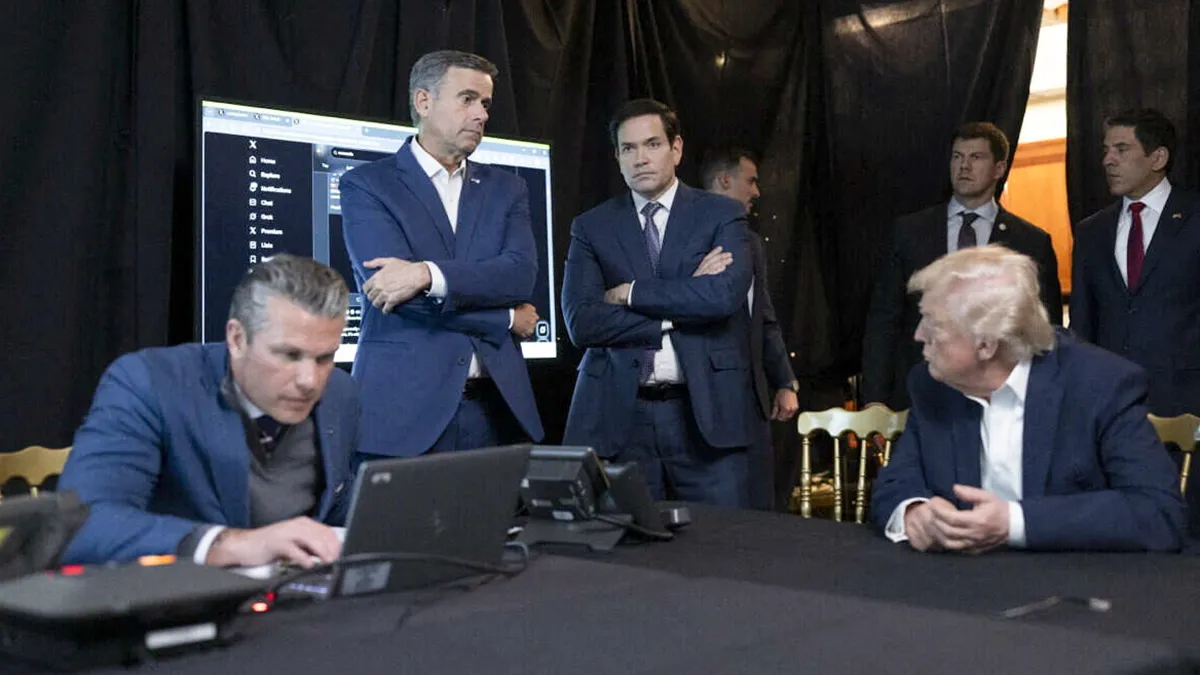
8) Trump raises the tone against Gustavo Petro and Colombia prepares for a scenario of extreme pressure.
Reuters reports that Trump threatened Colombia with military action similar to that taken against Venezuela, and the Colombian foreign minister stated that the armed forces must defend sovereignty in the event of a hypothetical aggression. This is a qualitative leap in regional risk.
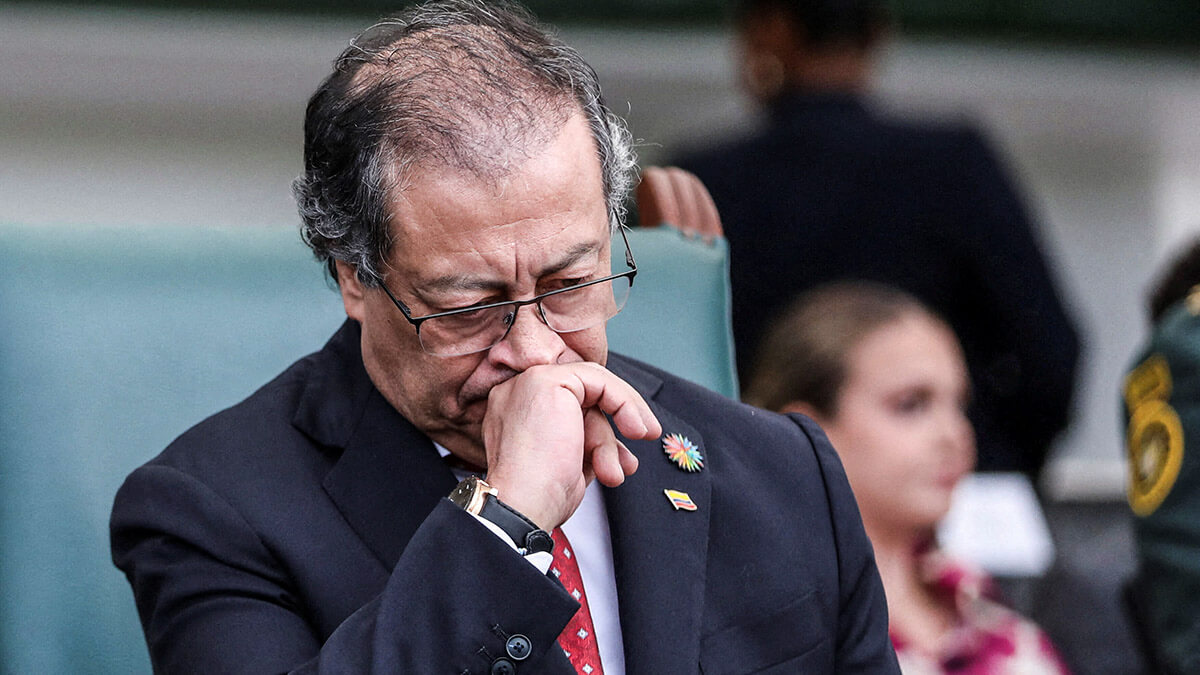
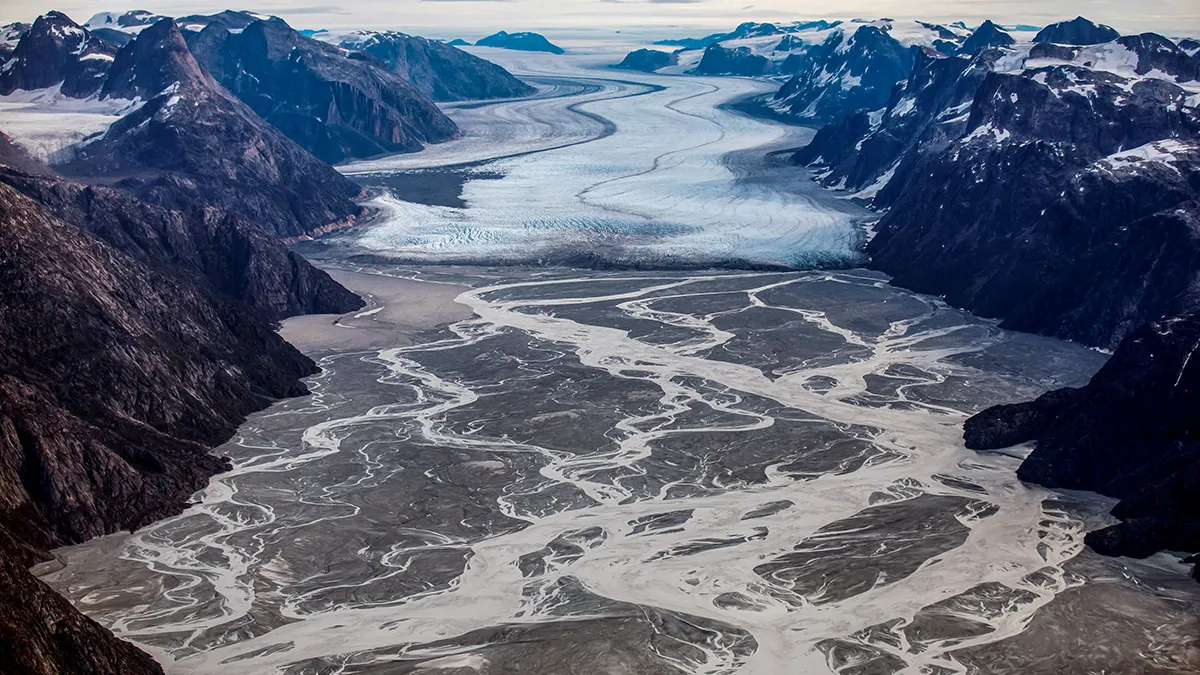
9) Trump reopens the Greenland front: ‘military option’ and political clash within NATO.
The White House makes it clear that using the military ‘is always an option’ to ‘acquire’ Greenland, while, according to the Washington Post, Rubio has privately explained that the escalating rhetoric is intended to pressure Denmark into selling. Europe reacts by appealing to the inviolability of borders, and Canada announces concrete measures (consulate in Nuuk).
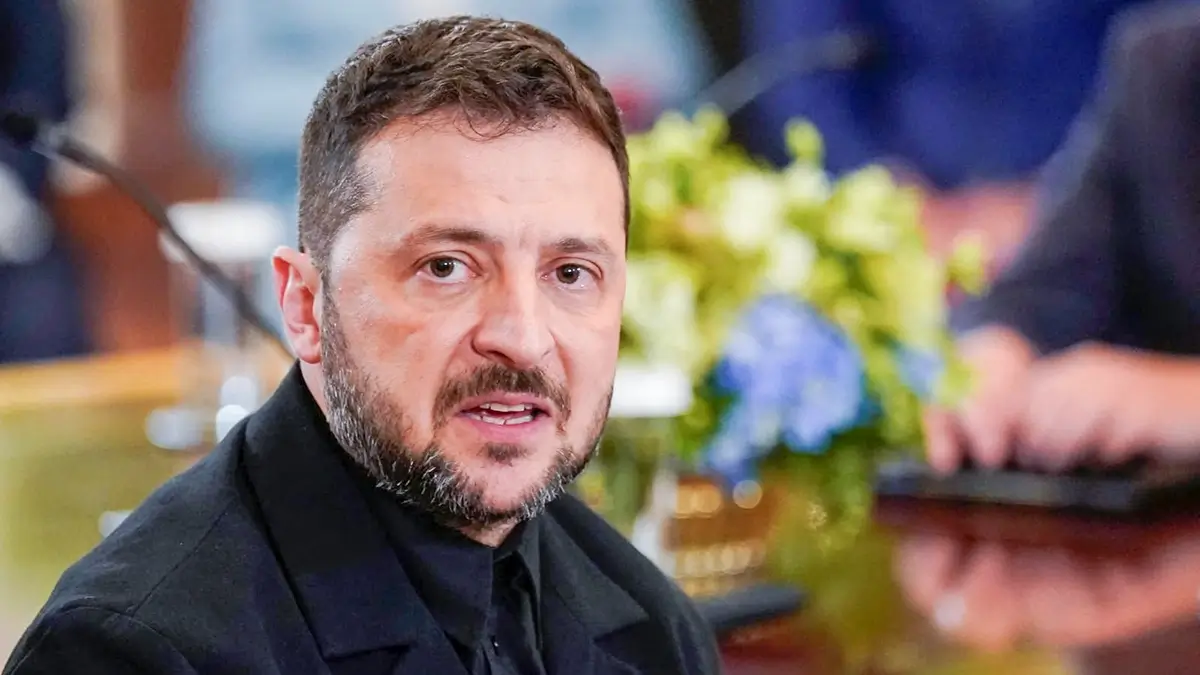
10) Paris summit on Ukraine: US backs security guarantees and considers European deployment after ceasefire.
In Paris, the ‘coalition of the willing’ agrees to move towards legally binding guarantees; the US participates with Witkoff and Kushner, and a US monitoring and verification mechanism without troops on the ground is taking shape. France and the UK sign a declaration of intent to deploy multinational forces after the ceasefire, and Macron speaks of thousands of French soldiers
B) Implications
1) Venezuela: the blow to the top is not enough; the key is to dismantle the criminal architecture.
Maduro's capture may be the beginning of the end of the regime, or it may be the prologue to a mutation: the same system with a different face. If the security, intelligence and financial structure remains intact, drug trafficking will not disappear; it will simply change hands. True success is not a mug shot in Manhattan, but the institutional decontamination of Caracas.
2) Immunity and recognition: a precedent that others will use tomorrow against the West.
If a US court succeeds in upholding the argument that Maduro does not have immunity because he is not recognised as the legitimate president, a legal and political toolbox will be opened. It can be used to prosecute tyrants, yes. But it can also be exploited by revisionist powers to justify arrests, renditions or attacks in the name of their own ‘legitimacy’. And then the bar is no longer moral, but pure force.
3) ‘Cartel of the Suns’: beware of the slogan; the operative thing is to follow the money.
Turning the diagnosis into a slogan (‘the state is the cartel’) may be useful in the political battle, but in the real battle—that of prosecutors, financial units and international cooperation—the decisive factor is to follow routes, accounts, front men and shell companies. The coverage itself reminds us that there is analytical debate about the degree of centralised control. This requires precision: without precision there is no conviction, and without conviction there is no justice.

4) The FTO label: it toughens sanctions, but does not replace a transition strategy.
Designation as an FTO (Foreign Terrorist Organisation) increases risks for intermediaries, logistics networks and financiers. But it does not, on its own, build a functional state.
If the ‘day after’ boils down to handing out concessions and controlling oil, the transition will be flawed from the outset, and Venezuelans will pay for it with another decade of frustration.
5) The charges against Maduro: justice must prevail without shortcuts.
If the prosecution fails to provide solid proof of conspiracy, the narrative of ‘kidnapping’ will become fuel for Caracas, Havana, Tehran, Moscow and Beijing. Western credibility is at stake in the form of procedural guarantees, evidence, transparency and sentencing. The end does not justify any means, especially when it comes to defending liberal democracy.
6) Transition: three plausible phases and one clear risk.
First phase: stabilisation and territorial control, avoiding a power vacuum. Second phase: internal negotiation and external pressure for an electoral calendar with guarantees and the release of political prisoners. Third phase: economic reconstruction, return of capital and reinstitutionalisation of the state. The risk is obvious: that phase one will drag on and become an ‘interim’ that does not transition, but rather administers.
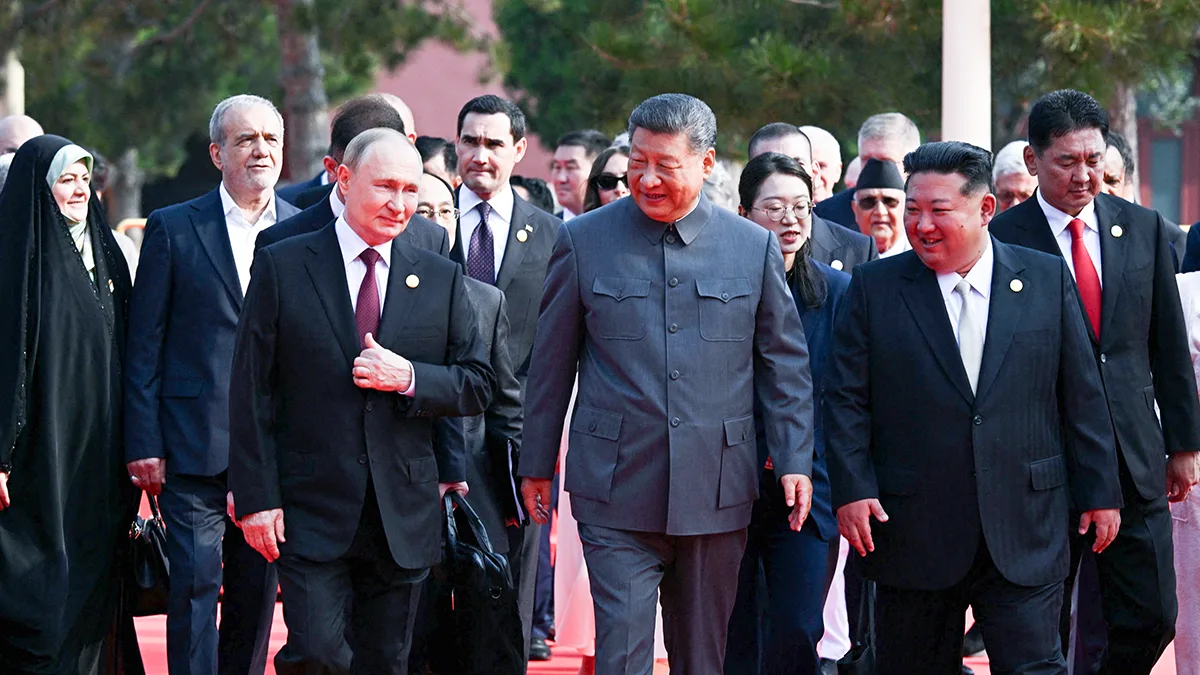
7) Reactions: the China-Russia-Iran axis is attempting to turn Venezuela into proof of US ‘imperialism’; the radical left is reflexively joining in.
Beijing denounces ‘bullying’ and emphasises sovereignty; Moscow protests and uses the case to point out double standards; Tehran finds a new narrative for its propaganda. In the West, part of the radical left reverts to automatism: if the US acts, then it is always looting. That mental framework is intellectually comfortable but politically irresponsible: it erases the crimes of a dictatorship and denies the criminal nature of its apparatus. At the same time, legal criticism of the operation is not ‘woke (identitarian)’; it can be a classic liberal warning about the limits of power.
8) Colombia: the risk is not only military; it is diplomatic, economic and internal security.
When a US president threatens military force, Colombia goes into strategic defence mode, but also exposes itself to investment crises, border tensions and the realignment of armed groups. Bogotá's priority should be to shield anti-drug cooperation without accepting blackmail, while not giving Petro the narrative of permanent victimisation. Firmness against drug traffickers is essential; geopolitical theatrics are a dangerous luxury.
9) Greenland: The Arctic is serious, the threat is grave, and NATO cannot afford a war of nerves.
Greenland has strategic value and critical resources, yes. But turning its acquisition into a goal of force fractures the principle of self-determination and dynamites trust among allies. NATO is a security alliance, not a market for territories. Pressuring Denmark may be negotiation; hinting at invasion is something else. And the mere noise is already a victory for Russia and China, who seek Atlantic division.
10) Ukraine: binding guarantees are the only way to ensure that a ceasefire is not a pause for Russia to rearm.
The Paris summit points in the right direction: legally binding guarantees, deterrence, verification and a multinational force after a ceasefire. The fact that the US is coming forward — albeit with language that is ‘not explicitly endorsed’ in the communiqué — is significant. Russia, which has already rejected NATO troops inside Ukraine, will have incentives to sabotage any serious architecture. The European Union, if it wants to be geopolitically mature, must support Ukraine with money, industry and political will, without complexes.
Media Rack
Comparative reading: who sets the agenda and how they frame it
Agencies (backbone of international reporting)
- Reuters focuses on the legal clash (immunity), the discussion at the UN, the transition controlled by Chavismo, the energy impact and China's reaction to Trump's oil plan, as well as the escalation with Colombia and the Greenland vector.
- AP emphasises the political-diplomatic angle in the Arctic: Canada moves and opens a consulate in Nuuk as a sign of support for Danish/Greenlandic sovereignty.
- AFP / DPA: in this window, I have not found any complete verifiable pieces openly available from AFP; from DPA there is syndication in German media (newsticker) on Rodríguez's swearing-in.
United States (national security, hard power and domestic politics)
- The Washington Post highlights the crux of the crisis: the White House floats military option in Greenland, and European diplomacy sees it as an existential threat to NATO.
- WSJ is quoted/referenced by other media outlets and by Reuters in relation to Russian movements around oil tankers; full access is limited by a paywall, but the central theme is maritime interdiction and the standoff between escorts.
- The Financial Times focuses on the financial and energy dimensions: Venezuelan oil as a geo-economic piece and market noise, including Greenland in its ‘FirstFT’.
- POLITICO / The Hill / USA Today / CNBC / CBS / Newsweek / The Daily Beast / Washington Times: no direct open verification within this execution; the dominant narrative observed in the US ecosystem pivots between legality, political cost and precedents. (Where verifiable access has been available, primary sources are cited above).
- NYT / CNN / BBC: access not verifiable here due to technical restrictions (access blocked), so I do not attribute specific headlines.
United Kingdom (ideological criticism and energy economics)
- The Guardian mixes minute-by-minute coverage and context: Venezuela, internal reactions in the US, and the effect on crude oil, with critical vocabulary about ‘oil grab’.
- The Times / The Telegraph / The Economist: no direct open verification in this window (paywall or no accessible syndication).
France (legality, method, and suspicion of imperial drift)
- Le Monde frames the operation as an ‘enlèvement (kidnapping)’ and heightens the debate on legality and method; it also adds an important nuance: it points out that in the recent indictment, the US would no longer exactly formulate the charge of ‘cartel leader’ as it did years ago, which reinforces the idea that the case hinges on the accuracy of the evidence.
- LCI / BFM / France Info / Libération: no direct open verification of this execution.
Germany (debate on international law and the Russian mirror)
- Die Welt observes the reaction of the Russian media and the debate on ‘Völkerrecht (international law)’, with an emphasis on precedent and the narrative of power.
- DIE ZEIT provides reconstruction and critical reflection, although some of the content is paywalled; the focus is on the ‘how’ of the operation and what it reveals about Trump.
- FAZ: access not verifiable here due to technical restrictions.
Italy and the Vatican (the moral question: a world without dictators, but with unchecked superpowers)
- Corriere della Sera emphasises the human and political aspects: the judicial moment, Maduro's speech and, above all, the fundamental question: is the world better off without Maduro if the method erodes boundaries? This is a useful approach because it forces us to think beyond the headline.
- L'Osservatore Romano: no direct open verification.
Other sections of its list (Russia, Asia, Middle East, Ukraine, Latin America)
In this exercise, I have not been able to verify openly — directly and with certainty — headlines from RT, TASS, WION, SCMP, China Daily, Kyiv Independent, Ukrinform, Haaretz, Al Jazeera/Al Arabiya, or the rest of the regional headlines listed, within the window and with traceable access. Where there is an official reaction and international narrative (China/Russia/UN), this is reflected through the agencies and primary sources already cited.
Editorial comment
A world without Nicolás Maduro at the helm is, quite simply, a better world. Not for romantic reasons, but for political hygiene: less impunity, less narco-economy, less state hijacked by criminal networks. However, the real test — the one that separates victory from botched work — is whether the fall of the man becomes the fall of the system, or whether the system reconfigures itself to survive.
Here, it is important to be clear. The radical American left—the one that turns any action by Washington into original sin and any ‘anti-imperialist’ tyranny into a lesser evil—is once again mistaken about the century and the map. Calling everything ‘hijacking’ without looking at the regime's history is not lucidity; it is moral laziness. And yet, it would also be a symmetrical mistake for the liberal world to celebrate the fact and despise the method: if you want to defend liberal democracy, you have to do so with law, evidence and guarantees, because force without form ends up looking too much like what it claims to be fighting.
In the same vein, the urge to “take” Greenland through pressure or threats is a bad idea at the worst possible time. Yes, the Arctic is strategic, and Greenland matters. But Atlanticism is not preached, it is practised, and it is practised by respecting allies, borders and self-determination. The opposite is not “realism”; it is opening a crack where Russia and China will become expert builders.
Meanwhile, Paris offers news that, when read carefully, is hopeful: Europe is trying to stop being a spectator in Ukraine, and the US—albeit with calculated ambiguity—is looking into the design of guarantees. If we want Ukraine to be not a pause in the war, but a defensible peace, we need deterrence, verification and binding commitments. There is no shortcut.