Gustavo de Arístegui: Geopolitical analysis of 11 November 2025


- The Western paradox and the pragmatic shift
- Washington: chronicle of a postponed crisis
- BBC: the cost of sectarianism and the death of trust
- Syria: the Damascus pact and the return of Realpolitik
- Bolivia: the pro-market shift and the battle for lithium
- EU: the ongoing failure of the migration consensus
- China: the double-edged sword of political control
- Ukraine: the transition to a structural conflict
- Markets: the vertigo of political uncertainty
- Final editorial analysis: the decline of the elites and the politics of the possible
The Western paradox and the pragmatic shift
11 November 2025 exposes a critical paradox that defines our time: while Western institutions, once the undisputed pillars of the global order, are consumed by a spectacle of self-destruction, or at the very least paralysis, the crudest Realpolitik is making its way onto the boards of the Middle East and Latin America.
We are witnessing a clash between internal decline and pragmatic imperatives. On the one hand, there is the governance deadlock, now happily resolved by the wisdom of nine moderate Democratic senators in the United States, with an administrative shutdown that highlights the growing inability of its elites to manage the common good. On the other, the severe blow to the credibility of the BBC, a media giant that has squandered a significant part of its capital of ‘neutrality’ by succumbing to ‘ideological sectarianism’ and activist manipulation.
These events are not isolated. They are symptoms of the same disease: extreme polarisation and factionalism that have replaced national interest and objectivity. Trust, the West's most valuable asset, is being eroded from within.
In contrast, and almost as a defensive reflex, realism is emerging. The ‘historic’ shift in Syria and the realignment in Bolivia are not decisions based on ideology. They are acts of pure pragmatism, presumably by a US administration that prefers tangible results to the supposedly moralising but sterile posturing so beloved of certain corridors of power in Brussels.
Today's analysis raises the central question: Can the West's geopolitical pragmatism abroad compensate for its institutional and moral emptying at home? Today suggests that the world will not wait for the West to resolve its identity crises. The urgency of the risks, threats and challenges does not allow for hesitation, which is Europe's speciality.
Washington: chronicle of a postponed crisis
Facts:
The bipartisan agreement reached in the US Senate is not a governance pact; it is a temporary truce and the chronicle of a postponed crisis. The ‘continuing resolution’ that funds the government until the end of January is a patch that only postpones fiscal collapse.
The key to the movement lies in the exposed fracture: eight ‘moderate’ Democrats (centrists from swing states) broke party discipline, exposing the fracture within the Democratic Party and the weakness of Chuck Schumer's leadership, whom they blame for a 40-day stalemate that ended in surrender.
Implications:
Donald Trump wins the battle of the narrative without giving an inch on the substance. He has shown that the Democratic power group is incapable of negotiating, even with itself. The narrative of ‘reopen now’ outweighed any issue that the sectors most resistant to the agreement considered non-negotiable. This is a victory for Trump's political communication strategy and his steadfastness.
The Democratic rift runs deeper than this shutdown. It reveals the unsustainable tension between the hard-left and radical wing and the moderates who face elections in competitive districts. Schumer is left as a hostage leader, weakened in the eyes of his own party and the executive.
The real battle (the debt ceiling, social spending, public health funding) moves to January. This is not a solution; it is the institutionalisation of ungovernability. The risk of a technical default or a downgrade of the sovereign credit rating is a shadow hanging over the US, with global markets held hostage to the partisan disputes of 100 short-sighted geopoliticians.

BBC: the cost of sectarianism and the death of trust
Facts:
The resignation of Tim Davie (chief executive) and Deborah Turness (head of news) is not due to a ‘mistake’, but to the culmination of an ideological drift. The broadcast of a documentary with misleading editing of a speech by Donald Trump is flagrant proof of an activist bias that has supplanted journalistic rigour. Trump's threat of a billion-dollar lawsuit, though theatrical, acts as a lethal catalyst.
Implications:
The Decline of an Institution: This is ‘The BBC's permanent sectarianism’ made manifest. The corporation has burned decades of global brand value by becoming a player in the ‘info-spectacularisation’ and polarisation it claimed to combat.
Model Crisis: This goes beyond the BBC. It is a crisis of the public broadcasting model (in the West). The renewal of its charter of principles in 2027, which guarantees its funding, is now in jeopardy, and it will be very difficult to rebuild its broken credibility. This may have serious consequences for its funding. This opens the door to a debate that the British power group wanted to avoid: the legitimacy of its compulsory funding.
Geopolitical Consequence: The BBC's loss of credibility is a strategic victory for state actors such as Russia and China, which saw the BBC as a serious and credible critic. The sectarianism of its leader has tarnished the reputation of the public broadcaster, which until a few years ago was considered the benchmark for public broadcasters due to its rigour and seriousness. Now they can dismiss any Western criticism of human rights or authoritarianism as ‘systemic bias’, and this time, they will have evidence provided by the BBC itself. This is more than just clumsiness; it is irresponsible and unforgivable incompetence.

Syria: the Damascus pact and the return of Realpolitik
Facts:
The meeting at the White House between the US president and the new Syrian leader, Ahmed al-Sharaa, redefines the Middle East chessboard. The partial and temporary lifting of the Caesar Act sanctions (an act of executive power) is exchanged for Syria's formal entry into the Global Coalition against ISIS and spearhead against Iran. A rapprochement between Israel and Syria is not ruled out, first through informal channels and then, perhaps, by participating in the Abraham Accords.
Implications:
This is the most disruptive move in the region in a decade. Damascus (under Sharaa, linked to Hayat-Tahrir al-Shams -HTS- and with the unconditional support of the Erdogan government and its Islamist AKP party in Turkey) is making a desperate pivot to escape the suffocation of its former patrons, Iran and Russia, and gain international legitimacy.
The Trump administration is ignoring moral criticism (the progressive press, such as The Guardian, speaks of ‘whitewashing’) in exchange for clear strategic objectives: 1) To remove Syria from Tehran's orbit, 2) To gain a partner in the fight against ISIS, and 3) Create a new security framework that reassures key allies such as Turkey and Israel (seeking a de-escalation zone in the Golan Heights).
The drawbacks are obvious: jihadists (ISIS itself is already trying to assassinate Sharaa), Iran and Russia (which are losing a strategic vassal), and part of the US Congress itself (which may try to block the lifting of sanctions). It is a high-risk gamble, but one with potentially huge rewards.
A Copernican shift, but not at all unexpected since two of the new protagonists in global and Middle Eastern geopolitics, Saudi Arabia and the UAE, backed the lifting of sanctions and committed to the reconstruction of Syria, incorporating the new regime into the club of decent nations and governments.
In addition to this, Sharaa is a sworn enemy of Iran (music to the ears of his interlocutors), DAEC-ISIS and even his former comrades in Al-Nusra, the Syrian branch of Al-Qaeda. Al Shaara must fulfil his commitment to protect and defend the minorities that make up Syria's rich and varied mosaic, especially Christians, Druze and members of the former ruling minority, the Alawites, not to mention the country's main minority, the Shiites, whom Iran will try to use as a bridgehead, as it has done throughout the region with Shiite minorities.
What a remarkable and historic day for peace! President Al Sharaa becomes the first Syrian president (ever) to visit the @WhiteHouse. 🇺🇸
— Yazan Abou-Ismail, MD - د. يزن أبواسماعيل (@DoctorYazanA) November 11, 2025
Thank you President Trump @POTUS, for a remarkably wise and forward-looking decision to support @SyPresidency’s pursuit of peace, prosperity,… pic.twitter.com/3PnOEDnroC
Bolivia: the pro-market shift and the battle for lithium
Facts:
The new Bolivian president, Rodrigo Paz Pereira, announces the full restoration of ambassadorial-level relations with the US, ending 17 years of rupture during the Morales/Arce era and 20 years of radical left-wing indigenous populism.
Implications:
The move symbolises the terminal erosion of ‘21st Century Socialism’ in the region. Bolivia, economically stifled, is desperately seeking pro-market pragmatism, multiplying its contacts with the IMF and the IDB. It is an unequivocal repudiation of Morales's disastrous legacy.
The obvious subtext of this agreement is lithium. The United States seeks to secure access to Bolivia's vast resources, competing directly with Chinese penetration and Russian influence in the strategic ‘Lithium Triangle.’
Paz Pereira's government is walking a tightrope. It needs pro-market reforms to attract investment and stabilise the economy, but these reforms (austerity, end of subsidies) will alienate the populist and indigenous grassroots, which could fuel social unrest and destabilisation and provide ammunition for the extremist and anti-Western indigenous left.

EU: the ongoing failure of the migration consensus
Facts:
Paris and Berlin are trying to speed up a common migration pact based on quota sharing and reinforced border controls. At the same time, Italy and Greece, on the front line, are calling for more flexible measures to ease the real pressure in the Mediterranean. There is no consensus.
Implications:
The migration debate exposes the fundamental fracture in the post-Lisbon EU. It is impossible to reconcile national sovereignty (the right to control borders) with free movement and mandatory quotas imposed by Brussels.
The ‘Franco-German axis’ no longer has the pulling power to impose its will on the rest of its partners. Fragmentation (with the rise of conservative-nationalist governments in Eastern and now Southern Europe) can be a powerful catalyst for paralysis. Brussels is structurally incapable of offering a ‘comprehensive’ (holistic) solution, only temporary fixes and more bureaucracy.

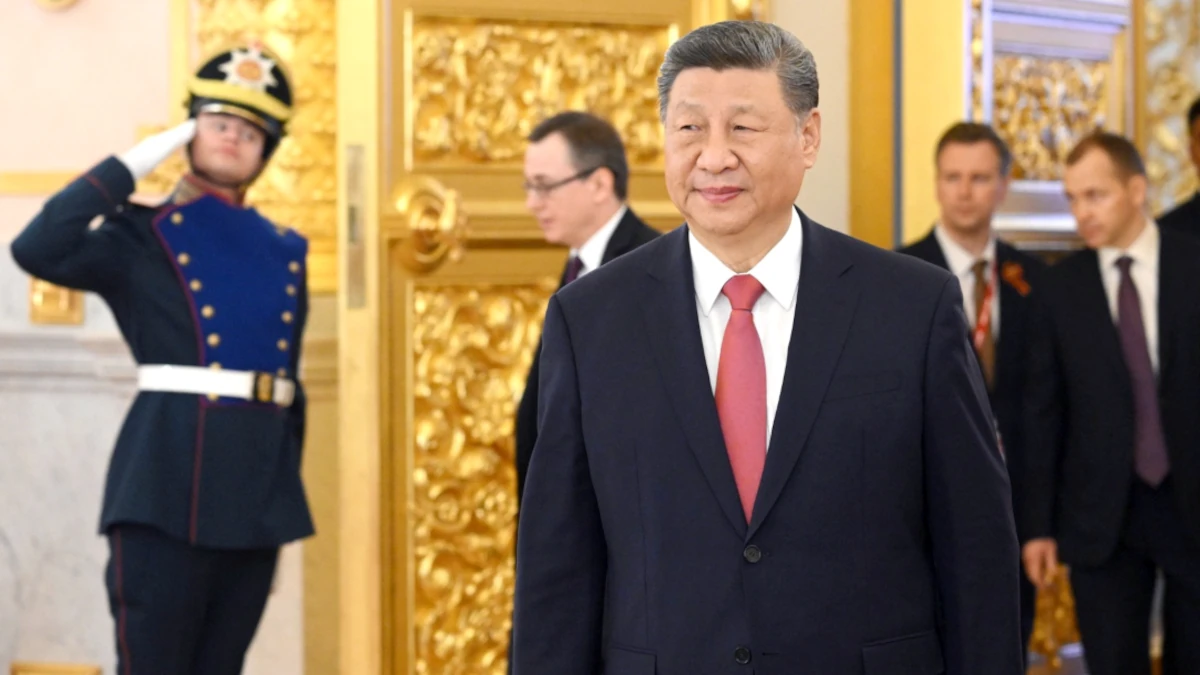
China: the double-edged sword of political control
Facts:
Beijing is unsettling markets with new regulations in the technology and financial sectors, tightening controls on capital transfers and, crucially, on data management.
Implications:
The Chinese Communist Party (CCP) is sending an unequivocal message to global capital: political stability and absolute Party control are above market efficiency or investor confidence. It's not volatility, it's discipline.
China is not abandoning capitalism; it is perfecting it as a tool of the state. They are willing to sacrifice short-term growth (stock market jitters) to ensure long-term control and, above all, technological self-sufficiency vis-à-vis the West.
Ukraine: the transition to a structural conflict
Facts:
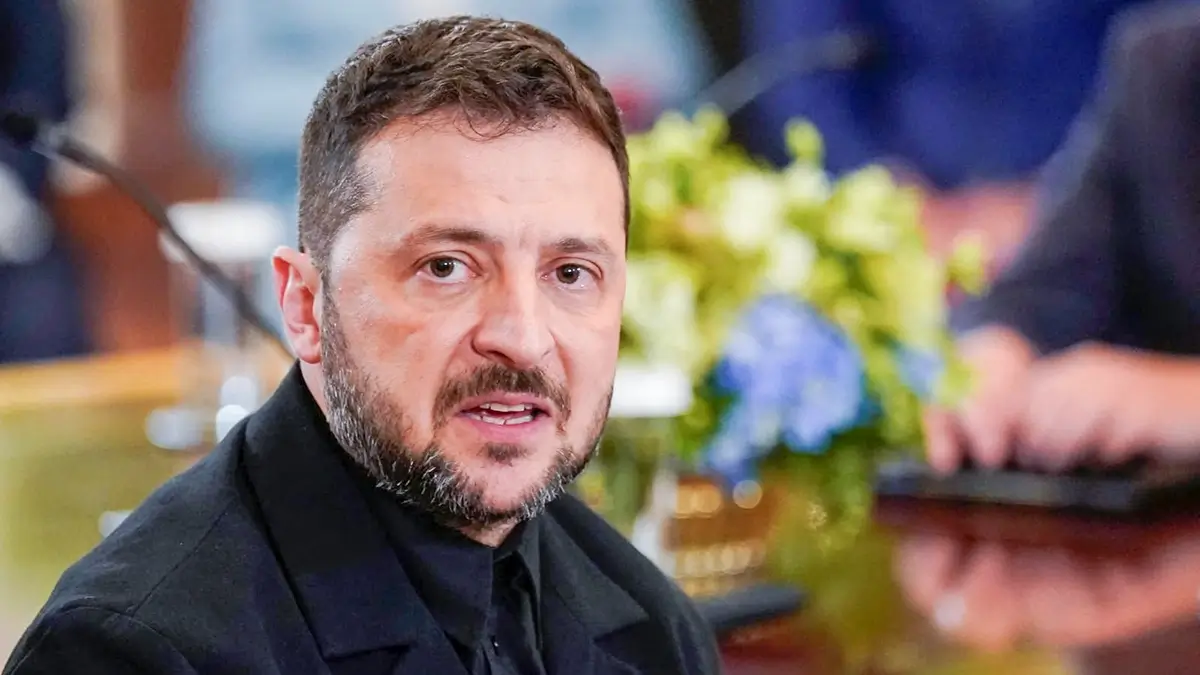
Kyiv demands greater logistical and military assistance from NATO as Russia intensifies its operations on the key fronts of Kherson and Zaporizhia. The Western press confirms the ‘accelerated attrition’ of the conflict.
Implications:
‘War fatigue’ is real: Kiev's insistence is coming up against the harsh reality of the fiscal crisis in the US and the bureaucratic paralysis of the EU. ‘Western solidarity’ has its limits, and those limits are the national budget and the internal political will of democracies consumed by their own problems.
Moscow is winning this battle of attrition. Its strategy of ‘tactical exhaustion’ is based on the (so far correct) premise that polarised and fiscally exhausted Western democracies will lose interest before Russia exhausts its resources. The conflict has shifted from an acute crisis to a long-term structural war.
Markets: the vertigo of political uncertainty
Facts:
Strong rebound in the S&P 500 and Nasdaq, followed by European and Asian indices, after the announcement of the temporary agreement ending the shutdown in Washington.
Implications:
The rally is a short-term relief based on a false premise (that the problem has been solved). It is a sugar rush before the inevitable January crash.
The real lesson is the ‘extreme vulnerability’ of the global economy. Markets no longer depend on economic fundamentals, but on the whims of 48 Democratic and 52 Republican senators, at least on this occasion.
Domestic political uncertainty in the United States has become one of the main elements of global systemic instability, although it is far surpassed in unpredictability by China's economic opacity and serious doubts about the health of its financial sector.

Final editorial analysis: the decline of the elites and the politics of the possible
The events of 11 November are not a series of random crises; they are a portrait of the failure of the political and ruling classes, as it is no longer possible to speak properly of elites. The self-styled ‘political elite’ in Washington hardly deserves such a title, as it cannot finance its own government, and the media “elite” in London has sacrificed the truth on the altar of its own ‘sectarian’ ideology, its credibility and prestige. The BBC, in particular, represents the decline of an institution that believed itself to be infallible and now reveals itself, before its peers and the world, as just another partisan activist.
While these ‘elites’ are navel-gazing, reality—in the form of pressing and urgent energy needs, border security, and strategic competition—is knocking at the door. ‘War fatigue’ in Ukraine is nothing more than the direct result of citizen fatigue with elites who demand sacrifices abroad while failing at domestic management.
Faced with the failure of ideological rigidity (evident in the EU's paralysis on migration), two movements of raw pragmatism are emerging. The shift in Syria is morally complex, as The Guardian is quick to point out, but geopolitically necessary. It is the ‘politics of the possible’ that seeks to stabilise a region in order to contain a greater adversary (Iran). Similarly, Bolivia's shift, although fraught with internal risks, is the de facto acceptance that populist ideology only produces misery, and that a return to economic pragmatism is the only way out.
The day demonstrates the clash between two worlds. The first is that of the globalist superstructure (the BBC, the Washington elites, the Brussels bureaucracy), which is crumbling under its own ‘sectarianism’ and incompetence. The second is that of the infrastructure of Realpolitik (national interest, security, resources such as lithium), which is imposing itself with force. 11 November 2025 is a reality check: the world has stopped waiting for Western elites to come to their senses. Not to mention that we are immersed in new cold wars, not just one but several.