Gustavo de Arístegui: Geopolitical analysis of 14 November 2025


End of the shutdown and tactical defeat for the Democrats
Facts:
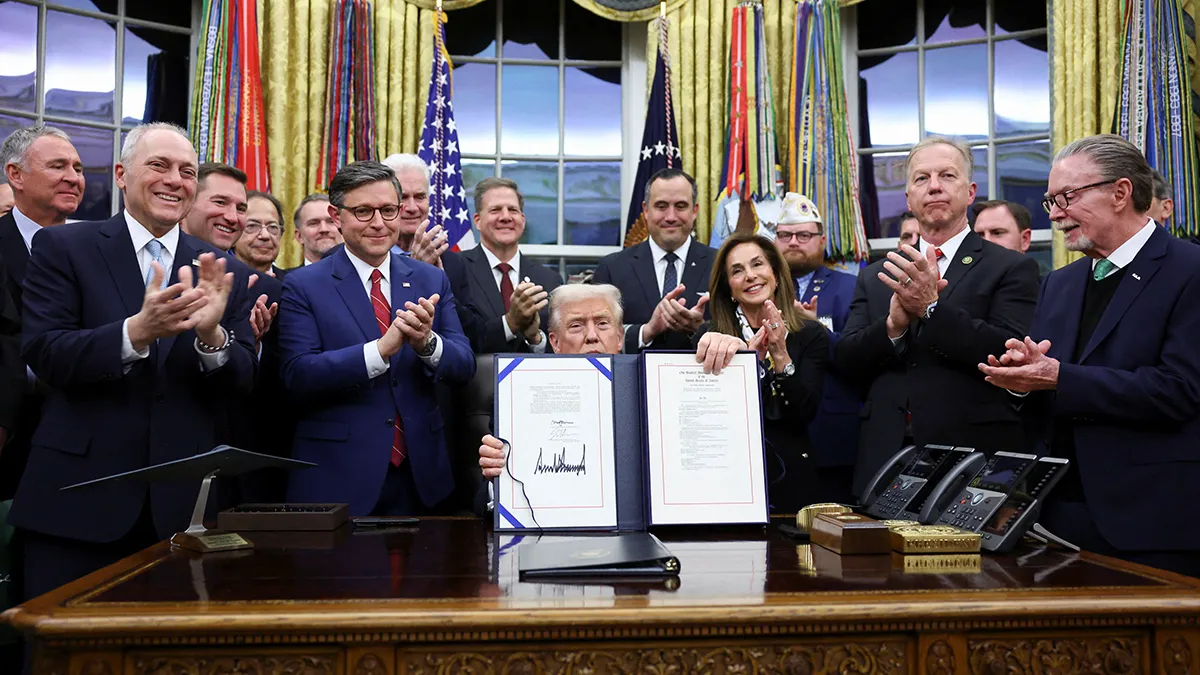
After 43 days of paralysis, Congress approved and President Trump signed the funding bill that reopens the federal government, ending the longest shutdown in US history. The agreement was reached after a partisan vote in the House of Representatives and a coalition in the Senate in which several Democrats joined the Republicans.
Pressure from the private sector—airlines, contractors, food banks, business associations—and from federal employees themselves, who had been left without pay, was decisive in forcing a resolution. Various media outlets (AP, NYT, FAZ, Die Zeit, Newsweek) highlight the direct impact on workers, travellers and basic services, as well as the damage to the institutional image of the United States.
Implications:
Trump emerges weakened in the eyes of part of the moderate electorate, but in strictly legislative terms he achieves a result very close to his initial position, fuelling a sense of tactical victory in the White House. The Democratic caucus, humiliated by a shutdown that ended without major concessions to its demands, is turning to a strategy of ‘revenge politics’: judicialisation, parliamentary investigations and relentless media warfare.
American bipartisanship is reduced to a mirage; politics becomes a permanent zero-sum game. For Europe and the markets, the end of the shutdown removes an immediate risk to global growth, but it exposes something much more serious: the greatest Western democracy exhibits institutional fragility and polarisation that erode its moral authority as the guarantor of the liberal international order.
Epstein, selective leaks and lawfare against Trump
Facts:
Coinciding with the end of the shutdown, thousands of documents and emails related to Jeffrey Epstein are published and leaked. Among them are messages in which the financier, through intermediaries, maintains contact with journalist Michael Wolff, who goes so far as to offer him ‘a unique opportunity to take down Trump’. Some of the messages refer to Trump's visits to Epstein's properties with a specific victim who, however, has repeatedly exonerated the then businessman and later president.
Several media outlets — NYT, The Guardian, Clarín, Jerusalem Post, Saudi Gazette — report the Democratic offensive as a direct response to the shutdown, while others emphasise that the emails have been released in a highly selective manner. The Guardian adds a disturbing element: the use of these files to fuel conspiracy theories in the MAGA universe and further polarise public opinion. At the same time, Trump is threatening to sue the BBC for £1 billion over a manipulated edit of a speech, reinforcing his offensive against the traditional media.
Implications:
This is not a calm search for judicial truth, but an acute phase of lawfare (judicial warfare) as a political tool. Democrats and part of the progressive media ecosystem are using the real horror of the Epstein case as a battering ram against Trump, in a manoeuvre that risks trivialising the suffering of the victims and transforming a criminal trial into a partisan spectacle. The credibility of investigative journalism suffers when someone like Michael Wolff appears as a political ‘operator’ rather than a reporter.
The move could backfire: if public opinion perceives manipulation and biased leaks, Trump could consolidate his position as the victim of a witch hunt, reinforcing his anti-establishment narrative. Added to the threat of a mammoth lawsuit against the BBC, the result is a worrying deterioration of the ecosystem of press freedom, caught between the excesses of some militant media outlets and the vengeful drive of a leader who does not tolerate criticism.

Rubio, drug boats and European hypocrisy in the face of narco-terrorism
Facts:
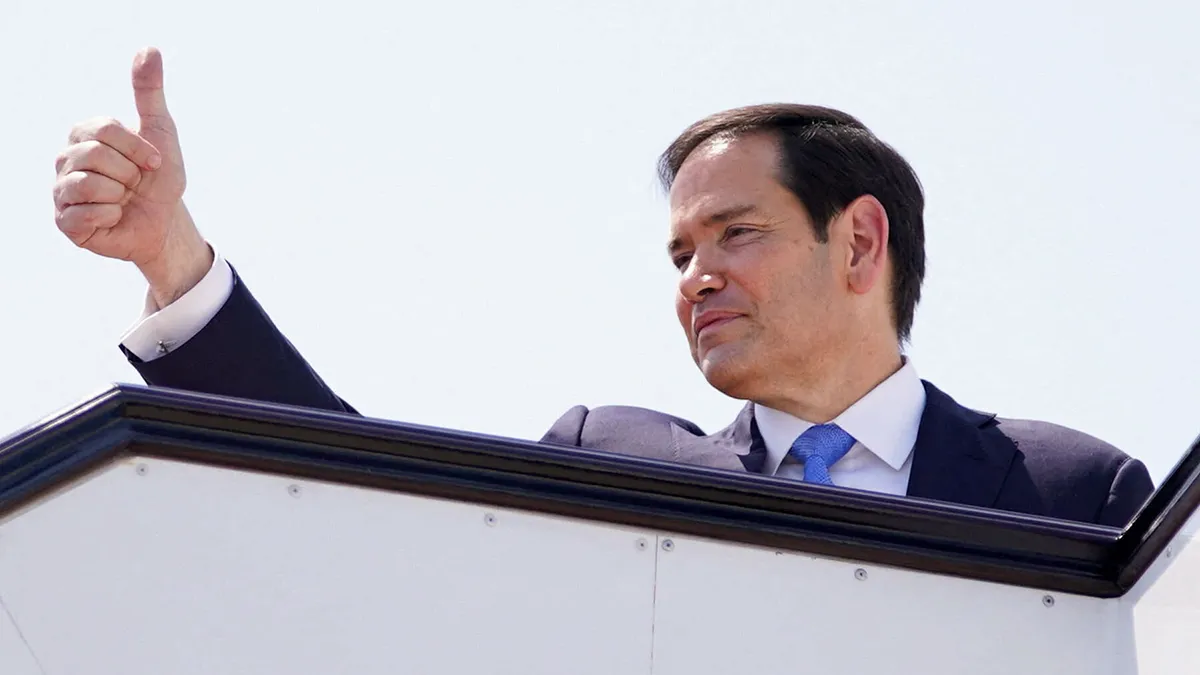
Secretary of State Marco Rubio has strongly defended the operations of the United States and its allies against Colombian and Venezuelan cartel drug boats in Caribbean waters, insisting that these are legitimate actions against narco-terrorism networks that threaten hemispheric security.
European governments, with France and some EU partners at the forefront, have criticised lethal strikes against these vessels when they occur in international waters or in grey areas of maritime law, invoking human rights principles. On the other side of the Atlantic, media outlets such as Clarin emphasise that Rubio combines this security agenda with intense economic diplomacy in Latin America, seeking to strengthen commercial and strategic alliances.
Implications:
The asymmetry is striking. Much of the European political class said virtually nothing when the Obama administration used drones (unmanned aerial vehicles) to execute hundreds of suspects in sovereign countries, with severe collateral damage. Today, however, it is up in arms about boats loaded with cocaine that finance private wars in Latin America and feed mafias operating in the heart of European cities.
Under the banner of human rights, some seek to effectively shield organisations that do not hesitate to murder, kidnap and destabilise entire states. The doctrine emerging from Washington is clear: large cartels will be treated as irregular warfare actors, not as mere criminals. For Europe, the irresponsible thing is not to cooperate with these operations, but to pretend that the battle against narco-terrorism can be won with statements and symbolic gestures while unscrupulously enjoying the economic benefits that dirty money brings to its own financial systems.
China slows down: structural weakness and fear of “Japanisation”
Facts:
The latest official data show that Chinese industrial production and retail sales have recorded their worst growth in more than a year. Added to this are weak investment in fixed assets, a persistent real estate crisis and inflation bordering on deflation. Reuters and other agencies agree that this is a symptom of structural weakness, not merely a temporary blip.
The ongoing trade war with the United States, mistrust among international investors and the gradual relocation of supply chains to India, Vietnam and other Southeast Asian countries are exacerbating the situation. The Economist and other media outlets are beginning to speak bluntly about the risk of a ‘Japanisation’ of the Chinese economy: prolonged stagnation, high debt and a bursting property bubble.
Implications:
If China sneezes, the rest of the world catches more than just a cold. A sustained slowdown would have a major impact on commodity prices — hitting producers in Africa and Latin America — and on global demand for industrial goods, including European cars. Beijing is at a crossroads: either it undertakes deep reforms that touch on the privileges of large state-owned enterprises and indebted local governments, or it resorts to more stimulus and easier credit, exacerbating the imbalances that already weigh down its model.
This internal fragility may push China to intensify its geopolitical activism: more investment in the Belt and Road Initiative, more pressure on weak partners and more use of trade as an instrument of influence. For Europe and Spain, staking everything on Chinese demand – in tourism, luxury goods, cars or heavy industry – is a reckless gamble in a context of systemic rivalry with the United States.

Deployment of soft power: royal visits to China and the narrative of the “reliable partner”
Facts:
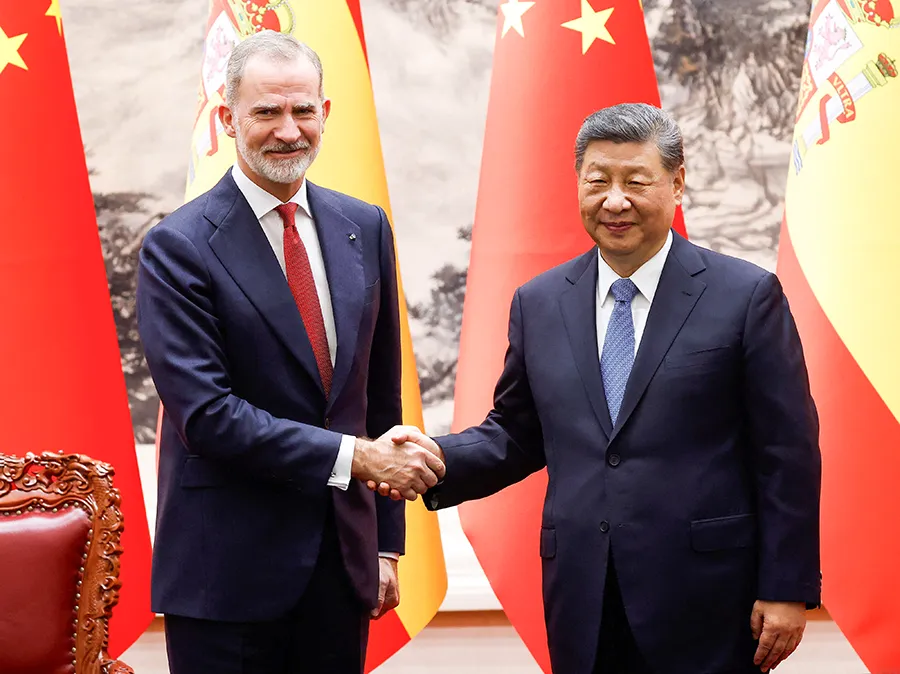
In parallel with the poor economic data, Xi Jinping is multiplying the displays of stability and international respect. In recent months, Beijing has welcomed Asian monarchs, such as King Vajiralongkorn and Queen Suthida of Thailand, and European monarchs, including the King and Queen of Spain, serving official propaganda to project an image of China as a partner courted by democracies and monarchies alike. The message is reinforced by flagship projects such as the China-Thailand railway and promises to further open the Chinese market to agricultural products and consumer goods from friendly countries. This is ceremonial diplomacy carefully designed to counter the Western narrative of ‘China risk’.
Implications:
Beijing is attempting to offset concerns about its economic figures with a highly sophisticated soft power offensive. Every visit by a head of state, every photo at the Great Hall of the People is used to convey the idea of normality and continuity. For Thailand, Spain and several Gulf monarchies, the balance is extremely delicate: they need China as a trading partner and investor, but they cannot jeopardise their security, technological and energy ties with the United States and the European Union.
Crown diplomacy has become a coded language of balance: a reception in Beijing can be, at the same time, a search for economic leverage, a sign of strategic autonomy and a reassuring message to Washington. On this chessboard, Europe runs the risk of fragmenting between countries that favour a pragmatic approach to China and others that insist on seeing it primarily as a systemic rival.
Russia, Ukrainian drones and the energy war of attrition
Facts:
According to industry sources cited by Reuters and other media outlets, Russia is using surplus refining capacity at less exposed facilities to compensate for the damage caused by Ukrainian drone attacks on its main refineries.
Despite documented attacks on more than a dozen plants, the drop in refined production is currently around 3% per year, demonstrating remarkable logistical resilience. Moscow is redirecting crude oil to safer refineries, adjusting rail flows and using its own ‘shadow fleet’ to continue exporting to Asia, especially India and China.
At the same time, Middle Eastern media outlets such as Asharq Al-Awsat emphasise that Russia claims to have shot down numerous Ukrainian drones, presenting an image of defensive control in the face of the real impact on critical infrastructure.
Implications:
The war is entering a phase of attrition where energy is as much ammunition as projectiles. Kiev is trying to strike at the heart of the Russian financial machine by attacking its refining capacity, while Moscow is demonstrating operational flexibility to avoid a sharp drop in exports. However, this apparent resilience comes at a cost: aggressive discounts to Asian buyers, growing dependence on foreign components and spare parts, and the need to concentrate defensive efforts on a growing number of facilities.
For Europe, which decided to drastically reduce its dependence on Russian crude oil, success is relative: it remains exposed to any shock in oil prices, whether from a devastating blow to a large Russian refinery or a parallel crisis in the Middle East. In the long run, the gradual erosion of Moscow's oil revenues may undermine its ability to sustain a high-intensity conflict; but in the meantime, the Kremlin is deepening its alliance with Iran, North Korea and a China that is playing a game of calculated ambiguity.

China's secret gold purchases: strategic insurance and a silent challenge to the dollar
Facts:
The Financial Times, Reuters and other media outlets agree that gold purchases by Chinese entities—both state-owned and semi-state-owned—have been a key factor in the precious metal's latest record rally. A significant portion of these acquisitions do not appear in the official figures of the People's Bank of China, indicating a deliberate strategy of opacity.
At the same time, other central banks in the Global South are also increasing their gold reserves, in line with growing mistrust of US and European sovereign debt and the use of the international financial system as a weapon of sanctions. Some analysts are already speculating that Beijing may aspire, in the medium term, to recalibrate the architecture of the yuan by strengthening it with gold, without necessarily moving to a formal gold standard.
Implications:
The policy of discreet gold purchases is not a numismatic eccentricity, but a strategic insurance policy. China is sending a message: if access to the dollar and the system dominated by Washington and its allies becomes a battlefield, Beijing wants to have a cushion of value that is difficult to confiscate or politically degrade. We are not yet witnessing the end of the dollar as a global reserve currency, but we are seeing a gradual erosion of its psychological hegemony.
The more the dollar and the SWIFT system are perceived as being used as a political cudgel, the more incentive emerging powers have to seek alternative refuges: gold, local currency clearing agreements and regional payment mechanisms. For Europe, which neither controls the hegemonic currency nor has managed to build a true capital markets union, the risk is to be caught in a three-way currency game — dollar, yuan and gold reserves — without having the banking system, currency or reserves to play in the same league.

Technological and space race: Blue Origin, F-35 and the architecture of hard power
Facts:
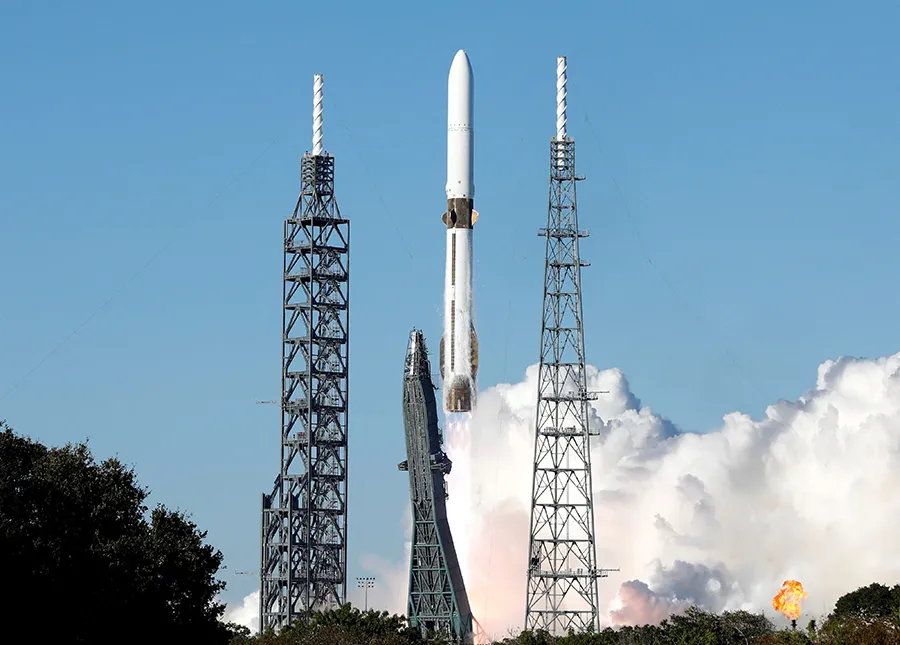
Blue Origin, Jeff Bezos' company, has successfully launched its New Glenn heavy rocket for the first time on a NASA scientific mission and recovered the booster through a controlled landing. The reuse of large launchers is moving from technological promise to industrial reality. The mission includes scientific satellites and demonstrates that the US new space ecosystem is no longer a monopoly of SpaceX.
At the same time, some media outlets are reporting on a Pentagon report warning of the risk that China could gain access to sensitive F-35 technology if certain export agreements to third countries, particularly Saudi Arabia, materialise through technological diversions, copying or reverse engineering. On the same day that the United States flexes its technological muscle in space, there is debate about the extent to which it can export advanced weapons systems without indirectly feeding the industrial and military base of its main strategic rival.
Implications:
Twenty-first-century geopolitics is being played out on two interrelated fronts: space and advanced military technology. The success of Blue Origin consolidates a private duopoly—SpaceX and Bezos' company—that reinforces the United States' ability to launch and maintain constellations of military, civilian and commercial satellites quickly and at low cost, something that neither China nor Russia can match today with the same flexibility. But the discussion about the F-35 reveals the dark side of that superiority: the temptation to use the export of weapons systems as a tool of influence could end up opening cracks in the Western technological shield if precautions are relaxed.
For Europe, lagging behind in new space and dependent on US technology in many combat systems, the lesson is clear: either invest sustainably in its own technological and space base, or be relegated to the role of luxury customer in a world where the ability to launch rockets and protect source code is as valuable as old aircraft carriers.
Media rack
United States and Anglo-Saxon world
NYT, AP, WSJ, Washington Post, USA Today, Newsweek, Politico, The Hill: dominant focus on the end of the shutdown, voter fatigue and the internal Democratic rift. Extensive coverage of the Epstein files and the tug-of-war between the White House and media outlets such as the BBC. The WSJ adds the disturbing fact that the job market is becoming increasingly hostile for 2026 graduates, with AI and mass layoffs as the backdrop.
The Guardian, The Economist: highlight the toxic mix of political polarisation, selective leaks and conspiracy theories, and warn that Democrats could lose again to Trump if they remain trapped in the logic of moral outrage rather than offering a convincing project.
Continental Europe and the UK
Financial Times, BBC, Le Monde, Le Figaro, FAZ, Die Zeit, Corriere della Sera: combine coverage of the United States with concern about the Chinese slowdown and Russia's apparent ability to sustain its energy exports despite Ukrainian attacks. The FT highlights the role of Chinese gold purchases in the metal's rally, while German newspapers focus on the impact of the US shutdown on the global economy and the credibility of American democracy.
Asia-Pacific
South China Morning Post, China Daily, Yomiuri Shimbun, The Straits Times, Times of India, Hindustan Times: emphasis on the weakness of Chinese macro indicators, the symbolism of monarchs' visits to Beijing and the consolidation of Blue Origin as a competitor to SpaceX.
Attention is paid to the possibility of additional tensions if the sale of advanced weaponry to the Middle East opens the door to technology leaks to China.
Arab world and Middle East
Asharq Al-Awsat, Arab News, Saudi Gazette, Al-Jazeera, Al-Arabiya: present the end of the shutdown as proof of American political dysfunction and take up the narrative that the Epstein case reveals the moral corruption of Western elites. Asharq Al-Awsat insists on Russia's resilience in the face of Ukrainian drones, while Gulf media highlight Trump's threat to sue the BBC as a symptom of the conflict between populism and traditional media.
Latin America and others
Clarín, Reforma, El Mercurio: focus on Rubio's role in the Caribbean and his dialogue with Latin American governments, as well as the use of the Epstein leaks as a political weapon. In general, Latin America views the offensive against drug smuggling boats with a mixture of concern for sovereignty and recognition of the real threat of drug trafficking.
The Western Axis: Institutional Crisis and Strategic Paralysis
The outlook in the major Western capitals during this second week of November 2025 has been characterised by a profound erosion of institutional confidence and functional paralysis. This dysfunction is acutely evident both in the legislative deadlock in Washington D.C. and in the collapse of editorial credibility at one of Europe's media pillars, the BBC. Simultaneously, US domestic politics has descended into an information war, and in no few cases of disinformation, using sensitive revelations as partisan ammunition.
United States: The End of the Shutdown and Permanent Dysfunction
On 12 and 13 November 2025, President Donald Trump signed legislation ending the longest government shutdown in modern US history, a paralysis that lasted 43 days. The shutdown, which began on 1 October with the start of fiscal year 2026, left nearly one million federal workers without pay or on forced leave and caused severe disruptions to critical services, affecting air travel and access to food assistance programmes such as SNAP and WIC.
The cause of the deadlock was a fundamental legislative dispute. The Republican-controlled House of Representatives passed a funding bill. However, this measure was blocked in the Senate by the Democrats, as a qualified majority of 60 out of 100 senators was required to avoid a government shutdown. The main Democratic demand was the extension of subsidies under the Affordable Care Act (healthcare assistance for those most in need, known by its acronym ACA), which were scheduled to expire at the start of the fiscal year.
The resolution of the conflict did not represent a clear political victory for either side. The deadlock was broken only when a group of moderate Democrats, including six in the House and a similar group in the Senate, broke ranks with their party. The final agreement did not include the Democrats' demand for ACA subsidies. In exchange for reopening the government, the Democrats only obtained a promise of a separate vote on subsidies in the future. The legislation signed by Trump funds the government only temporarily, until 30 January 2026.
Analysis of this episode reveals a structural paralysis in the US system. The ability of a minority in the Senate to use filibustering (which requires 60 votes to unblock the passage of laws such as the budget) to force the longest shutdown in history against a party that controls both houses and the presidency underscores a level of dysfunction that transcends partisan politics. For the United States' allies and adversaries, the event confirms that Washington's strategic predictability has been seriously affected and that its operational stability can be hijacked at any moment by domestic disputes. The solution, a mere postponement of the crisis until January, demonstrates the system's inability to resolve its fundamental problems in a stable and longer-term manner.
The Collapse of Credibility: The BBC, Donald Trump and the Fall of the Leadership
Parallel to the fiscal crisis in the United States, a crisis of confidence of equal magnitude has hit the United Kingdom. The BBC's top management, including the group's director general Tim Davie and the network's executive director of news services, Deborah Turness, have irrevocably resigned.
The trigger was an investigation, revealed by The Daily Telegraph, which showed that a documentary by the prestigious Panorama programme had editorially manipulated a speech by Donald Trump on 6 January 2021. The editing consisted of splicing together sentences spoken by Trump almost an hour apart, with the aim of falsely suggesting that the then president had made a direct and unequivocal call for violence at the Capitol.
The reaction was immediate. Trump's legal team threatened the corporation with a £1 billion libel suit. In response, the BBC's new chairman, Samir Shah, has sent a personal apology to the White House. Shah publicly admitted that the editing gave ‘the impression of a direct call to violent action.’ Although the BBC has agreed not to rebroadcast the documentary, it has rejected the legal basis for the defamation lawsuit and refuses to pay compensation.
This incident does not appear to be an isolated error, but rather a symptom of a systemic problem. Reports indicate that similar concerns about editing of the same speech had already been raised internally in 2022 in connection with the programme Newsnight. The fact that the manipulation occurred on Panorama, the flagship of BBC investigative journalism, represents the immolation of trust in one of the institutional pillars of the West.
The BBC has fallen into a strategic trap. Although its lawyers believe they have a solid legal basis to defend themselves against the libel suit in court, they have nevertheless lost the reputation war spectacularly. By admitting to manipulation, the corporation has handed Donald Trump an extraordinary political victory on a silver platter, validating his ‘Fake News’ narrative to a global audience. This act has seriously undermined the BBC's moral authority to criticise disinformation and propaganda from authoritarian regimes.
The Information War: New Revelations in the “Epstein Case” as a Political Weapon
In a demonstration of the state of total political war in Washington, the conclusion of the shutdown crisis coincided exactly with the start of a new information offensive. On the same day that the government reopening was signed, Democrats on the House Oversight Committee selectively leaked a series of emails from the late Jeffrey Epstein.
The leaks were designed for maximum political impact, suggesting deep knowledge on the part of Donald Trump of Epstein's activities. Key documents include:
A 2011 email from Epstein to Ghislaine Maxwell, where he refers to Trump as ‘the dog that hasn't barked’ and notes that a victim (identified by the White House as Virginia Giuffre) ‘spent hours at my house with him.’
A 2019 email from Epstein to journalist Michael Wolff, in which Epstein states about Trump: ‘Of course he knew about the girls since he asked Ghislaine to stop.’
The Republican response was instantaneous and forceful. The White House and Republicans on the committee accused Democrats of ‘cherry-picking’ to ‘generate clickbait’ and ‘create a false narrative.’ As a tactical retaliation, Republicans released all of the documents received from Epstein's estate: more than 20,000 pages.
The timing of the Democratic leak, coinciding exactly with the resolution of the shutdown, indicates that it was not a coincidence, but a tactical pivot. Having lost the legislative battle (they did not obtain the ACA subsidies), the offensive immediately shifted to the information war.
Perhaps the most cynical revelation in this set of documents is the one involving journalist Michael Wolff himself. The emails suggest that Wolff was actively advising Epstein on how to use his relationship with Trump as ‘public relations and political currency.’ This exposes a corrupt symbiosis between certain media actors, political elites, and criminal figures. The Epstein case is no longer a quest for justice for the victims; it has completely transformed into a toxic asset that both sides use as a weapon.
Washington's New Doctrine: ‘War on Narco-Terrorism’ in the Caribbean
The Trump administration's second term has ushered in an extraordinarily proactive foreign policy doctrine in the Western Hemisphere. The ‘War on Drugs’ has been logically equated with the legal framework of the ‘War on Terror,’ and Washington has launched a unilateral military campaign that is creating deep rifts with its European and regional allies.
“Operation Southern Spear”: The Lethal Attack Campaign
Since September 2025, the US military has been conducting a campaign of lethal strikes against vessels suspected of drug trafficking, known as ‘narco-boats,’ in the Caribbean Sea and the Eastern Pacific Ocean (near the coasts of Colombia and Panama; it is the Eastern Pacific, since the Western Pacific is in Asia). As of 13 November, more than 20 attacks against 21 vessels have been confirmed, resulting in the deaths of more than 80 narco-terrorists.
This strategy, dubbed “Operation Southern Spear” by the Pentagon, represents a fundamental doctrinal shift. The administration has justified these actions by declaring that the United States is in a ‘non-international armed conflict’ (NIAC). Under this premise, the administration has, with full justification, designated several drug cartels as ‘Foreign Terrorist Organisations’ (FTOs).
The justification was articulated by Defence Secretary Pete Hegseth, who stated that ‘narco-terrorists have killed far more Americans than Al-Qaeda or DAECH (Islamic State), and they will be treated the same.’ Secretary of State Marco Rubio has reiterated this line, declaring that the US is ‘under attack’ and that the president ‘is responding in defence of our country’.
This doctrinal shift replaces the traditional interdiction model (a law enforcement framework involving warnings, boarding, arrest and prosecution) with a military model of ‘lethal direct attacks’ and ‘destroying narco-vessels’ occupied by dangerous and violent criminals armed to the teeth and transporting tonnes of drugs. These are vessels with extremely powerful outboard motors (drug boats with up to five maximum-power outboard motors have been seen) that reach speeds of up to 80 knots (145 km/h, a breakneck speed at sea). By redefining traffickers as ‘illegal combatants,’ the US administration rightly recognises its authority to eliminate them as it has done with dangerous terrorists in the past.
The Office of Legal Counsel (OLC) of the Department of Justice has issued a legal opinion that provides complete immunity from prosecution to US military personnel involved in these attacks. This move to legally shield operators from any judicial scrutiny suggests that the administration is aware of the legal controversy that the attacks have raised. The destroyed vessels were carrying huge quantities of drugs and therefore posed a serious, real and imminent threat to the United States, which legally justifies the attacks.
The Deployment of Force: Pressure on Venezuela
Operation Southern Spear is backed by a massive naval deployment, described as the largest in the Caribbean in decades. The fleet includes the world's largest aircraft carrier, the USS Gerald R. Ford, accompanied by its strike group, missile destroyers, frigates and a nuclear submarine, F-35 fighter jets and MQ-9 Reaper drones.
The composition of this Carrier Strike Group might seem excessive for an anti-narcotics mission against speedboats. It is a force designed for deterrence and, eventually, if the unlikely event of a conflict between states. Washington's rhetoric unequivocally links the operation to Nicolás Maduro's regime in Venezuela. Some of the world's most serious intelligence and security services have described Venezuela as a narco-state. I define it as a narco-dictatorship. It is a mafia organisation structured like a state and with all the means of a state, including armed forces, security services and police, courts of injustice (it is impossible to call them anything else), as well as a tax agency and attorney general's office (both institutions are central elements of the regime's apparatus of oppression and extortion).
Secretary of State Marco Rubio has been explicit, accurately describing Maduro's government as an ‘illegitimate regime’ and a ‘drug-trafficking organisation,’ identifying it directly with the ‘Cartel of the Suns.’ The attacks have progressively moved closer to the Venezuelan coast. In addition, reports indicate that President Trump has authorised covert CIA operations inside Venezuela and that senior military commanders have presented him with options for attacks on land targets.
The ‘war on drugs’ thus functions as a transparent casus belli for a policy of regime change in Venezuela. The strategic objective is not cocaine; it is Nicolás Maduro. This doctrine creates a deliberate escalation: the deployment of the fleet provokes a Venezuelan military response (such as fighter jets flying over US destroyers), which in turn is used to justify the US naval presence.
The Allied Fracture: European and Regional Opposition
This new unilateral doctrine has caused a serious rift with key US allies.
France, a NATO member, has led the criticism. Foreign Minister Jean-Noël Barrot publicly condemned the attacks, stating that they ‘ignore international law.’ Barrot stressed that France has direct interests and more than a million citizens in its Caribbean territories (such as Martinique and Guadeloupe), who could be ‘affected by the instability caused by any escalation’. The tension was palpable at the G7 foreign ministers' meeting, where European counterparts grilled Rubio on the legality of the operation.
At the regional level, the impact has been felt. The IV EU-CELAC Summit, held in Santa Marta (Colombia), ended in diplomatic failure. Key European leaders, such as European Commission President Ursula von der Leyen and French President Emmanuel Macron, cancelled their attendance. Reports attribute these absences directly to tensions generated by the US attacks and pressure from Washington on the attending countries. The hypocrisy is alarming, especially the regrettable statements by EU High Representative for Foreign Policy Kaja Kallas.
The summit's host, Colombian President and former terrorist Gustavo Petro, has become one of the operation's staunchest critics, despite being a key regional partner of the US.
Despite the US's perfectly justified reasons, the collapse of the EU-CELAC summit is a strategic gift to China and Russia. By alienating vital partners through ‘diplomatic boycotts’ and military actions mistakenly perceived as imperialist, the US is creating a power vacuum.
The Eurasian Theatre: The Energy War of Attrition
On the Eastern European front, the conflict in Ukraine has evolved into a full-blown energy war of attrition. Both sides have identified the adversary's economic infrastructure as a key military centre of gravity. Kiev attacks Russia's export revenue sources, while Moscow attacks Ukraine's domestic generation capacity.
Russian Resilience: Compensating for Refinery Attacks
Throughout 2025, Ukraine has executed a bold campaign of long-range drone attacks against Russian oil infrastructure. At least 17 major refineries have been hit. At the height of the offensive, between August and October, the attacks, combined with planned maintenance, took up to 20% of Russia's refining capacity offline.
However, a detailed analysis by Reuters reveals that the actual impact on production has been minimal. Despite the public narrative of resounding success, Russia's total refining output has only declined by 3% to 6%.
The discrepancy between the capacity attacked (20%) and the production lost (3-6%) is explained by Russia's vast excess capacity. The country's total refining capacity is approximately 6.6 million barrels per day (bpd), but it is rarely used to its full capacity. Russian refineries have mitigated the damage simply by activating reserve units that were inactive.
Although Ukraine's strategy is tactically insufficient to achieve a quick knockout, it does impose a long-term cost. The real bottleneck for Moscow is access to high-tech components for repairs. Western sanctions complicate the procurement of specialised parts. Russia is forced to rely on domestic production or imports from China, making repairs slower, more expensive, and potentially of lower quality.
The Impact of Sanctions: The IEA Report and ‘Floating Storage’
The International Energy Agency's (IEA) November 2025 oil market report corroborates the pressure on Russian finances. Russia's oil export revenues fell to $13.1 billion in October, their lowest level in a year. This decline is due to a combination of attacks on infrastructure and falling crude oil prices.
A more significant development is the imposition of new direct sanctions by the United States and the United Kingdom against Russia's two largest producers, Rosneft and Lukoil, which will take effect on 21 November. These two companies alone produce and market internationally about half of the country's crude oil.
These sanctions represent a qualitative escalation. Unlike the general mechanism of ‘price caps’, these measures directly attack the arteries of export. The IEA warns that this could have ‘the most far-reaching consequences for global oil markets’.
The immediate effect has been ‘buyer panic.’ There is a massive accumulation of ‘oil in water’ (floating storage) as key buyers in Asia, primarily India and China, are halting purchases while their compliance departments assess the legal risks. Although the Russian ‘ghost fleet’ (opaquely owned vessels flying flags of convenience) continues to operate, it is being forced to offer its cargoes at even greater discounts.
The Russian Offensive: Attacks on Ukrainian Infrastructure
Moscow has responded to the pressure by intensifying its own campaign against Ukrainian energy infrastructure, coinciding with the onset of winter.
A critical shift in Russian attack doctrine has been observed. During the period 2022-2024, attacks focused on energy transmission and distribution (substations and transformers). While this caused widespread blackouts, this infrastructure is relatively repairable.
Now, the Russian strategy focuses on the destruction of power and gas generation plants. In October, a single massive attack reportedly destroyed 60% of Ukraine's gas production capacity. Rolling blackouts have returned to all regions of the country.
This change is strategic. Destroying a transformer causes a temporary blackout; destroying a thermal power plant's turbine removes megawatts from the grid for years. Russia's goal is no longer just to make the population cold this winter; it is to inflict permanent, multi-year economic damage, seeking the systematic deindustrialisation of Ukraine to ensure that its economy cannot recover after the war.
The Beijing Axis: Diplomatic Pragmatism and Structural Economic Weakness
The People's Republic of China presents a dual strategy in November 2025. Externally, it projects confidence and stability through high-level diplomacy. Internally, its economy faces significant structural headwinds and the risk of prolonged stagnation. Meanwhile, in the shadows, its central bank wages a silent financial war against the hegemony of the dollar.
The Slowing of the Giant: October 2025 Data
China's official economic data for October 2025, released on 14 November, confirm an economic slowdown and ‘persistent consumer apathy’.
Key indicators are notably weak:
Industrial Production: Grew 4.9% year-on-year, a significant slowdown from 6.5% in September.
Retail Sales: Grew by 2.9%, down from 3.0% in September, showing the weakness of domestic demand.
Fixed Asset Investment (Jan-Oct): Declined by 1.7% year-on-year. This figure is being dragged down by a 14.7% collapse in real estate development investment.
China's traditional growth engine, the real estate sector, is broken. The new engine, domestic consumption, is failing to take off. This scenario has intensified warnings about the risk of ‘Japanisation’: a prolonged period of low growth, low inflation or deflation, caused by the bursting of the real estate bubble and chronic oversupply.
Beijing's response, articulated in its 15th Five-Year Plan, is not to stimulate domestic demand. On the contrary, the strategy is to redouble its industrial policy (‘Made in China 2025’) to export its deflation. Through its so-called ‘anti-involution’ policy, the Chinese Communist Party encourages Darwinian internal competition. This policy forges ‘national champions’ capable of surviving on razor-thin margins, designed to destroy their foreign competitors in strategic sectors such as electric vehicles, solar energy and batteries. What the West diagnoses as internal economic weakness (overcapacity) is, in reality, a tool of geo-economic warfare.
High-Level Diplomacy: State Visits to Spain and Thailand
In a calculated exercise of ‘soft power,’ Beijing has used the month of November to project an image of normality and stability, in stark contrast to Western dysfunction. It has organised two high-profile state visits:
Spain: King Felipe VI is making the first state visit by a Spanish monarch in 18 years. The visit seeks ‘pragmatic engagement’ and ‘economic diversification,’ with the signing of cooperation agreements.
Thailand: King Maha Vajiralongkorn arrived in Beijing for the first visit by a reigning Thai monarch since the establishment of diplomatic relations.
The visit, which marks the 50th anniversary of relations, consolidates China's influence over a formal military ally of the United States.
The Gold Strategy: Clandestine Accumulation
Behind public diplomacy, China is waging a silent financial war. A report in the Financial Times alleges that actual gold purchases by the Chinese state are more than ten times higher than official figures.
Officially, the People's Bank of China (PBoC) holds approximately 2,300 tonnes of gold. However, analysts estimate that the Chinese state's actual holdings, accumulated clandestinely through unreported entities such as the sovereign wealth fund (CIC) and the military, exceed 5,000 tonnes, with some estimates reaching 15,000 tonnes.
This is not a diversification of reserves; it is a financial warfare strategy. Analysts define it as a ‘pure hedge against the United States’ and a central pillar of Beijing's de-dollarisation strategy. Secrecy is vital for two reasons: first, to avoid a diplomatic crisis with Washington; second, to avoid triggering a rise in the price of gold while it is being accumulated. With the price of gold exceeding $4,000 an ounce, China is quietly draining physical gold from London's vaults, challenging the Western ‘paper gold’ system.
The Geopolitics of Technology, Defence and Space
Competition between major powers is being defined in new domains, where technological advantage is synonymous with strategic supremacy. Two events in November illustrate this reality: the emergence of a new player in the orbital space race and the dangerous interconnection between Middle East alliances and Indo-Pacific technological security.
The New Space Race: Blue Origin's Critical Success
On 13 November, Jeff Bezos' aerospace company Blue Origin successfully completed the second orbital flight of its New Glenn heavy rocket. The mission achieved two key milestones:
Main Mission Success: The rocket successfully deployed NASA's ESCAPADE mission, a pair of twin probes designed to study the atmosphere of Mars.
Reusability Milestone: For the first time, Blue Origin successfully landed the 98-metre-tall New Glenn first-stage booster on its recovery barge ‘Jacklyn’ in the Atlantic Ocean.
This successful landing, achieved on only the second attempt, effectively breaks Elon Musk's SpaceX monopoly on reusable orbital rocket technology. It demonstrates that genuine competition in the heavy launch market has arrived.
The implications for US national security are profound. NASA and the Pentagon no longer depend on a single supplier (SpaceX), whose volatility has been a cause for concern. This success has immediate repercussions for the Artemis lunar programme. NASA had recently cited delays in the development of SpaceX's Starship as a reason to reopen the contract for the manned lunar lander. The flawless flight of New Glenn positions Blue Origin's ‘Blue Moon’ lander as a suddenly credible and viable alternative, giving NASA critical negotiating leverage.