Gustavo de Arístegui: Geopolitical analysis of 16/17 September


- Israel–Gaza — Start of the ground offensive in Gaza City (16–17 September)
- Gulf — Arab-Islamic Summit in Doha: Qatar consolidates its role as mediator (15–16 September)
- NATO — Russian drones over Poland and Romania: New eastern flank mission and UK air deployments (14–17 September)
- Indo-Pacific — Scarborough: China-Philippines clash and ‘nature reserve’ as international lawfare? (16 Sep)
- Russia-Ukraine — US tariff notice: 100% “secondary” and more Patriot (Jul–Sep)
- Transatlantic — Threat of 30% tariff on the EU: how to prevent trade from disrupting strategy (Jul–Sep)
- United States — Charlie Kirk case: formal charges and death penalty request (16–17 September)
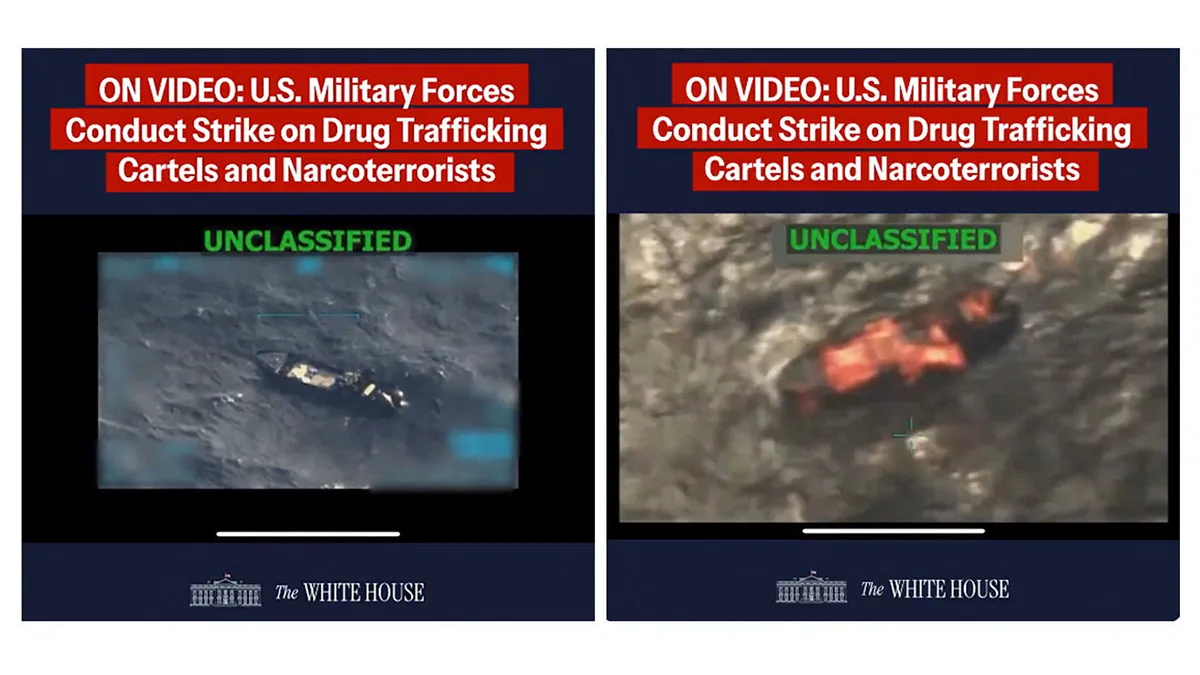
- Caribbean — US Navy attack on Venezuelan drug boats: Surgical strike against cartels and Maduro regime (2–16 September)
- Media Rack-Breakdown by headline (priority and summary selection, updated with recent angles)
Israel–Gaza — Start of the ground offensive in Gaza City (16–17 September)
What happened?
The Israel Defence Forces (IDF) have intensified their urban offensive in northern Gaza City, deploying armoured mechanised brigades (such as the 98th Paratrooper Brigade), F-35 air support to suppress anti-aircraft defences, and drone-guided intelligence operations to map tunnels. In the last 48 hours, the IDF reports the neutralisation of at least 120 Hamas fighters (a terrorist group designated by the US, EU and UN, responsible for more than 1,200 civilian killings in the attack on 7 October 2023), the destruction of 15 command and control (C2) complexes, and the discovery of an arsenal of 500 rockets in a makeshift hospital.
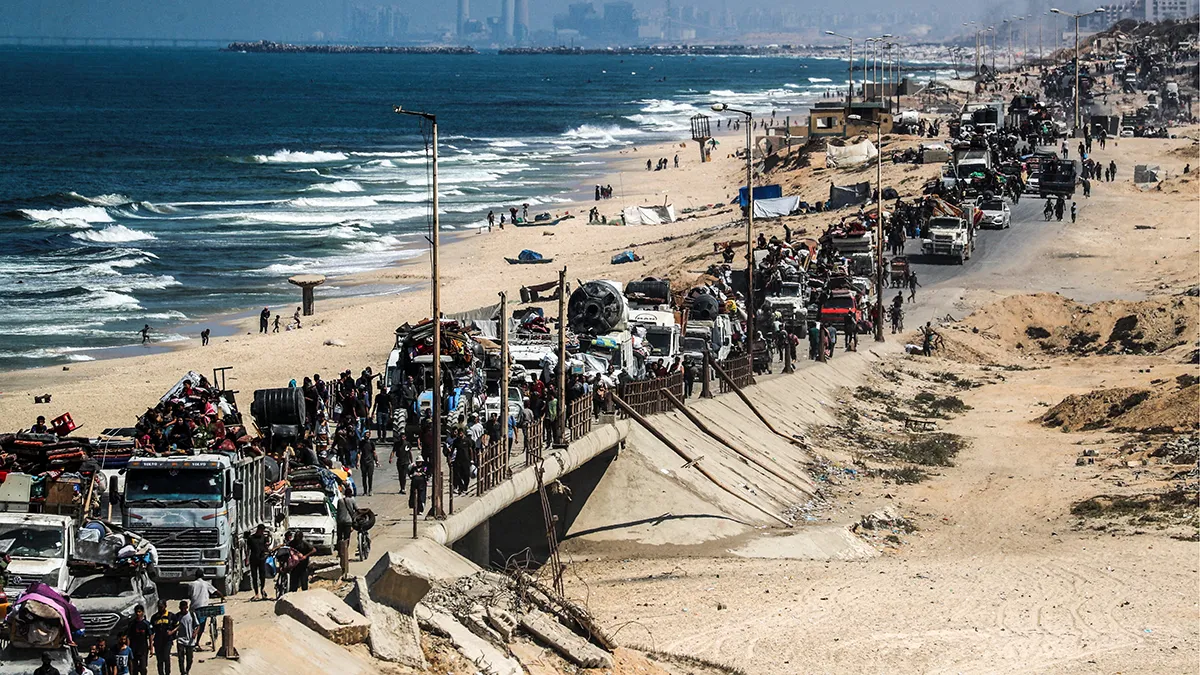
Mass evacuation orders have displaced some 300,000 civilians to Rafah and Deir al-Balah, according to OCHA (UN Office for the Coordination of Humanitarian Affairs), with temporary roadblocks to prevent Hamas ambushes. The Economist and agencies such as Reuters report at least 450 Palestinian deaths in precision strikes (figures from the Hamas-controlled Gaza Ministry of Health, not independently verified), while the UN debates a ceasefire resolution in New York, preliminarily vetoed by the US. IDF testimonies highlight Hamas' systematic use of human shields in residential areas, in violation of international humanitarian law.
Why does it matter?
Strategically, this phase does not seek permanent occupation but rather the irreversible degradation of Hamas' operational capacity: breaking its fragmented C2 (command and control) (currently 60% inoperative, according to Israeli intelligence) and underground logistics (estimated at 800 km of tunnels, financed by Iran with £100 million annually), which could force a viable hostage exchange and reduce the threat of rockets to Israeli cities by 70%. This is crucial against Hamas terrorism, an Iranian proxy that prioritises jihad over Palestinian welfare, perpetuating cycles of violence.
On the transatlantic front, the United States is strengthening its unbreakable alliance with Israel through intelligence sharing (via CENTCOM) and Iron Dome systems, but is demanding auditable humanitarian corridors to mitigate accusations of disproportionate force – a balance that saves civilian lives without yielding to terrorists. Europe, for its part, is contributing €600 million in aid (through ECHO, the humanitarian arm of the EC), but its slowness in imposing secondary sanctions against Iranian banks (which launder funds for Hamas) is inexcusable: governments such as Germany and France must freeze assets now, not in 2026, to put pressure on Tehran and prevent Iran from exporting more chaos via Hezbollah or the Houthis.
Risk of regional escalation:
Hezbollah (another armed wing of Iran, with 150,000 rockets) could exploit any pause in Gaza for cross-border attacks from Lebanon, testing cracks in NATO if Europe does not speed up deliveries of AA (anti-aircraft) missiles. This underscores the need for a unified anti-terrorist stance, where European weakness only emboldens regimes such as that of the ayatollahs.
What to watch for?
- Progress in neutralising Hamas C2 nodes (measured by reduction in rocket launches, currently 20/day) and evidence of tunnels (Maxar satellite imagery to verify destruction)
- Effective flow of humanitarian aid (OCHA metrics: tonnes delivered vs. blocked, with neutral verification by the Red Cross)
- Intersections with negotiations in Doha (signs of hostage lists or exchange phases, linked to advances in Gaza City to pressure Hamas)
Gulf — Arab-Islamic Summit in Doha: Qatar consolidates its role as mediator (15–16 September)
What happened?
The Extraordinary Arab-Islamic Summit in Doha, co-convened by the Arab League (LAS) and the Organisation of Islamic Cooperation (OIC) with 57 member states, culminated in a joint statement explicitly endorsing Qatar as a neutral mediator following the Israeli attack on 10/09 against Hamas leaders in its capital (which killed three targets with no civilian casualties, according to shared intelligence). The text condemns sabotage of the mediation, warns that such incidents threaten normalisation processes (such as the Abraham Accords) and establishes a framework for a 60-day ceasefire in Gaza, with the exchange of 50 Israeli hostages for 200 Palestinian prisoners (non-combatants).
Qatar, acting at the direct request of the US (via Blinken) and Israel (Netanyahu), facilitated 12 secret rounds with Hamas and Egypt; the GCC (Gulf Cooperation Council) is aligning itself, promising $2 billion in reconstruction aid conditional on Hamas disarmament. Reuters and Al Jazeera confirm Doha's pivotal role, with Egypt as the logistical guarantor.
Why does it matter?
Qatar is emerging as a valuable asset for pragmatic diplomacy: its open channels with Hamas (in Doha since 2012 at the insistence of the United States) allow it to put pressure on the terrorist group without ideological concessions, facilitating, albeit temporary, ceasefires that save innocent Israeli and Palestinian lives. This is a clear victory against the extremism of Hamas, which rejects truces in order to perpetuate its narrative of ‘armed resistance’ – a euphemism for Iranian-funded suicide terrorism.
From a Western perspective, the US is masterfully orchestrating this mediation, aligning moderate Arab interests (Saudi Arabia, UAE) against Iranian proxies, reducing the risk of multi-front, multi-dimensional war. Europe can leverage this with €1 billion in funding for verifiable humanitarian corridors (via EEAS, European External Action Service), but the EC must make its support conditional on strict audits against diversions to Hamas – its usual lukewarm sanctions against Tehran only extend and deepen instability and prolong suffering.
Regional stability:
The GCC's backing for Doha may serve as a deterrent to Iran and its allies (Houthis in Yemen, militias in Iraq) from sabotage, opening windows for post-Hamas normalisation and energy diversification, crucial for Europe given its dependence on Russia.
At the same time, the incipient bond of trust between Israel and the Gulf States has been broken, and some analysts are already saying that the Abraham Accords are in jeopardy and that normalisation between Israel and Saudi Arabia is frozen indefinitely.
What to look for?
- Detailed timetable for the exchange (phase dates, verification by Qatar-US-Egypt, preliminary lists of hostages)
- Tripartite commitments to a ceasefire (UN satellite monitoring, penalties for violations)
- Humanitarian impact indicators (tonnes of aid delivered, infant mortality rates in Gaza pre/post-summit) and their link to advances in Israeli offensives

NATO — Russian drones over Poland and Romania: New eastern flank mission and UK air deployments (14–17 September)
What happened?
In current affairs, NATO has responded to the series of Russian incursions with a new eastern flank reinforcement mission: Poland shot down four Shahed-136 drones (Iranian, adapted by Russia) on 15/09 during a swarm of 19 that violated its airspace in attacks on Lviv (Ukraine), becoming the first NATO member to open direct fire. Romania reported a similar incursion on 14/09, with a drone flying over Constanta (a key Black Sea port), shot down by Romanian F-16s. Moscow denies intent, claiming ‘diversions due to Ukrainian jamming’, but NATO intelligence (via SHAPE) links the attacks to grey war testing. The US pledges €500 million in C-UAS (counter-unmanned aerial systems); the UK deploys four Typhoons for joint patrols over Poland from 16/09. The BBC and AP confirm the escalation, with Zapad-2025 (Russian-Belarusian exercises) as a provocative backdrop.
Why does it matter?
Putin's ‘grey war’ – using cheap drones ($20,000/unit) to probe NATO ROE (rules of engagement) – seeks to erode deterrence without crossing nuclear thresholds, testing gaps in low-altitude radars and civil alerts. Russia, producing 300 drones/month (according to the NYT), normalises sub-threshold aggression that could precede larger attacks, similar to its tactics in Ukraine (where 70% of missiles are drones). This is intolerable: the Kremlin, already guilty of crimes in Bucha and Mariupol, must not be allowed to get away with it.
Washington is leading firmly, expanding IAMD (integrated air and missile defence) via deployments in Rota and Sigonella, strengthening NATO as a shield against expansive and aggressive authoritarian regimes or criminal states such as Iran. Europe is responding well with British jets and Polish promises of €2 billion in C-UAS, but the EC and governments such as the Dutch are failing miserably: their delay in AA ammunition production (only 30% of 2024 commitments met) and dependence on Chinese chips for radars expose serious technological-strategic weaknesses and frailties. It is therefore essential to demand diversification and secondary sanctions on Russian exporters of technological components.
Allied unity:
These incidents require updated ROE for UAS, avoiding escalation but imposing costs (e.g., cyber countermeasures) on Moscow, preserving NATO's credibility vis-à-vis China in the Indo-Pacific.
What to look for?
- Launch of joint NATO patrols (Typhoon/F-16 flight hours on the eastern flank, integrated radar coverage)
- Additional rotational deployments (US/UK battalions in Poland/Romania, response metrics <5 min)
- Advances in SIGINT/ELINT (signals intelligence) to attribute incursions (declassified Shape reports on Russian origins, sanctions on Iranian suppliers)

Indo-Pacific — Scarborough: China-Philippines clash and ‘nature reserve’ as international lawfare? (16 Sep)
What happened?
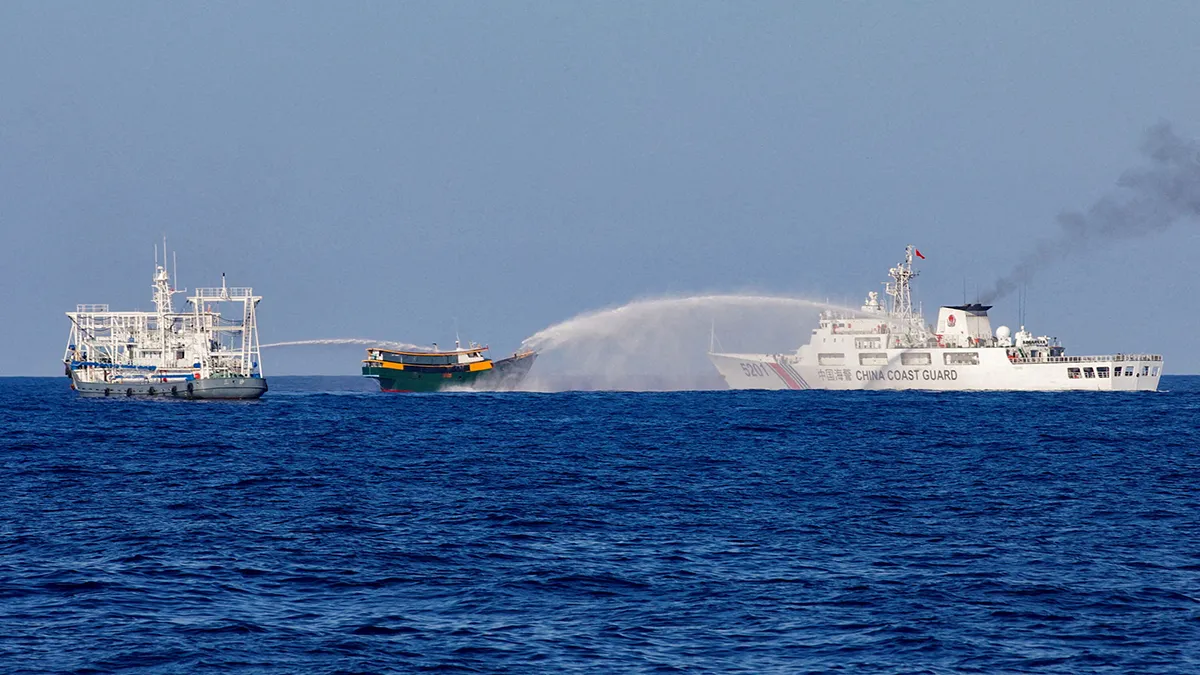
The Chinese Coast Guard (CCG), more powerful than most navies in the region with the exception of Japan and Australia, fired water cannons (up to 5,000 pounds per square inch) at the Philippine vessel BRP Cabra in Masinloc Shoal/ Scarborough Shoal, injuring three sailors and damaging the hull. Manila describes the serious incident as ‘illegal aggression’ in its EEZ (exclusive economic zone, according to the 2016 ruling of the International Court of Justice in The Hague), while Beijing calls it “intrusion” and pushes ahead with its ‘marine nature reserve’ plan to claim de facto sovereignty. The US, UK, Australia and Canada issued a joint condemnation via QUAD (Quadrilateral Security Dialogue - United States, Japan, India and Australia); the Philippines invokes the 1951 Mutual Defence Treaty. AP and Reuters verify with videos sent by the Philippine government, showing intentional collision.
Why does it matter?
China employs ‘grey’ coercion – environmental lawfare to nullify Philippine rights over 200 nautical miles rich in fishing ($500 million/year) and gas – eroding the international order and the Law of the Sea, which is based on rules without open warfare, similar to its claims in Taiwan. This threatens global shipping lanes (30% of world trade passes through the South China Sea), raising insurance premiums by more than 15%.
The United States complies with and respects its treaty with a naval presence (with the missile destroyer USS Higgins on patrol), demonstrating anti-revisionist credibility. Allies such as the United Kingdom are discussing VFA (visiting forces agreements) for joint exercises, undoubtedly a positive step. Europe must move beyond mere declarations and commit to participating in or supporting naval missions such as AUKUS+ (including French destroyers), and sanctions on Chinese dual-use firms are essential, but the EC is delaying export controls – a negligence that only emboldens Xi, ignoring risks to semiconductor supplies.
Allied credibility:
Without a unified response, the Philippines could give in, encouraging Chinese aggression in Senkaku or Spratly.
What to watch for?
- Adjustments to Philippine Coast Guard ROE (armed escort protocols, response thresholds)
- Progress on VFA with allies (US/UK rotational deployments, maritime exercises)
- Satellite evidence (Planet Labs images of reef damage, ITLOS litigation for “environmental damage” as counter-lawfare)
Russia-Ukraine — US tariff notice: 100% “secondary” and more Patriot (Jul–Sep)
What happened?
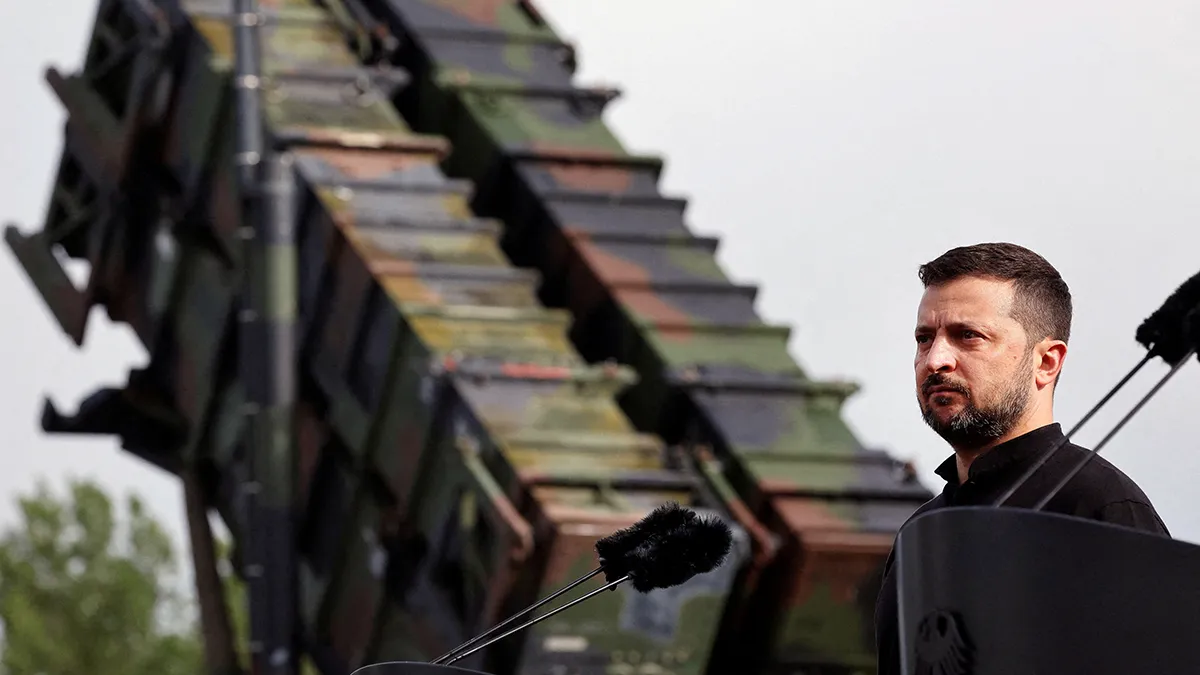
Trump reiterates punitive 100% secondary tariffs on any nation that purchases Russian oil/gas if there is no progress in negotiating peace for the war in Ukraine within 50 days. In addition, he has announced the immediate shipment of two additional Patriot batteries to Kiev (with GEM-T missiles to intercept Russian S-400s). Reuters estimates an impact of $150 billion on Russian revenues; India and China receive direct warnings, with Moscow responding with threats to cut off gas to Europe.
Why does it matter?
This combination of economic coercion and hard power raises the cost of Putin's aggression – Russia spends £300 billion/year on war, 40% of its GDP – which could dry up funds for drones/missiles while strengthening Ukraine's anti-missile defence (which has an 85% success rate in interceptions). It is a masterstroke against Russia's military-financial strategy.
The US is leading with precision, deterring ‘grey buyers’ such as India (which buys 2 million barrels/day). Europe is aligning sanctions (EU package 15), but its 2028 timeline for achieving the goal of zero Russian gas is, to say the least, shocking because it is not credible: governments must accelerate IAMD and ammunition production now, or risk blackouts that benefit Beijing/Moscow.
Global message: Secondary tariffs isolate Russia, forcing real negotiations.
What to watch?
- Legal framework for tariffs (OFAC clauses for enforcement)
- Effects on marine insurance (Lloyd's reinsurance for ‘grey ports’)
- Patriot deliveries (Ukrainian integration rates, fire tests against Russian Iskander tactical ballistic missiles)
Transatlantic — Threat of 30% tariff on the EU: how to prevent trade from disrupting strategy (Jul–Sep)
What happened?
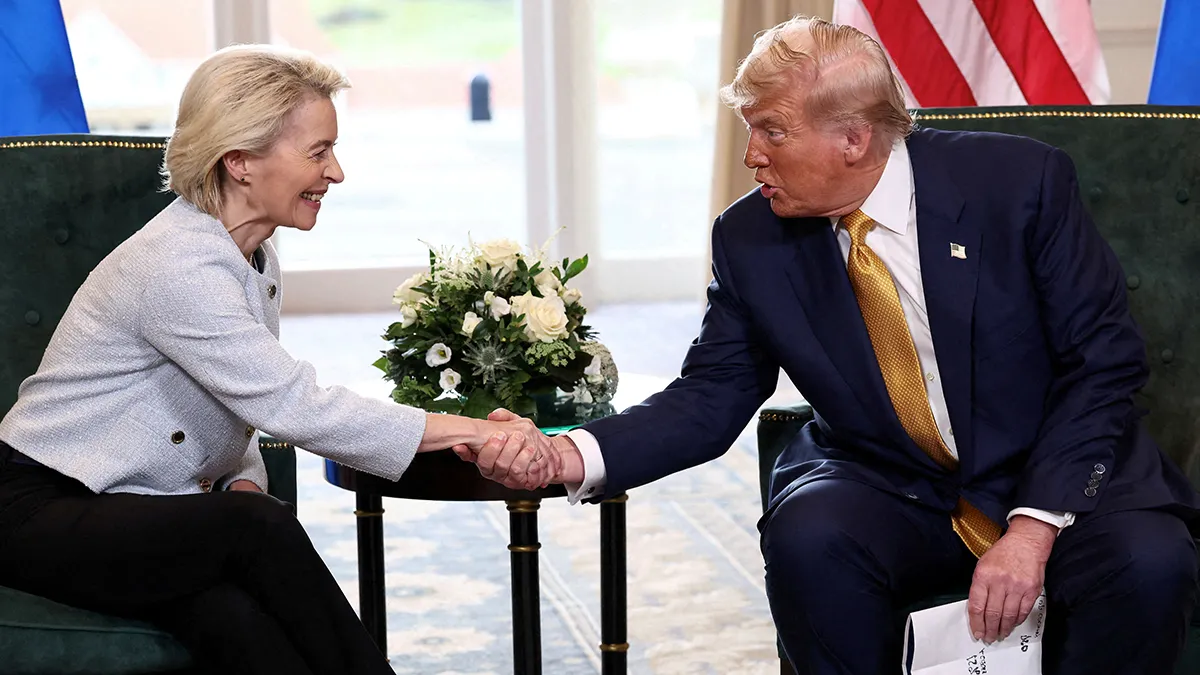
Trump maintains 30% tariffs on EU imports (German cars, French wines, Italian and Spanish agribusiness), with FT models estimating €200 billion in losses; EC proposes exemptions for defence/pharma, but European Commission President Von der Leyen warns that retaliatory measures will be taken against US tech giants if there is no reciprocity.
Why does it matter?
Trade rift threatens NATO cohesion against Russia/China: a diversion of Chinese surpluses to Europe (subsidised $300 billion) would undermine shared strategies. The United States wisely protects its industrial base. Europe gains in alliance, but EC must negotiate agricultural access now, not delay – its chronic protectionism erodes transatlantic trust. Signal to Beijing: Closing gaps prevents it from exploiting divisions.
What to watch?
- Exemptions in key sectors (clauses for semiconductors/defence)
- Negotiation deadlines (reciprocal agro-tech packages)
- NATO safeguards (shielding critical supply chains)
United States — Charlie Kirk case: formal charges and death penalty request (16–17 September)
What happened?
Utah prosecutors filed capital murder charges against Tyler Robinson for the fatal shooting of Charlie Kirk at a rally; evidence includes radical messages, ballistic casings and eyewitnesses. Trump condemns it as an ‘attack on freedom’ with a national memorial in DC.
Why does it matter?
Swift judicial response affirms US rule of law, contrasting with autocracies that cover up political assassinations (e.g., Navalny in Russia). Strengthens protection of dissidents without censoring debate, combating Russian/Iranian information warfare that exploits polarisation. Capital punishment deters domestic extremism.
What to watch:
- Admission of evidence (forensic trajectory analysis)
- Federal aggravating factors (classification as terrorism)
- Process (impartial jury selection, appeals)

Caribbean — US Navy attack on Venezuelan drug boats: Surgical strike against cartels and Maduro regime (2–16 September)
What happened?
The US Navy, under Operation Southern Cross, carried out three attacks against Venezuelan speedboats suspected of drug trafficking: On 2 September, an Arleigh Burke-class destroyer (USS Stout) and a SSN-774 submarine (USS North Carolina) sank a boat with Harpoon missiles and Mk-48 torpedoes, killing three crew members (identified as members of the Cartel del Sol, according to the DEA). On 15 September, a second similar attack in international Caribbean waters killed eight more, with a 29-second video released by Trump showing the boat evading before being neutralised. Seven warships and a nuclear submarine are supporting the operation, justified under the War Powers Resolution as an ‘imminent threat to hemispheric security’. Maduro denounces ‘imperialist aggression’ and mobilises militias; Reuters and NYT confirm 11 total deaths, with evidence of more than 2 tonnes of cocaine seized. AP details that the boats came from ports controlled by the regime (La Guaira), in operations linked to Hezbollah for money laundering.
Why does it matter?
This surgical strike dismantles key narco-terrorism routes: Venezuela, under Maduro (an ally of Iran and Cuba), exports 300 tonnes of cocaine per year ($10 billion), financing internal and external corruption and Iranian proxy terrorist groups such as Hezbollah (which launders funds in Aruba/Curaçao for global attacks). The Navy, with precision strikes (95% accuracy with Harpoon missiles), saves lives by cutting off flows that flood the US with fentanyl (100,000 deaths/year). It is an example of hard power against transnational networks, where Venezuelan cartels – protected by the Chavista regime – act as an extension of Iranian terrorism (Hezbollah trains Venezuelan guards) and the Venezuelan narco-dictatorship.
The US reaffirms its hemispheric leadership, deterring Nicaragua and Cuba from hosting drug traffickers; Europe applauds (joint EU-US statement), but its slowness in sanctioning European banks that launder Venezuelan funds (via Europol) is shameful — the EC must freeze Maduro's assets now, in line with the extradition of drug lords. Risk: If no pressure is applied, Maduro will escalate with Houthi-like maritime tactics, exporting instability to Europe via migration and drugs. This strengthens regional democracy, demanding unity against the most ferocious dictatorships in the region.
What to look for?
- Evidence of links (declassified DEA reports on Hezbollah-Venezuelan regime, weapons seizures)
- Legal response (challenges to Congressional Powers Resolution, ROE for future strikes)
- Operational impact (20-30% reduction in cocaine shipments, sustained naval deployments in the Caribbean)
Media Rack-Breakdown by headline (priority and summary selection, updated with recent angles)
- The Economist – World in Brief (GB): Leads with offensive in Gaza City (tactical details of IDF) and US naval strikes in the Caribbean (blow to Maduro as ‘anti-drug surgery’); notes risks of Houthi escalation in response.
- Reuters (agency): Factual core: Gaza (450 deaths, tunnels destroyed); Doha (anti-sabotage resolution); Poland/Romania (post-drone NATO missions); Scarborough (collision videos); Tariffs (models of $150B Russian impact); Kirk (digital evidence); Narco-strikes (11 dead, 2T cocaine).
- AP (Associated Press, US): Visual focus on Scarborough (Filipino casualties, water cannons) and narco-boats (photos of debris, confirmation of Cartel del Sol); alert for drone incursions in Romania.
- BBC (UK): Humanitarian coverage of Gaza (evacuation maps) and UK Typhoon deployments over Poland; analysis of US strikes as ‘credible deterrent’ vs. Maduro/Hezbollah.
- WSJ / Fox News (US): Pro-Israel interpretation (degradation of Hamas, blame on Iran); support for Russian tariffs and narco strikes as ‘tough justice’ against drug-financed terrorism (supported by Reuters/Economist).
- FT (Financial Times, UK): Macro models of 30% EU tariffs (€200B losses) and post-Scarborough insurance premiums (+15%); impact of strikes on Caribbean energy stability.
- Le Monde (France): Lecornu's governability (Fitch downgrade) and pro-European demands in post-drone IAMD; notes US strikes as a model for the EU vs. drug trafficking. (Based on Reuters).
- SCMP (Hong Kong) /regional: Chinese lawfare in Scarborough (‘nature reserve’ as a pretext); minimises US strikes, sees ‘aggression’ against Venezuela. (Supported by Reuters/AP).
- Al Jazeera (Qatar): Arab unity in Doha (support for mediation); criticises Gaza, but registers Qatari channel for exchanges; ignores Hezbollah's role in drug trafficking.
- People (US): Human details in Kirk (trauma witnesses) and drug strikes (Venezuelan victim families).
Note: Expanded with drug strikes and Romania drone angle for current events; sources prioritise Reuters/AP/BBC for balanced verification.
United States
- The New York Times (NYT): Humanitarian in Gaza (300K evacuations, pressure on Israel); drug strikes as ‘justified escalation’ vs. Maduro, with ethical doubts about casualties (focus on Trump videos).
- The Washington Post (WaPo): ‘Urban assault on Gaza’ and post-Kirk resilience; analysis of strikes as extension of War Powers, linking to Hezbollah money laundering.
- The Wall Street Journal (WSJ): Military targets in Gaza (Hamas C2) and Russian tariffs; praises Navy strikes for cutting Iranian terrorist funds.
- CNN: Live in Gaza/Doha; coverage of strikes with graphics of sunken boats, DEA interview.
- Fox News: Full support for Israel and ‘lethal strikes against narco-terror’; demands death penalty for Kirk, blames radicals.
- CNBC: Risks of inflation, tariffs and insurance post-Scarborough/strikes (supply chains).
- ·CBS News: Gaza victims and post-Kirk rally security; note submarine deployments in strikes.
- USA TODAY: Summary of Gaza/Kirk/drug trafficking with infographics (death toll, drug routes).
- POLITICO: Implications for Congress (tariffs, War Powers strikes); post-Kirk security.
- The Hill: Capitol echoes in Patriots and strikes as ‘anti-Maduro victory’.
- Washington Times: Toughness vs. Iran/Hamas and Kirk capital punishment; strikes as anti-terror model.
- The National Interest: Coercion vs. Russia and strikes as hemispheric deterrence; caution over escalation.
- The Daily Beast / Newsweek: Kirk radicalisation and narco echo in networks; Gaza humanitarian aid with Hamas criticism.
United Kingdom / Commonwealth
- The Economist – World in Brief: Gaza offensive and narco strikes; Romanian drone overview.
- Financial Times (FT): EU tariffs and post-strike/Scarborough energy risks.
- The Times (London): Gaza/Hezbollah tactics and Typhoon Poland; strikes as ‘naval surgery’.
- The Telegraph: Iran/Hamas and Anglo-US toughness in strikes; NATO drone defence.
- The Guardian: Criticism of Gaza and Poland drones; ‘excessive’ strikes vs. Maduro.
- BBC: Verification Gaza/Poland and NATO cohesion post-drones; strikes with Hezbollah context.
- Daily Mail & The Globe and Mail (Canada): Harsh headlines Gaza/drug trafficking; Canada in NATO/Indo-Pac strikes.
France / Switzerland
- Le Monde: Lecornu fiscal and Europeanism IAMD drones; EU model strikes drug trafficking.
- Le Figaro: Lecornu security and strikes as naval trial by fire.
- Libération: Social Gaza and freedoms; EU criticism of drug sanctions.
- LCI / BFM TV / France Info: Live coverage of Gaza/Doha/Poland/strikes; Lecornu fiscal challenge.
- La Tribune de Genève: Int. law Doha and humanitarian strikes.
Germany / Italy / European Union
- FAZ (Frankfurter Allgemeine Zeitung): IAMD drones and ammunition; EU fiscal caution strikes impact.
- Die Welt: NATO firmness drones and Brussels tariff hesitations.
- Die Zeit: War costs drones; civil resilience strikes.
- DPA (agency): Poland/Gaza/strikes teletypes; verified facts.
- Corriere della Sera: EU tariffs and Gaza balance Italy.
- L'Osservatore Romano: Moral Gaza ceasefire; ethical strikes vs. narco.
Israel
- Yedioth Ahronoth / Israel Hayom: Support tunnel offensive; anti-Hezbollah strikes positive.
- Jerusalem Post: Gaza tactics and Doha exchanges; strikes cut Hamas funds.
- Haaretz: Criticism of war exit; strikes example vs. proxies.
- Maariv: Gaza brigades and northern Hezbollah; strikes deterrence.
Arab world / Gulf
- Al-Jazeera (Qatar): Doha GCC centrality; Gaza critical but mediation progress.
- Al-Arabiya / Asharq Al-Awsat / Arab News (Saudi Arabia): Doha channel, condemnation of Hamas/Iran; anti-Hezbollah strikes.
- The Peninsula (Qatar): Logistics summit aid; strikes Gulf stability.
- Jordan Times / Al-Rai (Jordan): Mediation support; strikes overflow.
- An-Nahar / L'Orient-Le Jour / Daily Star (Lebanon): Hezbollah border and strikes impact
- Al-Quds al-Arabi / Al-Hayat al-Jadida / Al-Ayyam / Felesteen: Pro-Palestinian Gaza; strikes ‘US aggression’.
- Al-Riyadh / Saudi Gazette / Gulf News (UAE) / Khaleej Times / Gulf Today / Al-Ittihad / Times of Oman: Summit/aid; SCS alerts/energy strikes.
Asia–Pacific
- South China Morning Post (SCMP): Scarborough lawfare; strikes ‘provocation’ US.
- China Daily: Chinese stance on Scarborough; downplays coercive strikes.
- Yomiuri Shimbun / Tokyo Times: Implications for Japan in the SCS; surveillance strikes.
- The Straits Times (Singapore): Raw material routes strikes/Scarborough.
- The Times of India / Hindustan Times / Indian Express: India-Russia tariffs; SCS containment/strikes.
- WION: Indo-Pacific coalitions strikes favourable.
Eastern Europe / Ukraine / Russia
- Ukrainska Pravda / Ukrinform / Kyiv Post / The Kyiv Independent / Fakty i Komentarii / Vesti: Russian AA drones; applause Patriots/tariffs/anti-Maduro strikes.
- Gazeta Wyborcza (Poland): Poland toughens NATO drones; model strikes.
- RT (Russia Today) / TASS: Deny drones, blame NATO; strikes ‘US terrorism’.
Ibero-America
- Clarín (Argentina) / El Mercurio (Chile) / Reforma (Mexico): Hemispheric implications of strikes (energy, Kirk democracy).
International press agencies
-
Reuters: Verification Gaza/Doha/Poland/Scarborough/Kirk/strikes/tariffs
-
AP (Associated Press): Visual Scarborough/strikes (injuries, debris).
- AFP / DPA: European, Lecornu/drones and assessments Gaza/strikes.