Gustavo de Arístegui: Geopolitical analysis of 19 November 2025


- Introduction: the era of hegemonic neo-transactionalism
- The total rehabilitation of MBS and the ‘Qatar-Plus’ security pact
- ‘Operation Southern Spear’ and the kinetic threat to Venezuela
- The Security Council resolution and the Gaza protectorate
- Nvidia, ‘circular deals’ and the spectre of the AI bubble
- The seafood war and Taiwan's red line
- Negotiations in Istanbul and the Western Rift
- María Corina's Nobel Prize and the ‘Land of Grace Plan’
- The injection of Saudi capital and ‘America first’
- Hamas and the promise of perpetual insurgency
- Saudi nuclear ambiguity
- The ‘Cartel of the Suns’ as a terrorist organisation
- The Technological Iron Curtain (China/AI)
- Media Analysis by Region: The Narrative Fracture
- Editorial analysis: the geopolitics of vertigo The New Consensus of Force
Introduction: the era of hegemonic neo-transactionalism
November 2025 is a definitive turning point in the history of 21st-century international relations. After a year of readjustments under President Donald J. Trump's second term, the global system has abandoned the pretensions of the rules-based liberal order that characterised the post-Cold War era and has fully entered an era of ‘hard transactional diplomacy’. In this new paradigm, historical alliances are not assumed on the basis of shared values, but are renegotiated quarterly based on capital flows, kinetic security guarantees and energy alignment.
The current landscape presents a simultaneity of high-intensity crises that challenge the risk management capabilities of state and corporate actors alike. In the Middle East, Washington is attempting a ‘grand design’ manoeuvre that seeks to close the security flank of the Persian Gulf through a historic pact with Saudi Arabia, while imposing an international governance structure on a devastated Gaza. This plan has been defined as "the only possible and viable one to end the Gaza War and move towards some kind of agreement and normalisation.
In the Western Hemisphere, the Monroe Doctrine has been reactivated with a military force not seen since the Cold War, placing Venezuela's narco-dictatorship before an ultimatum: democratise, renounce its narco-terrorist activities and stop feeding extreme left-wing regimes and parties. The pressure is backed by the largest naval deployment in the Caribbean in decades.
At the same time, the global economy is in a contradictory state, oscillating between precariousness and euphoria. Financial markets, sustained by the promise of artificial intelligence, face their litmus test with the possibility that the revenue models of tech giants will not justify their astronomical valuations, creating a systemic risk of correction that could evaporate trillions of dollars in market capitalisation.
In Eurasia, the war in Ukraine is moving into a phase of forced negotiation, where territorial sovereignty is becoming a bargaining chip at diplomatic tables in Istanbul, under the shadow of Western fatigue and renewed American realism.
This report is prepared using a political and strategic risk intelligence methodology and breaks down the architecture of these conflicts. It analyses not only the surface of events, but also the underlying currents: the militarisation of supply chains, the financing of national security and the return of great power politics in its crudest form. Through twelve vectors of critical analysis, a review of the global media spectrum and an assessment of risk scenarios, this document provides a roadmap for navigating the extreme volatility of the end of 2025.
The total rehabilitation of MBS and the ‘Qatar-Plus’ security pact
Analysis of the Facts:
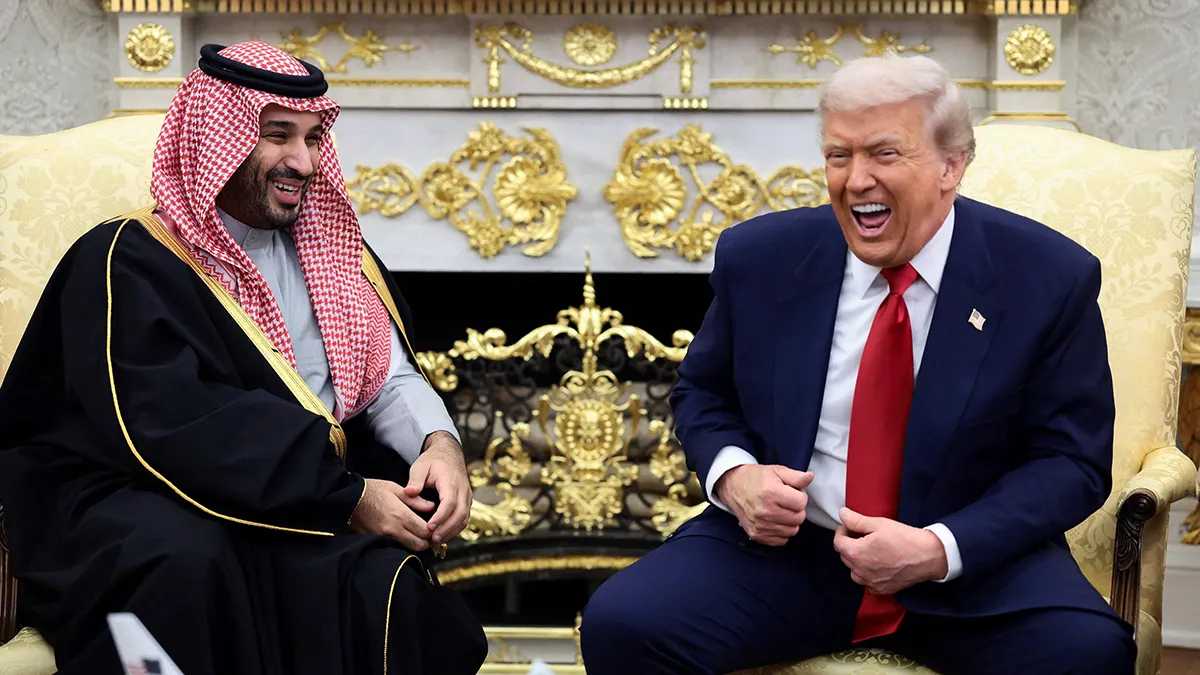
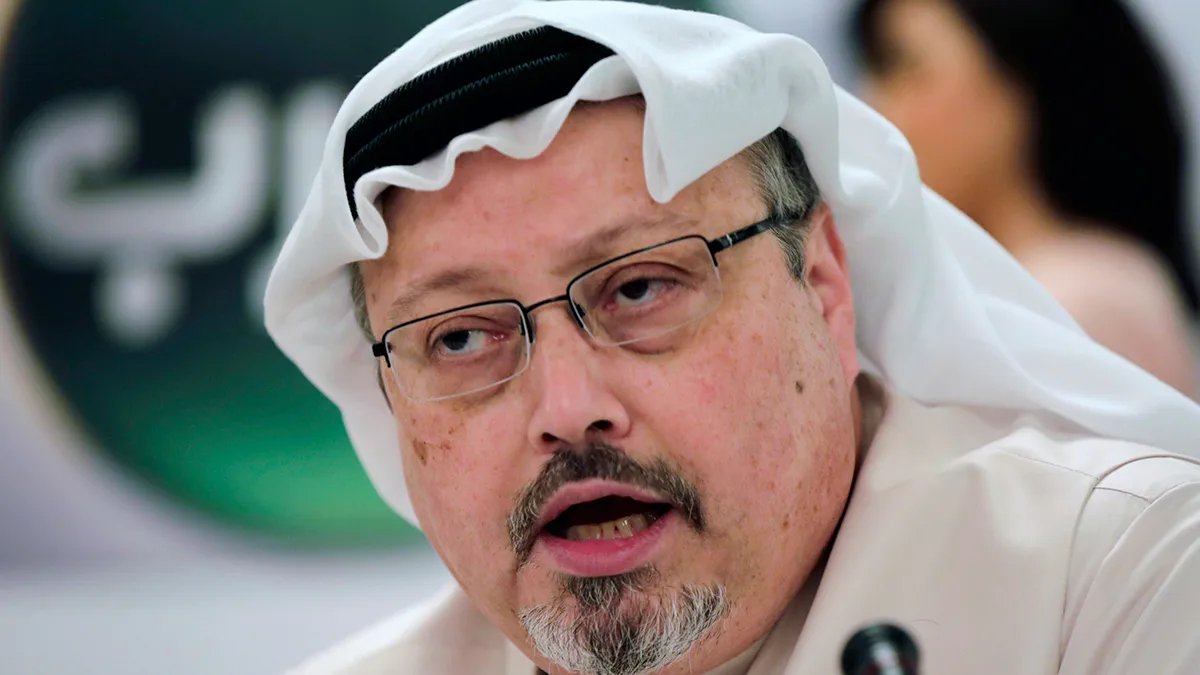
18 November 2025 marks the definitive return of Crown Prince Mohammed bin Salman (MBS) to the centre of US diplomacy. After a period of diplomatic cooling post-2018 (the Khashoggi case), MBS's visit to the White House and his meeting with President Trump symbolise the triumph of political realism over normative human rights considerations. The Trump administration has finalised a series of agreements that consolidate the strategic partnership, notably a defence pact described by analysts and officials as ‘Qatar-Plus’ or similar to the 1960 Mutual Cooperation Treaty with Japan.
This security agreement goes beyond traditional arms sales guarantees. It establishes a formal commitment by the United States to defend Saudi territory, sovereignty and critical infrastructure against external aggression. At the same time, a civil nuclear cooperation agreement has been signed that lays the legal foundation for a decades-long partnership, allowing Riyadh access to US nuclear technology under the promise of non-proliferation standards, although details on the fuel cycle remain opaque.
Strategic and Security Implications:
The elevation of Saudi Arabia to the status of strategic ally, after several years of ostracism, fundamentally changes the deterrence equation in the Persian Gulf.
The Carter Doctrine 2.0: By formalising the defence of the Kingdom, Washington is institutionalising the 20th-century Carter Doctrine for the 21st century, but with a twist: the goal is no longer just the flow of oil, but the containment of Chinese influence and the integration of Riyadh into the anti-Iran security architecture. This forces the US Central Command (CENTCOM) to integrate its operational plans with Saudi forces at an unprecedented level, creating an interdependence that will make it nearly impossible for future US presidents to disengage from the Kingdom's regional conflicts. On the other hand, it should not be forgotten that Saudi Arabia has always been a strategic ally of the US. To the extent that it was the only country outside the US to have the most advanced versions of the F-15 fighter jet, along with Israel.
The Israeli Normalisation Dilemma: Despite the euphoria in Washington, full diplomatic normalisation between Saudi Arabia and Israel (presented to us as the ‘Holy Grail’ of the Abraham Accords) has not yet been confirmed. Riyadh has maintained its conditionality of an irreversible path towards a Palestinian state, a demand that has hardened after the 2023-2025 Gaza war.
The Saudi strategy seems to be ‘security first, normalisation later,’ ensuring the US umbrella regardless of progress with Tel Aviv. This leaves the Trump administration with a partial success: it has secured Riyadh within the American security orbit, but has not achieved full regional integration with Israel.
Moral Hazard and Ally Behaviour: The history of international relations suggests that states protected by superpower security guarantees often take greater risks (‘moral hazard’). With the US defence guarantee in his pocket, MBS may feel emboldened to take more aggressive stances in his neighbourhood (Yemen, Lebanon) or in his oil policy, knowing that the regime's security is underwritten by the Pentagon.
‘Operation Southern Spear’ and the kinetic threat to Venezuela
Analysis of the Facts:
Tension in the Caribbean has reached pre-war levels with the deployment of the USS Gerald R. Ford, the world's most advanced and largest aircraft carrier, to the northern coast of South America. This move, part of ‘Operation Southern Spear’ announced by Defence Secretary Pete Hegseth, includes a 15,000-strong task force, amphibious assault ships and guided missile destroyers.
The White House's rhetoric has escalated dramatically, with administration officials anonymously stating that ‘the table is set’ for military action, and President Trump himself cryptically declaring that he has ‘almost made a decision’ regarding the future of Nicolás Maduro.
In response, the Caracas regime has mobilised 200,000 military and militia personnel, deploying Russian-made air defence systems (S-300VM Antey-2500 and Buk-M2E) in coastal and border positions. The official US narrative justifies the escalation under the banner of fighting ‘narco-terrorism,’ citing £50 million rewards for Maduro's capture and linking the Venezuelan state to drug trafficking to the US.
Strategic and Security Implications:
This deployment is not merely a ‘gunboat diplomacy’ manoeuvre; it represents operational preparation for high-intensity conflict in the Western Hemisphere.
Intervention Scenarios: The composition of the force (aircraft carrier plus amphibious capability) suggests two possible operational vectors. First, a total naval and air blockade to economically suffocate the regime and intercept oil and drug shipments. Second, a campaign of precision ‘decapitation’ strikes against the command and control leadership in Miraflores and Fuerte Tiuna, avoiding an initial massive ground invasion but preparing the ground for special forces.
Risk of Casualties and Asymmetric Escalation: Military experts warn that Venezuela has the densest and most modern air defence network in the region. Russian S-300 systems pose a threat to US aviation, which, on the other hand, has highly advanced means and systems that can perfectly neutralise Venezuelan air defences, whose armed forces have been described as an inoperative disaster. It would seem that it is only capable of internal oppression and drug trafficking.
Message to Extra-Continental Rivals: The operation carries an implicit direct message to Moscow and Beijing. By surrounding its key ally in the region, Washington reaffirms the validity of the Monroe Doctrine, signalling that it will not tolerate the presence of adversarial military or intelligence infrastructure (Russian or Chinese) in its ‘near security zone’.
The Security Council resolution and the Gaza protectorate
Analysis of the Facts:
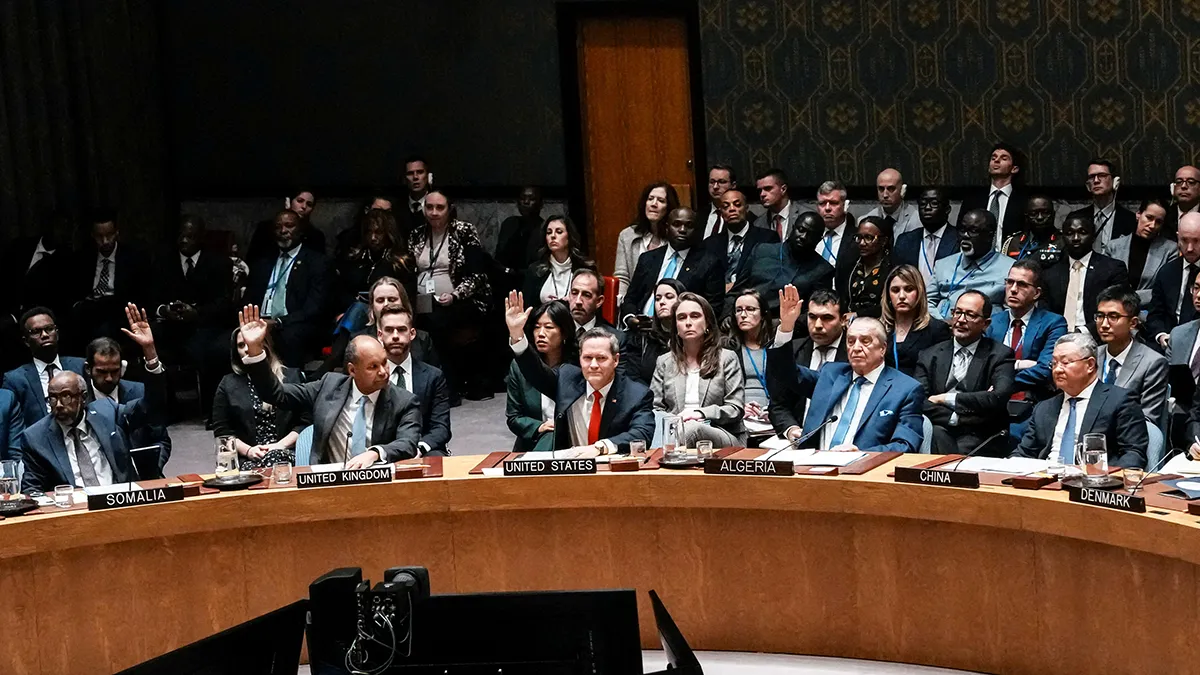
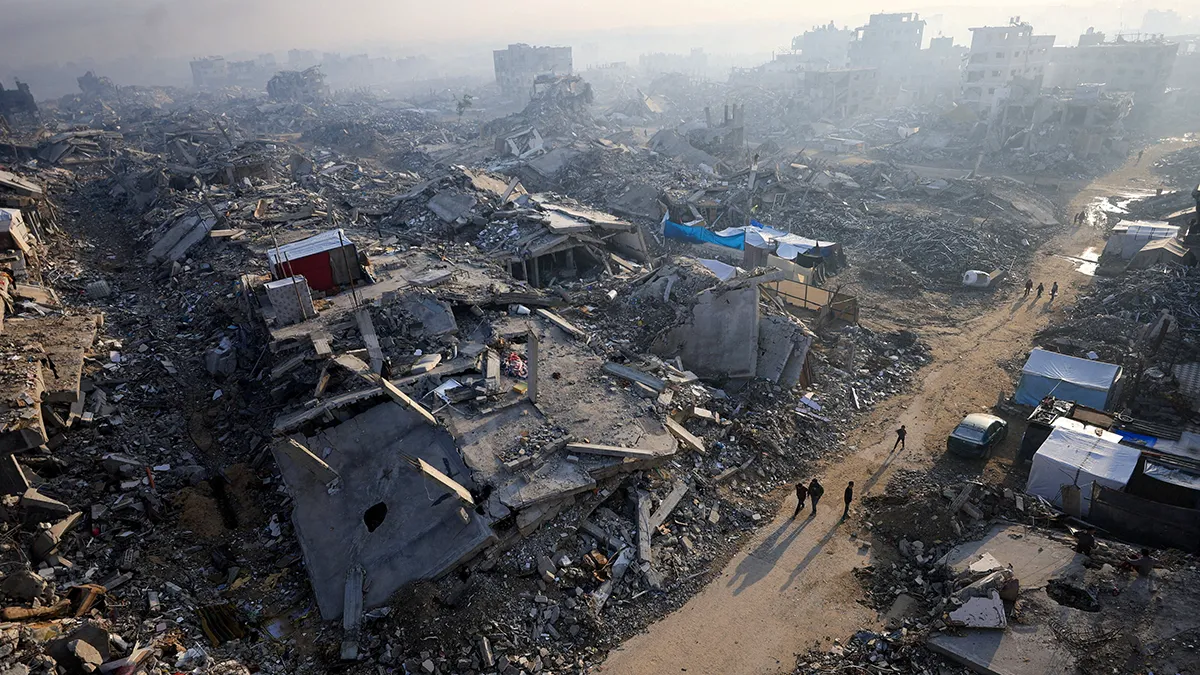
The UN Security Council approved, with 13 votes in favour and the strategic abstentions of Russia and China, a resolution drafted by the United States that reconfigures the governance of the Gaza Strip. The resolution authorises the deployment of an International Stabilisation Force (ISF) with an initial two-year mandate. Its objectives are to secure the borders, demilitarise armed factions, and oversee institutional reconstruction.
The most controversial and novel aspect is the creation of a ‘Board of Peace’ to oversee this transition mechanism. According to reports and statements, this body will be personally chaired by President Donald Trump, an unprecedented move that places the US head of state at the direct helm of an international trusteeship. The resolution provides for the withdrawal of Israeli forces conditional on security milestones achieved by the ISF.
Strategic and Security Implications:
The resolution marks the end of Israel's total autonomy over Gaza's security and the beginning of an internationalisation of the Palestinian conflict under US tutelage.
The Personalisation of Geopolitics: Trump's chairing of the ‘Board of Peace’ is not just a protocol detail; it is a high-risk move that links his personal and political prestige to the success of one of the most difficult state-building missions in the world. If the ISF fails or suffers massive casualties, the political cost will fall directly on the Oval Office, without intermediaries.
Limited Sovereignty and Techno-Governance: The plan replaces immediate political self-determination with technocratic and security administration. By entrusting security to a multinational force and governance to a committee, a model of ‘de facto protectorate’ is established. For the Palestinians, this indefinitely postpones real sovereignty in exchange for humanitarian aid and physical reconstruction; for Israel, it offers a strategic exit from the Gaza quagmire, albeit at the cost of entrusting its border security to third parties.
Operational Risk of the ISF: The history of peacekeeping forces in the Middle East (from the Marines in Beirut in 1983 to UNIFIL in Lebanon) is tragic. Without the consent of Hamas (which has already rejected the plan), the ISF will be seen as a hostile occupying force. International troops will face IEDs, ambushes and rockets, testing the political will of contributing countries from day one. But that should not intimidate the international community, which, if necessary, must enforce the disarmament of Hamas terrorists through the legitimate use of force.
Nvidia, ‘circular deals’ and the spectre of the AI bubble
Analysis of the facts:
Tech giant NVIDIA is preparing to present its third quarter fiscal 2026 results in a climate of extreme nervousness. Although revenue guidance projects $54 billion driven by the Blackwell chip architecture, cracks have appeared in the narrative of infinite growth.
Financial investigations have revealed a network of ‘circular deals’ in which NVIDIA invests capital in cloud startups and AI labs, which in turn use that capital almost exclusively to purchase NVIDIA GPUs. This artificially inflates short-term revenue, creating a feedback loop that may not reflect sustainable organic end demand.
The most alarming signal for institutional markets has been SoftBank's complete liquidation of its position in NVIDIA, citing the need for liquidity and caution, just before the earnings report. The company's shares, which carry disproportionate weight in the S&P 500 and Nasdaq 100 indices, have fallen 7.9% in November on these fears.
Economic and Systemic Implications:
The debate over NVIDIA has transcended stock market analysis to become a global macroeconomic concern.
Risk of ‘Cisco Moment’: Analysts are comparing the current situation to Cisco Systems in 2000. If it is confirmed that much of the demand for chips comes from companies financed by the seller itself and that do not have clear profitability models, a correction in NVIDIA's share price could trigger a cascading sell-off across the technology sector. Given that the ‘AI economy’ has been the main driver of industrial GDP growth in the US in 2024-2025, the bursting of this bubble could precipitate a technical recession.
Impact on Energy Infrastructure: The AI boom has driven massive investments in power generation and data centres. If the bubble bursts, billions in planned infrastructure projects (which depend on projected computing demand) could be cancelled, affecting utilities, construction, and industrial real estate companies.
The seafood war and Taiwan's red line
Analysis of the facts:
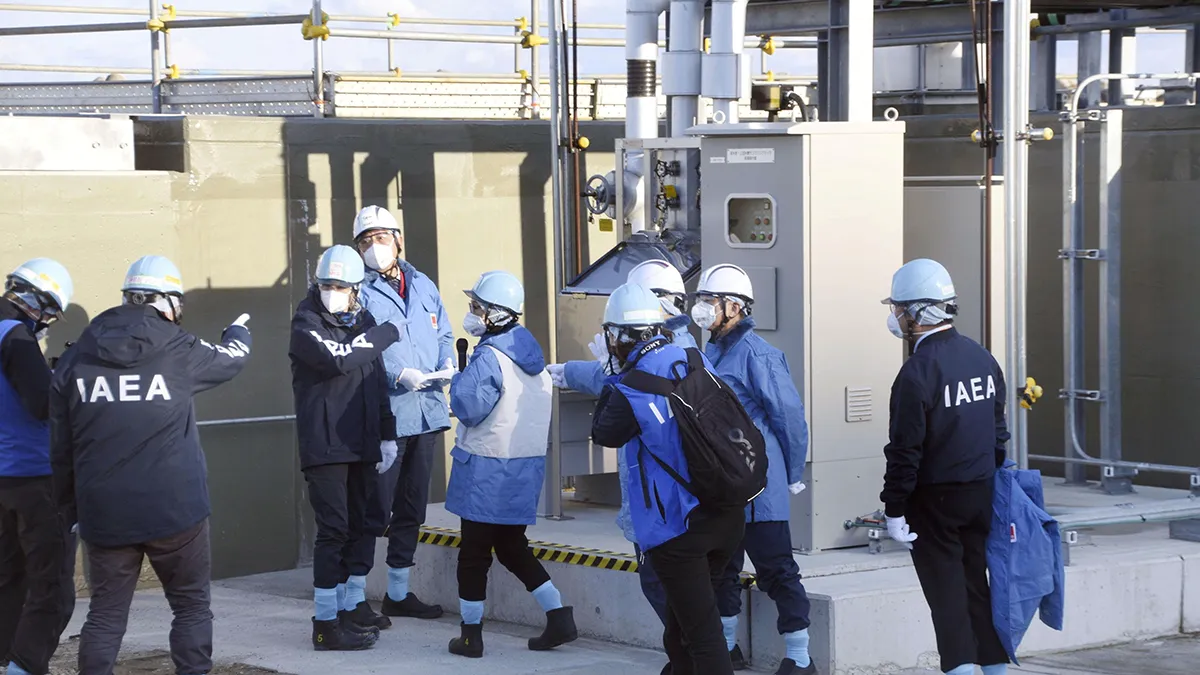
China has unexpectedly reimposed a total ban on imports of Japanese seafood, reversing a lifting agreement reached just weeks earlier. Officially, Beijing cites health concerns over the discharge of treated water from the Fukushima nuclear plant.
However, diplomatic sources and the timing confirm that the move is a direct political retaliation for comments by Japanese Prime Minister Sanae Takaichi, who explicitly stated that a Chinese invasion of Taiwan would constitute a ‘survival threat situation’ for Japan, which would legally enable the mobilisation of the Self-Defence Forces.
Geopolitical Implications:
This incident illustrates the complete fusion of trade and national security in East Asia.
Economic Coercion as First Response: China once again demonstrates its willingness to use access to its consumer market as a weapon of instant diplomatic punishment. For Japanese corporations, this reinforces the need to accelerate the ‘China Plus One’ strategy, diversifying markets toward Southeast Asia and the US to reduce vulnerability to political blackmail from Beijing.
The Internationalisation of the Strait Crisis: Takaichi's statement is a significant doctrinal shift. By existentially linking Japan's security to that of Taiwan, Tokyo is removing its strategic ambiguity. This brings Japan closer to full operational integration with US contingency plans for the Taiwan Strait, making it more likely that any local conflict will immediately escalate into a regional war involving the world's third-largest economy.
Negotiations in Istanbul and the Western Rift
Analysis of the Facts:
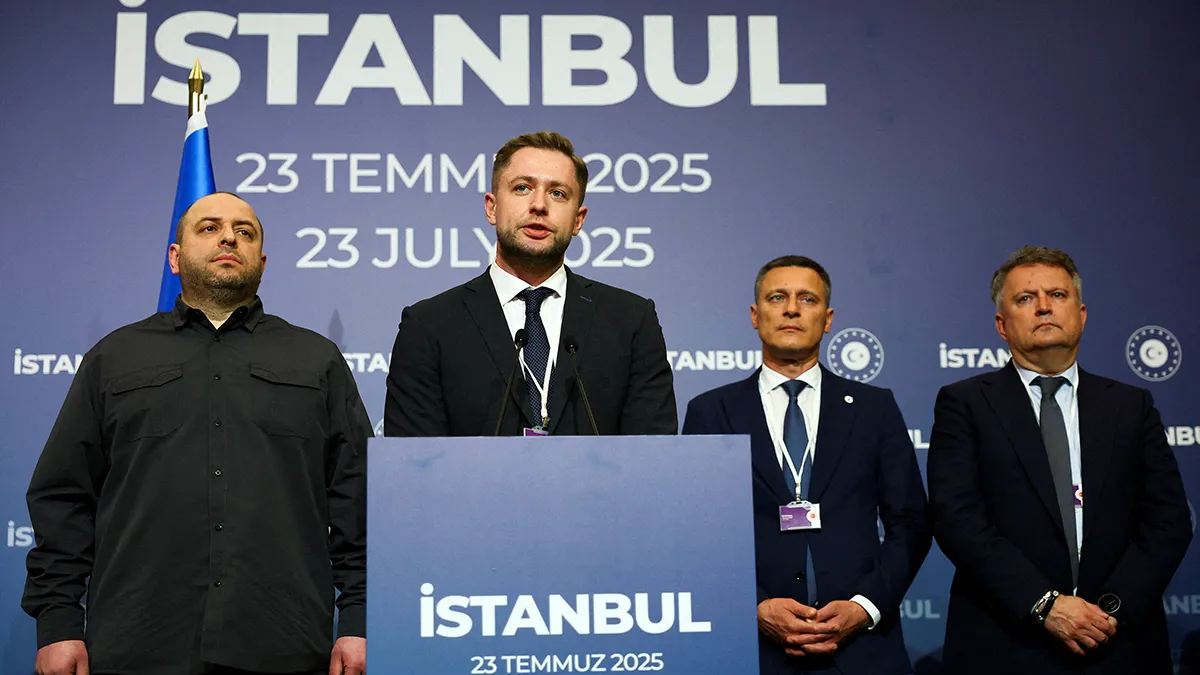
Under diplomatic pressure from the new Trump administration, Russian and Ukrainian delegations have resumed direct peace talks in Istanbul, with Turkish President Erdogan acting as host and mediator. The composition of the delegations is revealing: on the Ukrainian side, Defence Minister Rustem Umerov (who has deep ties to Turkey and the Tatar community); on the Russian side, hardline figures from military intelligence (GRU) such as Igor Kostyukov. The positions are diametrically opposed: Russia demands recognition of territorial annexations and Ukraine's constitutional neutrality, while Kiev, still backed by Europe, demands the withdrawal of troops and security guarantees.
Geopolitical Implications:
The resumption of talks under the current terms threatens the cohesion of the transatlantic alliance.
The NATO Schism: The Trump administration's willingness to consider Russian territorial demands as a basis for freezing the conflict clashes head-on with the position of its European allies to the north and east (Poland, the Baltics, the United Kingdom). There is a real risk that NATO will fracture into two blocs: one led by the US seeking a quick exit to pivot towards China, and a European ‘coalition of the willing’ attempting to sustain the Ukrainian war effort alone, an economically and militarily titanic task.
Precedent of Sovereignty: If the final outcome validates Russia's territorial conquest, it will set a devastating legal and political precedent for the international order. This would send a green light to other global irredentist actors, validating military force as a legitimate tool for redrawing borders in the 21st century.
María Corina's Nobel Prize and the ‘Land of Grace Plan’
Analysis of the Facts:
The awarding of the Nobel Peace Prize to the heroic Venezuelan opposition leader María Corina Machado in October 2025 has internationalised her figure to an unprecedented level, granting her a moral legitimacy that shields her leadership from the internal purges of Chavismo. Capitalising on this moment, her team has presented a detailed ‘Economic Transformation’ plan, dubbed ‘Tierra de Gracia’, at global forums (such as the Council of the Americas). This plan envisages investments of one trillion dollars, massive privatisations and the reconstruction of the energy sector, designed to attract Western capital immediately after a regime change.
Political Implications:
Shadow Government: The combination of Nobel recognition and a detailed technocratic government plan positions Machado not as a mere opposition figure, but as a head of state in waiting (similar to the recognition of Juan Guaidó in 2019, but with a larger popular base and a concrete operational plan). This makes it easier for the Trump administration to justify its military pressure: this is not a coup, but the restoration of a democratic order ready to govern.

The injection of Saudi capital and ‘America first’
Analysis of the Facts:
As an economic counterpart to the defence pact, Saudi Arabia has committed direct investments in the US economy amounting to nearly a trillion dollars. The agreements are surgical and politically astute: specific funds such as the Energy Investment Fund ($5 billion) and the New Era Aerospace and Defence Technology Fund ($5 billion) are aimed at creating industrial jobs in states that are key to Trump's electoral base. In addition, a memorandum on artificial intelligence and critical minerals has been signed.
Economic Implications:
China's Financial Decoupling: By committing such a large amount of capital to strategic US sectors (AI, defence, energy), Riyadh is implicitly accepting Washington's restrictions on Chinese investment. Saudi capital is filling the void that forced Chinese divestment would leave, aligning the interests of the Saudi Public Investment Fund (PIF) with US national security and creating an interdependence that will serve as a buffer against future bilateral political crises.

Hamas and the promise of perpetual insurgency
Analysis of the Facts:
The terrorist organisation Hamas has issued a categorical rejection of the UN resolution and Trump's ‘Peace Board’ plan. In official statements, the group has declared that any foreign force on Gaza soil will be treated as an occupying force, refusing to surrender its weapons or submit to the required demilitarisation processes.
Security Implications:
The Somali Scenario: Hamas' stance ensures that the ISF mission will not be one of peacekeeping, but of peace enforcement. International troops will enter a dense and hostile urban environment, facing a prepared insurgency. This raises the risk of a ‘Black Hawk Down’ (Mogadishu 1993) or Beirut 1983 scenario, where massive attacks with Western casualties force a humiliating withdrawal, leaving an even greater power vacuum.
Saudi nuclear ambiguity
Analysis of the facts:
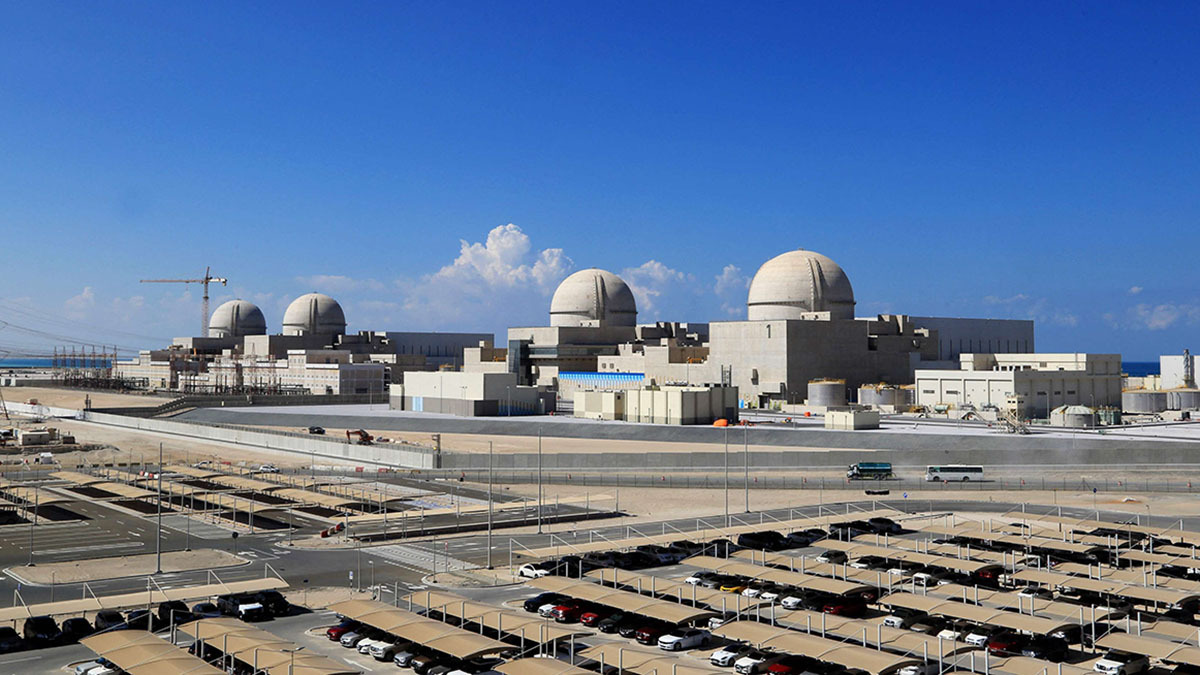
Although the nuclear agreement between the US and Saudi Arabia is presented as ‘civilian,’ Riyadh's historical insistence on mastering the entire nuclear fuel cycle (including uranium enrichment) raises questions about secret clauses or tacit understandings in the current pact.
Proliferation Implications:
The Nuclear Cascade: If Saudi Arabia's neighbours (especially Turkey, Egypt and the UAE) perceive that Washington has tacitly given the green light to Saudi enrichment as a counterweight to Iran, the Non-Proliferation Treaty (NPT) in the region could collapse. This could trigger a multipolar nuclear arms race in the Middle East, the world's most volatile region, exponentially increasing the risk of strategic miscalculation.
The ‘Cartel of the Suns’ as a terrorist organisation
Analysis of the Facts:
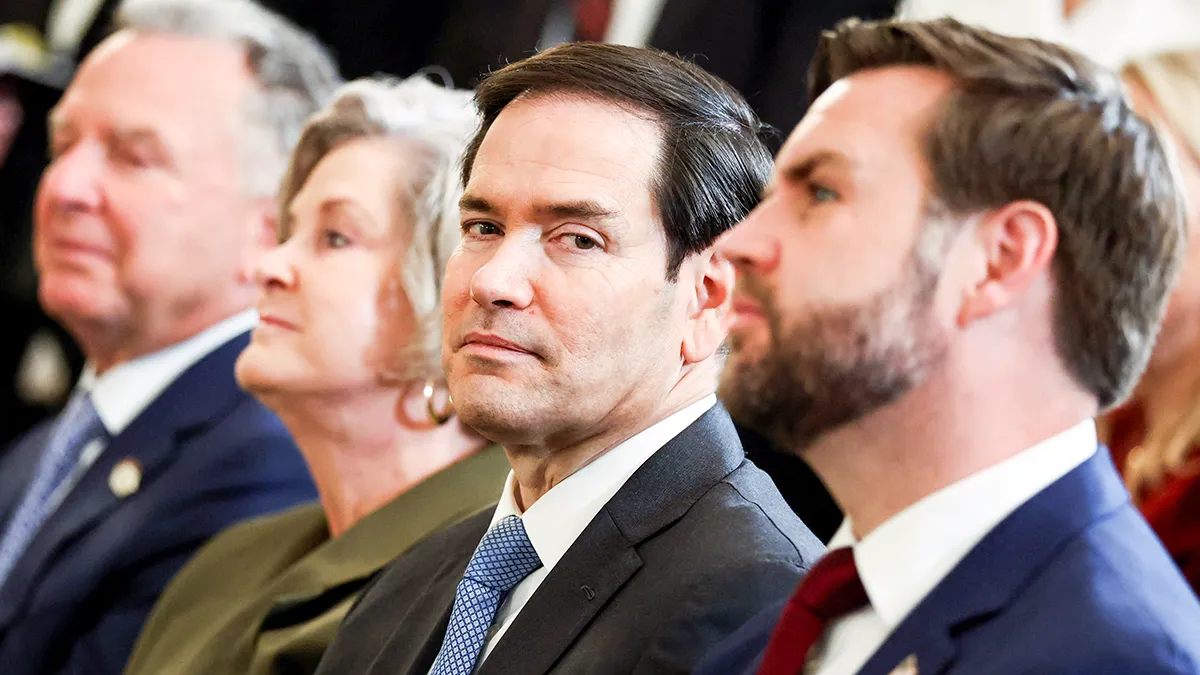
The State Department, under the direction of Marco Rubio, has formally designated the ‘Cartel of the Suns’ — the alleged criminal structure embedded in the Venezuelan military high command — as a Foreign Terrorist Organisation (FTO).
Legal and Military Implications:
Lawfare and AUMF: This designation is not symbolic. Legally, it allows the US to treat designated Venezuelan officials not as representatives of a sovereign state with immunity, but as illegal enemy combatants or terrorists. This opens the legal door to invoke the 2001 Authorisation for the Use of Military Force (AUMF) or similar statutes to justify drone strikes, extraterritorial capture operations, or kinetic actions without a formal declaration of war by Congress, framing them as counterterrorism operations.
The Technological Iron Curtain (China/AI)
Analysis of the Facts:
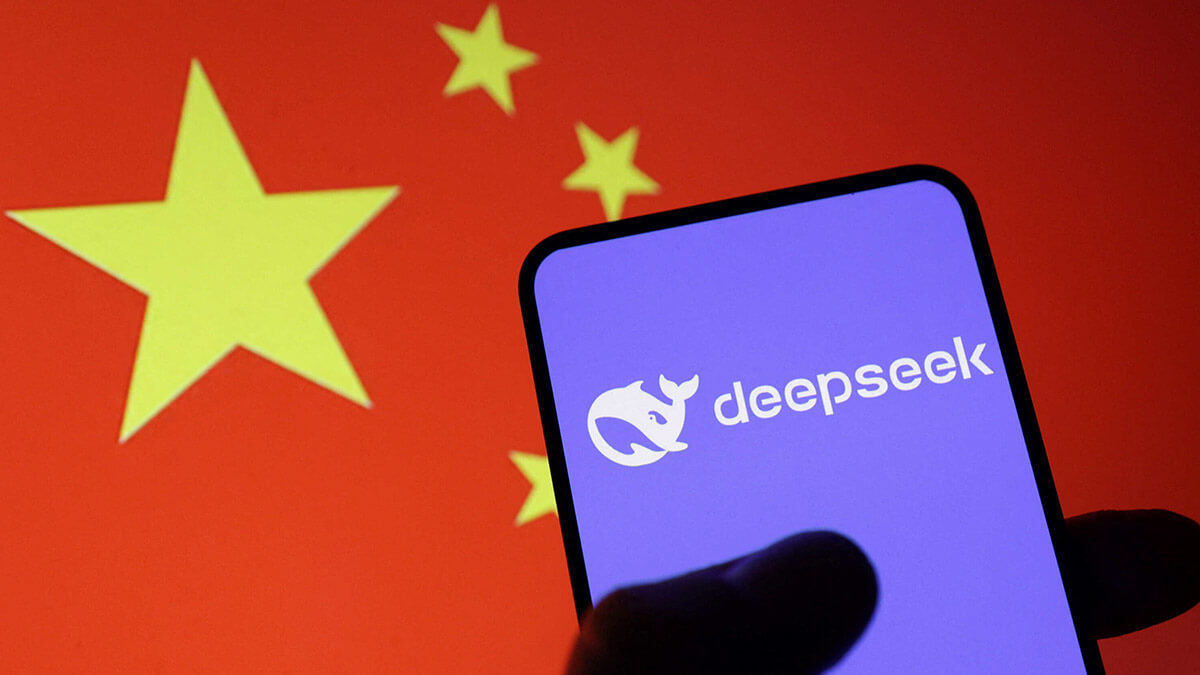
NVIDIA has confirmed the total absence of discussions to reintroduce its advanced chips into the Chinese market, strictly complying with the export controls tightened by the US administration. The company has removed China from its revenue forecasts for cutting-edge products.
Technological Implications:
Irreversible Fork: This confirms that the ‘Chip War’ has entered a phase of total blockade. China is forced into autarky in the development of AI hardware, which in the short term will delay its capabilities in large language models (LLMs) and military AI applications. In the long term, however, it guarantees the creation of two incompatible global technological ecosystems (one Western, one Chinese), irreversibly fragmenting science, the internet, and global industrial standards.
Media Analysis by Region: The Narrative Fracture
Analysis of global media discourse reveals a deep cognitive dissonance between different spheres of influence. There is no ‘global truth’ about the events of November 2025; there are competing regional realities.
North America (US and Canada): Polarisation between Prosperity and War In the United States, the narrative is bifurcated. The financial and conservative media (Wall Street Journal, Fox Business) are obsessed with the economic dividends of Trump's foreign policy. The figure of ‘$1 trillion’ in Saudi investment is repeated incessantly as validation of the transactional model.
However, in the mainstream and centre-left media (NYT, Washington Post, NPR), there is growing palpable anxiety about Venezuela. The phrase ‘the table is set’ is analysed with fear, evoking the ghosts of the 2003 invasion of Iraq. The constitutionality of an undeclared war and the risk of entanglement are questioned. Canada, for its part, is concerned about being caught in the crossfire of sanctions and energy instability if conflict breaks out in the Caribbean.
Middle East and North Africa (MENA): Gulf triumphalism vs. resistance The Gulf state media (Al Arabiya, Saudi Gazette) present MBS's visit as the definitive consecration of Saudi Arabia as an independent global superpower, capable of dealing with Washington on equal terms. The Palestinian question is almost entirely omitted in the context of bilateral agreements.
In contrast, independent pan-Arab media outlets linked to the ‘Axis of Resistance’ (Al Jazeera, Al Mayadeen) frame the UN resolution on Gaza as a new colonial betrayal. Trump's ‘Peace Council’ is ridiculed and seen as a tool to legitimise perpetual occupation under an international façade. The gap between Arab governments (which normalise) and the ‘Arab street’ (which radicalises) has never been more evident in media coverage.
Latin America: Fear of the Return of the ‘Big Stick’ The Latin American press is in turmoil. In Venezuela, the state propaganda machine (Telesur, VTV) has adopted an apocalyptic tone of ‘Homeland War,’ using the presence of the USS Gerald Ford to mobilise the grassroots with extreme defensive nationalism.
In the rest of the region (Brazil, Colombia, Mexico), the coverage is one of deep concern. Editorialists in Folha de S.Paulo and El Tiempo debate whether a US intervention would trigger a humanitarian crisis that would spill over the borders, or whether, on the contrary, it would be the only way to resolve the Venezuelan stalemate. The figure of María Corina Machado is treated with reverence in the liberal press, legitimising the narrative that intervention would be a ‘liberation’ and not a ‘conquest’.
Asia-Pacific: Economic Security vs. Military Security In Asia, coverage is dominated by the intersection between economics and war. The Chinese media (Global Times) denounce the US ‘encirclement’ in both the Middle East (Saudi pact) and the Pacific, and justify the boycott of Japan as a necessary defence of sovereignty over Taiwan. In Japan and South Korea, the tone is one of anxious resignation; the media recognise that they are caught in a spiral where every step to improve military security (such as Takaichi's comments) causes immediate economic damage from China.
Europe: Irrelevance and Fatigue The European press reflects a sense of strategic impotence. Coverage of the negotiations in Istanbul is sombre; there is a tacit recognition that Ukraine's future is being decided between Washington and Moscow, with Brussels as a spectator. There is a tone of alarm about the possible US abandonment of NATO if Europe does not align itself with Trump's new priorities.
Editorial analysis: the geopolitics of vertigo The New Consensus of Force
As November 2025 draws to a close, the world is not simply in transition; it is in a phase of accelerated refounding of the rules of international coexistence. The Trump administration has crystallised a doctrine that could be called ‘High Voltage Realism’. This doctrine is based on a simple but brutal premise: stability is not achieved through multilateral consensus, but through the overwhelming preponderance of force and selective economic integration.
What we see at the Washington summit with MBS and in the waters of the Caribbean are not isolated events. They are two sides of the same coin. With Saudi Arabia, the US offers the ultimate ‘carrot’: existential protection and nuclear integration in exchange for financial and strategic loyalty. With the despicable and criminal Chavista narco-dictatorial regime in Venezuela, it shows a firmness that has two sources of inspiration: the first, the urgent need to combat the grave risk posed by state and parastatal drug cartels in Venezuela; and the second, the moral imperative to restore democracy in the hemisphere.
However, this strategy contains hidden systemic risks. The US economy's dependence on the ‘AI bubble’ is its Achilles heel. While Washington projects military strength outwardly, its internal economic strength rests on stock market valuations that seem increasingly disconnected from accounting reality, as suggested by NVIDIA's balance sheets. A financial collapse in Silicon Valley would weaken Trump's hand on the global stage more quickly than any military defeat.
Furthermore, the proposed peace structure for Gaza — a trusteeship personally led by the US president — represents a gamble of historic arrogance. It assumes that external institutional engineering can supplant local political aspirations and armed resistance. If the history of the Middle East teaches anything, it is that such imposed structures often collapse under the weight of their own contradictions and native resistance.
In conclusion, investors and corporate strategists must prepare for a 2026 of extreme volatility. Markets are no longer immune to geopolitics; they are hostage to it. Diversification of supply chains, hedging against kinetic conflict risks, and extreme vigilance over the robustness of technological assets are not optional; they are imperatives for survival in this new era of geopolitical vertigo.