Gustavo de Arístegui: Geopolitical analysis of 20 October


- Gaza: A faltering ceasefire
- Lebanon: The silent front is no longer silent
- China: weaker growth and global thermometer in amber
- Energy: crude oil loses ground due to trade fears between the United States and China
- Ukraine: Moscow advances on tactical fronts; Minsk explores channels
- Bolivia: Rodrigo Paz Pereira wins and ends the MAS cycle
- United States: government shutdown exacerbates political crisis
- US real estate market: risk of a domino effect
- MEDIA RACK — 20 OCT 2025
- Editorial conclusion
Gaza: A faltering ceasefire
Facts
The Israeli Defence Forces (IDF) reported that on Sunday, Hamas militants launched an anti-tank missile and automatic fire at Israeli troops in the Rafah area, killing two soldiers.
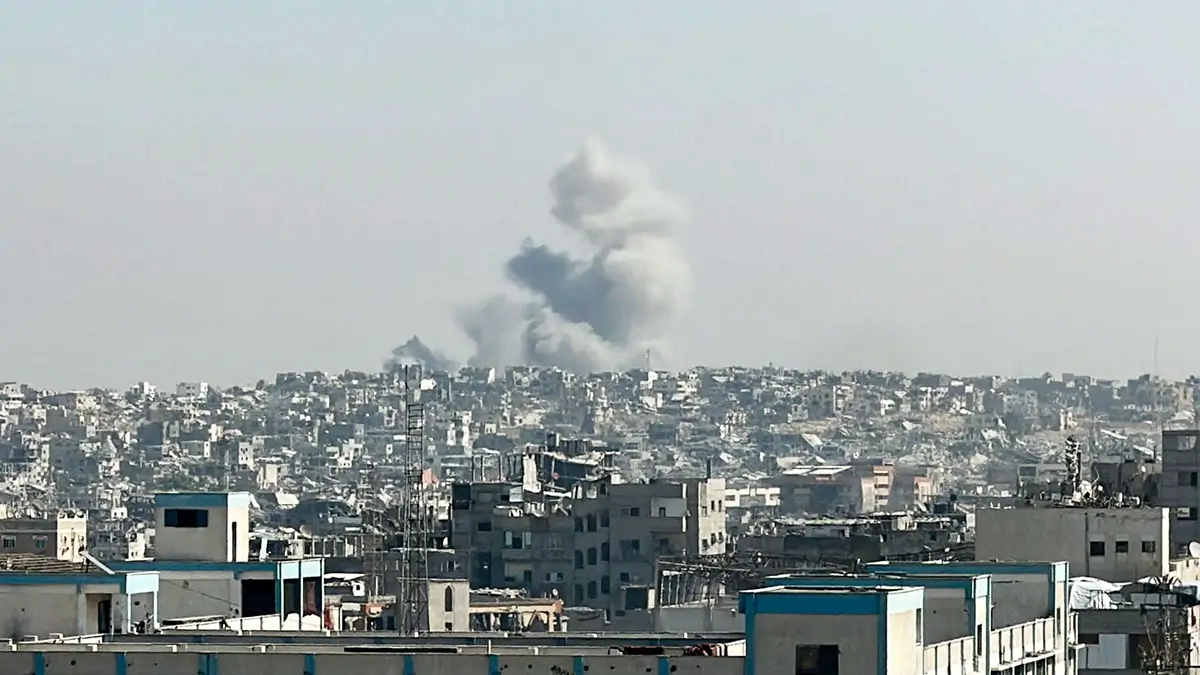
In response, Israel carried out a series of bombings on tunnels, underground positions and weapons depots in the Strip, killing between 26 and 36 people, according to Israeli and Palestinian sources.
The truce, agreed in early October under the mediation of Egypt and the US, was temporarily suspended, interrupting humanitarian aid. On Monday, Israel announced its resumption, although the Gaza authorities reported 47 violations of the ceasefire and 38 Palestinian deaths, including women and children.
Implications
The cessation of hostilities hangs in the balance. Israel seeks deterrence without reoccupation, while Hamas uses ambiguity to maintain the narrative of resistance. Egypt, Qatar and the US are trying to prevent the collapse of the truce, but without a verifiable mechanism or a functional civil authority in Gaza, the cycle of violence will resume. Diplomatic pressure on Israel is mounting, although no regional actor wants to take on the administration of the Strip.
Lebanon: The silent front is no longer silent
Facts
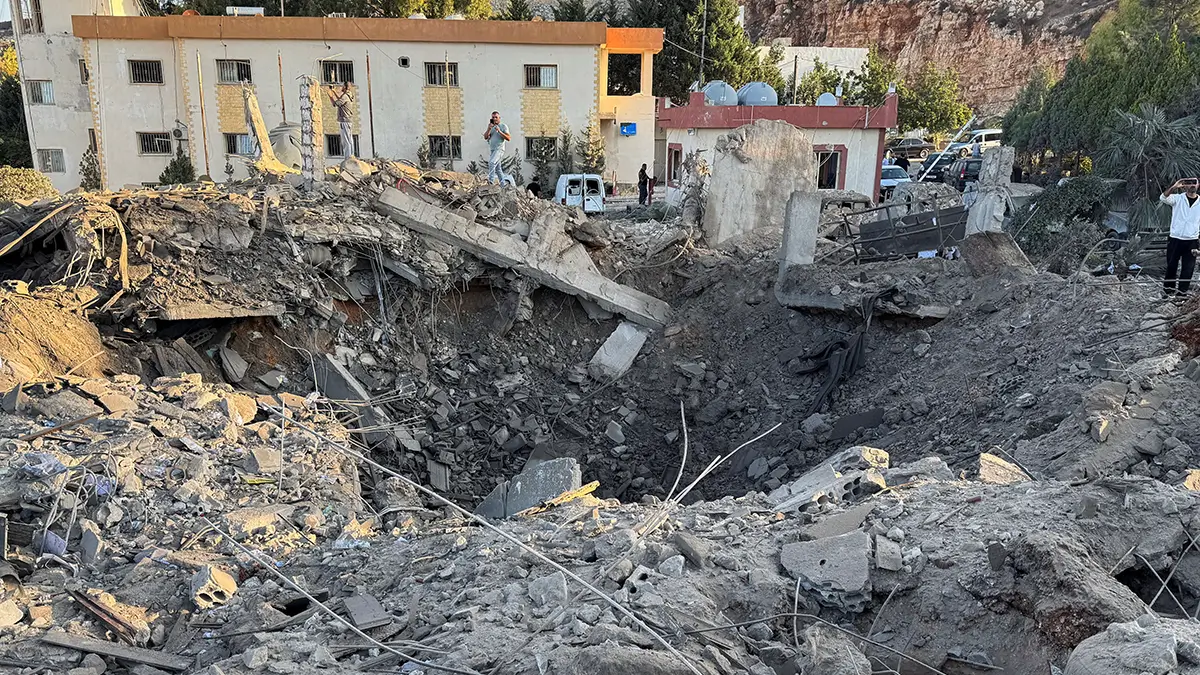
Sources from Al-Arabiya, Haaretz and The Guardian report new Israeli bombings in southern Lebanon that caused civilian casualties, while Shiite militias fired rockets at northern Israel.
Hezbollah warned that ‘any aggression will be met with a response.’ At the same time, Egypt and France are pushing for diplomatic efforts to prevent the tension from escalating into an open war that would drag in Syria and Iran.
Implications
The risk of regional spillover is high. A miscalculation could blow up the containment that has been achieved. Hezbollah is weighing every move, seeking to show strength without provoking all-out war.
Israel, for its part, is combining selective attacks with public warnings to restore deterrence. The presence of UNIFIL (United Nations Interim Force in Lebanon) is now symbolic: without political backing, it lacks real influence.
China: weaker growth and global thermometer in amber
Facts
Chinese GDP grew by 4.8% year-on-year in the third quarter, the lowest figure in a year. Retail sales rose by just 3% and consumer prices fell by 0.3%, a sign of internal weakness.
Real estate investment plummeted by 13.9% and house prices fell in 70 cities. Exports grew by 8.3%, but sales to the US fell by 27%. Beijing is trying to offset the contraction in local credit through liquidity injections and infrastructure projects, while subnational debt threatens financial stability.
Implications
China is showing anaemic and unbalanced growth. The export boom is not enough to offset the collapse of the construction sector and the contraction in consumption. Its mixed model, between a planned economy and a managed market, faces structural limits.
The Chinese slowdown reduces global demand for raw materials and puts downward pressure on industrial prices. For Europe and Latin America, which depend on this momentum, the impact will be tangible.

Energy: crude oil loses ground due to trade fears between the United States and China
Facts
Brent and WTI fell by around 0.4% on forecasts of lower global demand. Fears of a Chinese slowdown and trade tensions between Washington and Beijing are pushing prices down.
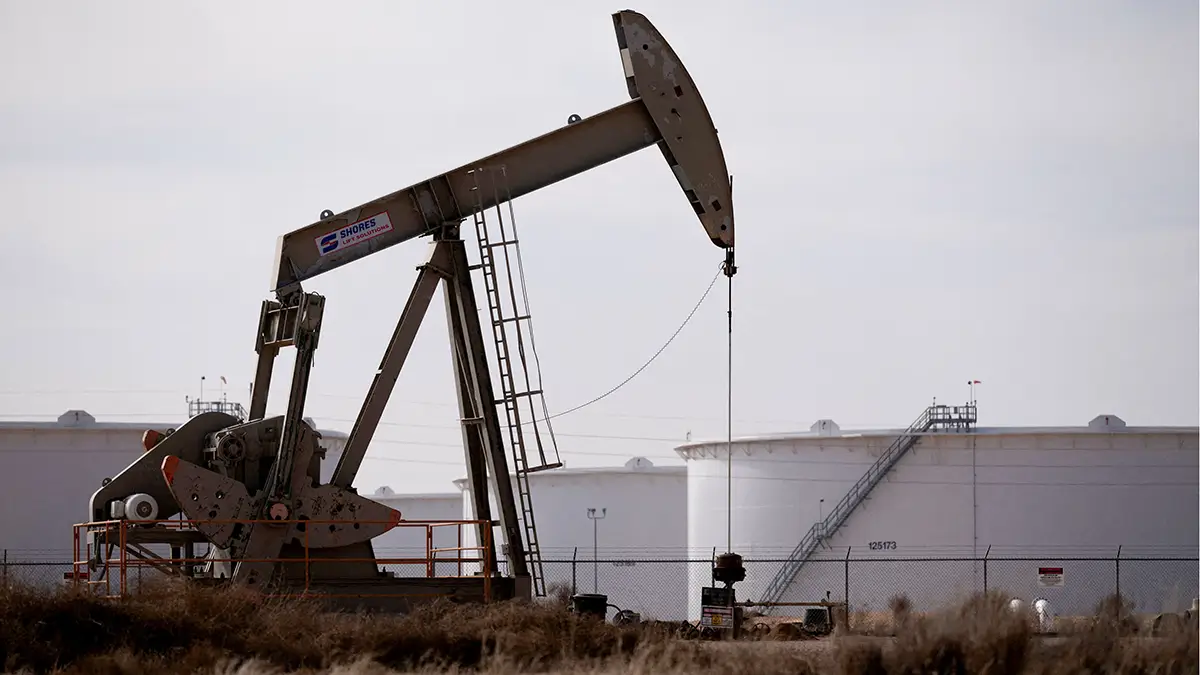
In the US, the number of active drilling rigs increased, boosting marginal supply. OPEC reports point to likely excess production in 2026, while Saudi Arabia and Russia maintain voluntary cuts.
Implications
Markets are discounting a phase of temporary price reductions. The relief benefits importers such as India and the EU, but worries producers with low fiscal margins. The fall in oil prices reduces inflationary pressures, although it may slow investment in energy transition. The geopolitics of crude oil remain subject to volatility: a stray missile in the Gulf or an escalation in Lebanon would be enough to reverse the trend.
Ukraine: Moscow advances on tactical fronts; Minsk explores channels
Events
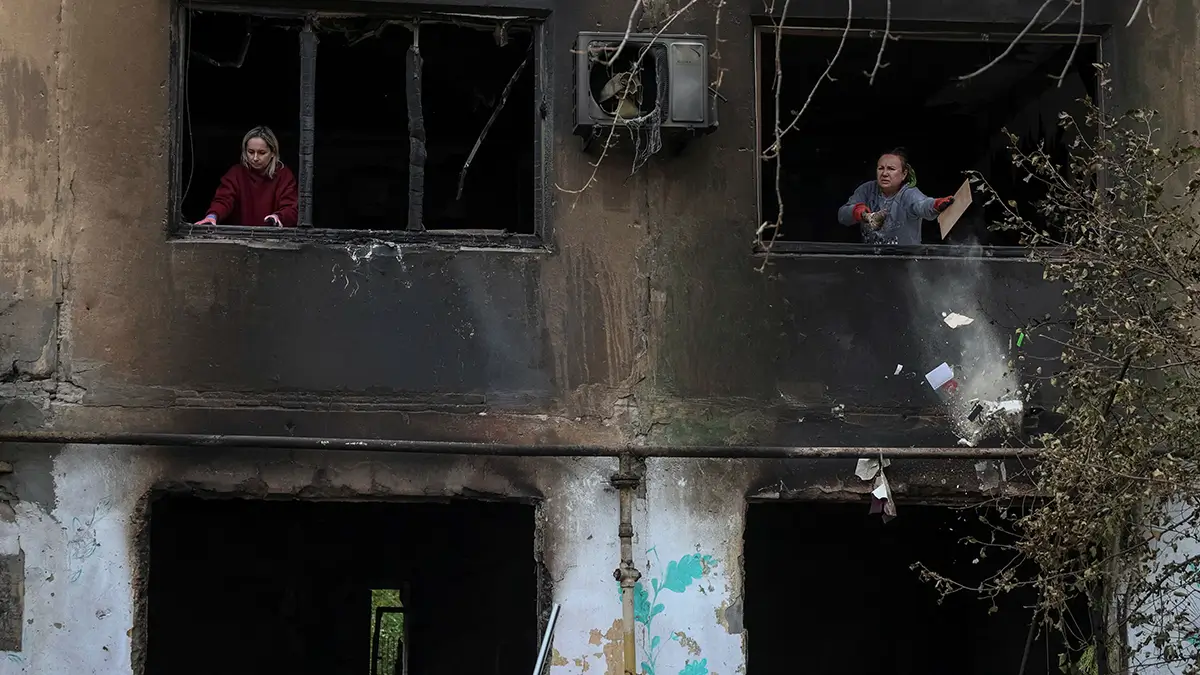
The Russian Defence Ministry claimed to have taken three new towns in Donetsk. Ukrainian forces, with limited ammunition and saturated logistics lines, report simultaneous offensives on the eastern and southern fronts. At the same time, the head of the Belarusian Security Council hinted at possible mediation with Kiev, while Washington debates whether to extend military aid funds in the face of budget paralysis. The arrival of winter complicates movements on the ground.
Implications
Russia maintains the tactical initiative and takes advantage of Western fatigue. If Belarus seeks to open channels, it is more to manage internal risks than out of a desire for peace. Kyiv needs reinforcements in air defence and artillery ammunition; without them, it will be difficult to regain positions before spring. The conflict stabilises at a stalemate, with increasing pressure on Zelensky to negotiate without appearing defeated.
Bolivia: Rodrigo Paz Pereira wins and ends the MAS cycle
Facts
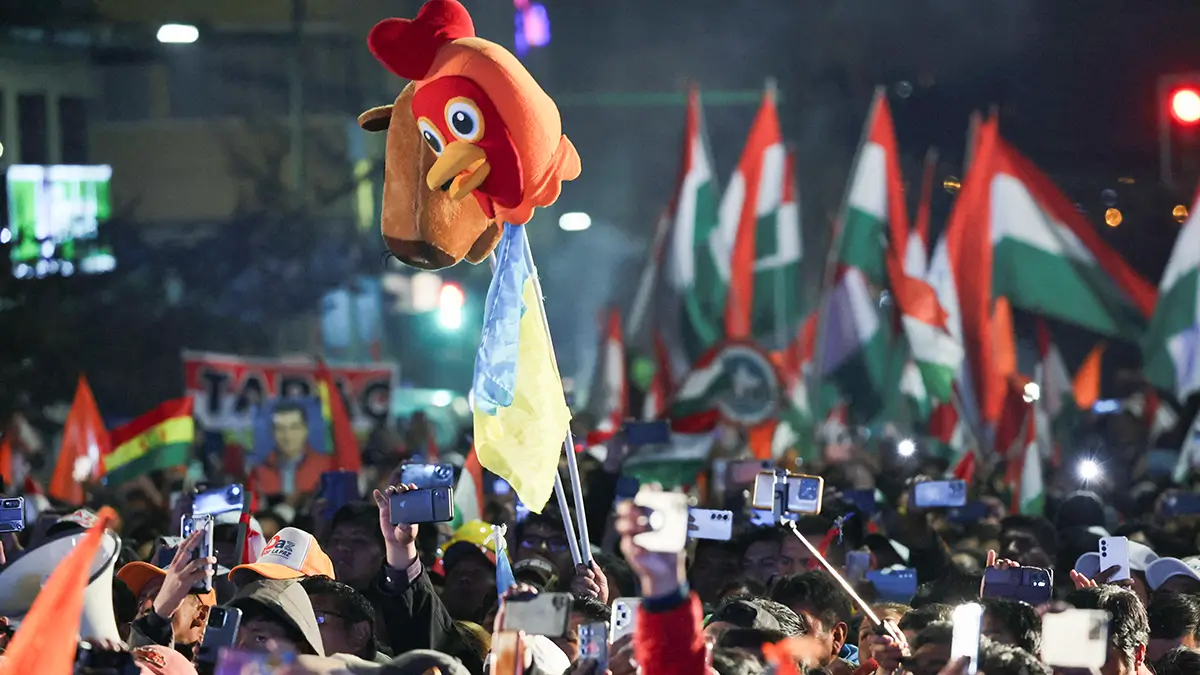
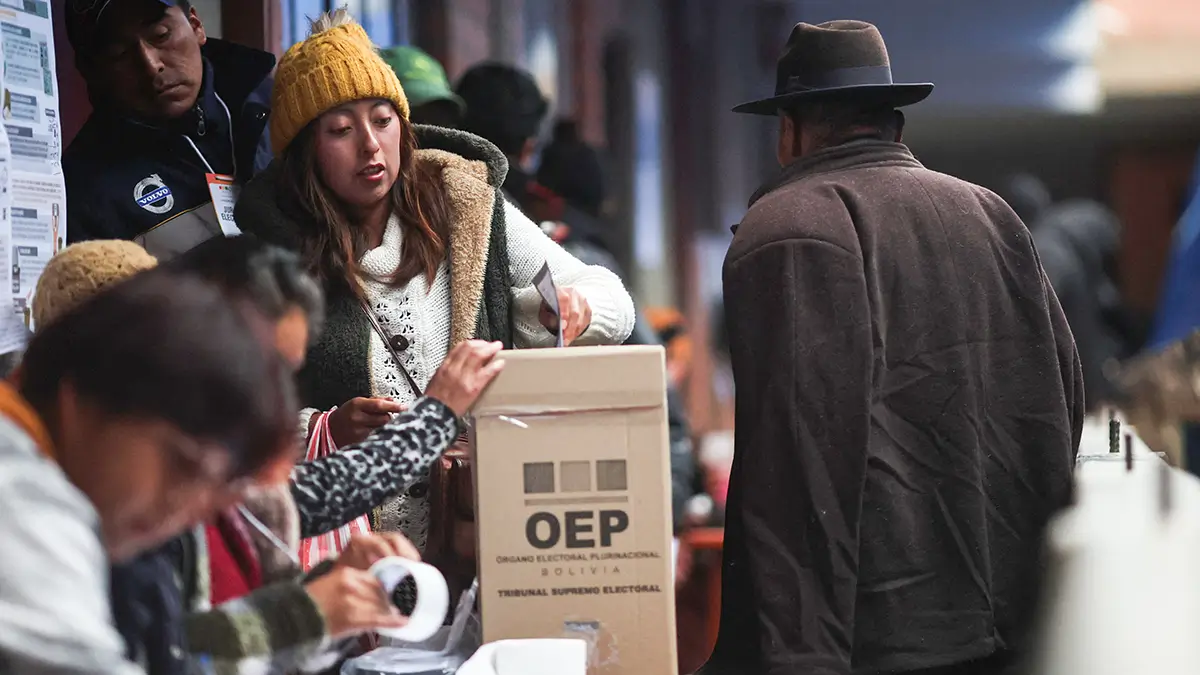
With 54.5% of the votes in the second round, Rodrigo Paz Pereira defeated Jorge ‘Tuto’ Quiroga and ended nearly two decades of hegemony by the Movement Towards Socialism (MAS). Without a legislative majority, Paz offers a model of ‘popular capitalism,’ administrative reforms, and the fight against corruption. His campaign covered more than 200 municipalities and won six of the nine departments, including La Paz (more than 60%) and Tarija. The new Aymara and Quechua middle class was decisive.
Implications
The victory reflects fatigue with statism and a desire for pragmatism. The five keys to his victory are: capturing the MAS's orphan vote through inclusive discourse; pragmatic centrism in the face of liberal and populist radicalisation; rejection of the ‘Paulista’ model of the São Paulo Forum and a promise of modernisation; winning over the urban and young electorate; and the end of the Evo Morales cycle and generational transition.
Paz Pereira symbolises the shift from state nationalism to market pragmatism with social sensitivity. The immediate challenge: governing without fracturing institutional stability.

Further information
Rodrigo Paz Pereira is the son of former Bolivian president Jaime Paz Zamora (1989–1993) and Carmen Pereira. However, he belongs to the same political family: he is the grandnephew of another former president, Víctor Paz Estenssoro, founder of the Nationalist Revolutionary Movement (MNR).
Rodrigo Paz Pereira is the new president of Bolivia, elected in the second round of October 2025 with approximately 54.5% of the vote. The son of former president Jaime Paz Zamora, he was born in exile in 1967 and is an economist with more than 20 years of experience in Bolivian politics as a member of parliament, mayor of Tarija and senator.
He is a moderate centre-right politician, proposing ‘capitalism for all’, fiscal decentralisation, tax cuts, social bonuses and a commitment to legalising the informal economy, as well as renouncing loans from traditional international financial institutions.
His message of consensus and fiscal adjustment consolidated him as a reformer in the face of the cycle of the radical left-wing and indigenist MAS party, which has suffered constant internal conflicts, attracting both indigenous sectors and new urban entrepreneurs.
It is an important and hopeful result that puts an end to the crazy 20-year cycle of indigenous radicalism, incompetence, hyperinflation and alignment with some of the most despicable regimes on the planet. The outgoing president had already broken with Evo Morales and his legacy despite being from the same MAS party.

The five keys to Rodrigo Paz Pereira's victory in Bolivia
Rodrigo Paz Pereira's victory in Bolivia's presidential elections (October 2025) marks the definitive end of one political cycle and the beginning of another. Two decades of MAS (Movement Towards Socialism) hegemony have left an exhausted electorate, an exhausted economy in permanent inflationary tension and an emerging middle class in search of stability. Paz Pereira's victory, with more than 54% of the votes in the second round, represents both a break and a transition: from ideological statism to economic pragmatism with a social face.
Inheriting the orphaned MAS vote
Following the crisis and fragmentation of the MAS—with Evo Morales sidelined and the party apparatus divided between irreconcilable factions—Rodrigo Paz Pereira managed to capture a significant portion of its traditional base. His inclusive discourse, aimed at indigenous and working-class voters, coupled with his proposal for ‘popular capitalism,’ attracted the new Aymara and Quechua middle class that emerged during the MAS cycle.
This alliance between modernity and social roots gave him legitimacy in the eyes of an electorate that rejected both a return to the authoritarian past and classic neoliberalism.
Pragmatic centrism in the face of his rivals' radicalisation
While Jorge ‘Tuto’ Quiroga offered an openly neoliberal shift, with promises to eliminate subsidies and open the economy to the IMF, Paz Pereira presented himself as a moderate centre-rightist, a defender of stability, employment and national reconciliation.
His image as a balanced manager and his conciliatory tone made him more trustworthy to the middle classes and popular sectors, who feared economic shock.
In times of polarisation, this pragmatic centrism proved to be the most fertile ground.
Weariness with the state model and the radical left-wing ‘Paulista’ (from the Sao Paolo Forum) model of the MAS
The vote was also a reaction to the exhaustion of the statist model established by Morales: excessive bureaucracy, corruption, interventionism and dependence on gas revenues.
Paz was able to channel this weariness by proposing administrative modernisation, with an emphasis on efficiency and transparency, but without dismantling the social component of previous years.
He promised to free up private initiative and attract investment without renouncing the protection of vulnerable sectors: a reformism of social balance, not rupture.
Conquest of the urban and regional electorate
Paz's campaign combined a territorial presence—he visited more than 200 municipalities—with sustained work in the departmental capitals.
He won in six of the nine departments, including La Paz, where he exceeded 60%, and Tarija, his historical stronghold.
His message particularly resonated with the urban middle classes, young professionals and entrepreneurs, a segment that today represents more than 70% of the electorate.
The urban vote, traditionally undecided or abstentionist, thus became the decisive factor in his victory.
The fall of Evo Morales and the end of the radical leftist/indigenist/populist cycle
The collapse of the leftist bloc, exacerbated by legal proceedings and the loss of internal cohesion within the MAS, created a political vacuum that Paz Pereira filled with a discourse of national renewal.
His proposal—less ideological and more focused on public management and meritocracy—marked a turning point after twenty years of socialist-inspired governments.
The vote for Paz was not so much an abrupt shift to the right as an act of generational fatigue in the face of an exhausted model and a promise to rebuild the state on pragmatic foundations.

Conclusion
The end of one era and the beginning of another. Let us hope that Víctor Paz Pereira does not squander his political capital and disappoint a Bolivia fed up with incompetence and radicalism.
The rise of Rodrigo Paz Pereira symbolises the transition from statist nationalism to market pragmatism with social sensitivity.
This is not a radical ideological break, but an orderly transition to a more competitive and open model, capable of rebuilding the social fabric without renouncing the advances of the past.
Bolivia, after the MAS cycle, is entering a period of institutional readjustment, where the challenge will be to maintain social peace and sustain the legitimacy of a leadership that must govern on the basis of balance, not confrontation.
United States: government shutdown exacerbates political crisis
Facts
The federal government has partially paralysed its operations after Congress failed to pass a temporary budget. Infrastructure projects and transport contracts have been frozen, affecting thousands of public employees. The Treasury warns of risks to sovereign credit if the deadlock persists. The dispute pits the Republican-controlled House, divided between ‘fiscalists’ and Trumpists, against a Democratic Senate without a solid majority. Markets are reacting cautiously and ten-year bond yields are rising.
Implications
The budget crisis reveals an erosion of federal governance. If the shutdown continues, it will affect housing, transport and public investment, with a direct impact on growth and global confidence in the dollar. The US enters the presidential campaign with a paralysed Congress: yet another symptom of institutionalised polarisation.

US real estate market: risk of a domino effect
Facts
The government shutdown is blocking the issuance of flood insurance, a legal requirement for thousands of real estate transactions in coastal areas. This threatens to freeze sales in Florida, Texas and California.
Developers warn that projects worth more than $600 million are at risk. The lack of processing of federal mortgage loans is exacerbating the uncertainty. The banking sector estimates that a prolonged paralysis would reduce fourth-quarter GDP by between 0.3 and 0.5 points.
Implications
The domino effect on housing could turn into a credit crunch if the paralysis continues. The combination of high debt, high interest rates and political crisis is a cocktail of financial instability that strikes at the heart of the real economy.

MEDIA RACK — 20 OCT 2025
AP / Reuters / The Guardian / BBC / The Times (London)
Gaza truce under pressure; Israel resumes humanitarian aid after bombings.
Reading: operational ceasefire, not political; structural intermittency without international verification.
The Economist / Financial Times
China grows 4.8%, but its model shows fatigue; oil falls due to trade tensions.
Reading: Asian slowdown heralds a world of weak growth and high debt.
Haaretz / Al Arabiya / France 24
Escalation in southern Lebanon; diplomatic pressure on Israel.
Reading: the northern front is the new barometer of the Gaza war.
El País / La Nación / BBC Mundo / France 24
Bolivia inaugurates a cycle of change with Rodrigo Paz Pereira.
Reading: transition without rupture: end of statist populism and moderate opening.
WSJ / CNN / Fox News / Politico / The Hill
US faces government shutdown and fiscal tensions; dollar retreats.
Reading: structural dysfunction undermining global leadership and institutional credibility.
Editorial conclusion
The world awakens to fragile truces and weary economies. The Middle East is experiencing a tenuous peace; China is slowing down; the US is paralysed by its own disputes. In contrast, Latin America offers a sign of democratic maturity with the victory of Rodrigo Paz Pereira, whose success reflects the exhaustion of populism.
The global chessboard is entering a phase where stability is worth more than ideology. The coming months will decide whether that value consolidates or fades amid frozen wars and unsolvable fiscal crises.