Gustavo de Arístegui: Geopolitical analysis of 20 October


- Fragility in Gaza truce with US mediation
- Trump-Zelensky tension over territorial concessions
- Colombia withdraws ambassador over Trump's tariff threats
- AWS (Amazon Web Services) outage disrupts global services
- Trump Backs AUKUS and Rare Earths Agreement with Australia
- Hyundai persists with investments in the United States despite raids
- Europe closes ranks with Ukraine after disagreement with Trump
- US government shutdown continues
- Media Rack
Fragility in Gaza truce with US mediation
Facts
The truce, which had led to a cessation of major hostilities, broke down over the weekend. Palestinian sources report an Israeli bombing of a camp in central Gaza that resulted in at least 28 civilian casualties.
Israel argues that the operation was a ‘surgical’ response to a previous rocket launch by dissident factions of Islamic Jihad, not directly controlled by the Hamas leadership in Qatar. At the same time, Hamas proceeded with the scheduled handover of a hostage's body, a gesture to keep the negotiations alive.
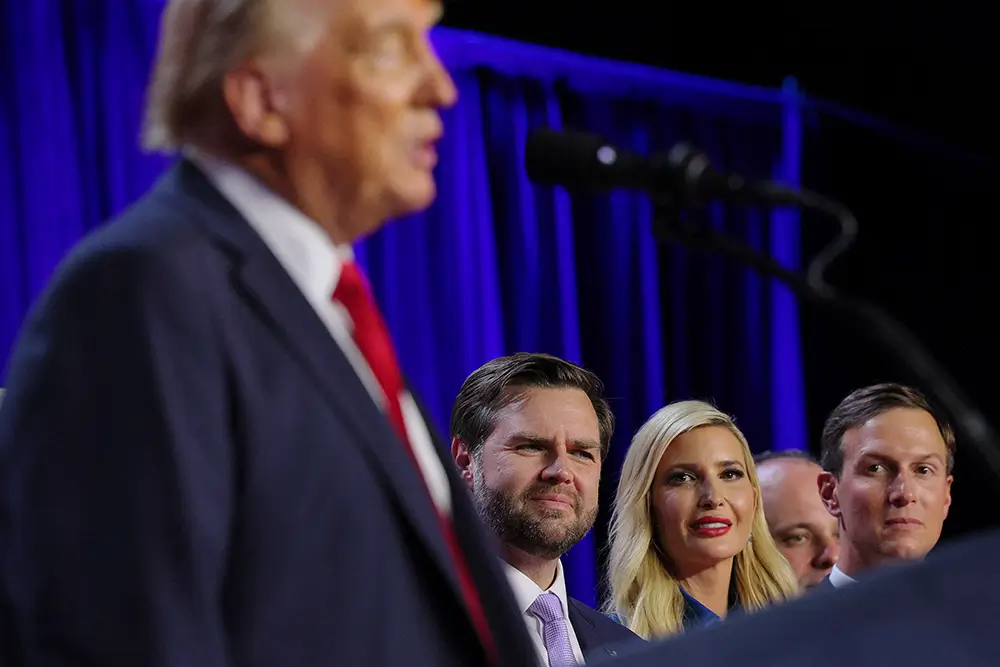
Fearing a total collapse, the White House has urgently dispatched Jared Kushner and Vice President JD Vance, who will act as direct mediators to launch ‘phase two’ of the agreement (focused on post-conflict governance and the release of prisoners).
Implications
The situation exposes the extreme fragility of a truce that depends on the containment of non-centralised armed factions. ‘Phase two’ is the real sticking point: Israel demands security guarantees and the total demilitarisation of the Strip, while Hamas refuses to hand over administrative control without a clear path to sovereignty.
The dispatch of Kushner and Vance indicates that Trump is seeking direct control, sidelining Egypt and Qatar. For Israel, these sporadic violations can be used as a pretext to prolong the military occupation of strategic areas, arguing that Hamas is not complying.
For Washington, the risk is twofold: if it fails, it loses credibility as a mediator; if it forces an agreement, it may create a ‘failed state’ in Gaza, ungovernable and a source of future conflict.
Trump-Zelensky tension over territorial concessions
Facts
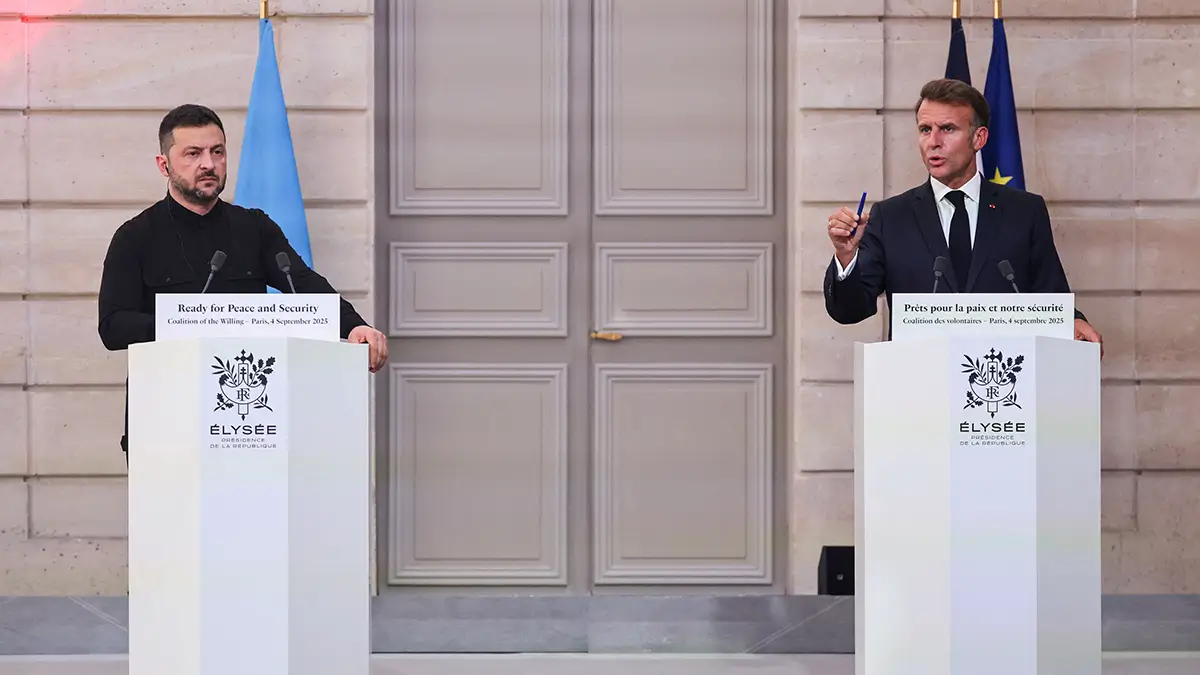
The meeting at the White House was described by diplomatic sources as ‘heated’. Trump, in line with his campaign promises to ‘end the war in 24 hours’, directly pressured Volodymyr Zelensky to agree to negotiate the formal cession of Donbas and the recognition of Crimea as Russian territory, arguing that ‘Putin has already won that territory’ and that continued US military aid is unsustainable.
This pressure comes days after a phone call between Trump and Putin. As an immediate reaction, EU leaders (especially Scholz and Macron) called an emergency conference and proposed a €140 billion loan package, financed not from national budgets but from interest generated by frozen Russian assets.
Implications
This is the biggest transatlantic rift since the invasion of Iraq. Trump's proposal is not just a negotiation, it is the legitimisation of territorial aggression by force, a taboo in international law since 1945 and a pillar that I firmly defend.
By suggesting this, Trump is undermining Ukrainian sovereignty and giving Putin his greatest strategic victory. The European reaction is one of panic and, at the same time, forced strategic autonomy: if the US abandons the defence of Ukraine, Europe must bear the cost.
The €140 billion plan is a complex and legally dubious financial manoeuvre, but it indicates that Brussels is willing to innovate to prevent a Ukrainian collapse, acting, de facto, as a geopolitical bloc independent of Washington.
Colombia withdraws ambassador over Trump's tariff threats
Facts
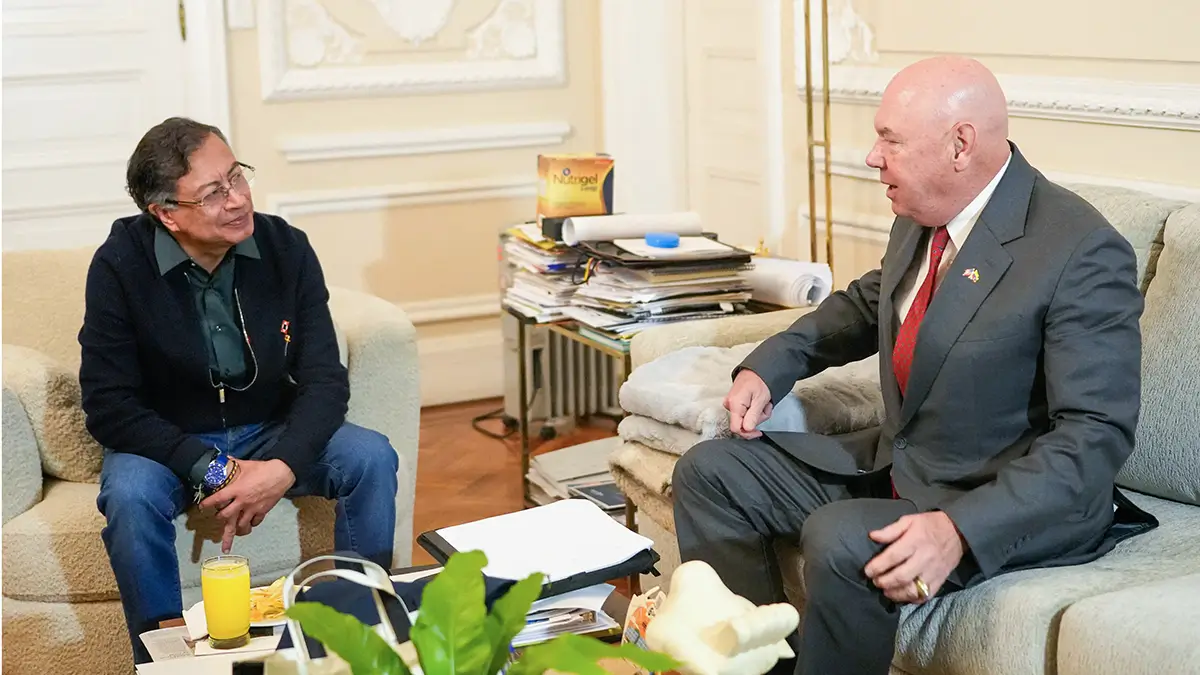
The diplomatic crisis escalated after Donald Trump's statements in which he called President Gustavo Petro a ‘drug leader’ and a ‘communist’. Trump linked these accusations to Colombia's lack of cooperation in eradicating coca crops.
He immediately threatened to impose tariffs of up to 10% on all Colombian exports (affecting flowers, coffee and oil) and an immediate cut in military and social aid. In response, the Bogotá government recalled its ambassador to Washington, a diplomatic measure that precedes the severing of relations.
Implications
This signals the end of decades of bipartisan alliance under ‘Plan Colombia.’ US policy toward Latin America is returning to unilateral economic coercion, abandoning cooperation.
The implications for Colombia are serious: risk of recession if tariffs are applied, and a security vacuum that cartels will exploit. For Petro, this is a direct challenge to his sovereignty and pushes him to seek stronger regional alliances with Brazil and Mexico to create a counterweight. The OAS is paralysed.
At the hemispheric level, ideological divisions are sharpening; Washington is no longer a reliable partner but has become a commercial threat, which only benefits China's influence in the region.
AWS (Amazon Web Services) outage disrupts global services
Facts
The outage originated in Amazon Web Services' US-EAST-1 (Northern Virginia) region, the largest and most important in the world. It was not a cyberattack, but a cascading failure of load balancing and DNS systems.
For several hours, critical services such as Snapchat, banking platforms (affecting transactions), airlines and logistics applications were rendered inoperative or severely degraded. It is the largest cloud service outage since a similar incident in 2024, demonstrating that the centralisation of digital infrastructure remains a single point of failure.
Implications
The incident goes beyond a technical problem; it is a matter of national security and systemic vulnerability. It demonstrates that the global digital economy is dangerously dependent on a handful of companies (Amazon, Microsoft, Google) and, in the case of AWS, on a single physical location.
For Europe, this accelerates the urgency of its ‘digital sovereignty’ policy (projects such as Gaia-X) and the implementation of stricter regulations (such as DORA) to force resilience and redundancy. Companies are forced to adopt multi-cloud strategies (using multiple providers), even if they are more expensive, to mitigate the risk of a single failure paralysing their entire business.
Trump Backs AUKUS and Rare Earths Agreement with Australia
Facts
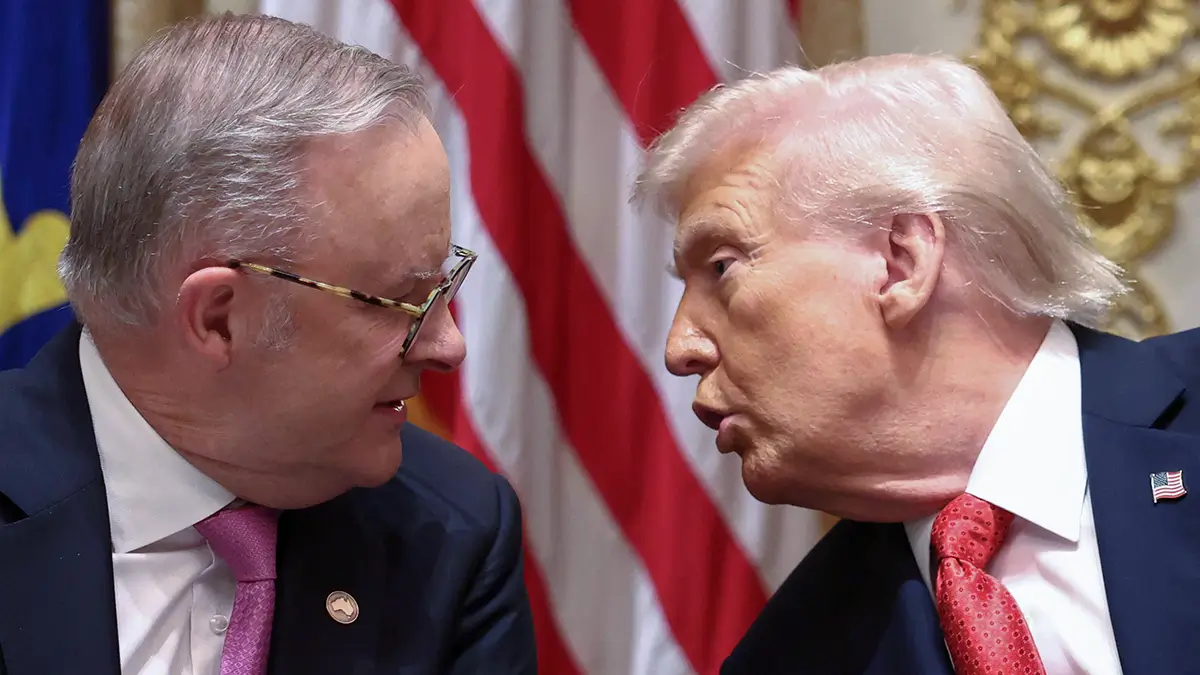
In a meeting with the Australian Prime Minister, Trump gave his explicit backing to the AUKUS security pact (which includes the sale of nuclear-powered submarines to Australia), dispelling doubts about his commitment to the pact.
Simultaneously, the two countries signed a £2 billion geo-economic agreement for the joint development of rare earth mines (such as lithium, dysprosium and neodymium) in Australia. The stated goal is to ‘break the Chinese monopoly’ on the processing of these critical minerals, which are essential for defence and energy transition.
Implications
This is the ‘America First’ doctrine applied to alliances: transactional but robust. Trump supports AUKUS not because of multilateralism, but because he sees Australia as a ‘customer’ and a key pillar in containing China. The real news is the rare earth agreement: it is the materialisation of friend-shoring (offshoring supply chains to allied countries).
By securing these minerals, the US not only reduces its dependence on Beijing, but also controls the inputs for the industries of the future (AI, electric vehicles, hypersonic missiles). For China, this is a direct threat to its geo-economic dominance, and it will likely respond with its own export restrictions.
Hyundai persists with investments in the United States despite raids
Facts
South Korean company Hyundai has reaffirmed that its $26 billion megaproject in Georgia (for the manufacture of batteries and electric vehicles) will go ahead. This confirmation comes weeks after a massive ICE (Immigration and Customs Enforcement) raid on its construction site, where 300 construction workers, many of them Korean and Latin American, were detained.
Hyundai, while lamenting the ‘uncertainty,’ prioritises access to the US market and subsidies from the ‘USA First’ industrial policy.
Implications
This incident exposes the fundamental contradiction in current US economic policy. On the one hand, there is a push for massive reindustrialisation (reshoring) that is vitally dependent on foreign capital (Hyundai, Samsung, TSMC) and skilled labour.
On the other hand, a ‘zero tolerance’ immigration policy is being implemented that directly attacks that same workforce. Companies like Hyundai are forced to tolerate this hostility because they cannot afford to be left out of the US market. However, in the long term, this friction causes delays, increases costs and sends a dangerous signal to other investors: the US is an erratic partner that can sabotage its own strategic investments.
Europe closes ranks with Ukraine after disagreement with Trump
Facts
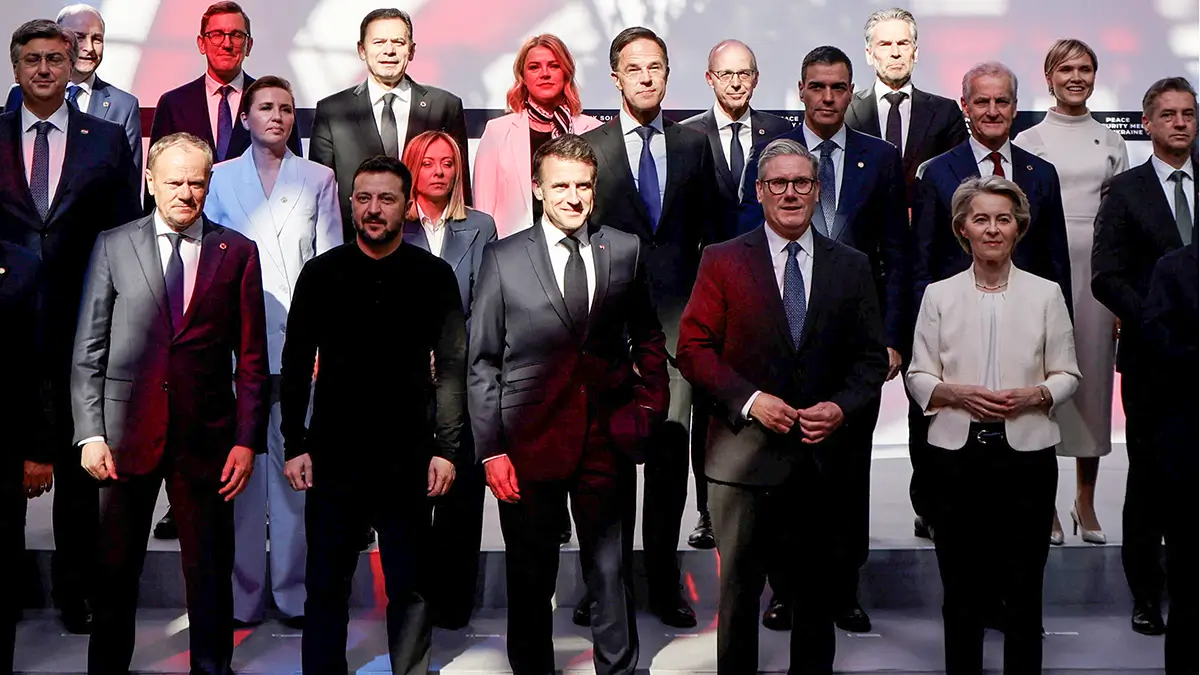
This news is a direct consequence of the Trump-Zelensky meeting (Point 2). In less than 24 hours, the leaders of Germany, France, Poland and Italy issued a joint statement reaffirming their ‘unwavering support’ for Ukraine's territorial integrity.
An emergency summit was convened in Brussels to accelerate the use of frozen Russian assets and approve new sanctions. Crucially, they reaffirmed the goal of a total phase-out of Russian natural gas by 2028, a goal that had been slowed down.
Implications
Europe activates its ‘strategic autonomy’ mode. The shock of seeing Washington propose Ukraine's territorial surrender has forced the EU to understand that its security can no longer depend on US guarantees. Closing ranks is a signal to Moscow (the EU will not bow down) and to Washington (the EU will act on its own if necessary).
The 2028 target for Russian gas is now less a climate goal and more a national security imperative: Europe cannot finance its defence if it continues to depend on its main adversary for energy. This is the birth of the EU as a defensive geopolitical actor, forced by the isolationism of its traditional ally.
US government shutdown continues
Facts
The partial shutdown of the federal government is entering its second week. The deadlock in Congress is due to the refusal of a wing of the Republican Party to approve funding unless certain subsidies in the healthcare law (Obamacare) are removed.
As a result, non-essential agencies have closed, but alarmingly, critical agencies such as the National Nuclear Security Administration (NNSA), responsible for maintaining the atomic arsenal, have begun to implement furloughs (suspension of employment and pay) for supervisory and maintenance personnel.
Implications
Beyond the domestic economic impact (reduction in GDP, suspension of services), the geopolitical implications are disastrous. It projects an image of chaos and ungovernability. US allies (such as Japan and South Korea, which depend on the nuclear umbrella) are horrified that partisan domestic politics could compromise the security of the deterrent arsenal.
Adversaries (China and Russia) use this as propaganda, arguing that liberal democracy is dysfunctional and incapable of managing its most basic responsibilities. A country that cannot pay the supervisors of its own nuclear weapons loses moral authority and strategic credibility on a global level.

Media Rack
Below is an analytical summary structured by key media outlets, based on coverage over the last 24 hours.
NYT (The New York Times): Highlights the demolition at the White House to build a 90,000-square-foot ballroom, symbolising presidential priorities; and Hyundai's resilience in investing £26bn in Georgia despite immigration raids, analysing labour tensions in reindustrialisation.
Financial Times: Covers the AWS outage affecting global services; Trump's support for AUKUS and rare earths agreement with Australia; and the European rally behind Zelensky after tension with Trump, proposing €140bn in loans with Russian assets.
Reuters: Focuses on diplomacy in Gaza to restore truce, with US emissaries; withdrawal of Colombian ambassador over Trump's tariff threats; and ceasefire violations.
CNN: Reports on heated Trump-Zelensky meeting with pressure for territorial concessions; updates on US government shutdown and Trump's threats to Hamas if it violates truce.
The Economist: Summarises the AWS outage as a major disruption; tensions in Gaza with the return of hostages' bodies; and mentions of Asian leaders, such as Japan's ‘Iron Lady’.
BBC: Covers AWS outage impacting the UK and globally; diplomacy in Gaza; and US-Colombia dispute over drugs.
WSJ (Wall Street Journal): Analyses the economic impact of the AWS outage on finance; Korean investments in the United States despite raids; and Trump's pressure on Ukraine.
Le Monde: Highlights tense Trump-Zelensky meeting as a risk to Western support; AWS outage as a digital vulnerability; and European proposals to arm Ukraine with Russian assets.
FAZ (Frankfurter Allgemeine Zeitung): Emphasises European unity against Trump's demands on Ukraine; risks in Gaza truce; and AUKUS agreement as anti-China containment.
Corriere della Sera: Covers tensions in Gaza and US mediation; Trump-Petro dispute as escalation in Latin America.
Al-Jazeera: Reports Israeli strikes in Gaza killing 28; Hamas accuses violations; and confusion over ‘yellow line’.
Jerusalem Post: Details restoration of aid to Gaza; preparations for transfer of dead hostage; and Vance's visit.
Haaretz: Critical of Israel for strikes; residents confused by demarcations; and diplomacy for phase two.
Russia Today (RT): Argues that Putin's proposals are reasonable; accuses Zelensky of escalating; AWS outage as US failure.
TASS: Covers Trump-Putin call; European support seen as interference; and Russian proposals for peace.
South China Morning Post: Highlights Trump's backing of AUKUS as anti-China; US-Australia rare earths agreement.
China Daily: Criticises AUKUS as provocation; Trump's threats of tariffs on China.
Foreign Affairs: Analyses implications of Trump's pressure on Ukraine, risking NATO.
The National Interest: Sees freeze in Ukraine as pragmatic but debilitating for Europe.
Kyiv Independent: Reports Trump-Zelensky tension; Zelensky seeks missiles in Europe; European unity.
Other media outlets such as the Washington Post, The Guardian, Fox News, etc., repeat themes without any new developments; for example, Fox emphasises Trump's ‘strong leadership’.