Gustavo de Arístegui: Geopolitical analysis of 24 November 2025


- The Geneva ultimatum: the 28-point plan
- Elimination of Haytham Ali Tabtabai in Beirut: the Lebanese front explodes
- Gaza: the fragile ceasefire and the UN-Trump plan
- Ukraine: negotiations in Switzerland, drones in Kharkiv, fire in Moscow
- Hybrid warfare in the North Sea: the Yantar and submarine vulnerability
- Sino-Japanese crisis: Japan crosses the Rubicon over Taiwan
- Air blockade of Venezuela and deployment of the USS Gerald Ford
- G20, COP30 and the Trump 2.0 energy doctrine: a world learning to operate without the United States
- Nigeria: the kidnapping of St. Mary's and the disintegration of the state
- Elections in Republika Srpska: the Balkan separatist challenge
- International media rack
The Geneva ultimatum: the 28-point plan
Facts:
In Geneva, the US delegation led by Secretary of State Marco Rubio and Special Envoy Steve Witkoff presented Kiev with the ‘28-Point Peace Plan,’ with a peremptory deadline: accept by 27 November or face the cut-off of military and financial support.
The document, drawn up in direct talks between Washington and Moscow—with Russian envoy Kirill Dmitriev, director of the Russian sovereign wealth fund, acting as economic architect—demands that Ukraine:
- De facto cession of the entire eastern Donbas and consolidation of all current Russian territorial gains.
- Reduction of the Ukrainian army to 600,000 troops (the European counterproposal raises this to 800,000).
- Constitutional renunciation of NATO and acceptance of a permanent neutrality status.
- Recognition of Russian as an official language throughout the country.
- Explicit limits on certain types of weapons and long-range systems.
Donald Trump himself has described Zelensky's resistance as ‘zero gratitude’, publicly reminding him that without Washington there would have been no large-scale Ukrainian military resistance.

In response to this text, the so-called E3 (France, Germany, United Kingdom) and the European institutions have brought a 28-point counterproposal to Geneva, which:
- Agrees to limit the size of the Ukrainian army, but to 800,000 troops, not 600,000.
- Proposes to gradually re-invite Putin to the G8, conditional on compliance with a verifiable ceasefire.
- Insists on postponing any territorial discussion until after a complete ceasefire.
- Demands that frozen Russian assets finance Ukrainian reconstruction.
US Secretary of State Marco Rubio described the meeting on Sunday 23 November as ‘the most productive so far’, claiming to have made ‘tremendous progress’ after working point by point with the Ukrainian delegation led by Andriy Yermak and taking care to deny that it was a ‘Russian wish list’. However, independent senator Angus King leaked that, in private, Rubio had described the initial draft in precisely those terms.
On the Ukrainian side, negotiator Rustem Umerov went so far as to say that the current version ‘reflects most of Ukraine's key priorities,’ a clear sign that the combined pressure from Washington and European capitals is having an effect.
Implications:
We are facing a new Yalta, but without Churchill or Roosevelt, and with Europe relegated to the role of nervous notary. The plan enshrines, de facto, the principle that the West claimed to be fighting against: that a nuclear power can modify borders by force and, after enduring sufficient attrition, force its adversaries to legally certify the result.
For Zelensky, signing the document as it stands is political suicide. Not only because of the territorial cession, but because the combination of forced neutrality, a reduced army and official recognition of Russian would be seen by large sectors of society and the armed forces as capitulation. The threat is not only external (Russia), but also internal: a coup or fracture of the national bloc that has sustained the resistance since 2022.
For Europe, the message is even more devastating. The automatic US security guarantee — the idea that Washington will cover any gaps — is blown to smithereens. Poland, the Baltics and, in practice, the whole of Eastern Europe understand that their defence is no longer an “Atlantic” issue but a direct responsibility of their own budgets. NATO may continue to exist institutionally, but confidence in the umbrella is weakening.
The Financial Times and other serious media outlets sum it up bluntly: the plan ‘could form the basis of a final peace agreement’... for Putin. Kiev sees it as capitulation. The precedent set is lethal: if this scheme prevails, Beijing will take note for Taiwan, Ankara for northern Syria and Iraq, and even Caracas for the Essequibo.
Geneva, rather than a peace conference, now resembles a laboratory for how to dismantle the European security order built since 1945.

Elimination of Haytham Ali Tabtabai in Beirut: the Lebanese front explodes
Facts:
Breaking five months of relative calm on the northern border, the Israeli Air Force has carried out a precision strike on a residential building in Haret Hreik, in Beirut's Dahiyeh, a historic stronghold of Hezbollah.
Target eliminated: Haytham Ali Tabtabai, chief of staff of Hezbollah's military forces, effectively its number one military commander and main liaison with Iran's Quds Force. In other words, the man who led the organisation's operational capabilities and the design of its rearmament after the latest cycles of war.
The attack left at least five dead and more than two dozen wounded, according to the Lebanese Ministry of Health. Hezbollah has confirmed the death of the ‘great commander’ and warned that the bombing ‘opens the door to an escalation of aggression.’
Lebanese President Joseph Aoun has accused Israel of ignoring calls to stop the attacks and has called on the international community to restrain Tel Aviv. Netanyahu, for his part, boasts of having eliminated a ‘mass murderer’ and reiterates that Israel will not allow Hezbollah to rebuild its military capabilities.
Implications:
Israel has explicitly moved from a doctrine of ‘containment’ to one of ‘decapitation.’ By attacking Hezbollah's political-military heart in a densely populated neighbourhood of Beirut, it sends an unequivocal message: there are no sanctuaries, even in urban areas and under the fiction of a ceasefire.
For Hezbollah, the dilemma is existential. If it does not respond with a major kinetic reaction—medium- and long-range missile attacks on strategic targets, or a spectacular operation—it loses credibility as a ‘resistance’ movement in the eyes of its own base and Tehran. If it responds, it opens the door to a large-scale regional war that Lebanon, economically and institutionally collapsed, is unable to withstand.
The Israeli media speak of an ‘operational feat’ and a break in Hezbollah's chain of command. The Arab press and much of the European press emphasise that the attack breaks a year of relative calm and jeopardises both the fragile Lebanese government and the UN mission (UNIFIL).
The Russian media, led by TASS and RT, frame the episode in a broader narrative: Israel, with Washington's green light, as a major destabilising factor in the Middle East. Geopolitically, the Lebanese front is shifting from being a ‘secondary theatre’ to a major lever on the future of Gaza and the regional security architecture.
If Hezbollah launches a barrage of precision missiles at Israeli nerve centres, the war will cease to be the ‘Gaza file’ and become an open conflict between Iran (and its constellation of militias) and Israel, backed by the United States. The risk of miscalculation is no longer yellow. It is bright red.
#Breaking: Congratulations to my friends in the #IDF — and condolences to French president #Macron — the #IsraeliAirForce has successfully eliminated Haytham Ali Tabatabaei, Chief of Staff of Hezbollah, in the Dahiya neighbourhood of #Beirut, #Lebanon. Rest in hell Tabatabaei. pic.twitter.com/3E7wkjEvoZ
— Babak Taghvaee - The Crisis Watch (@BabakTaghvaee1) November 23, 2025
Gaza: the fragile ceasefire and the UN-Trump plan
Facts:
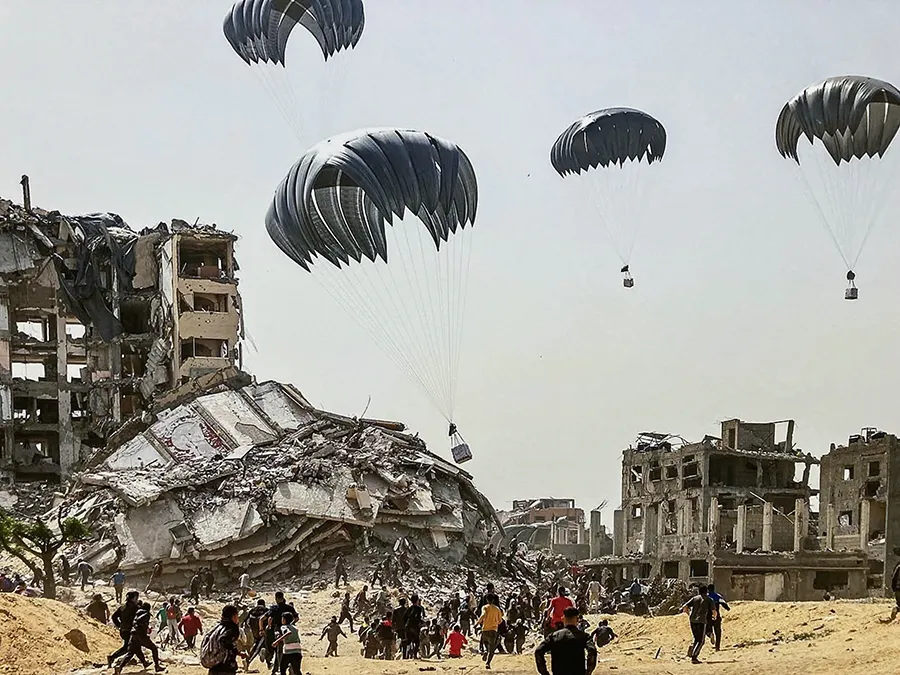
While the UN Security Council has just enshrined Donald Trump's 20-point plan for Gaza in a resolution — which includes an international stabilisation force and a ‘board of peace’ with broad powers over the Strip — on the ground, it is not speeches that are being heard, but explosions.
In the last 24 hours, Israeli attacks have once again hit densely populated neighbourhoods. An Al Jazeera report on the latest incursions speaks of dozens of deaths, hospitals at breaking point and a flow of humanitarian aid that is still drastically restricted.
At the same time, the Nuseirat refugee camp has become a symbol of the ‘false truce’: bombings of civilian buildings in a context where Israel claims to be respecting the ceasefire. Various local sources and monitoring organisations have documented 497 Israeli attacks since the truce was declared 44 days ago.
Implications:
What is being sold as a ‘ceasefire’ is, in reality, a low-intensity war of attrition. The strategy is clear: control of supplies, psychological pressure and periodic bombings.
On paper, the UN resolution and Trump's plan describe a roadmap towards international transitional administration and, in theory, towards a form of limited Palestinian statehood. In practice, Israel continues to use overwhelming air power on a devastated territory, with a broken health infrastructure and a displaced population living in an open-air prison.
The major Anglo-Saxon media outlets (Washington Post, Financial Times, The Guardian) oscillate between acknowledging the humanitarian drama and expressing radical scepticism about the plan's viability: who will provide the troops? Who will really be in charge in Gaza? How can aid be delivered without lifting the blockade? In the Israeli press, the discourse is different: Hamas remains armed, still holds hostages, and ‘half the strip’ remains under direct military control.
In the Arab media (Al-Jazeera, Al-Quds Al-Arabi, Arab News), the dominant narrative is that of a non-existent ceasefire and a civilian population under constant military and humanitarian pressure.
Ukraine: negotiations in Switzerland, drones in Kharkiv, fire in Moscow
Facts:
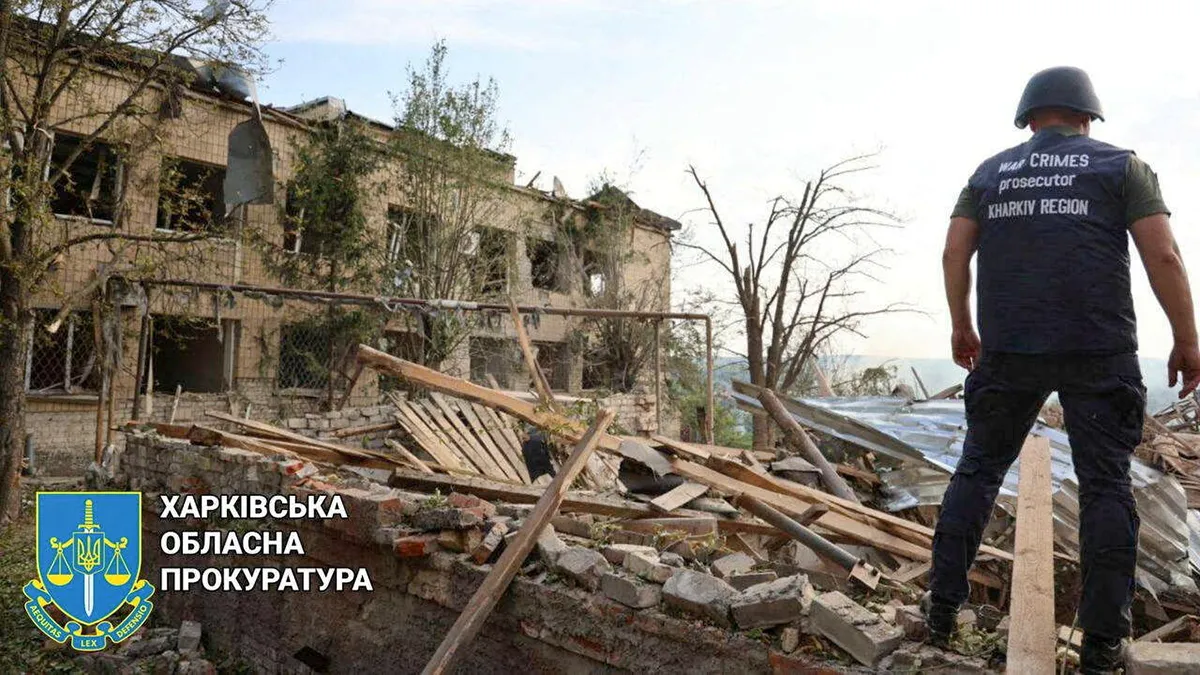
While the map of Ukraine's future is being negotiated in Geneva, on the ground the war continues unabated.
According to Reuters, a massive Russian drone attack on Kharkiv has left at least three people dead and caused significant damage to civilian infrastructure, in one of several waves recorded in recent hours. Another report from the same agency describes a drone attack on Dnipro that struck a residential area just as delegates were sitting down at the table in Switzerland.
Kiev, for its part, has intensified its long-range drone campaign against targets on Russian territory. In recent hours, Ukraine has attacked a thermal power plant in the Moscow region, causing a major fire and heating outages for tens of thousands of people, according to Russian sources. This is just the latest chapter in a clear trend: the war is no longer being fought only in Donbas, but in the energy heartland of Russia and the urban depths of Ukraine.
Implications:
The simultaneity of military offensive and political negotiation sends an unequivocal message: no one trusts the peace process enough to stop escalating. Moscow is demonstrating that it can continue to punish Ukrainian cities and reinforce the idea that Kyiv cannot defend its infrastructure indefinitely. Kyiv, in turn, is showing Russian society that the war has a cost at home.
The major Western media outlets (Reuters, AP, BBC, CNN) describe this duality as the inevitable backdrop to any peace negotiations: negotiations are taking place, but they are taking place amid fire, not silence. The Russian state media (TASS, RT) present the attacks as a defence against ‘Ukrainian terrorism’ and highlight the impact of Ukrainian drones in the Moscow region as proof that it is necessary to ‘go all the way’ to ensure a definitive solution.
The combination of Russian attacks on large cities and Ukrainian drones targeting critical infrastructure in Russia brings the conflict closer to a cycle of retaliation against energy and civilian targets that will be difficult to contain. Add to this the possible breakdown of the Geneva talks due to Kiev's rejection of the ultimatum, and the risk of simultaneous collapse of the military front and the diplomatic framework is real.
Hybrid warfare in the North Sea: the Yantar and submarine vulnerability
Facts:
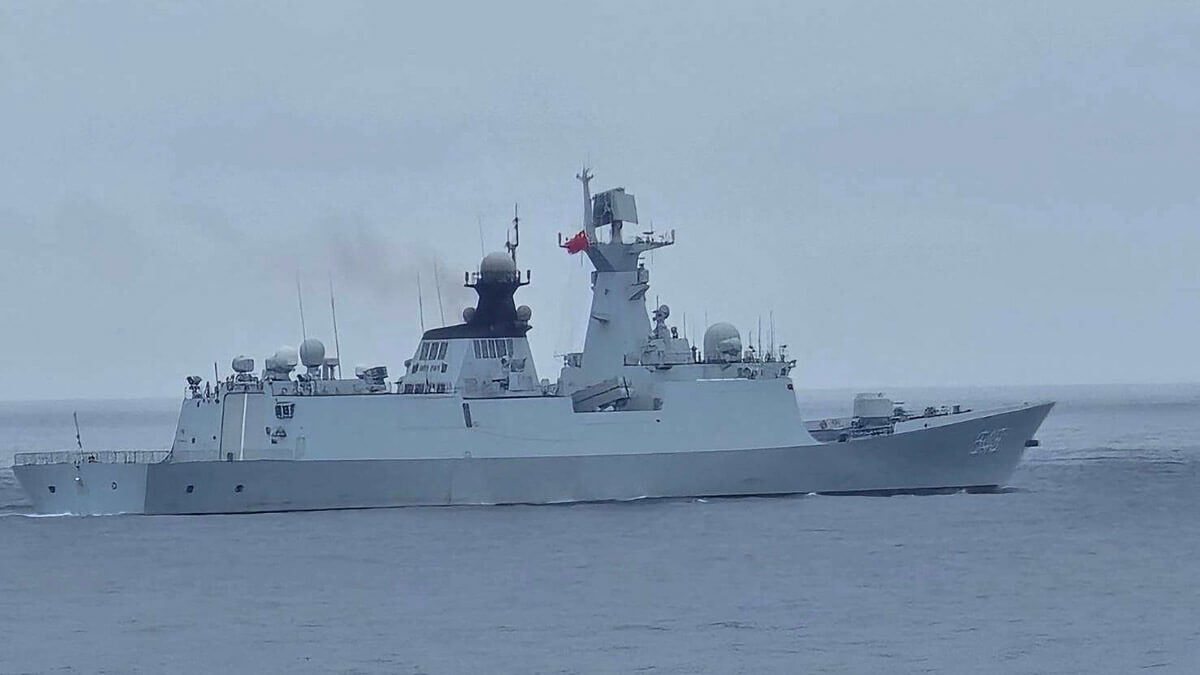
British Defence Secretary John Healey has revealed that the Russian vessel Yantar, officially presented as an ‘oceanographic research ship’, has been repeatedly operating on critical submarine cables in the Irish Sea and north of Scotland.
What makes this episode a qualitative leap is the use of laser weapons from the Russian vessel to dazzle RAF P-8 Poseidon aircraft pilots monitoring it and British helicopters and ships conducting tracking manoeuvres. Healey has described Russia's behaviour as ‘deeply dangerous’ and has announced a change in the rules of engagement, warning that the UK has ‘military options ready’.
Previous reports in the Financial Times and the Kyiv Independent had already documented the presence of the Yantar and other assets of Russia's Main Directorate for Deep Sea Research (GUGI) in areas where internet cables, military communications and power lines are concentrated, including key connections to Norway, the United States and the European mainland.
Implications:
Russia has taken the confrontation into the so-called ‘grey zone’: hostile actions that, by design, remain just below the threshold that would trigger an automatic response from NATO. The use of lasers against Western military aircraft is objectively a hostile act, but calibrated so as not to become a formal casus belli.
The strategic objective is transparent: to signal vulnerability. Moscow is reminding London and NATO as a whole that it has the technical capability to cut, sabotage or manipulate the submarine cables that are the digital and financial backbone of the West. A synchronised attack on a few key points could cause a communications and transactions blackout with immediate economic and political impact, without the need to fire a single missile at a city.
The British response – more aggressive rules of engagement, intensified patrols, public warnings of “military options” – also increases the risk of a direct incident: a collision, a misunderstood warning shot, a pilot injured by a laser. The first open armed clash between Russian and Western forces may not occur in Ukraine, but in the darkness of the seabed.
Be in no doubt, we live in a new era of threat.
— John Healey (@JohnHealey_MP) November 19, 2025
A Russian spy ship, the Yantar, returned to UK waters and directed lasers at our pilots.
Our government will always do what’s needed to defend Britain, and our Armed Forces stand ready to deter. pic.twitter.com/SpxwFiNnKF
Sino-Japanese crisis: Japan crosses the Rubicon over Taiwan
Facts:
Japanese Prime Minister Sanae Takaichi has declared before the Diet that a military contingency in Taiwan would constitute a ‘survival threat situation’ for Japan. That expression is not rhetoric: it is a specific legal category that opens the door to the use of force in collective self-defence alongside the United States.
At the same time, Defence Minister Shinjiro Koizumi has confirmed the deployment of medium-range surface-to-air missiles on the island of Yonaguni, some 110 km from Taiwan, and has visited the base to emphasise that the deployment ‘reduces the likelihood of an armed attack on our country’.
Beijing has reacted furiously. The Global Times described the stance as ‘hypocritical’ and ‘provocative’, the Chinese Foreign Ministry summoned the Japanese ambassador, and China set in motion the machinery of economic retaliation:
- Cancellation of mass tourist packages to Japan.
- Suspension of some fish imports and additional controls.
- Official warnings to its citizens about travelling to the country.
- Increased air and naval patrols near the Senkaku/Diaoyu Islands.
To add to the irony, the United States has decided to withdraw the Typhon missile system — capable of launching long-range Tomahawk and SM-6 missiles — from the Iwakuni base, following pressure from China, just as Japan takes a step forward in its own defensive militarisation.
Implications:
Japan has definitively abandoned its comfortable strategic ambiguity. By explicitly linking its survival to the fate of Taiwan, it assumes that war in the strait is no longer an academic scenario, but a possibility for which it must prepare.
China's response shows that Beijing understands the seriousness of the gesture. The weaponisation of tourism and trade is not only intended to punish Japan economically, but also to activate the Japanese business elite to pressure the government and ask it to change course. It is a battle for Japanese political will.
Geopolitically, the East China Sea is consolidating its position as one of the most dangerous flashpoints on the planet. The risk is not just a clash between ships or aircraft around the Senkaku Islands; it is that a tactical incident could trigger a chain of automatic commitments between Tokyo and Washington, dragging the entire alliance into a crisis with China.
For Europe, which is playing a game of looking the other way, the message is simple: while Geneva discusses how to cede territory in Ukraine, in the Indo-Pacific, democracies that feel threatened are not giving an inch. They are arming themselves.
Air blockade of Venezuela and deployment of the USS Gerald Ford
Facts:
The US Federal Aviation Administration (FAA) has issued NOTAM (notice to airmen) A0012/25, effectively banning US aircraft operations over Venezuela and warning other airlines of a ‘deteriorating security situation’.
Within hours, airlines such as Iberia, TAP Air Portugal, Avianca, GOL and LATAM suspended their routes to Caracas, leaving Maduro's regime increasingly isolated by air.
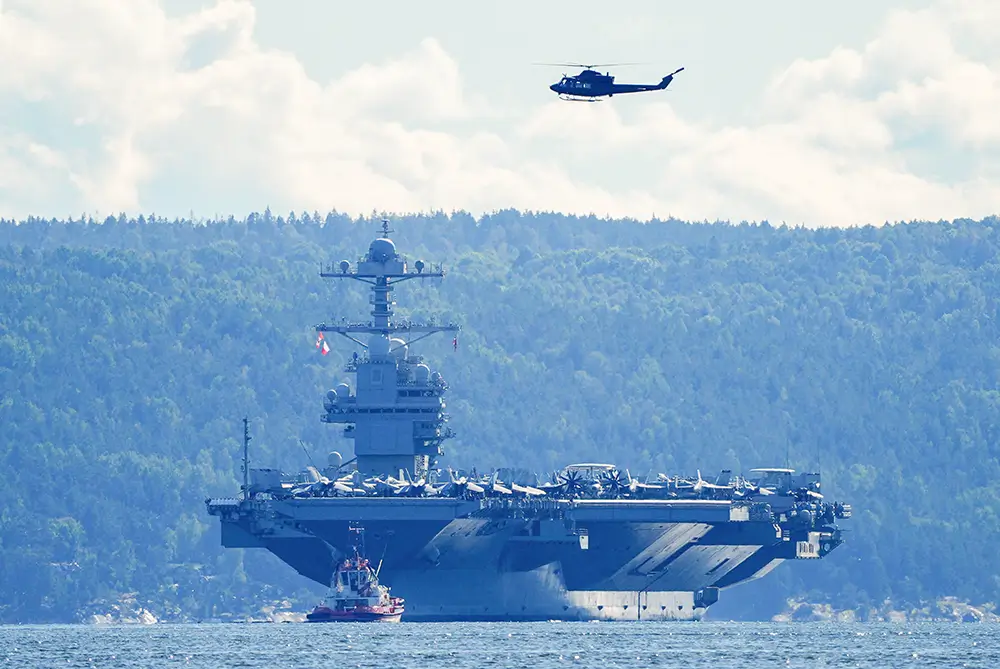
At the same time, the Pentagon has deployed the aircraft carrier USS Gerald Ford with its combat group — destroyers, frigates, escorts and F-35s — to the Caribbean, accompanied by demonstration flights of B-52 bombers, under the rhetorical umbrella of an ‘anti-narcotics operation’ against the so-called ‘Cartel of the Suns’.
Leaks collected by Reuters and other media outlets suggest that Washington is preparing for a ‘new phase of operations’ in Venezuela, which would include covert CIA operations aimed at weakening or overthrowing the regime, and a possible designation of the ‘Cartel of the Suns’ as a foreign terrorist organisation, with the consequent expansion of the legal framework for coercive actions.
Implications:
This is not a simple air safety alert. It is a deliberate logistical tourniquet. The aim is to strangle the escape and supply routes of the Chavista elite, using airspace as an instrument of political encirclement.
The combination of civilian isolation, massive naval deployment and B-52 flights is reminiscent of the prologues to interventions such as Panama in 1989. The Trump administration is laying the groundwork for a coercive intervention that could take many forms: from an induced palace coup to a surgical operation to capture key figures accused of narco-terrorism.
If Russia or China decided to send naval or air assets to symbolically back Maduro, the Caribbean could relive an updated version of the Missile Crisis. The risk of an air incident—an accidental shootdown of a civilian aircraft by Venezuelan S-300 systems, for example—would add a tragic dimension to the calculation.
For years, the West tolerated authoritarian regimes in its immediate neighbourhood while the focus was on the Middle East and Eastern Europe. That margin has run out. And the laboratory where this new red line will be tested is called Venezuela.
G20, COP30 and the Trump 2.0 energy doctrine: a world learning to operate without the United States
Facts:
A G20 summit marked by the empty US chair has concluded in Johannesburg. Trump decided to boycott the meeting, citing both the alleged ‘persecution of the Afrikaner minority’ and South Africa's closeness to the BRICS+. Argentina, under Milei, aligned itself with Washington and also did not send high-level representation.
Despite the absence of the world's largest economy, the other 19 countries reached a joint declaration, with references to:
- The need to strengthen economic multilateralism.
- The commitment to energy transition.
- The defence of Ukrainian territorial integrity, in contrast to Trump's peace plan.
At the same time, in Belém, in the heart of the Brazilian Amazon, COP30 closed with a minimal agreement: a promise to triple funding for climate adaptation and some support mechanisms for vulnerable countries, but without explicitly committing to a phasing out of fossil fuels, blocked by resistance from Saudi Arabia and other producers.
While climate multilateralism struggles to survive, another decisive move has been made in Washington: the United States Export-Import Bank (Ex-Im Bank) has announced a plan to mobilise $100 billion to make US ‘energy dominance’ the cornerstone of its foreign policy.
The new president of Ex-Im, John Jovanovic, has unveiled an initial package that includes:
- £4 billion for liquefied natural gas (LNG) exports to Egypt.
- A £1.25 billion loan for the Reko Diq copper and gold mine in Pakistan.
- Future investments in nuclear energy in south-eastern Europe.
- Projects related to uranium and critical minerals.
At the same time, the United States and China have agreed to a tactical trade truce: Beijing is suspending its export restrictions on rare earths and other critical minerals and committing to agricultural purchases and cooperation against fentanyl; Washington is temporarily relaxing some technological and tariff restrictions. The truce has an expiry date: November 2026.
Implications:
The G20 and COP30 paint the same picture: a world trying to govern itself without the United States or, at times, in spite of the United States. Washington's absence weakens the legitimacy and enforceability of agreements, but it also frees up space for China and, to a lesser extent, Europe to present themselves as alternative centres of leadership.
The Ex-Im Bank's shift crystallises Trump's energy doctrine 2.0: if the United States withdraws from climate multilateralism, it does not relinquish its energy power; it converts it into geopolitical leverage. LNG, nuclear and critical minerals become the new dominoes. The goal is not only business, but also to build ‘secure’ supply chains that reduce dependence on China and Russia.
Countries such as Pakistan and Egypt face yet another dilemma: accept massive financing with implicit strategic conditions (alignments, access to ports, regulatory commitments) or remain in the hands of Chinese banks and Gulf funds. Competition for the Global South is increasingly being fought on the energy and infrastructure front.
The trade truce with China reveals an uncomfortable truth for both sides: Washington cannot decouple itself from Chinese minerals without sinking its defence industry and green transition, nor can Beijing afford a head-on collision when its domestic economy is slowing down. It is a technological armed peace, not reconciliation.
In this context, Europe risks being caught between two realities: it makes climate speeches in Belém, while its main ally massively reopens the door to fossil gas and strategic nuclear power. If Brussels does not articulate a coherent position that reconciles energy security, defence and climate, others will decide for it.
Gunmen raided St. Mary’s Catholic School in Niger State, kidnapping 200+ kids and 12 teachers.#Nigeria #NigerState #Kidnapping #PrayForNigeria #Christian pic.twitter.com/u2QasL9LsF
— Just Updates (@Justupdates98) November 22, 2025
Nigeria: the kidnapping of St. Mary's and the disintegration of the state
Facts:
In Papiri, in the Nigerian state of Niger, a group of armed men has kidnapped 303 students and 12 teachers from St. Mary's Catholic School. In the hours that followed, some 50 students managed to escape on their own, according to Church sources. Around 253 people remain captive: 250 students, three children of staff members and 12 teachers.
The government has ordered the closure of 47 schools in the northern region, unable to guarantee minimum security for the schools. Pope Leo XIV has made an urgent appeal from St. Peter's Square for the immediate release of the hostages.
This is not the first case of mass kidnapping in northern Nigeria, but it is one of the most serious in recent years. The violence does not emanate exclusively from jihadist groups such as Boko Haram; increasingly, armed criminal gangs have turned industrial kidnapping into a stable economic model.
Implications:
Nigeria, Africa's demographic giant with some 220 million inhabitants, is showing advanced symptoms of state failure in large areas of its territory. The government's inability to protect a Catholic school turns the security crisis into a sectarian problem as well: Christian communities, already under pressure, see even their educational spaces as vulnerable.
The normalisation of mass kidnapping has a devastating effect:
- It discourages education, especially for girls, perpetuating backwardness.
- It encourages internal and external exodus, fuelling migration routes to the Sahel, the Maghreb and, ultimately, Europe.
- It weakens confidence in the state and reinforces parallel structures (militias, warlords, religious networks).
For Europe, which is focused on Ukraine and the Indo-Pacific, Nigeria is the silent front that, if it collapses, will multiply migratory pressures and instability throughout West Africa. The images from St. Mary's are also a mirror of the consequences of decades of rhetoric about ‘development support’ without a real commitment to security and governance.
Gunmen raided St. Mary’s Catholic School in Niger State, kidnapping 200+ kids and 12 teachers.#Nigeria #NigerState #Kidnapping #PrayForNigeria #Christian pic.twitter.com/u2QasL9LsF
— Just Updates (@Justupdates98) November 22, 2025
Elections in Republika Srpska: the Balkan separatist challenge
Facts:
In the Serb-Bosnian entity of Republika Srpska, part of Bosnia and Herzegovina, early presidential elections were held following the dismissal and six-year disqualification of nationalist leader Milorad Dodik, who was sanctioned for defying the Constitutional Court and the international High Representative while pursuing an openly secessionist agenda.
The election pitted Sinisa Karan, Dodik's protégé and candidate for the ruling SNSD party, against opposition candidate Jelena Trivić and other more moderate contenders. Preliminary results give Karan around 54.4% of the vote, compared to 35.4% for Trivić. Turnout was around 31% of the 1.2 million voters, reflecting a mixture of fatigue, resignation and mistrust.
Al Jazeera and other media outlets note that the campaign was conducted under openly separatist rhetoric and hostility towards Sarajevo and the institutions created by the Dayton Accords.
Implications:
These elections are not a routine exercise in alternation. They are, in fact, a plebiscite on secession. Dodik, although formally disqualified, retains control of the political and media apparatus and uses Karan as a tool to dismantle Dayton from within.
A clear victory for the continuity candidate, in a context of European distraction by Ukraine and the Middle East, could be the prelude to:
- Unilateral declarations of transfer of powers to Banja Luka.
- Systematic blockages of central Bosnian institutions.
- Mobilisations and counter-mobilisations that reactivate old ethnic fault lines.
For Moscow, this is a cheap front for destabilisation in NATO's rear. For the EU and NATO, the nightmare scenario is obvious: a Republika Srpska slowly moving towards secession, encouraged by Russia, while Brussels continues to promise an abstract ‘European perspective’ that never materialises.
The Balkans already demonstrated in the 1990s that their wars do not stay at home. Ignoring the Serb-Bosnian fuse today would be to repeat the mistake of the past, but with less room for manoeuvre, more open fronts and a Russian adversary willing to exploit every crack.
International media rack
The fragmentation of the international order is reflected in a parallel fragmentation of media narratives. There is no homogeneous ‘international community’; there are blocks of information that inhabit different realities.
Anglo-Saxon bloc (NYT, Washington Post, FT, The Telegraph, WSJ, BBC, CNN, AP, Reuters)
This bloc oscillates between transactional triumphalism and security alarmism.
On Geneva, the New York Times and Washington Post speak of ‘tremendous progress’, ‘refined peace framework’ and ‘reconciling differences’, but make it clear that the plan was originally negotiated between Washington and Moscow, with Ukraine as a latecomer.
The Financial Times and The Telegraph lay bare the reality: the initial text looks too much like a ‘Kremlin wish list’; the European counterproposal is leaked almost in real time, including Putin's return to the G8.
The WSJ sees for the first time a possible ‘way out’ of the Ukrainian quagmire, although it warns of the impact on NATO's credibility.
The BBC and CNN strive to emphasise that the plan ‘is not a final offer’ and may be modified, but they openly report the expression ‘zero gratitude’ and the ultimatum of the 27th.
In the Middle East, these same media outlets divide their focus between:
- The elimination of Tabtabai in Beirut (as a demonstration of Israeli capability).
- The fiction of the ceasefire in Gaza, with photos of Nuseirat and data on victims.
- The judicial radicalisation of the Houthis in Yemen, with 17 death sentences as a symbol of a de facto power that feels unpunished.
On the economic security front, the FT and WSJ focus on Yantar, submarine cables and the energy doctrine of the Ex-Im Bank, which they see as the financial arm of the United States' strategic retreat.
Continental European bloc (Le Monde, Le Figaro, FAZ, Die Welt, Corriere, El País, France24, Euronews)
Here, existential panic and a sense of strategic abandonment dominate.
Le Monde and El País are obsessed with Geneva, speaking bluntly of a plan that ‘largely favours Russian demands’ and of a Europe desperately trying to introduce counterweights.
The German press (FAZ, Die Welt) warns of the impact of a mutilated Ukraine on Germany's security and its eastern flank.
On Japan and China, Le Monde speaks of ‘Japanese pacifism being put to the test’ and recalls the parallels with the prelude to Pearl Harbor.
On the economic front, coverage of COP30 is openly bitter: ‘minimal agreement’, ‘blow to Lula’, ‘fragile climate unity’.
Europe looks in the mirror and sees something it does not like: too much military dependence on the United States, too much energy dependence on others and too little ability to impose its agenda.
Revisionist bloc (RT, TASS, China Daily, Global Times)
Here, the narrative is one of inevitable victory.
RT and TASS present Geneva as proof that the West has accepted the ‘reality on the ground’ and is willing to build a plan around Moscow's basic demands: territory, Ukrainian neutrality, end of sanctions.
The Chinese media present the crisis with Japan as Tokyo's sole fault: Takaichi has ‘crossed the red line’ on Taiwan and the deployment of missiles is a ‘gross provocation’.
Global Times takes advantage of the US boycott of the G20 to present itself as a defender of multilateralism in the face of an erratic Washington.
In this block, Tabtabai's elimination is used to show a West that allows Israel to do what it claims to deny Russia: ‘change realities by force and then ask for recognition’.
Middle East block (Al-Jazeera, Al-Arabiya, Asharq Al-Awsat, Haaretz, Jerusalem Post)
The region is in a state of total war.
Al-Jazeera insists on the nearly 500 Israeli violations of the truce in Gaza, speaks bluntly of slow-motion genocide, and analyses Geneva as a conference that legitimises force in Europe while normalising the occupation in Palestine.
The Jerusalem Post celebrates Tabtabai's assassination as a restoration of deterrence and wonders what the attack means for the various ceasefires. Haaretz introduces doubt: does this bring us closer to security or simply postpone the next cycle of war?
The Gulf media looks at Yemen with a mixture of horror and calculation: the Houthi executions may force them to take a clearer stance, just as they are attempting a détente with Iran.
Indo-Pacific bloc (Yomiuri, Japan Times, South China Morning Post, Straits Times, Times of India, Hindustan Times)
In the Indo-Pacific, everything is viewed through the lens of China-US balance.
Yomiuri and Japan Times cover in detail the deployment of missiles in Yonaguni and Koizumi's tour of southern bases, recalling that Japan has been studying for years the development of its own land attack capability.
South China Morning Post highlights Trump's anger with Ukraine and Japan's withdrawal of the Typhon system, and sees the Japanese move as part of the pressure on China.
The Straits Times and the Indian press, from different angles, read Trump's peace plan as proof of how far Western commitment really goes: if Ukraine is abandoned, what guarantees that something similar will not happen with Taiwan or India in the face of China or Pakistan?
Global South and Latin America (Clarín, El Mercurio, Reforma, Infobae...)
In Latin America, the region's own agenda takes precedence.
Clarín, El Mercurio and Reforma prioritise the Venezuelan crisis: FAA alert, air isolation, aircraft carriers in the Caribbean. Ukraine and Taiwan appear, but always subordinate to the question: how does the heating up of the United States' backyard affect us?
On climate, Lula appears as a tragic protagonist: the ‘COP of truth’ in Belém ends in minimal compromise; Brazil wants to lead, but its economic model depends on commodity exports.
Specialised media (Foreign Affairs, The Economist, Politico, The Hill, National Interest)
The Economist sees Geneva as a laboratory for how the European order is being rewritten and the Sino-Japanese crisis as proof that containment in Asia is over.
Foreign Affairs and National Interest debate post-war scenarios in Ukraine: restoration, freeze or partition.
Politico and The Hill focus on the internal US power struggle: congressmen horrified by a peace plan seen as capitulation to Putin, versus a White House that wants to close the European front to focus on China.