Gustavo de Arístegui: Geopolitical analysis of 24 September


- Executive Summary
- Main sources consulted
- Trump at the UN: Shift on Ukraine, sovereignty and criticism of the multilateral system
- Trump–Zelensky meeting at the UN
- Euro-Atlantic security: ‘Shoot down’ Russian fighter jets or drones that enter NATO airspace
- OECD revises 2025 growth upwards (3.2%), but warns of the negative effects of tariffs on global economic growth
- Macron to Trump: ‘A military solution is not enough to defeat Hamas’
- West Bank: Strategy to block the viability of a Palestinian state and border closures
- Signals from Kiev and the UN on Russian abuses and nuclear risk
- Gaza diplomacy in New York: Trump promises to ‘end the war’
- Media Rack. Analytical summary structured by media
Executive Summary
In the last 24 hours, the UN General Assembly (UNGA) dominated the scene, with Trump's speech marking a shift towards greater support for Ukraine and criticism of multilateralism, while his meeting with Zelensky reinforces NATO's deterrence against Russia. In the Middle East, Macron pushes for political solutions in Gaza, contrasting with Israeli expansion in the West Bank that buries Palestinian viability.
Economically, the OECD raises growth forecasts but warns of risks from tariffs. Other news includes Russian abuses in Ukraine and Trump's promises to end the war in Gaza. These dynamics underscore transatlantic fractures, risks of escalation in Eastern Europe and the decline of the two-state solution, all while Iran and its terrorist proxies (Hamas, Hezbollah, Houthis) remain weakened but persistent threats post-war in June-July 2025, demanding maximum pressure without appeasement.
Main sources consulted
NYT, Washington Post, Reuters, Al Jazeera, White House, OECD, Le Monde, Kyiv Independent, Arab News, Times of Israel, FAZ, Die Welt, Corriere della Sera, BBC, CNN, Fox News, Russia Today, TASS, South China Morning Post, The Times of India, Haaretz, Al-Jazeera, Asharq Al-Awsat.
Priority has been given to recognised international sources such as Reuters, AP, AFP, OECD for data, statistics and specific news; and CFR, ISW (Institute for the Study of War and RUSI Royal United Services Institute) for analysis.
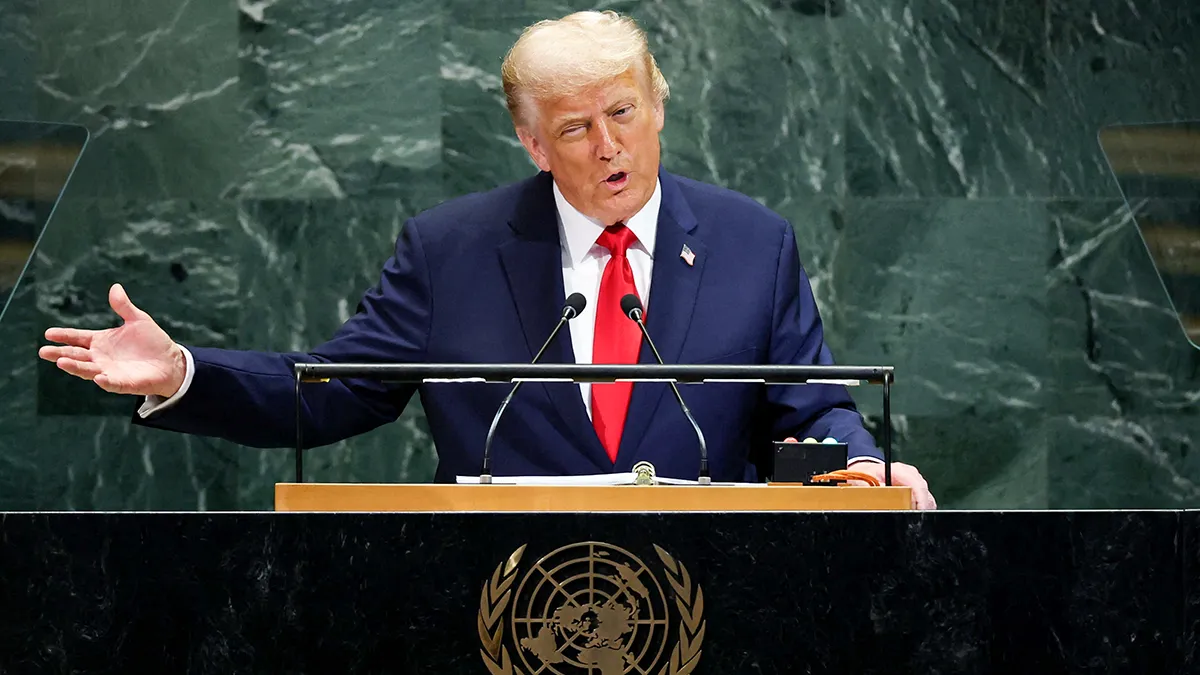
Trump at the UN: Shift on Ukraine, sovereignty and criticism of the multilateral system
What happened?
In his 56-minute speech to the 80th UNGA, Donald Trump defended national ‘sovereignty’ against the ‘globalism’ of the UN, which he accused of being ineffective and failing to help resolve crises. He called on Europe to immediately cut off purchases of Russian energy and assured that Ukraine ‘can regain all its territory’ with the support of the EU and NATO, a notable shift from previous more transactional and sceptical positions. He also claimed credit for ‘ending seven wars’ and criticised migration, climate change and ‘green’ policies.
Why does it matter?
It signals a political repositioning by Trump: rhetoric more aligned with the defence of Ukrainian territorial integrity, which may recalibrate the expectations of European allies (e.g., energy sanctions) and increase pressure on Moscow, weakened post-war 2025. However, it erodes multilateralism at a time of global crises, benefiting the narratives of rivals such as Russia and China.
(Expanded: According to Reuters, this complicates transatlantic alliances, with the EU warning of trade impossibility if tariffs are imposed).
Scenarios:
- Continuist-Firm: Washington maintains maximum economic pressure and demands that the EU shut off Russian energy supplies, strengthening NATO.
- Conditional: High rhetorical support, but selective application (‘depending on circumstances’), risking fatigue and distancing from allies.
- Critical escalation: If criticism of the UN leads to US funding cuts, it weakens collective responses to threats such as Iranian terrorism. (Expanded: Possible alignment with moderate Arab allies against Iran, but fracture with Europe if tariffs materialise).
- Key facts: Full transcript at White House; quotes verified in NYT and CNN; OECD indirectly links by noting risks of ‘political uncertainty’ in forecasts. (Expanded: Speech lasted 56 min, with BBC fact-check on ‘7 wars ended’ —e.g., Israel-Iran as unstable truce, not victory).
- Conclusions: This speech deepens transatlantic divisions, multiplying disputes and creating a dangerous dynamic of recriminations, in principle without altering the balance of power, but it could end up pushing the most criticised allies to entrench their positions.

Trump–Zelensky meeting at the UN
What happened?
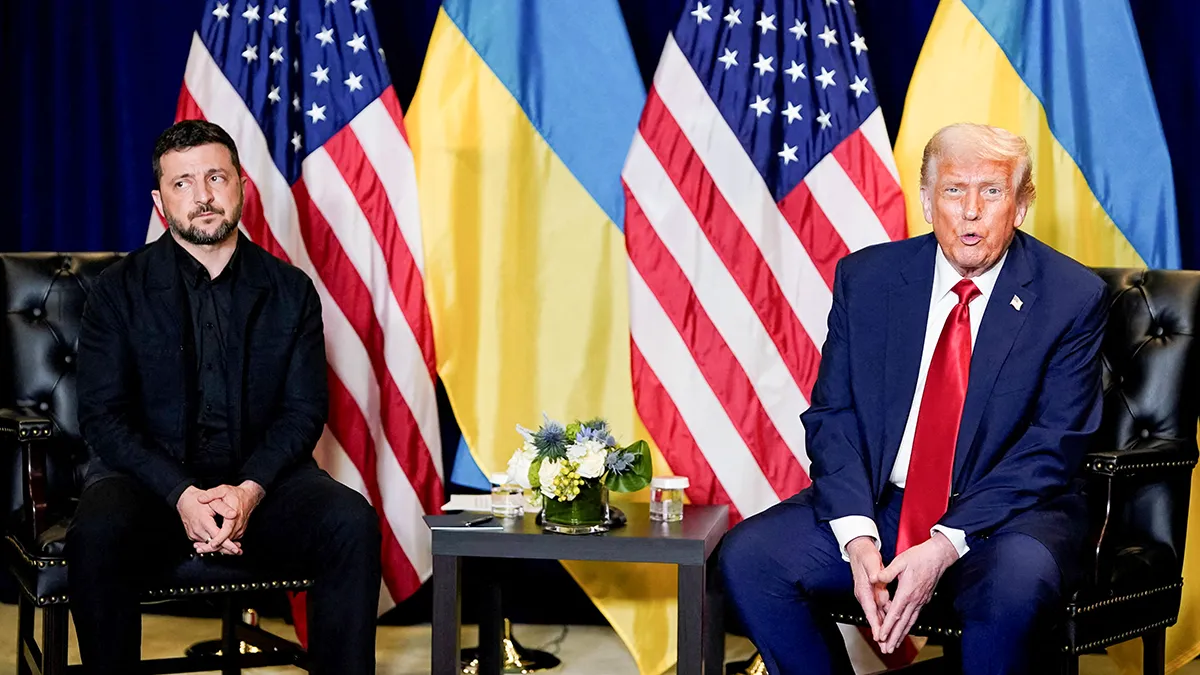
Volodymyr Zelensky called for more sanctions and guarantees from Western allies to prevent Russia from attacking Ukraine again. Trump reiterated that Ukraine can reverse territorial losses and suggested tightening the energy squeeze on Moscow, describing Russia as a ‘paper tiger’. Zelensky called it ‘un tournant’ (a turning point).
(Expanded: Bilateral meeting on the sidelines of the UNGA, with Zelensky emphasising China's role in pressuring Russia, according to Le Monde and Kyiv Independent).
Why does it matter?
For Kyiv, the meeting was intended to confirm and secure commitments from the White House and allay doubts about continued post-election support. For Moscow, it complicates its narrative of ‘Western fatigue,’ especially with post-war weakening in 2025. (According to AP, this marks a significant shift for Trump, who until then had been sceptical about a Ukrainian victory.
Scenarios:
- Coordinated EU-US sanctions reinforcement: On Russian hydrocarbons, increasing economic pressure.
- Waiting game: Political gestures without material acceleration in deliveries/financing, risking stagnation.
- Defensive escalation: If it includes shooting down Russian jets, it could lead to NATO-Russia incidents. (Expanded: Possible integration of more aggressive ROE, as in the Baltic, according to the Kyiv Post).
- Key facts: Live coverage by Le Monde; Zelensky describes Trump's message as ‘un tournant’ (a Copernican shift). The meeting included promises of post-war ‘security guarantees,’ according to CNN and Ukrinform.
- Conclusions: This shift weakens the possibility of normalisation with Russia, strengthening NATO deterrence when it is most needed against threats such as Iran (link to previous analysis). Many sectors of the more conservative right on both sides of the Atlantic have traditionally maintained pro-Russian narratives. However, it exposes Ukraine's fragility without proper Western assistance and due to Trump's changing mood.
Euro-Atlantic security: ‘Shoot down’ Russian fighter jets or drones that penetrate NATO airspace.
What happened?
Trump said NATO countries should shoot down Russian aircraft that violate their airspace; the issue comes to a head after incursions/drones over Poland and the Baltics, with Poland declaring readiness to defend itself.
(Expanded: Comments at the UNGA, with Trump clarifying ‘it depends on circumstances,’ per Kyiv Independent and Reuters; links to recent incidents in Estonia/Poland).
Why does it matter?
It raises the bar for immediate response and deterrence; it also increases the risk of tactical escalation if a shoot-down leads to major incidents, testing NATO unity post-war 2025. (Expanded: According to FAZ, this responds to Russian provocations testing NATO limits).
Scenarios:
- Clearer rules of engagement (ROE): Allied air defence integration; deterrence.
- Serious incident: With Russian aircraft → NATO-Russia crisis management.
- Selective Containment: If only rhetorical, it weakens credibility. (Expanded: Possible nuclear escalation if it involves Zaporizhia, per ISW).
- Key Data: Three Russian fighter jets in Estonia, per Reuters; Poland is prepared, according to Gazeta Wyborcza.
- Conclusions: Positions towards Russia are hardening, which could restrict the possibilities for negotiations with Russia, but strengthens allied sovereignty (link to previous analysis). Multiplies risks of humanitarian escalation, without altering the balance of power. Must be strongly opposed to Russian war crimes (incursions as acts of aggression against its neighbours.

OECD revises 2025 growth upwards (3.2%), but warns of the negative effects of tariffs on global economic growth
What happened?
The Interim Economic Outlook raises the global forecast for 2025 to 3.2% (from 2.9% in June) and maintains 2.9% for 2026, pointing to a slowdown due to tariffs/uncertainty, with resilience due to AI development in the US and fiscal measures in China.
(Expanded: OECD warns of front-loading risk in trade (transfer of unforeseen costs to the earliest stages of the value chain) and warns of the risks to the economy posed by trade barriers.
Why does it matter?
The cycle shows resilience despite wars, but tariffs and lower investment will weigh heavily, impacting allies such as the EU.
(Expanded: US raised to 1.8% in 2025, with a notable slowdown in 2026 due to the tariff war, according to the WSJ and CNBC).
Scenarios:
- Soft landing: With inflation easing in 2026 if there are no new geopolitical shocks.
- Worsening: If tariffs rise or there is an energy shock due to Russia/Middle East.
- Selective resilience: Benefit for anti-tariff economies such as China. (Expanded: Mexico raised to 0.08% in 2025, according to Mexico News Daily).
- Key data: PDF report with tables and inflation path. (Expanded: Global 3.2% in 2025; US 1.8%; EU, slowdown due to uncertainty, per FT).
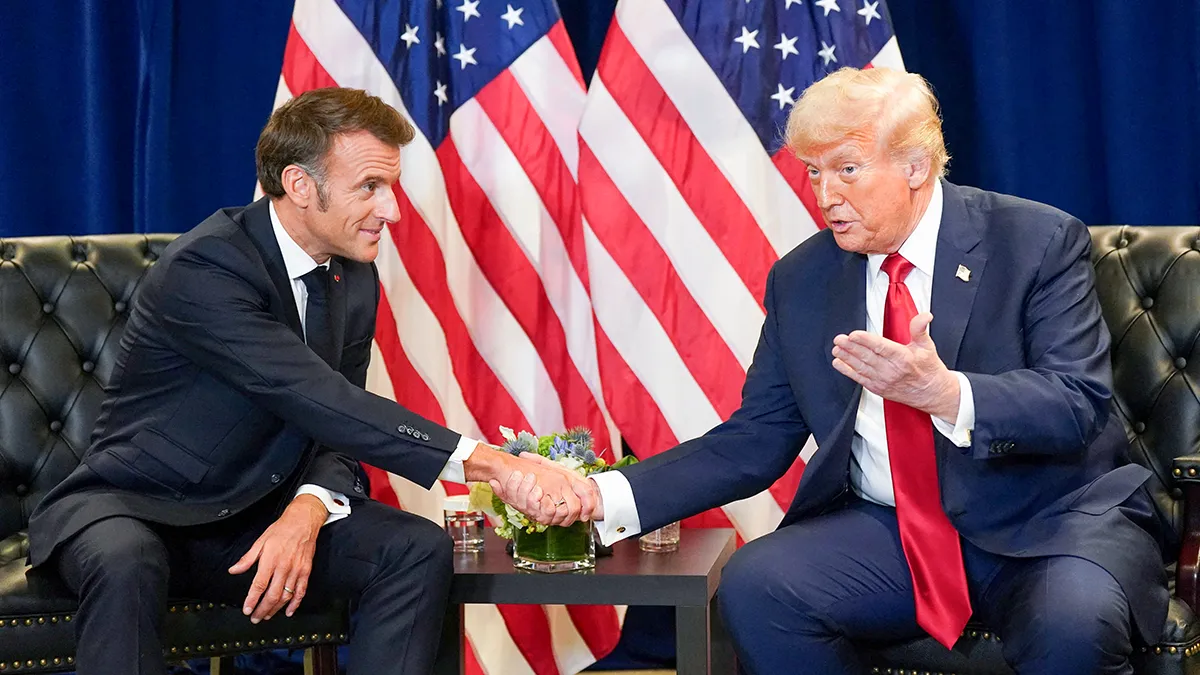
Macron to Trump: ‘A military solution is not enough to defeat Hamas’
What happened?
In bilateral interaction and parallel messages at the UNGA, Emmanuel Macron praised ‘successful’ strikes against Hamas leaders, but said they do not dismantle the structure; calls for a complete political process, with ‘the day after’ in Gaza.
(Expanded: Macron to Trump: killing leaders is a ‘great achievement’ but there are ‘as many fighters as at the beginning,’ per Reuters and France 24).
Why does it matter?
Paris defends Palestinian recognition and pivots towards a political-security approach (Israel's security + Palestinian statehood horizon), isolating Hamas. (Expanded: This contrasts with Trump, who sees recognition as a ‘reward for terror,’ per Al Jazeera).
Scenarios:
- EU-Arab diplomatic window: Ceasefire + PA reform + effective exclusion of Hamas.
- Blockade: If Jerusalem maintains purely military logic.
- Humanitarian escalation: If it ignores abuses, it prolongs the conflict. (Expanded: Possible Nobel Prize for Trump if he stops Gaza, per Hindustan Times).
- Key facts: Reuters summarises the message: recognising Palestine ≠ forgetting the brutal attacks of 7 October 2023. (Expanded: Bilaterally, Macron urges US pressure to stop supplying arms to Israel, according to French news channel BFM).
- Conclusions: This stance disappoints Palestinians by exposing the fragility of the Palestinian Authority without translating into real security.
West Bank: Strategy to block the viability of a Palestinian state and border closures
What happened?
Reuters visual report documents how roads and settlements are reshaping the West Bank, fragmenting contiguity; in addition, Israel closes the Allenby Bridge/King Hussein Bridge, the main border crossing with Jordan, ‘until further notice’.
(Expanded: Expansion accelerates post-recognition, with the forced displacement of 2,500 Bedouins, according to Reuters graphics; closure following Jordanian attack).
Why does it matter?
The geography of faits accomplis reduces the scope for a viable two-state solution, strains relations with allies that recognise Palestine and complicates Jordanian security.
(Expanded: UN reports ‘systematic destruction’ in Gaza extending to the West Bank, according to Al Jazeera).
Scenarios:
- Silent escalation: De facto annexation and European diplomatic response.
- Incentive/conditioning package: EU-US linked to de-escalation in the West Bank.
- Permanent fragmentation: If it continues, it buries the two-state solution. (Expanded: Possible EU boycott of settlements, per BBC).
- Key data: See interactive map/photo series on Reuters. (Expanded: 7,000 units approved by 2025, double that of 2020, according to Peace Now via Reuters).
- Conclusions: Accelerates Israeli isolation, providing pretexts for aggressive responses such as annexation (link to previous analysis). Weakens Palestinian viability, indirectly benefiting terrorists such as Hamas without demanding accountability. Tough on threats: prioritise defeat of Hamas/Hezbollah as existential, with verification of deradicalisation.
Signals from Kyiv and the UN on Russian abuses and nuclear risk
What happened?
In briefings today, Ukrainian and UN sources pointed to systematic torture in occupied areas and new electrical incidents in Zaporizhzhia; Zelensky called for more pressure on China to cut support to Moscow.
(Expanded: UN OHCHR reports abuses as war crimes, per Kyiv Post; nuclear risks in Zaporizhzhia persist, per DPA).
Why does it matter?
Reopens human rights front in sanctions calculations and recalls technological-nuclear risk, eroding Russian narrative. (Expanded: Link to Trump's shift: abuses justify support for Ukraine, per Ukrinform).
Scenarios:
- Strengthened investigation mandates: And additional targeted sanctions.
- Freeze: If media focus shifts to the Middle East.
- Nuclear escalation: If incidents in Zaporizhzhia worsen, they could lead to a crisis.
- Conclusions: Exposes Russian fragility post-2025, multiplying international pressure, finally, without concessions. However, the lack of results disappoints the Ukrainian population in the territories occupied by Russia, and there are signs of a growing breeding ground for resistance.

Gaza diplomacy in New York: Trump promises to ‘end the war’
What happened?
At a multilateral meeting with Arab and Muslim leaders on the sidelines of the UNGA (United Nations General Assembly), France and other major international players announced their recognition of the Palestinian state. The summit was convened by Saudi Arabia and France. We will analyse the consequences of this in a separate report. For his part, Trump said he would end the war in Gaza.
Why does it matter?
It marks the start of negotiations if it translates into a roadmap (ceasefire, hostages, post-Hamas governance, Israeli security).
(Expanded: Contrasts with Macron: military end is not enough, per Reuters).
Scenarios:
- Exploratory phase: Mediation by the US, Qatar, Egypt and Saudi Arabia.
- Stalemate: If there are no verifiable incentives/guarantees.
- Post-Hamas: PA reform excluding terrorists. (Expanded: Possible link to Palestinian recognition, per Al Jazeera).
- Key data: Coverage in Arab News. (Expanded: Trump: ‘US can end war now,’ per Fox News).
- Conclusions: This promise weakens Hamas as an existential terrorist, but disappoints without verification (link to previous analysis). Toughens stance vs. Iran, demanding exclusion of proxies without ‘woke’ concessions. Opportunity for conditionality: release of hostages, disarmament of Hamas.
Media Rack. Analytical summary structured by media
Western media perspectives (NYT, Washington Post, The Times London, The Telegraph, The Guardian, WSJ, FT, BBC, CNN, POLITICO, USA TODAY, The Hill, Fox News, CNBC, CBS, The Daily Beast, Newsweek, Washington Times, The National Interest)
- NYT and Washington Post: Focus on Trump's shift on Ukraine as ‘dramatic,’ fact-checking claims; criticise attacks on the UN/multilateralism.
- The Times London, The Telegraph and The Guardian: Highlight support for shooting down Russian jets as escalation; The Guardian supports Macron's political approach in Gaza.
- WSJ, FT and BBC: Analyse OECD economic impacts, with tariff risks; BBC fact-checks Trump's promises on Gaza.
- Fox News, Washington Times and The National Interest: Support Trump's firm stance vs. Russia/Hamas, emphasising sovereignty.
- CNN, POLITICO and USA TODAY: Cover Trump-Zelensky/Arab meetings as diplomatic pivots.
European Perspectives (Le Monde, Le Figaro, FAZ, Die Welt, Corriere della Sera, Libération, L'Observatore Romano, Die Zeit, La Tribune de Genève, Helsingin Sanomat, France Info, LCI, BFM)
- Le Monde and Le Figaro: Celebrate Trump's ‘tournant’ in Ukraine; Macron as anti-‘law of the strongest’ leader in Gaza.
- FAZ, Die Welt and Die Zeit: Concern over Russian jet escalation; analysis of West Bank fragmentation.
- Corriere della Sera and Libération: See opportunity for transatlantic unity, but doubt Trump.
- Helsingin Sanomat and Gazeta Wyborcza: Relief in the Baltic/Poland over shootings.
Perspectives from Other Media (Russia Today, TASS, Tokyo Times, Straight Times, South China Morning Post, China Daily, Reuters, AFP, AP, DPA, Yomiuri Shimbun, The Times of India, Hindustan Times, Clarin, El Mercurio, Reforma, Indian Express, Ukrainian Pravda, Ukrinform, Fakty i Kommentarii, Vesti, Kyiv Post, The Kyiv Independent, Yedioth Ahronoth, Israel Hayom, Jerusalem Post, Haaretz, Maariv, Al-Jazeera, Al-Arabiya, Al-Hayat, An-Nahar, Orient Le Jour, Daily Star, Jordan Times, Al Rai, Hürriyet, Al Quds Al Arabi, Al Hayat Al Jadida, Alyyam, Felestin, Peninsula Qatar, Arab News, Asharq Al-Awsat, Al Riyadh, Saudi Gazette, Gulf News UAE, Gulf News Qatar, Khaleej Times UAE, Gulf Today, Al-Ittihad, Times of Oman)
- Russia Today and TASS: Accuse Trump of provocation with jets; downplay Russian abuses.
- Ukrainian Pravda, Ukrinform, Kyiv Post and The Kyiv Independent: Celebrate Trump's shift as a victory; highlight nuclear risks in Zaporizhia.
- Yedioth Ahronoth, Haaretz and Jerusalem Post: Criticise Macron for ‘not enough military’; see West Bank expansion as security.
- Al-Jazeera, Al-Arabiya and Asharq Al-Awsat: Celebrate Trump's promises on Gaza; condemn settlements as illegal.
- South China Morning Post and China Daily: Analyse weakening multilateralism benefiting Beijing; OECD as positive for China.
- The Times of India and Hindustan Times: Note implications for QUAD vs. China/Russia.