Gustavo de Arístegui: Geopolitical analysis of 28 October 2025


- Russia tests the Burevestnik nuclear cruise missile: a qualitative leap and strategic message
- RSF in Sudan: systematic ethnic atrocities in Darfur
- Trump's tour of Asia: ‘Golden Age’ with Japan and rare earths pact
- Côte d'Ivoire: Ouattara wins fourth term; Cameroon: Biya retains power
- Argentina: ‘Milei moment’ after the midterms — reforms, markets and governance
- Stock market rally with feet of clay: mega-cap volatility exposes fragility
- Hurricane Melissa: imminent historic impact on Jamaica and regional threat
- Run-up to the Trump–Xi summit: reallocation of risks in the Indo-Pacific
- Media rack (curated by headlines and focus)
- Global trends
- Analysis by media
- Final editorial note
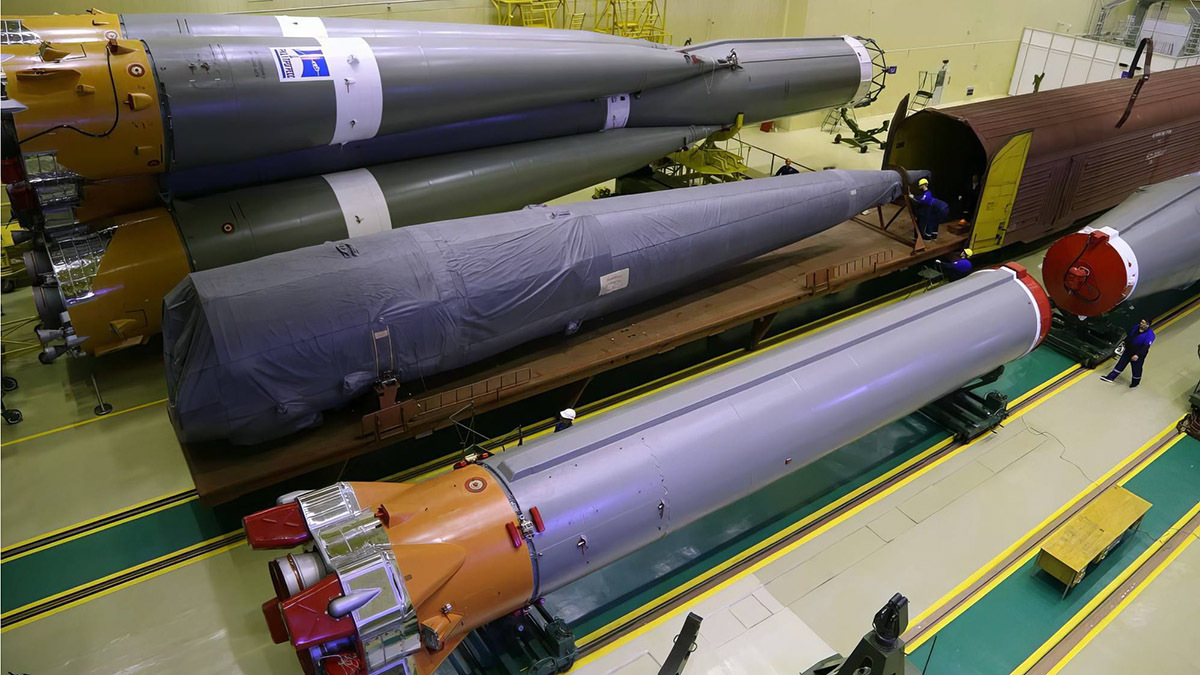
Russia tests Burevestnik nuclear cruise missile: qualitative leap and strategic message
Facts:
Moscow has not only confirmed a test; it has confirmed the materialisation of a nuclear doctrine announced by Vladimir Putin. The 9M730 Burevestnik (designated by NATO as SSC-X-9 Skyfall) is a nuclear-powered vector. In practical terms, this means that its power plant gives it a theoretically unlimited range, allowing it to fly for days if necessary, circling the globe to attack from unexpected angles.
Unlike an intercontinental ballistic missile (ICBM), which traces a predictable arc, the Burevestnik flies at low altitude (skimming flight), hiding below the radar horizon and adapting to the terrain. The choice of Novaya Zemlya, the traditional Arctic test site of the Soviet era, underscores the solemnity and seriousness of the message. The Kremlin is not improvising: it frames the test as its direct response to the collapse of the arms control architecture (the US withdrawal from the ABM Treaty and the demise of the INF) and its perception of strategic encirclement by NATO expansion.
Implications:
We are witnessing ‘second-generation deterrence’. This is no longer Mutually Assured Destruction (MAD), but deterrence through strategic saturation and psychological attrition.
Such a weapon is not intended for a first strike, but to guarantee an undetectable second strike, capable of rendering advanced air defences useless. Europe is exposed to a new ‘nuclear fog’, which complicates any future attempts at arms control.
RSF in Sudan: systematic ethnic atrocities in Darfur
Facts:
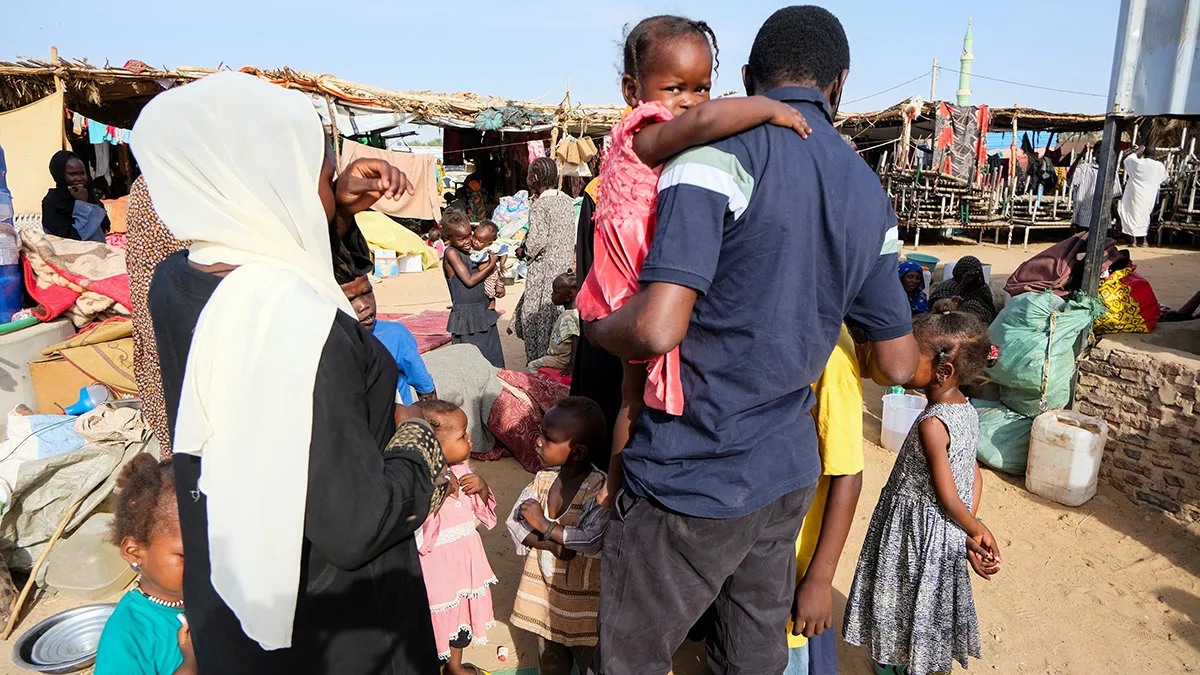
What is happening in El-Fasher, the last bastion of the regular army (SAF) in Darfur, is not conventional combat: it is ethnic cleansing in slow motion. The UN speaks of ‘ethnically motivated atrocities’.
Hemedti's Rapid Support Forces (RSF) are replicating the genocidal playbook of the Janjaweed: summary executions, systematic rape and deliberate siege of camps for internally displaced persons.
Implications:
It is a new ‘Rwanda effect’, slower but just as devastating. The fall of El-Fasher would consolidate the RSF's control and legitimise barbarism as a political method. The consequences will be regional: massive waves of refugees will destabilise Chad, Libya and the entire Sahel. Tolerating Hemedti is not pragmatism; it is complicity with crime.
Trump's tour of Asia: ‘Golden age’ with Japan and rare earths pact
Facts:
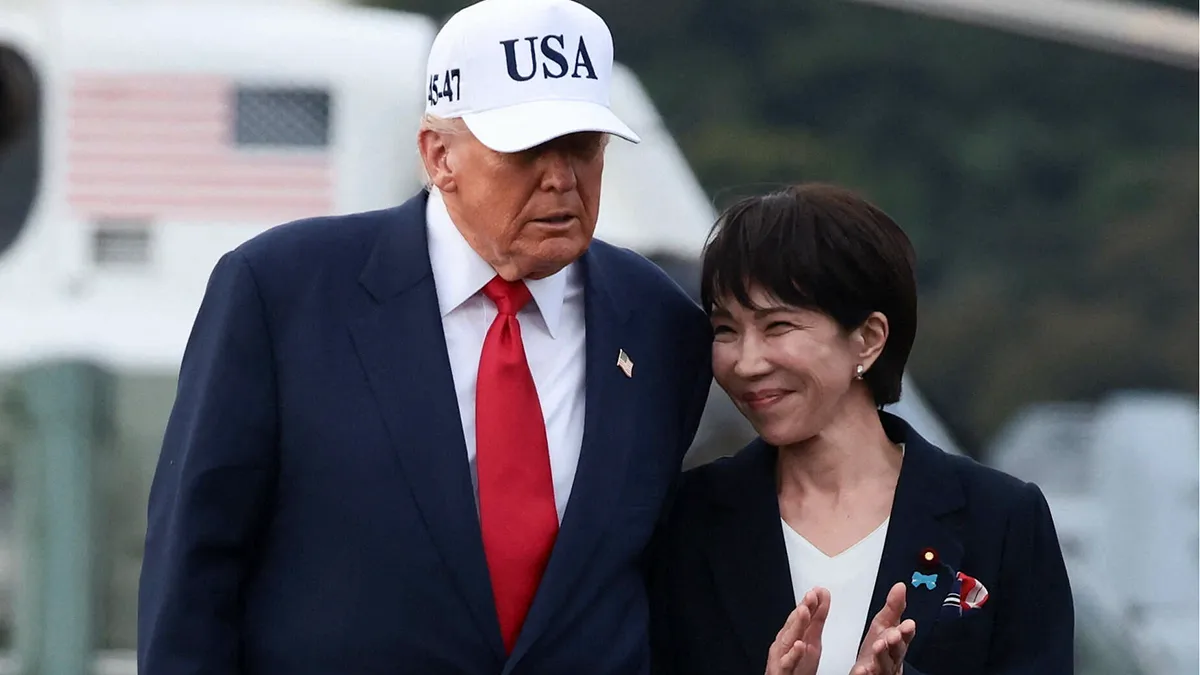
The meeting between Donald Trump and Prime Minister Sanae Takaichi in Tokyo symbolises the strongest axis in the Indo-Pacific. The agreement signed guarantees the supply of rare earths and critical minerals, a direct challenge to China's monopoly on these resources that are essential for technology and defence.
Implications:
Washington is executing a surgical de-risking strategy. If the ‘Critical Minerals Axis’ expands to South Korea and Australia, China's economic coercion capacity will be drastically reduced. Europe, on the other hand, must react: either integrate as a technological partner or resign itself to being a mere consumer in the new strategic economy.
Côte d'Ivoire: Ouattara wins fourth term; Cameroon: Biya retains power
Facts:
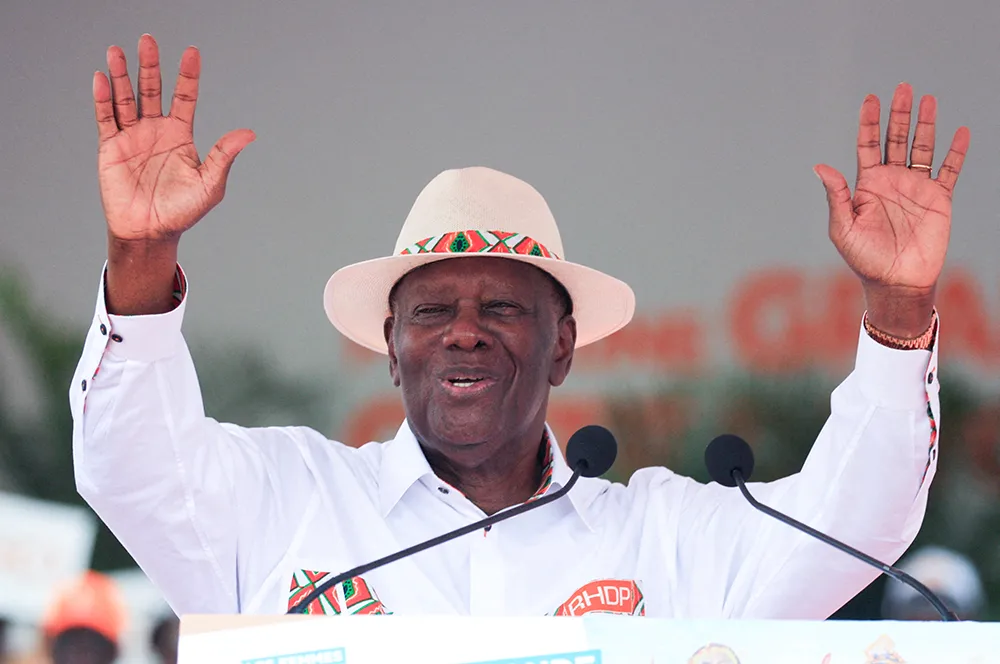
In both Côte d'Ivoire and Cameroon, the elections were predictable democratic farces. Ouattara was re-elected with 89.77% of the vote after neutralising his rivals; Biya, aged 92 and with almost half a century in power, retained his position with 53.66% of the vote amid allegations of fraud and violence.
Implications:
There is no stability, but rather ‘authoritarian stability’: deferred fragility. The political exclusion of a young population creates an ideal breeding ground for extremism.
Europe is making a strategic mistake by financing these regimes in exchange for illusory migration control. Making cooperation conditional on democratic reforms is not neo-colonialism, it is geopolitical realism.
Argentina: ‘Milei moment’ after the midterms — reforms, markets and governance
Facts:
The ruling party wins a landslide victory in the legislative elections, confirming Milei's ‘shock therapy’. The markets react euphorically: bonds rise, country risk falls and the peso appreciates. Wall Street sees the result as a green light for deregulation and massive privatisation.
Implications:
Milei moves from the chainsaw to the legislative scalpel. If he manages to shield his DNU and consolidate fiscal discipline, Argentina could break its inflationary curse. But the political risk is enormous: without a federal pact and a social safety net, the adjustment could become ungovernable.

Stock market rally with feet of clay: mega-cap volatility exposes fragility
Facts:
The Financial Times warns of a sustained bull market on weak foundations. The ‘Magnificent Seven’ tech stocks fluctuate by hundreds of billions a day, inflated by 0DTE options and hyper-concentrated ETFs.
Implications:
The market is leveraged and homogeneous: everyone is on the same side of the boat. With central banks running out of room for manoeuvre and profits tight, any disappointment could trigger a flash crash. Tactical prudence — liquidity, hedging, real diversification — is the only rational response.

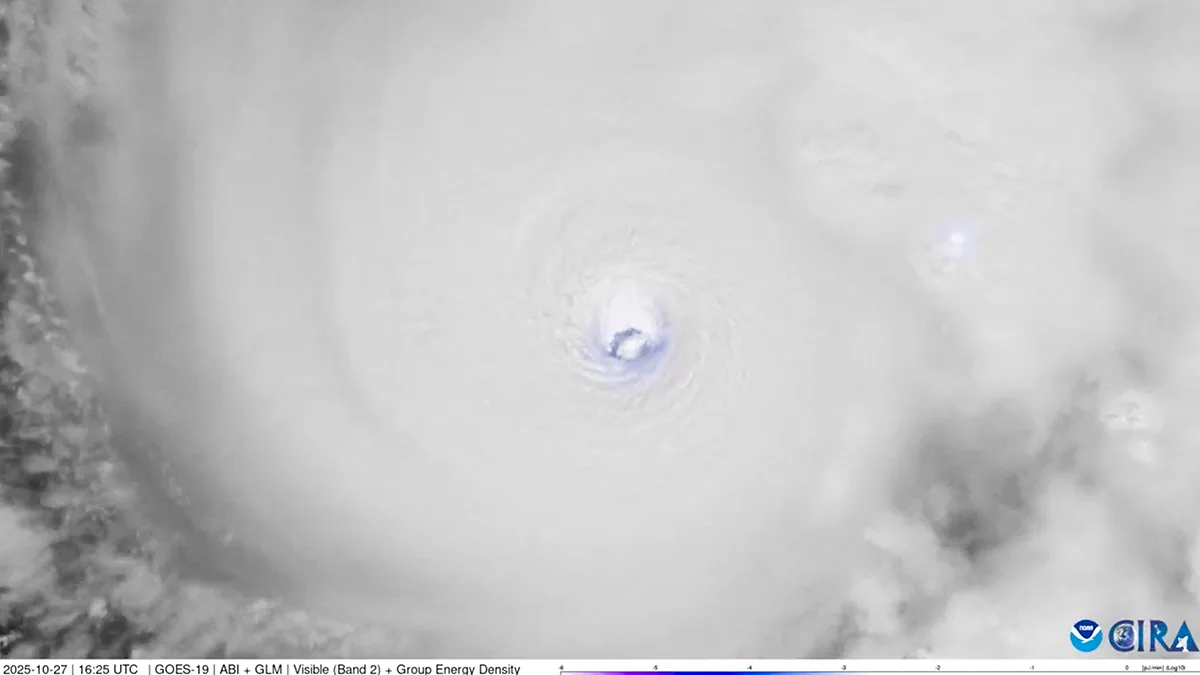
Hurricane Melissa: historic impact imminent in Jamaica and regional threat
Facts:
Melissa, a Category 5 hurricane with winds of 280 km/h, threatens to make a direct landfall in Jamaica. Evacuations are spreading to Cuba, Haiti and the Bahamas, with casualties already reported.
Implications:
Beyond the humanitarian disaster, the economic impact will be profound: disruption of shipping routes, closure of strategic ports and global logistical disruption. Europe will suffer indirect effects on raw material prices and transatlantic transport.
Pre-Trump–Xi summit: risk reallocation in the Indo-Pacific
Facts:
Trump's Asian tour sets the stage for his meeting with Xi Jinping. Following the technology pact with Japan, the White House defines its red lines. The Financial Times wonders whether ‘America First’ protectionism will push ASEAN towards China.
Implications:
If the US combines high tariffs with real investment, ASEAN will be able to balance risks. If not, the vacuum will be filled by Beijing. Europe, meanwhile, needs to move quickly: agreements with ASEAN and South Korea or it will lose relevance in the Indo-Pacific technology race.

Media rack (curated by headlines and focus)
Agencies & Global reference: Reuters (Burevestnik; tour of Japan; rare earths; Norway) · AP (Hurricane Melissa; Argentine midterms) · RFI (RSF/El-Fasher; elections in Ivory Coast)
Economic press: Financial Times (fragility of the rally; Indo-Pacific; US-Japan ‘golden age’)
European generalists: The Guardian (Biya and protests)
Video & live: Reuters Live (Trump's agenda in Tokyo; kidnapped by North Korea.
Global trends
- Technological remilitarisation (critical minerals, de-risking).
- African authoritarianism with an electoral veneer.
- Extreme weather as a geopolitical risk multiplier.
- Return of nuclear strategy to the hard agenda.
Analysis by media
- NYT – Focuses on the Burevestnik test as nuclear escalation and links Darfur to humanitarian crisis. Criticises Milei's ‘rescue’ and warns of stock market volatility.
- Washington Post – Interprets Milei's victory as a ‘Trumpian mandate’ and warns of economic interference. Sees the Russian missile as a direct challenge.
- The Times – Highlights the risk of global volatility due to Trumpian tariffs and defines the Russian test as a ‘Putinist provocation’.
- The Telegraph – Denounces ‘treason’ in the Argentine bailout and brands the RSF as ‘bloodthirsty’.
- The Guardian – Criticises austerity in Argentina and addresses the Russian missile as strategic intimidation.
- WSJ – Celebrates Milei's economic victory, but warns of financial volatility and US-China trade tensions.
Final editorial note
This week's global chessboard combines signs of simultaneous retreat and advance: the nuclear race is reactivated, African authoritarianism is consolidated, economic populism resurges and financial markets fluctuate wildly. The common constant is the fragility of the international order: each power seeks to shield itself while the climate, markets and geopolitics demand a cooperative vision that no one seems willing to assume.