Gustavo de Arístegui: Geopolitical analysis of 31 October 2025


- US – China: Tactical truce on ‘shifting sands’
- The US and the breaking of the nuclear taboo
- US Senate challenges tariff policy (third setback)
- Thirty days of shutdown: the state as a political weapon
- Ukraine: chronic deficit and ‘European incapacity’
- Sudan: RSF atrocities and international failure
- Technology: Apple and Amazon break records amid tensions
- X-59: the technological leap of the silent supersonic aircraft
- Media Rack (analytical classification)
US – China: Tactical truce on ‘shifting sands’
Facts
The summit between Donald Trump and Xi Jinping in Busan (South Korea) resulted in a strictly tactical trade truce. The United States reduced the global tariffs applied to China from 57% to 47% by halving the surcharge associated with the fight against fentanyl. This decision avoids, for the time being, the scenario of an escalation to 100% tariffs, which had been considered as a measure of maximum pressure.
For its part, Beijing has committed to deferring the imposition of new restrictions on the export of rare earths—essential inputs for the energy transition and advanced electronics—to resuming large-scale soybean purchases, and to strengthening its cooperation with Washington in the fight against drugs, with an emphasis on fentanyl precursor chemicals and verification mechanisms. In other words, both governments are cooling down without giving up their fundamental positions.
Implications
We are facing a pragmatic and reversible pause, not a strategic shift. China is managing to project an image of parity with the United States, strengthening its room for manoeuvre and buying time to adjust its value chains without compromising its long-term industrial objectives. As the international economic press has pointed out with the metaphor of the ‘Wild West’, the powers have ‘holstered’ their commercial weapons, but they have not abandoned them.
For the West, the truce offers immediate relief to the markets, reduces volatility and eases tensions in sectors dependent on rare earths; however, it does not address the underlying problem: Beijing's trade policy is a functional instrument of its global power strategy. Without a united, predictable transatlantic response with a geostrategic vision for the next ten to fifteen years—including real diversification of critical materials—this apparent decompression will reinforce China's footprint in regions where Western influence is already waning and consolidate Xi's domestic power.

The US and the breaking of the nuclear taboo
Facts
President Trump has ordered the Pentagon to ‘begin testing’ nuclear weapons, effectively breaking the de facto moratorium that the United States has maintained since 1992. The decision comes after Russia's display of new strategic vectors—the Poseidon nuclear-powered torpedo and the cruise missile with theoretically unlimited range, known in NATO as Skyfall—which Moscow presents as capabilities capable of evading defences and altering the tactical-strategic balance.
Washington, moreover, is lagging behind in hypersonic programmes and renounced nuclear-powered platforms in the 1960s, raising the technical barriers to any return to significant testing. In this context, the announcement has a strong performative and political component for both domestic and international audiences.
Implications
The main consequence is the risk of legitimising a new testing race and eroding the international taboo that has contained the proliferation and testing of nuclear devices for decades. The gesture is intended to confuse and deter Moscow and Beijing, but it raises ethical, scientific and security questions: from the possibility of ‘radioactive fallout’ and accidents during testing to the impact on verification regimes and treaties already weakened by Russia's decisions to suspend or denounce its obligations.
The signal to third countries with nuclear ambitions is equally worrying: every crack in the non-proliferation consensus increases the incentives to advance, albeit covertly, their own capabilities. Twenty-first century deterrence will gain more from investment in C4ISR, missile defence and cyber deterrence than from a hasty return to testing, the cost-benefit balance of which is, today, highly uncertain.

US Senate challenges tariff policy (third setback)
Facts
In parallel with the truce with China, the Senate approved by 51 votes to 47 a resolution to invalidate the legal architecture of the global tariffs (‘Liberation Day tariffs’) promoted by the White House.
Several Republican senators crossed party lines, making the vote the third bipartisan rebuke of the week. The measure is not immediately binding and still faces resistance in the House of Representatives, but it marks a political turning point.
Implications
The message is clear: the domestic cost of the tariff war — imported inflation, regulatory uncertainty, supply chain tensions and pressure on agriculture — is breaking party discipline. Checks and balances are working and tempering the trend toward economic isolationism.
The coexistence of a tactical truce with Beijing and a Congress that questions tariff maximalism complicates the administration's negotiating credibility and increases volatility for businesses and allies. The US trade agenda is thus fraught with litigation, symbolic votes of no confidence and contradictory signals which, if not resolved, will increase risk premiums for investment.
Thirty days of shutdown: the state as a political weapon
Facts
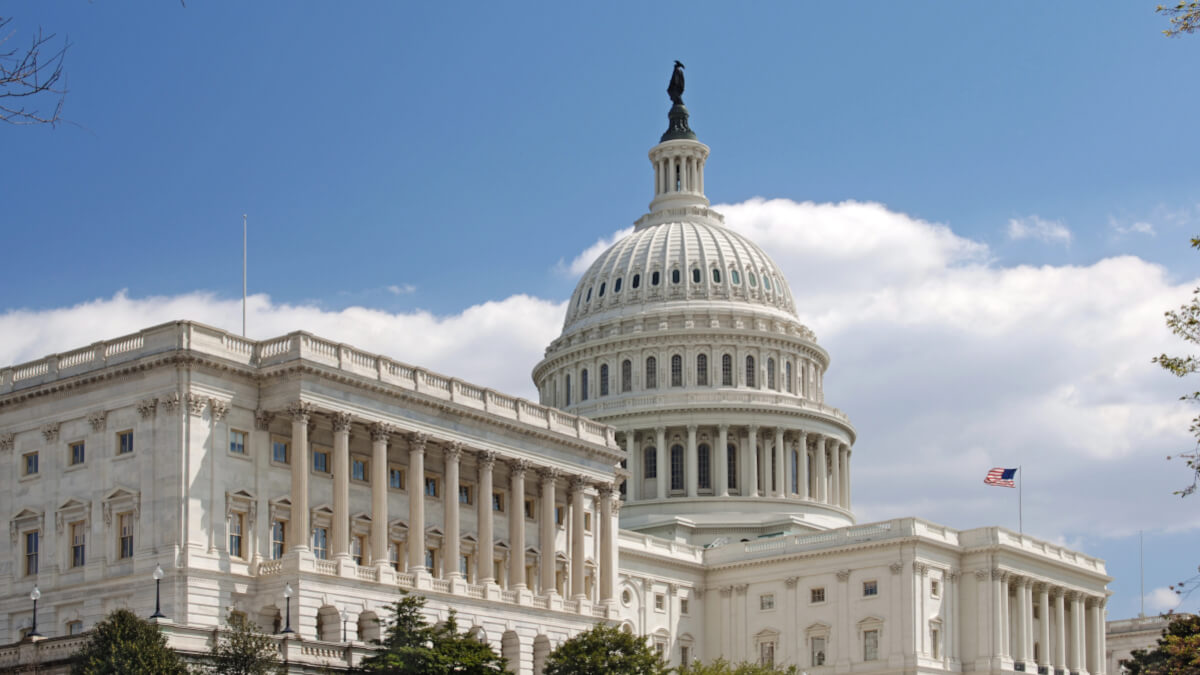
The government shutdown has reached thirty days and is beginning to show cumulative effects on the state's operational capacity. The White House has attempted to take advantage of the rigidity of negotiations with the Democratic opposition to push through RIFs (reductions in force) and cuts in public sector jobs considered ‘redundant’, although court decisions have already halted some of these moves.
Critical agencies such as the FBI and the FAA are seeing essential functions degraded—from travel and payments to informants to maintenance, inspections, and air traffic control shifts—while social programmes such as SNAP are approaching operational limits that could result in service interruptions.
Implications
Polarisation turns the shutdown into an instrument of institutional engineering that erodes human capital, empties multi-year planning of content and undermines the confidence of citizens and markets in the predictability of the federal government. For each day of closure, irrecoverable costs accumulate—administrative backlogs, penalties for contract delays, productivity losses—and a narrative of dysfunction is fuelled that damages the international credibility of the United States.
Although politically presented as a way to ‘drain the swamp,’ in terms of national security and social cohesion, the price grows exponentially as the weeks go by.

Ukraine: chronic deficit and ‘European incapacity’
Facts
Ukraine's strategic bill is skyrocketing, and the need for stable financing is becoming the Achilles' heel of the country's war effort and economic resilience. Kiev faces a chronic deficit estimated at nearly €400 billion to sustain defence and reconstruction until 2029.
The European Union promises to cover immediate needs, but continues to postpone the decision to use frozen Russian assets as collateral for a mega-loan that would truly close the gap. This indecision contrasts with the urgency of ammunition, equipment maintenance and basic budgetary support (salaries, pensions, public services).
Implications
European reluctance to activate a financial instrument of sufficient scale is not a technicality: it is an existential risk. Without a multi-year budget firewall, Ukraine is exposed to internal political shocks in member states and donor fatigue, opening an operational window for Russia.
Europe must understand that financing Kyiv is not a “cost of solidarity” but a historic bargain for its own security: for every euro that prevents defeat or a freeze of the conflict on terms favourable to the Kremlin, dozens are saved on military border reinforcement, cyber protection, energy and future migration crisis management. The decision on Russian assets cannot be postponed indefinitely without paying a geopolitical price.
Sudan: RSF atrocities and international failure
Facts
The UN Security Council has condemned the Rapid Support Forces (RSF) assault on El-Fasher, a key city in Darfur, and warned of the real danger of large-scale killings. Eyewitness accounts from the field and humanitarian organisations describe summary executions, attacks on hospitals, mass displacement and the systematic destruction of civilian property. The fall of urban centres, the collapse of communications and the interruption of humanitarian access are pushing the population into a situation of extreme vulnerability.
Implications
Sudan is approaching a humanitarian point of no return that requires urgent action if genocide or crimes against humanity are to be avoided. Inaction—whether due to paralysis in the Security Council, a lack of regional resources, or donor fatigue—is immoral and strategically short-sighted: it empowers militias, further fractures the social fabric, and projects instability onto neighbouring countries such as Chad, Libya, and the Central African Republic. Without a clear mandate, safe corridors and effective traceability of arms flows, any ceasefire will be meaningless.

Technology: Apple and Amazon break records amid tensions
Facts
Tech giants have exceeded market expectations despite geopolitical uncertainty. Apple reported revenue of £112 billion, driven by the iPhone 17 cycle and the resilience of its services ecosystem. Amazon grew 13% to £180 billion, thanks mainly to the performance of AWS, which recorded a 20% increase on the back of demand for artificial intelligence computing and long-term enterprise contracts.
Implications
There are two sides to this story. On the one hand, spending on AI consolidates hyperscalers and reinforces economies of scale, vertical integrations and network effects that favour a few players. On the other hand, the risk of concentration and systemic dependence intensifies if competition, data and interoperability regulation does not keep pace.
For Europe, the combination of US leadership in hardware, cloud and foundational models and privileged access to capital raises the bar: without a genuine industrial strategy — from semiconductors to synthetic data and talent training — the gap will widen.

X-59: the technological leap of the silent supersonic aircraft
Facts
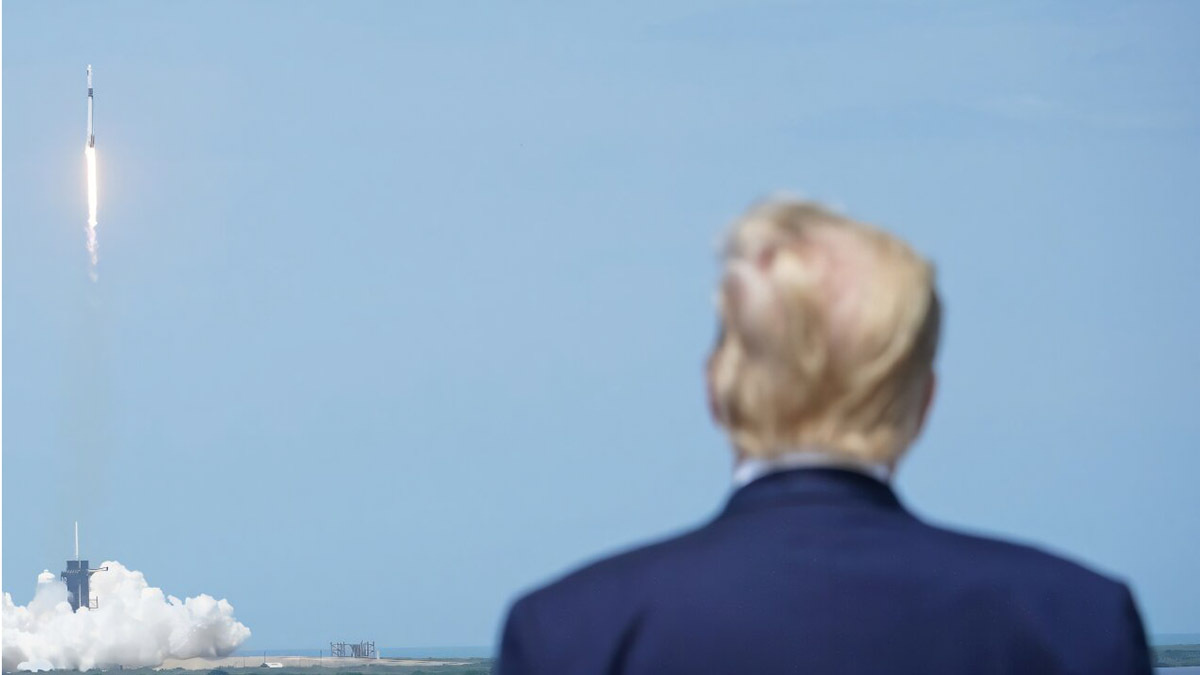
NASA's X-59 has completed its first flight and validated in a real environment a configuration capable of transforming the traditional sonic boom into a much softer acoustic thump. The programme's objective is not only technical prowess; it is about generating data and regulatory consensus that will allow supersonic flight over land to be reopened, which, if successful, could halve travel times on transoceanic and long-haul routes.
Implications
The potential impact on commercial aviation is enormous: hand in hand with advances in materials, aerodynamics and noise control, a new market niche is emerging for high-speed aircraft with a more favourable economic equation than that of the Concorde.
The dual-use dimension should not be ignored: reduced acoustic signature technologies, flight profiles and energy efficiency could be transferred to military strategic penetration platforms. A future generation of bombers or reconnaissance aircraft combining supersonic flight without afterburners with stealth capabilities would, in practice, be much more difficult to detect and intercept at long distances.
Media Rack (analytical classification)
The Economist, Financial Times, POLITICO
These three media outlets lead the structural analysis of the US-China rivalry, clearly explain the tactical nature of the trade truce, and provide detailed coverage of nuclear and arms control risks. POLITICO adds value with its coverage of Republican resistance in the Senate and European debates on the use of Russian assets, helping to understand the political rifts that shape decisions.
CNN, BBC, Le Point, Al Jazeera
CNN and the BBC stand out for illustrating the human impact of the shutdown and translating it into everyday consequences for citizens and businesses. Le Point provides a sharp focus on Trump's nuclear announcement as a tactic of confusion, illuminating its domestic political implications. Al Jazeera offers robust and continuous coverage of the humanitarian catastrophe in Sudan, gathering local voices and the views of aid agencies.
RT, China Daily, WION
These outlets are useful for mapping alternative—and, at times, openly propagandistic—narratives that are worth knowing in order to anticipate the rhetorical frameworks of Moscow and Beijing. They are valuable when contrasted with independent sources.
Regional media (Clarín, Kyiv Post)
Their coverage is more focused and their global reach limited, but they provide local granularity. Kyiv Post, for example, is consistent in highlighting the urgency of funding and denouncing Europe's ‘inability’ to close Ukraine's financial gap.
L'Osservatore Romano
Its value lies in its ethical and humanitarian focus—particularly on Sudan—although its contribution to geopolitical analysis is less in-depth and more prescriptive.