Gustavo de Arístegui: Geopolitical analysis of 8 September


Ukraine — massive air strike hits the “heart” of Kyiv
What happened?
Russia launched the largest attack of the war: 805 drones and 13 missiles. Ukraine claims to have shot down 751 drones and 4 missiles. A projectile hit the Cabinet of Ministers in Kiev, causing a fire and casualties (4 dead, including a child). Zelensky described the attack as ‘ruthless’ and a Russian attempt to ‘prolong the war.’
President Trump said he was prepared to impose new sanctions on Russia for not sitting down to negotiate peace with Ukraine, and to extend punitive secondary tariffs to those who buy Russian oil or gas.
Putin's invitation to Zelensky to come to Moscow to start negotiations was met with Zelensky's response: ‘Let Kiev come,’ adding that Putin is beating around the bush and deceiving Trump.
For the first time in his second term, Trump has asked Europe for help in increasing pressure on Russia by imposing punitive secondary tariffs on buyers of Russian oil and gas, assuring that if Europe joins the US pressure measures, ‘the Russian economy will implode’. How they report it:
- NYT, Washington Post, WSJ: aerial saturation tactic to exhaust Patriot/NASAMS.
- Reuters/AFP: symbolism of striking the administrative centre of the capital.
- The Economist: ‘strategic quagmire’ pushing Moscow to intensify aerial terror.
Why it matters (analysis):
Moscow demonstrates its ability to punish symbols of power. Kyiv suffers from defence fatigue and critical dependence on Western interceptors. The strike on the government centre fuels the Russian narrative of total insecurity. The war enters a phase of prolonged attrition, with the risk of political fracture among partners.

Gaza and the Middle East — intensified Israeli offensive and humanitarian collapse
What happened?
Israel accelerates the capture of Gaza City: residential towers demolished, new evacuations and mass displacement; the UN warns of famine. A Houthi drone struck Ramon Airport (Eilat). The IDF (Israel Defence Forces) demolished a second residential tower block. The reason given is that it was a Hamas espionage and intelligence base.
Reuters reports on the warning issued by UN emergency aid chief Tom Fletcher that the window of opportunity to avert widespread famine in Gaza is closing.
The IPC (Integrated Food Security Phase Classifier), an independent body responsible for determining the severity and phases of famine, classified from 1 to 5, with 5 being the critical and most severe phase,
has assessed the situation in Gaza, reporting that 514,000 Gazans are at level 5 famine and that this level will extend to another 130,000 by the end of September. How they report it:
- Reuters/AP: triple axis — military advance, humanitarian pressure, demand for total surrender of Hamas.
- Times of Israel/Haaretz: internal pressure to show operational ‘results’.
- Al Jazeera: focus on civilian casualties and destroyed infrastructure.
- The Economist: the settler boom in the West Bank dynamites the ‘day after’.
Why does it matter (analysis)?
Israel is applying a scorched earth strategy to break Hamas' urban capacity. The Houthi vector confirms the regionalisation of the conflict. The West Bank is the structural blockage of any post-war situation. Risk of humanitarian collapse with severe, possibly irreversible effects among those suffering from famine.

Brazil — pro-Bolsonaro marches and standoff with the Supreme Court
What happened?
Crowds in São Paulo, Rio and Brasilia supported Jair Bolsonaro (under house arrest) and called for amnesty for those convicted on 8 January 2023. Lula responded with a sovereignist speech in the face of ‘external pressures’. Bolsonaro's Liberal Party, which has a majority in the Brazilian parliament, will push for a pardon for Bolsonaro, which would allow him to run in next year's elections. How they report it:
- Reuters/Guardian: magnitude of the mobilisation and proximity of the STF ruling.
- Clarín/El Mercurio: a ‘slow-motion democratic implosion’.
Why it matters (analysis):
Clash between courts and mobilised masses. A harsh ruling could radicalise the grassroots; an amnesty erodes the rule of law. Polarisation weakens Brazil's regional leadership and its weight in BRICS+/G-20.

Japan — resignation of Prime Minister Ishiba Shigeru
What happened?
Ishiba resigns after the electoral debacle that left the LDP without a majority in both houses; he will remain interim until the party elects a successor. How they report it:
- Yomiuri Shimbun: warns of the serious risk of internal fracture in the LDP.
- Financial Times: emphasises the leadership vacuum as China and North Korea heighten tensions.
Why does it matter (analysis)?
Japan is politically weakened in a volatile Indo-Pacific region. The LDP is losing its hegemony due to public fatigue. There is a risk of slowing down rearmament and an opportunity for provocations from Beijing/Pyongyang.

France — François Bayrou faces a vote of confidence
What happened?
Prime Minister François Bayrou faces a decisive vote of confidence. Everything points to him losing, which would precipitate his resignation and force the Élysée to reconfigure the government. How they report it:
- Le Monde/ Libération: structural weakness of the government, unable to forge consensus.
- Le Figaro: Macron could sacrifice Bayrou to regain the initiative.
- FAZ/ Die Welt: symptom of chronic French deadlock.
Why it matters (forward-looking analysis):
Bayrou's likely fall opens an era of weak cabinets. Option of a ‘technical’ PM to buy time, but without a majority the margin will be minimal. France loses traction to lead in EU/NATO (Ukraine, Sahel, defence). An early election could boost Marine Le Pen ahead of 2027. Base scenario: short succession of governments until the presidential elections, with erosion of international prestige.

Energy — OPEC+ increases production in an uncertain market
What happened?
OPEC+ will increase production by 137,000 b/d in October. Prices are holding up, although demand is expected to fall. How they report it:
- Bloomberg/FT: ‘fine-tuning’ to avoid prices collapsing.
- Al Arabiya: Saudi leadership as a stabilising force.
Why it matters (analysis):
Balance between global growth and producer income. Saudi Arabia reinforces its anchor role in G-20/BRICS+. Europe receives anti-inflationary oxygen at the cost of strategic dependence.

Norway — close elections and the sovereign wealth fund dilemma
What happened?
Hotly contested elections between the ruling left and the conservative-populist opposition. Debate: use of the £2 trillion sovereign wealth fund. How they report it.
- Aftenposten: cost of living pressure.
- Le Monde: redistribution vs. fiscal discipline.
Why does it matter (analysis)?
The largest sovereign wealth fund is a geostrategic tool. A conservative shift could reorient investments (energy, sanctions) with effects on the EU/NATO.

United States — friction over trade and migration
What happened?
The UPU reports an 80% drop in shipments to the US following the end of the de minimis exemption; in addition, 300 South Korean workers were detained in Georgia (Hyundai plant); Seoul will send a plane to repatriate them. How they report it:
- Reuters/AP: direct impact on global e-commerce.
- Yonhap: irritation in Seoul and doubts about investments.
Why it matters (analysis):
Sign of a more protectionist US. Friction in a key alliance against China, serious political tension irritates a country that is key to global stability and security and a loyal ally of the US. Risk of disruption to supply chains and investor confidence.

United Kingdom — nearly 900 arrested for pro-Palestine protests
What happened?
Mass arrests for protesting against the banning of Palestine Action as a terrorist organisation. Some media outlets report the interruption of the Tour of Spain with strong criticism of the organisation for its security failures. How they report it:
- Guardian/ BBC: blow to freedoms.
- Telegraph: justification on national security grounds.
Why it matters (analysis):
Security vs. rights dilemma in the midst of the Gaza crisis. Risk of social polarisation. Possible precedent for criminalisation of political protest.

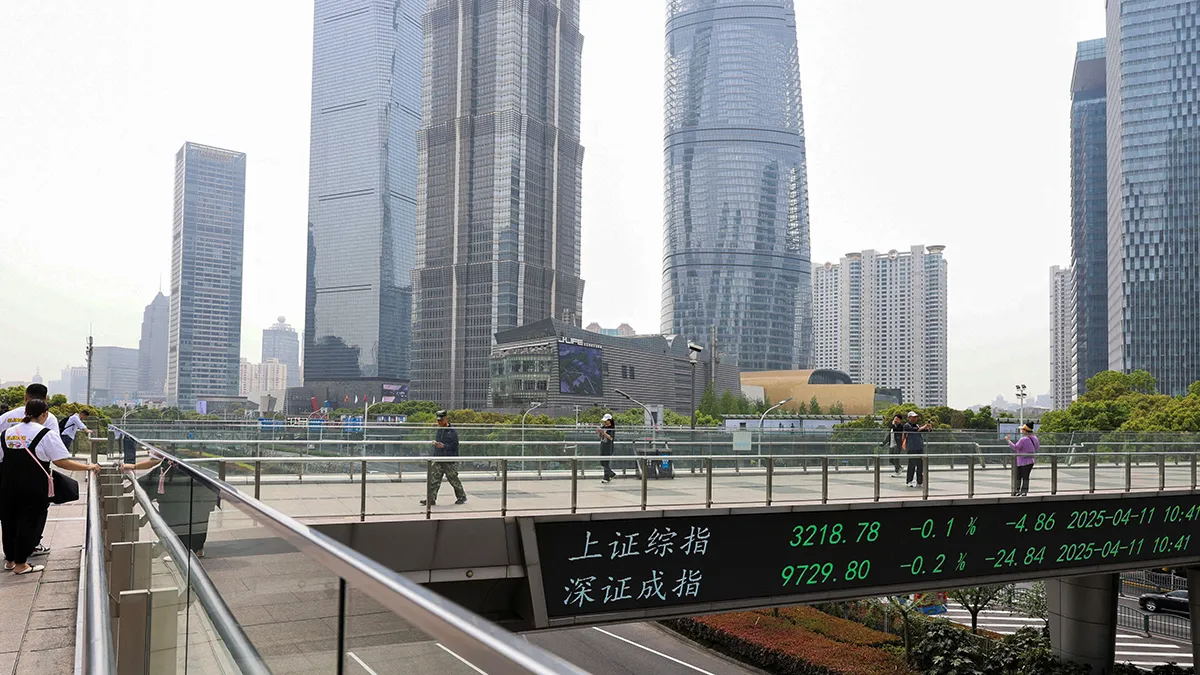
China — real estate crisis: ‘prolonged landing’
What happened?
Price falls lower than expected in 2025, but the sector remains stagnant; further weakness expected in 2026. How they report it:
- Reuters: additional −0.5% in 2026.
- SCMP: depressed private consumption.
Why does it matter (analysis)?
Beijing is containing the crisis, not resolving it. The risk of tepid growth and global financial contagion persists. Chinese banks are heavily affected by the property bubble and also have worrying problems with toxic loans and liquidity. The problem is circular because the banks are state-owned and owe money to the state for previous bailouts, and that ball of debt is getting bigger. The state owes itself. The problem may arise if the first domino falls, dragging down many other Chinese banks, which could trigger a new global financial crisis.
Canonisation of Carlo Acutis: Vatican — Canonisation of Carlo Acutis by Pope Leo XIV
What happened?
Pope Leo XIV canonised the young Italian Carlo Acutis (1991–2006), known as the “cyber apostle of the Eucharist”, in St Peter's Square. Acutis, who died of leukaemia at the age of 15, was beatified in 2020 and now becomes the first saint of the digital age. The ceremony brought together tens of thousands of faithful, especially young pilgrims from Europe, Latin America and Asia. The news has been reported with a wealth of information and enormous admiration for the young saint. Even media outlets far removed from religious and social issues, such as CNN
and the BBC, which are rather cold on spiritual issues, highlighted the news in all their news bulletins, commenting on the life of the young saint with great praise and respect, even with deep emotion in the voices of the reporters. How they report it:
- L'Osservatore Romano: highlights that Leo XIV inaugurates his pontificate with a gesture of generational harmony, by elevating to the altars a young layman connected to the digital world.
- Corriere della Sera and Le Figaro: highlight the massive influx and global nature of devotion to Acutis.
- Reuters and AP: emphasise that this is an unprecedented case of the canonisation of a ‘digital native’, with strong media and pastoral resonance.

A person holds a work of art on the day Pope Leo XIV officiates at Holy Mass for the canonisation of Carlo Acutis, a British-born Italian boy who will become the first millennial to be declared a Catholic saint, and Pier Giorgio Frassati, in St Peter's Square at the Vatican, September 7, 2025 - REUTERS/ MATTEO MINNELLA
Soft power — Alcaraz wins his second US Open
What happened?
Carlos Alcaraz defeated Jannik Sinner: second US Open and sixth Grand Slam at the age of 22. How they report it:
All the world's major media outlets—BBC, CNN, Fox News, all the news agencies and major newspapers—are reporting the news in their main headlines. The BBC has featured it in all its news bulletins throughout the night, describing the match as exciting and the victory as overwhelming.
- NYT, The Times, El País: icon of a new era in tennis.
- ESPN/ATP: generational dominance (semifinals with Djokovic).
Why it matters (analysis):
It reinforces the Spain brand. Sport as soft power in contrast to a harsh global agenda.

Closing — The common thread
- Wars (Ukraine, Gaza) strain the international system and expose the limits of diplomacy.
- Political fragility (Brazil, Japan, France) indicates fatigued democracies and short-sighted governments.
- Energy/finance (OPEC+, Norway, China) trapped in structural uncertainty.
- The West (US, UK) debates its balance between security, trade and freedoms.
- Soft power (Alcaraz) offers a positive narrative of cultural and sporting leadership.
Scenario Annex: France (vote of confidence in François Bayrou)
Probable scenario: immediate triggers; early signs; political impact; EU/NATO/market impact
What to watch (7–10 days)?
Bayrou falls, resigns; Macron appoints “technical” or low-profile PM:
- Clear loss of vote; centrist fracture; LR and left do not abstain
- Leaks about “management” profiles; language of “appeasing the Assembly”
- Weak but functional government; minimal agenda (budget, EU, security)
- Relative stability; OAT-Bund spreads narrow if appointment is credible
- Names being mentioned; tone of LR/socialists; reaction of French bonds
Bayrou survives by the skin of his teeth with tactical abstentions:
- Last-minute agreement with LR/centrist rebellion
- Speech of ‘unity/responsibility’; calls to avoid a vacuum
- Precarious survival: each law will be a new test
- Tactical relief; full continuity, but minimal legislative capacity
- Published concessions; legislative calendar; cohesion of the presidential group
Bayrou falls and Macron calls early legislative elections:
- Impossible to articulate a majority; calculation of a ‘reset’
- Mobilisation of RN/LFI; polls with opposition advantage
- High risk: more fragmented chamber or RN advance; cohabitation likely
- Volatility in OAT/CDS; doubts about EU industrial/energy agenda
- Flash polls; local RN/LR alliances; position of regional barons
‘Grand Republican agreement’ (moderate centre-right + part of socialists) and new political PM:
- Blockade fatigue; pressure from employers/mayors
- Signs of cross-party pact; veto on extremes
- 12–18 month window with limited reforms
- Positive signal to Brussels/markets; Paris regains initiative
- Support from state figures; roadmap (budget, security, competitiveness)
Time horizon and risks:
- 7 days: parliamentary thermometer (group leaders), possible ‘useful abstentions’, shortlist for Matignon, 10-year OAT reaction and France CDS.
- 30 days: cabinet architecture (weight of Interior/Economy/Foreign Affairs), first test with budget, tracking of Macron and RN popularity.
- 90 days: either a ‘patchwork government’ with a minimal agenda, or drift towards early legislative elections. Implications for France's leadership in the EU/NATO (Ukraine, defence, fiscal discipline).
Key messages
- ‘Bayrou goes into the vote with the wind against him: France enters a phase of fragile governability.’
- ‘If he falls, Macron will choose between a technical PM or the ballot box: either option implies a narrow margin.’
- ‘For the EU/NATO, the line does not change, but it loses momentum: Paris will lead less, manage more.’
- ‘The market fears long-term uncertainty more than a one-off shock: watch the OAT-Bund spread and the fiscal credibility of the replacement.’
- Ukraine — massive air strike hits the “heart” of Kyiv
- Gaza and the Middle East — intensified Israeli offensive and humanitarian collapse
- Brazil — pro-Bolsonaro marches and standoff with the Supreme Court
- Japan — resignation of Prime Minister Ishiba Shigeru
- France — François Bayrou faces a vote of confidence
- Energy — OPEC+ increases production in an uncertain market
- Norway — close elections and the sovereign wealth fund dilemma
- United States — friction over trade and migration
- United Kingdom — nearly 900 arrested for pro-Palestine protests
- China — real estate crisis: ‘prolonged landing’
- Canonisation of Carlo Acutis: Vatican — Canonisation of Carlo Acutis by Pope Leo XIV
- Soft power — Alcaraz wins his second US Open
- Closing — The common thread
- Scenario Annex: France (vote of confidence in François Bayrou)