‘Fallen for freedom’

- Human toll
- Day 16 of the uprising: clashes and street fighting
- Reactions from the Iranian regime
- International reaction
Human toll
The People's Mojahedin Organisation of Iran (PMOI), a declared enemy of the mullahs' regime, has announced that the total number of martyrs in the uprising across the country exceeds 3,000 people between 27 December and 10 January.
These figures have been obtained from investigations carried out with local sources, hospitals, forensic services and families of martyrs and missing persons in 195 cities.
On Monday, the magnitude of the regime's crimes against the insurgent population became even more evident.
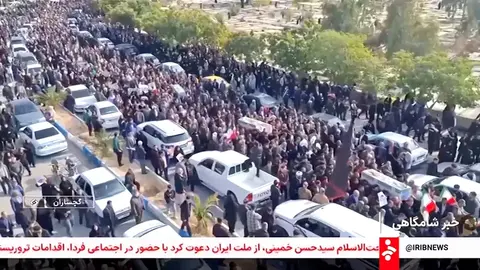
In Tehran and Karaj, regime agents piled up numerous bodies of martyrs inside and outside forensic medicine buildings, summoning families to identify their loved ones.
In Bandar Abbas, the regime moved a large number of bodies to an industrial hangar and subjected the city to extremely tight security.
The crimes committed in Kahrizak are particularly shocking. The bodies of the martyrs are transported in vans to the morgues, and screens showing images of the victims are set up to force families to proceed with identification.
The regime is reportedly demanding 700 million tomans for the return of each body.
Day 16 of the uprising: clashes and street fighting
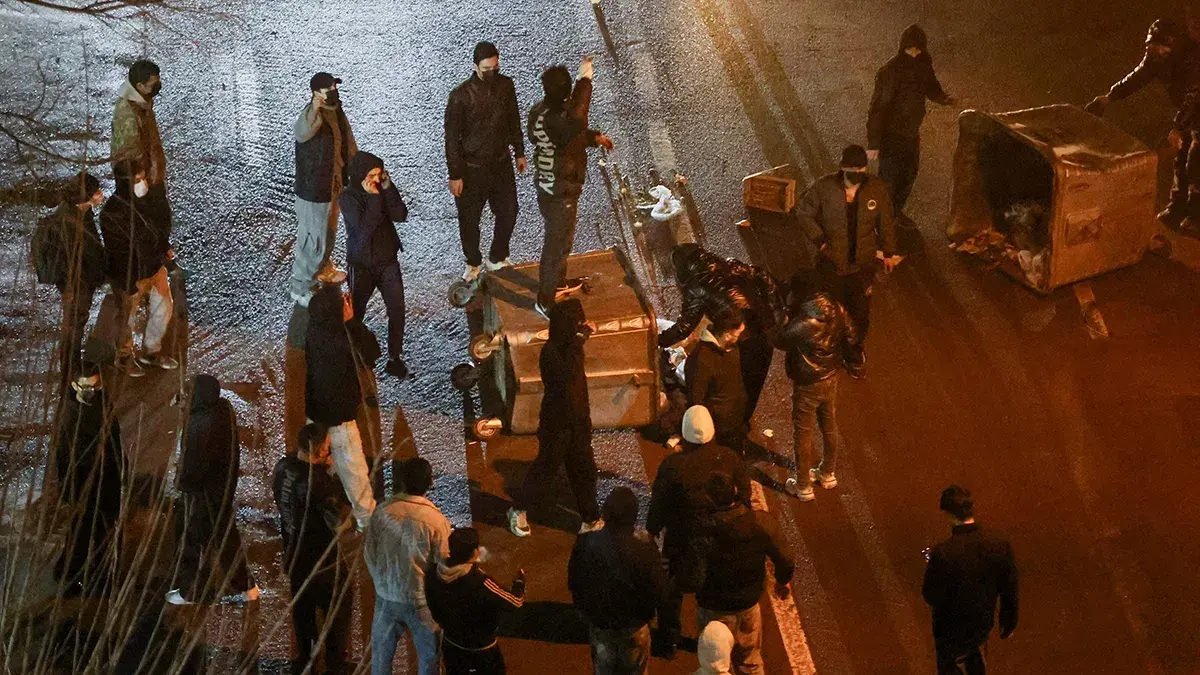
In Isfahan, despite the establishment of an undeclared state of siege and the deployment of snipers on the roofs of mosques and schools in the city centre, the outlying areas — from Najafabad and Falavarjan to Sepahan-Shahr and Baharestan — have come under the control of the population.
Young insurgents set fire to banks and the town hall.
On Monday night, in Izeh (Fars province), violent clashes and street warfare broke out between insurgents and special units at nightfall.
In Ahvaz (Khuzestan province), intense fighting broke out on Monday night between young insurgents and IRGC special units.
In the streets of Kermanshah, there were major clashes between young insurgents and IRGC forces.
In Mahdasht, fighting continued between insurgents and the Pasdaran.
On Sunday night, in Quchan, young insurgents carried out a daring attack, taking control of the governorate and setting fire to the local IRGC headquarters. Several young people were killed during these clashes.
In Babol, insurgents attacked and disarmed police stations No. 2 and No. 14, which had opened fire on demonstrators.
In Ilam, a Pasdaran involved in the massacre of numerous young people was killed during clashes with insurgents.
In Tehran, the neighbourhoods of Pounak, Ariashahr, Haft-Hoz and Sadeghieh were the scene of violent clashes between young people and special units.
In Mashhad, a Basij base was set on fire by young insurgents.

Reactions from the Iranian regime
State television announced the death of General Javad Keshavarz, head of the anti-drug police, during an armed attack in Mashhad.
The Tasnim agency, affiliated with the IRGC, acknowledged the deaths of 13 members of the security forces, including police, Pasdaran, Basij members and intelligence agents.
Ejeï, head of the regime's judiciary, told the parliamentary security committee that there would be no leniency towards the demonstrators.
Special courts have been set up across the country to speed up legal proceedings.
Regime officials are calling for immediate and severe repression, labelling anyone accused of taking up arms against the security forces as a ‘mohareb’ (person at war with God).
International reaction
Roberta Metsola, President of the European Parliament, announced on Monday 12 January in a message posted on social media that, in response to the continuing repression and violence against protesters in Iran, and while the popular uprising continues, she has decided to suspend access to the European Parliament's premises for all diplomatic staff and other representatives of the Islamic Republic.
It cannot be business as usual.
— Roberta Metsola (@EP_President) January 12, 2026
As the brave people of Iran continue to stand up for their rights and their liberty, today I have taken the decision to ban all diplomatic staff and any other representatives of the Islamic Republic of Iran from all European Parliament premises.…
Volodymyr Zelensky, President of Ukraine, said on Monday 12 January, referring to the national uprising in Iran, that the international community should support the realisation of change in that country and help the Iranian people to free themselves from a power he described as a source of misfortune and distress.