Hope and skepticism regarding Trump's peace plan for the Middle East
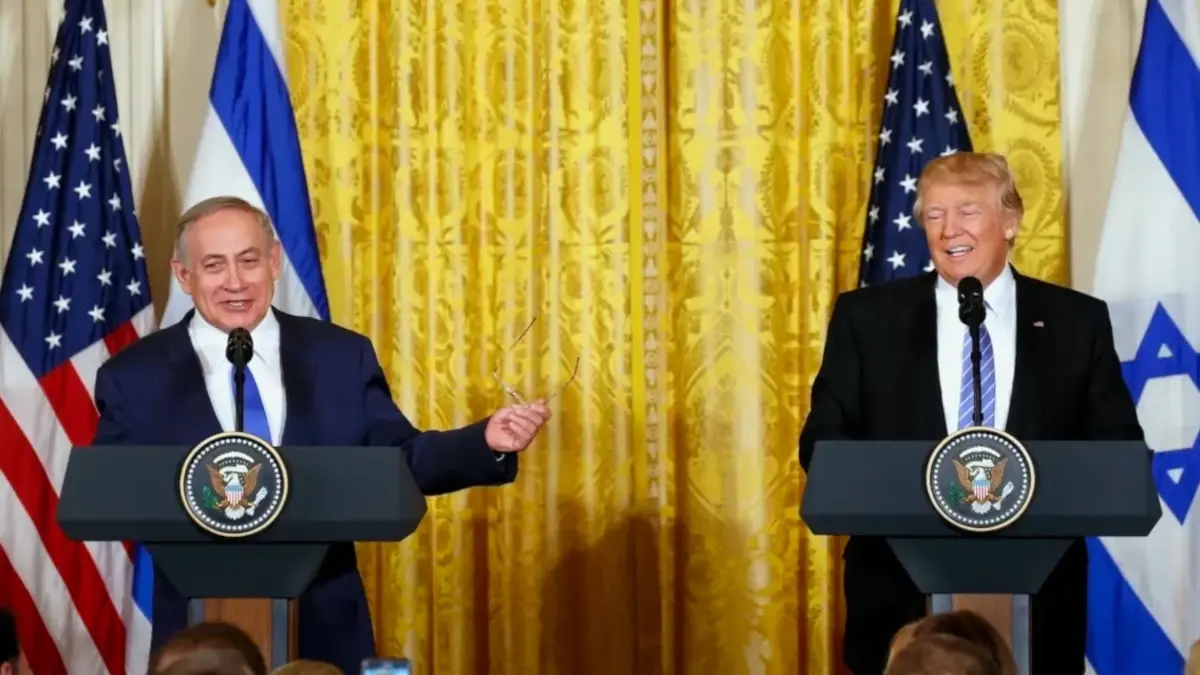
President Trump's peace plan for Gaza and the Palestinian territories has the backing of the Israeli prime minister, pending a response from Hamas.

- Emergency assessment in the absence of a more in-depth study
- Summary of the plan: ‘President Donald J. Trump's Comprehensive Plan to End the Gaza Conflict’
- Initial assessment of the plan pending a more in-depth study
- What changes the regional landscape
- Plan architecture (7 pillars)
- Reactions by headline (brief overview, today)
- Strategic assessment (pros and cons)
- 90-day scenarios (Gaza → Middle East)
- Signs to watch (next 72 hours)
Emergency assessment pending further study
Trump's plan reorders priorities in the Middle East: security first, economy second, politics last. It does not grant Palestinian statehood, but makes normalisation with Saudi Arabia and the rest of the Arab world contingent on a two-state solution. It is both bold and fragile: bold because it combines hostages, security, transition and financing within the same structure; fragile because it rests on political wills that yesterday not only did not recognise each other, but denied each other legitimacy. At the same time, the most radical elements of Netanyahu's government are unlikely to accept it despite US pressure.
If it succeeds, it could reduce Iran's influence through concrete actions (Lebanon/Red Sea); if it fails, it could leave us on the brink of a war in stages with a human and strategic cost that is currently incalculable.
Summary of the plan: ‘President Donald J. Trump's Comprehensive Plan to End the Gaza Conflict’
Below are the first points and their translation/explanation (the original text is in English).
- Gaza will be a deradicalised and terrorism-free zone that poses no threat to its neighbours.
- Gaza will be rebuilt for the benefit of its people, who have suffered greatly.
- If both sides accept this plan, the war will end immediately. Israeli forces will withdraw to an agreed line to prepare for the release of the hostages; during that time, all military operations (air, artillery, bombing) will be suspended and the front lines will be frozen until conditions for a complete phased withdrawal are met.
- Within 72 hours of Israel publicly accepting this proposal, all hostages (living and dead) will be returned.
- Palestinian prisoners will be released as part of the exchange, including 250 serving life sentences and 1,700 detained since the conflict began (or other approximate figures depending on the draft).
- Israel will carry out a staged withdrawal to previously agreed lines while the exchange is taking place.
- There will be an amnesty for Hamas members who disarm and commit to not using force.
- Safe passage will be granted to those who wish to leave Gaza (temporarily or permanently).
- Hamas' military and terrorist infrastructure must be destroyed and not rebuilt.
- A transitional Palestinian technocratic government (technicians, without extreme party affiliation) will be established to administer Gaza during the transition.
- A ‘Board of Peace’ chaired by Trump will be created to oversee reconstruction, administration and political transition.
- Gaza will receive massive humanitarian aid and supervised international access for the rehabilitation of basic services (water, electricity, transport, health).
- An economic plan for Gaza will be promoted with experts from the Middle East, with an emphasis on employment, investment and development.
- A Special Economic Zone will be established with preferential conditions (access, trade, incentives) to accelerate recovery.
- No one will be forced to leave Gaza; residents will be able to stay or move freely according to their preferences.
- All armed factions (including Hamas) will be excluded from the government and will not be able to participate in the ruling administration.
- Gaza must be completely demilitarised; security personnel will be restructured under external supervision.
- An International Stabilisation Force will be formed to secure borders, maintain order and oversee compliance with the plan.
- The full return of governance will be conditional on reforms of the Palestinian Authority (PA) and verifiable democratic mechanisms.
- In the long term, the plan envisages a path to self-determination/a Palestinian state, conditional on the fulfilment of milestones in governance, security and development.
Important notes and clarifications:
- Some versions of the plan refer to 21 points instead of 20: certain sources indicate that, when presenting it to Arab leaders, the term 21-point plan for the Middle East/Gaza was used.
- The public versions of the Financial Times document do not show all the points in exact detail, but rather the most decisive and symbolic ones.
- Data on prisoners released, hostages returned, etc., may vary depending on the version of the plan, negotiations or leaks.
- The plan leaves room for operational adjustments: for example, the mandate, composition and rules of the International Force, oversight mechanisms, financing, etc., are subject to negotiation.
Initial assessment of the plan pending further in-depth study
Verified key facts (last 24 hours)
20-point document (White House): immediate ceasefire if both sides agree; release of all hostages within 72 hours of Israeli acceptance; prisoner exchange (250 life sentences + 1,700 Gazans detained since 7 October); staggered withdrawal of the IDF to agreed lines while the exchange takes place; amnesty for Hamas members who disarm and safe passage for those who wish to leave; Gaza demilitarised and administered by a Palestinian technocratic committee supervised by a ‘Board of Peace’ chaired by Trump with the participation of Tony Blair; International Stabilisation Force; economic development plan (‘New Gaza’).
- Israel: Netanyahu says yes to the framework, stressing that it meets his objectives (hostages, end of Hamas's rule and military capability) and that he will ‘finish the job’ if Hamas rejects it.
- Hamas: did not participate in the drafting; is ‘studying’ the proposal after receiving it through mediation by Qatar and Egypt; maintains its refusal to disarm.
- Key Arabs (Gulf): UAE pressures Netanyahu to accept and warns against annexations in the West Bank; broader normalisation (including Saudi Arabia) depends on progress towards two states. Trump has indicated that he will not allow annexation of the West Bank.
- Full text available (several media outlets reproduce the document).
What changes the regional landscape
Although the title says ‘Gaza,’ the package touches on issues throughout the Middle East:
West Bank / ‘Illegal Settlements’
The halt to annexation is a condition of Arab actors (UAE/SA) and a prerequisite for broader normalisation. In practice, the En-Gaza plan reopens a window for a path to Palestinian self-determination (reform of the PNA + transition in Gaza), without promising immediate statehood, but linking it to verifiable behaviour (disarmament, security, governance). This limits the annexation agenda and makes the expansion of illegal settlements more expensive.
Saudi Arabia / normalisation
Riyadh has reiterated that there will be no full relations without a Palestinian state; the plan, with no annexation and international oversight in Gaza, brings together the pieces for conditional normalisation (defence, technology, investment) if milestones are met.
Lebanon / Hezbollah
Washington had been exploring the phased disarmament of Hezbollah and Israeli withdrawal from positions in the south as part of a ‘north-south package’. If Gaza stabilises, the second leg (northern border and 1701) will be unblocked, reducing the saturation of Israeli defences and the risk of escalation.
Qatar / mediation and regional security
The plan includes language to avoid repeating attacks on Qatari soil and to re-establish the channel with Doha after the September bombing; Qatar and Egypt remain guarantors of the release of hostages and the ceasefire.
Red Sea / Yemen (Houthis)
Although the 20-point text is Gaza-centric, the architecture (multinational force + diplomatic board with the Gulf) facilitates a maritime security regime that contains the Houthis if the general de-escalation progresses. (Reasoned inference based on Gulf positions and Washington's emphasis on maritime corridors).
Iran
If a ‘Gaza without Hamas’ transition is consolidated, it will erode Iranian influence via proxies and rebuild regional deterrence (Lebanon/Syria/Iraq). Tehran will tend to sabotage the process via militias and media pressure. (Inference based on recent patterns).
Plan architecture (7 pillars)
- Ceasefire with timelines: freezing of lines, 72 hours for hostages (living and dead) and verifiable ceasefire.
- Asymmetric exchange: 250 + 1,700 Palestinian prisoners/detainees after the release of hostages.
- Security: disarmament of Hamas, conditional amnesty, safe passage for voluntary departure; International Force and purged local police.
- Governance: Palestinian technocratic committee, supervised by a Board of Peace (Trump/Blair); possible return of the PNA after reforms.
- Economy: reconstruction plan and special economic zone (‘New Gaza’) with experts from ‘miracle cities’ in the region.
- Regional guarantees: no annexation (message from Trump and Arab demand); role of Qatar/Egypt/UAE/Saudi Arabia.
- Political path: no promise of statehood yet, but ‘conditions’ for self-determination after reform and verification are opened up.
Reactions by headline (brief overview, today)
- Reuters: details mechanics (72 hours hostages, exchange figures, multinational force); highlights that Hamas was not involved in the negotiations, viability in doubt; UAE ties plan to non-annexation and normalisation.
- Washington Post: explains the timing of the ceasefire, the role of Qatar/Egypt and the pressure/ambivalence within Netanyahu's coalition.
- FT: reproduces the text and highlights the institutional design (Board of Peace, technocrats, international force).
- The Economist (World in Brief): notes Arab support cited by Trump, demilitarisation and hostages as core issues.
- AP / PBS: point-by-point educational summary and FAQ on implementation.
- The Guardian: emphasis on the ultimatum to Hamas and the legitimacy of an imposed administration and ‘Trump's economic plan’.
- BFMTV / RFI: report on the ‘20-point American plan,’ with conditional support from Netanyahu.
- Al Jazeera / Asharq Al-Awsat / Al Arabiya: full text, doubts about Hamas disarmament and Blair's role; continuous regional coverage.
- Times of Israel: publishes the full document and joint statements; debate between 20/21 points depending on the version.
Strategic assessment (pros and cons)
Strengths:
- Clear sequence (ceasefire → hostages → exchange → phased withdrawal → transition). Timelines and verification reduce grey areas.
- Regional anchoring (UAE/SA/Qatar/Egypt) that internalises Arab conditions (no annexation, political route).
- Incentives: amnesty and voluntary departure for Hamas bases; reconstruction and economic zone for Gazan society.
Weaknesses:
- Legitimacy: external tutelage (Trump/Blair) with limited Palestinian representation; risk of social rejection.
- Critical details up in the air: who contributes troops to the International Force, legal mandate (UN/coalition?), rules of engagement and multi-year funding. (Comparative analysis of coverage).
- Hamas: was not involved in the agreement; its disarmament is the biggest bottleneck.
- Israeli domestic politics: the hard right could derail the transition if it perceives a ‘return of the PNA’ or a freeze in the West Bank.
90-day scenarios (Gaza → Middle East)
- Conditional approval (30-45 days): ceasefire begins, hostages return, initial deployment of International Force; Riyadh activates a phased normalisation package. Risk: spoilers (PIJ/Hezbollah/Houthis) and internal Israeli sabotage.
- Partial acceptance/intermittent truce: ceasefire with incidents; exchange in stages; war economy slows reconstruction.
- Hamas rejection: return to Israeli operations with US backing, increasing humanitarian costs and closing the window for SA-Israel; return to saturation of fronts (north and Red Sea).
Signs to watch (next 72 hours)
- Logistical delivery of the list of hostages and schedule of crossing points.
- Composition and mandate of the International Force (offering countries, NATO/Arab/mixed?).
- Explicit declaration of non-annexation by Israel and freezing of expansion in the West Bank (signal demanded by the Gulf).
- Multi-year financing framework (G7, Gulf, IFIs) for ‘New Gaza’.
- Doha channel: public coordination with Qatar (guarantees + mediation).