IAEA finds traces of uranium in Syria
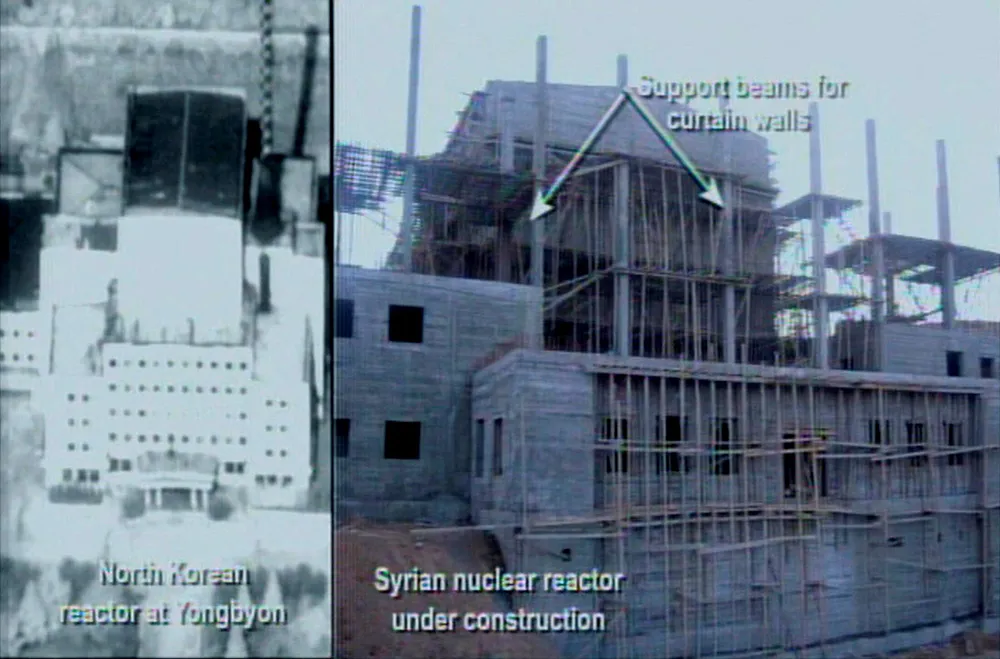
Suspicions have been reignited about Bashar Al-Assad's possible nuclear programmes in Syria after traces of uranium were found at the Al-Kibar facility in the city of Deir Al-Zor, which was bombed by Israel in 2007.
US confirmation through satellite photographs, and North Korean assistance to the Syrians in its construction, was sufficient evidence to authorise the bombing. According to the former Syrian administration, the site was a conventional military base. However, the International Atomic Energy Agency (IAEA) believed that the facilities were “very likely” a nuclear reactor built in secret by Damascus.
As a member of the Organisation for the Prohibition of Chemical Weapons (OPCW), Syria is obliged to submit to inspections by the OPCW Security Council. However, for more than a decade, Bashar Al-Assad's government did not allow inspectors to enter, which fuelled the possibility that the site was in fact part of a nuclear facility.

Information from Mossad and the FBI showed that Damascus and Pyongyang intended to help the Iranian regime develop a nuclear programme just a few kilometres from Israel. However, the former director of the IAEA, Mohamed El Baradei, stressed that ‘we have no evidence that Syria has the human resources that would enable it to carry out a large-scale nuclear programme’.
In view of the refusal of Bashar Al-Assad's Damascus, the IAEA has suggested that the debris collected at three unidentified locations is entirely related to the alleged activities carried out at Al-Kibar. The agency found "a significant amount of natural uranium particles in samples taken at one of the three locations.

The Agency's analysis of these particles indicated that the uranium is of anthropogenic origin, i.e., it originated as a result of a natural chemical reaction, indicating that the uranium was not enriched. The clean-up carried out by those responsible for the facilities fuels suspicions about the possible existence of enriched uranium debris.
Syria currently has full relations with international organisations. Since the departure of Bashar Al-Assad, the country has opened up its policies. Taking dialogue as the main route, the current Prime Minister of Syria, Ahmed Al-Sharaa, has met with the Director General of the IAEA, Rafael Grossi, to agree on all possible visits to the Al-Kibar facility by the agency, which has been investigating the activities carried out there for more than 14 years, both before and after the Israeli bombings.

Al-Sharaa stated that ‘the current Syrian authorities indicated that they had no information that could explain the presence of such uranium particles’. Along the same lines, Syria's Foreign Minister, Assad Al-Shaibani, assured his country's commitment to the IAEA and to the elimination of everything related to chemical weapons programmes and possible arsenals.
In another meeting that took place the same month between Rafael Grossi, the director of the IAEA, and Ahmed al-Sharaa, the president of Syria, ‘Syria agreed to cooperate with the Agency, in a fully transparent manner, to address the country's previous nuclear activities,’ the report said.

During the meeting, Grossi requested Syria's cooperation in returning to Deir al-Zor ‘in the coming months to conduct further analysis, access the necessary documents and talk to the people involved in the country's previous nuclear activities.’
The report indicated that the IAEA still planned to visit Deir al-Zor and would evaluate the results of environmental samples taken elsewhere. ‘Once this process is completed and the results are analysed, there will be an opportunity to clarify and resolve the safeguards issues that still remain related to Syria's past nuclear activities and bring the matter to a close,’ it added. In parallel, the OPCW has requested the Syrian government to inspect more than 100 sites that may have been linked to the alleged nuclear activities of Bashar Al-Assad's Syria.