Iran maintains its stance of not negotiating on its missiles under any circumstances
Iranian officials indicate that the nuclear agreement is blocked due to a refusal that prevents progress in the negotiations
- Iran's refusal to limit its missile programme
- Importance of the missile programme for Tehran
- Western concern about uranium enrichment
- Statements by senior Iranian officials on military capabilities
- Deterrent capability against possible Israeli attacks
- Development of new generations of missiles
- ‘Eqtear 1404’ military manoeuvres
- Iranian missile arsenal
- Satellite analysis of Iranian military infrastructure
- Expansion of Iran's regional influence
- European Union sanctions for nuclear and military activities
- UN measures and international positions
Iran's refusal to limit its missile programme
The United States and European countries are demanding that Iran limit its missile capabilities, but Iran refuses to do so under any circumstances. The spokesperson for the Ministry of Defence, Iranian Brigadier General Reza Talaei-Nik, stated that ‘any external interference in the country's defence decisions and security capabilities is not permitted’.
Importance of the missile programme for Tehran
For Tehran, the missile programme is a fundamental pillar of the country's balance, especially in the face of its enemies, such as Israel. The spokesman for the Iranian Armed Forces, Brigadier General Abdolfazl Shekarchi, insisted that they do not need permission from any nation when it comes to defensive equipment.
Government spokeswoman Fatemeh Mohajerani was emphatic: ‘We do not ask anyone's permission regarding our missile capabilities, and we will not back down because we will not sacrifice the security of the population at any cost. The issue at stake in the negotiations is security, and therefore missiles are an integral part of our security.’
Western concern over uranium enrichment
The West, for its part, fears that the uranium enrichment programme poses a danger that could escalate into a nuclear threat. It has therefore attempted to include the issue in the negotiations on the nuclear agreement, but Tehran rejects the restrictions.

Statements by senior Iranian officials on military capabilities
General Mohsen Rezaei, former commander of the Revolutionary Guard and member of the Expediency Discernment Council, denounced that ‘all limits have been exceeded’ by the demand that their missiles not exceed a range of 400 kilometres.
The deputy chief of staff for operations of Iran and brigadier general, Mohammed Jafar Asadi, revealed the intentions that the missiles ‘will reach the distance they need.’ Currently, they have a range of 2,000 kilometres, which seems to be sufficient, as they can reach Israeli territory.
Deterrent capacity against possible Israeli attacks
Asadi explained that the Islamic Republic's deterrent capacity was very important when confronting its enemies. Therefore, one of the compelling reasons is that these are preparations in case of another attack by Israel, a scenario that the Israeli Chief of Staff, Eyal Zamir, does not deny: ‘We are not done with Iran yet.’
Development of new generations of missiles
Iranian Defence Minister Aziz Nasirzadeh announced that a new generation of missiles ‘with far superior capabilities’ had been developed in case ‘the Zionist enemy’ decides to attack again. He argued that, in addition to the Israeli army, they also need to confront ‘all the logistical, intelligence and support capabilities of the United States that backs it’.
‘Eqtear 1404’ military manoeuvres
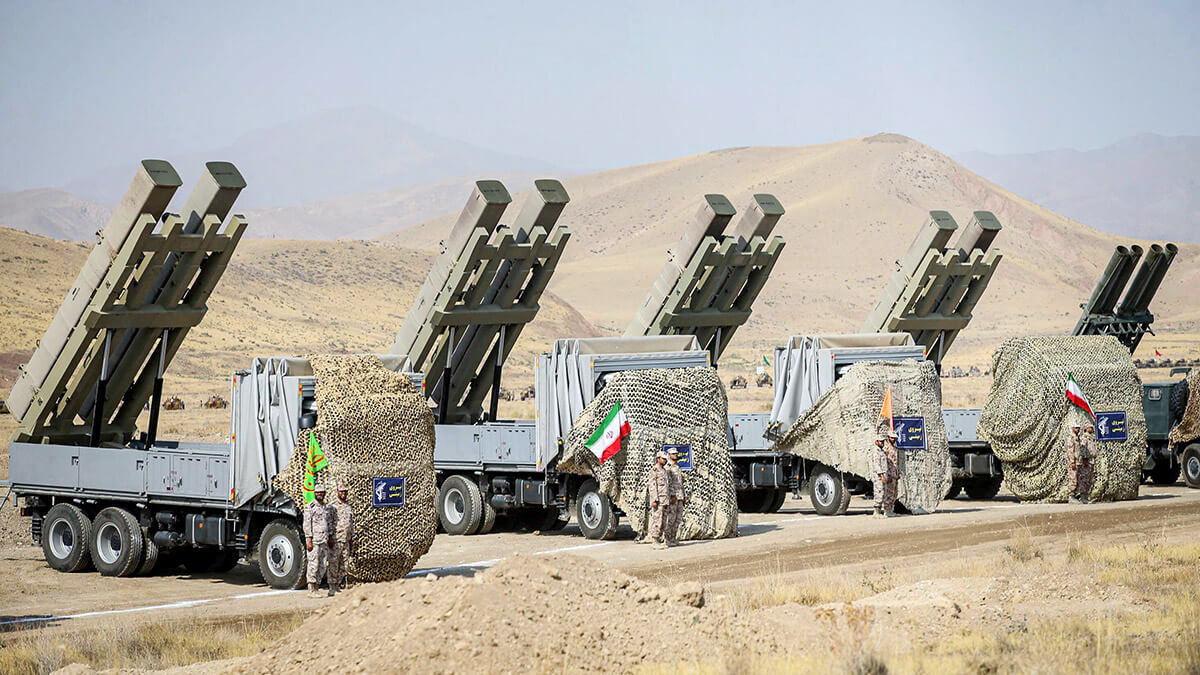
As part of its preparations for another offensive, the ‘Eqtear 1404’ military manoeuvres were also carried out in August, in which naval units launched missiles and drones in the Indian Ocean. According to Admiral Abbas Hassani, the aim was to ‘improve combat capabilities, instil hope in the Iranian people, strengthen the capacity to plan, direct and control the theatre of operations, and achieve deterrence by relying on the capabilities of local experts’.
Iranian missile arsenal
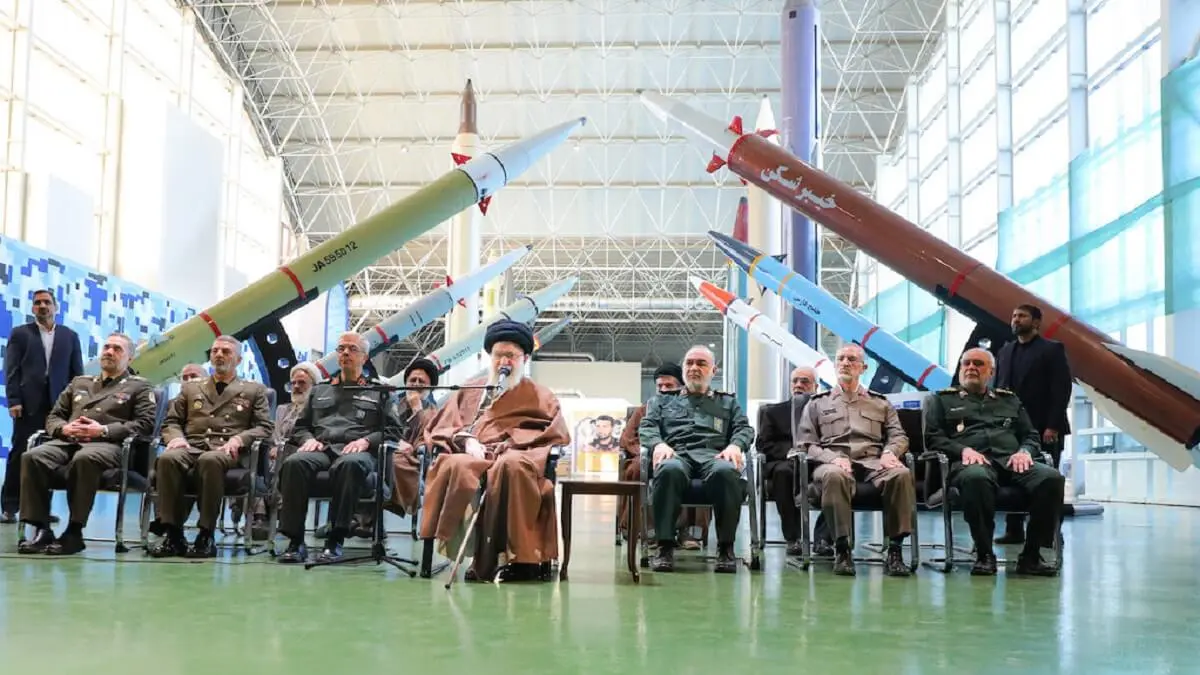
Its arsenal includes Fateh and Fateh 2 missiles (hypersonic missiles), Khaibar Shekan (a solid-fuel ballistic missile with a range of 1,400 km), Ghads, Emad and Shahab missiles.
Satellite analysis of Iranian military infrastructure
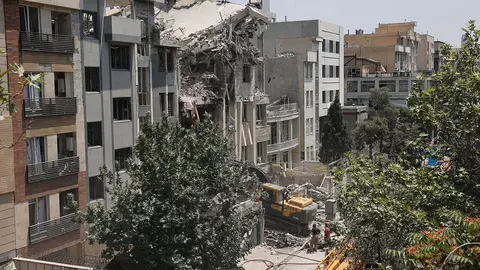
Even The Associated Press analysed satellite images showing missile reconstruction plants lacking solid fuel mixers for weapons.
Expansion of Iran's regional influence
Another of Iran's motives is the expansion of its influence throughout the region through proxies such as the Houthi group in Yemen, the Popular Mobilisation Forces in Iraq and Hezbollah in Lebanon.
European Union sanctions for nuclear and military activities
In response to Tehran's refusal and its advances, such as, according to Iranian websites, the development of intercontinental missiles, the European Union reimposed sanctions after France, Germany and the United Kingdom accused the Islamic Republic of violating the 2015 nuclear agreement before the UN.
The sanctions were directed at Iranian cargo ships containing prohibited materials or weapons, and also involved transfers of any goods or technology contributing to Iran's nuclear enrichment and reprocessing. Not only that, but sanctions were also imposed on the economic, commercial, oil and natural gas sectors.

UN measures and international positions
The UN also imposed new sanctions after rejecting Russia and China's proposal to extend the 2015 agreement for another six months. ‘To our great regret, Iran has persisted in its attitude of rejection. We were hoping for gestures, but concrete and precise gestures. Iran has not presented any that are truly concrete and precise,’ said French Ambassador Jérome Bonnafont.
Despite everything, both Jérome and British Ambassador Barbara Woodward expressed their desire to continue diplomatic efforts.
Russian Ambassador Dmitry Polyanskiy denounced what he called European ‘hypocrisy’ and assured that Russia would not impose the sanctions because they consider them null and void.