Legal, historical, political, and diplomatic basis for Morocco's sovereignty over the Sahara
1. The Founding Period (1956–1963): Historical Continuity of the Moroccan State, Colonial Dispossession, and International Legal Framework of the Sahara
1.1. Original Moroccan Sovereignty: A Nation-State with Over Twelve Centuries of Continuity
The legal and historical reconstruction of the Moroccan Sahara must start from an indisputable fact in international law: Morocco is one of the oldest sovereign states in the world, a continuous political entity since the establishment of the Idrisid Emirate in 788 AD, that is, more than twelve centuries of accredited statehood.
This historical continuity—territorial, institutional, dynastic, legal, and religious—constitutes a title of original sovereignty. The southern provinces were part of this integrated state space, with a common political-religious structure articulated around:
The bay‘a, the solemn oath of allegiance, written and renewed, which united the tribes of Saguía el Hamra and Río de Oro with the Sultans of Morocco.
The political-administrative authority exercised by representatives of the Sovereign.
Linguistic and cultural unity (classical Arabic, Darija, and Hassaniya).
Religious unity under the Command of the Believers (Amir al-Mu'minin).
All these elements confirm that, before 1884, the Sahara was by no means a “legal vacuum,” but rather a territory integrated into a constituted and recognized state. This explains why the International Court of Justice, in its Advisory Opinion of October 16, 1975, explicitly stated that: “Western Sahara was not terra nullius at the time of its colonization by Spain.”
The Court also recognized the existence of “legal ties of allegiance” between the Sultan of Morocco and the Saharan tribes.
1.2. Colonial fragmentation of Moroccan territory (1884–1956): a dismemberment without transfer of sovereignty
In November 1884, Spain proclaimed its “occupation” of the Sahara. However, this occupation was not accompanied by any treaty of cession with Morocco, did not involve a transfer of sovereignty, and took place in a territory that was part of the Moroccan state.
At the same time, France established the Protectorate in 1912, while in 1923 the European powers imposed an international statute on Tangier.
There has never been an international legal act separating the Sahara from Morocco that is fully valid under international law.
1.3. 1956: Restoration of independence and official start of the legal claim to the usurped territories
With the Proclamation of Independence on November 18, 1955, Morocco regained its full international personality. Immediately, it notified Spain of its desire to recover all parts of its national territory still occupied, using exclusively diplomatic and legal channels, and affirmed, in verbal notes and official communications to the UN, the historical continuity of the Moroccan state and the illegality of the fragmentation resulting from the colonial period.
This position is particularly relevant because at that stage in history, neither the Polisario (founded in 1973) nor any other internationally recognized alternative claim existed, nor did the term “Sahrawi people” as a distinct political entity in international law.
The claim emanated solely from the dispossessed state, Morocco.
1.4. Progressive territorial recovery in accordance with international law (1958–1969)
Territorial recoveries were carried out through registered and recognized international agreements, never through the use of force.
Tarfaya (1958)
Under the Cintra Agreements (April 1958), Spain returned this region to Morocco.
The UN took note of this development as part of the decolonization process.
Ifni (1969)
General Assembly Resolution 2072 (XX) of December 16, 1965, urged Spain to: “immediately take the necessary measures to free the region of Ifni and the Sahara from Spanish colonial rule.”
Spain proceeded in 1969 to retrocede Ifni through the 1969 Treaty of Fez, registered with the United Nations.
This point is crucial: the UN treated Ifni and the Sahara together, as a single decolonization case to be negotiated with Morocco, which shows that the only recognized claimant state was the Kingdom of Morocco.
Spain attempted to dissociate the two cases from 1966 onwards, but the General Assembly maintained the legal link between the two territories for years.
1.5. Inclusion of the Sahara on the list of Non-Self-Governing Territories (1963): a decisive Moroccan initiative
In 1963, Morocco officially requested the inclusion of the Sahara on the list of Non-Self-Governing Territories (NST). The UN immediately agreed.
This fact is of structural legal importance:
1. It was Morocco that promoted the inscription, not Spain.
2. The request was made while the territory was still colonized, confirming that Morocco was the dispossessed sovereign owner.
3. The international community accepted Morocco's legal premise.
4. There was no other party, movement, or alternative political entity.
This listing does not create rights for third parties: it reflects a process of territorial restitution between an administering power (Spain) and the dispossessed sovereign state (Morocco).
1.6. The joint treatment of Ifni and the Sahara by the UN (1964–1965)
Resolution 2072 (XX) (1965) fully confirmed the Moroccan position by urging Spain to negotiate both territories—Ifni and the Sahara—with Morocco.
The joint mention is a central legal argument: it demonstrates the territorial coherence of the case, confirms the absence of a third party, recognizes Morocco as a legitimate party, and reinforces that the Sahara was not an ownerless territory that needed to “seek” a new people or a different political entity.
1.7. The absence of any alternative political entity (until 1973)
1. Until 1973 (creation of the Polisario), the UN: does not mention any “Sahrawi people” as an independent political entity, does not recognize any political entity other than Morocco and Spain, does not introduce any third party into the case, and treats the matter as a classic decolonization issue under Chapter VI of the Charter.
Algeria, which had only recently gained independence in 1962, did not begin to intervene in the case until 1974, when, for geopolitical reasons linked to the Cold War, it attempted to transform a simple decolonization issue into an artificial regional dispute.
2. The international legal clarification of the status of the Sahara (1974–1976): ICJ Advisory Opinion, Green March, Madrid Agreements, and completion of decolonization
2.1. The Advisory Opinion of the International Court of Justice (October 16, 1975): restoration of the legal link
As part of the process of decolonization of the Sahara, then under Spanish occupation, the United Nations General Assembly requested an Advisory Opinion from the International Court of Justice on the legal status of the territory.
At Morocco's initiative, the essential questions submitted to the Court revolved around three central issues:
1. Whether or not Western Sahara was terra nullius at the time of its colonization by Spain in 1884.
2. The nature of the legal ties, if any, between the territory and the Kingdom of Morocco.
3. The competence of the Court itself to rule on these matters.
In its Advisory Opinion of October 16, 1975, the Court responded unequivocally to these points:
First, it declared that “Western Sahara was not terra nullius at the time of its colonization by Spain.” In other words, Spain did not occupy a land without an owner, but rather a territory that was integrated into a pre-existing legal and political order.
Second, the Court recognized the existence of “legal ties of allegiance” between the Sultan of Morocco and certain tribes in the Sahara. These ties were articulated in Moroccan public law through the oath of allegiance (bay‘a), which constitutes the basis of the relationship between the Sovereign and the tribes, clans, and notables throughout the Kingdom.
From the Moroccan perspective, this recognition has a dual legal significance: it confirms that the Sahara was part of the political and spiritual space of the Moroccan State before Spanish colonization, and it reinforces the thesis that the Spanish presence only affected the administration of the territory, without breaking the original sovereignty or extinguishing the bonds of loyalty between the Saharan tribes and the Moroccan Monarchy.
The question of self-determination, mentioned in general terms by the Court as a principle of the United Nations, takes on a particular meaning for Morocco, which is analyzed specifically in a later section. At this stage, the essential point is that the ICJ rejected the thesis of “terra nullius” and confirmed the existence of legal and political ties between the Sahara and Morocco, thereby reestablishing, in terms of international law, the historical continuity of the Moroccan State over its southern provinces.
2.2. The Speech of His Majesty King Hassan II and the Green March: legal basis and choice of the peaceful path
On the same day that the ICJ's Advisory Opinion was published, His Majesty King Hassan II addressed the Moroccan people in a historic speech, in which he explained the content of the ruling in detail and drew out its legal and political significance for Morocco.
In his speech, the Sovereign first recalled the questions put to the Court:
"We asked the Court of Justice:
First: Was the Sahara, before its occupation by Spain, a land without a master, without a lord and without an owner?
Second: If it was not a dead land, what relations linked it to Morocco?
Third: If you answer these questions, you acknowledge your jurisdiction to decide legally on the matter.“
He then explained the ICJ's responses as follows:
”First: The Court acknowledged its jurisdiction to hear the case and rule on it.
Second: It responded that “the Sahara was not terra nullius,” meaning that when Spain arrived, it did not find a vacuum.
Third: To the question of what relations existed between the Sahara and Morocco, the Court stated that there are legal ties and ties of allegiance (bay'a)."
Based on this finding, the King developed an interpretation of great legal and doctrinal depth, drawing on both contemporary international law and Islamic public law.
He emphasized, in particular, that: the bay‘a is not a symbolic formula, but a solemn legal act that binds tribes, cities, and notables to the Sovereign, and that in Morocco it has a specific character: the bay‘a is written, preserved, and archived, which gives it full probative value; the notion of “bonds of loyalty” recognized by the ICJ is, in the Moroccan tradition, functionally equivalent to the modern concept of sovereignty, insofar as it expresses political submission, religious obedience, and territorial belonging to the State; even in the European context of the 19th and early 20th centuries, when the colonization of the Sahara took place, the political organization of many monarchical states was based on personal bonds of loyalty and oaths, which makes the Court's recognition of the bay‘a ties between the Sahara and Morocco all the more relevant.
On that basis, the Sovereign concluded that the ICJ's ruling was consistent with the principles of Islamic constitutional law and the historical reality of the Kingdom. The Sahara, he said, “has opened its doors to us legally,” since the whole world recognized that the territory had been Moroccan and that its ties with the Kingdom had only been interrupted by colonization.
On this basis, Mohammed VI announced the option of a peaceful solution and the organization of the Green March, conceived as an expression of the national will and as an instrument for the restitution of the territory in full conformity with international law and the Charter of the United Nations: "We cannot go to the United Nations and the Court and, at the same time, wage a war that spills blood and claims lives. We choose peace: the Green March."
Launched in November 1975, the Green March brought together approximately 350,000 unarmed citizens who advanced peacefully toward the territory in a climate of discipline and serenity that has become a global benchmark for peaceful mobilization. There was not a single casualty, confirming the consistency of Morocco's choice of legal, political, and non-violent means.
In Morocco's reading, the sequence "Advisory Opinion of the ICJ – Royal Speech – Green March" sequence represents the exemplary articulation between: a ruling by the principal jurisdiction of the United Nations, the constitutional and doctrinal interpretation of the head of state, and a mechanism of peaceful pressure that scrupulously respected the framework of the Charter and opened the way to a negotiated solution with Spain.
2.3. The Madrid Agreements (November 14, 1975) and Spanish Law 40/1975: legal culmination of decolonization
In this context, on November 14, 1975, the Tripartite Agreements between Spain, Morocco, and Mauritania, known as the “Madrid Agreements,” were signed in Madrid. These agreements constitute a central regulatory element in the process of Morocco's recovery of the Sahara and in the legal culmination of decolonization.
In the Declaration of Principles between Spain, Morocco, and Mauritania on Western Sahara, the three parties: acknowledge Spain's willingness to decolonize the territory and to terminate its responsibilities and powers as the administering power; agree to establish a temporary administration in which Morocco and Mauritania will participate, in collaboration with the Yemaa, as the representative assembly of the territory's population, to which the responsibilities and powers of the former administering power will be transferred; set the date for Spain's final withdrawal before February 28, 1976; commit to respecting the opinion of the Saharan population, expressed through the Yemaa; and declare that they will inform the Secretary-General of the United Nations “in accordance with Article 33 of the Charter of the United Nations,” that is, within the framework of the peaceful settlement of disputes.
The Declaration further specifies that the parties have reached these conclusions “in the best spirit of understanding, brotherhood, and respect for the principles of the Charter of the United Nations,” and stipulates that the document will enter into force on the date of publication in the Official State Gazette of the “Law on the Decolonization of the Sahara,” intended to enable the Spanish Government to implement the commitments made.
The Agreements were signed by the President of the Spanish Government, Carlos Arias Navarro, the Prime Minister of the Kingdom of Morocco, Ahmed Osman, and the Minister of Foreign Affairs of Mauritania, Hamdi uld Mouknass, which establishes their nature as an international instrument subject to public international law.
On November 19, 1975, the Spanish Parliament approved Law 40/1975 on the decolonization of the Sahara, published in the Official State Gazette on November 20. This Law, consisting of a single article, authorizes the Government to adopt “the necessary acts and measures to carry out the decolonization of the non-autonomous territory of the Sahara, safeguarding Spanish interests.”
The preamble to the Law further specifies that: Spain has exercised “full powers and authority over the non-autonomous territory of the Sahara,” that said territory “has never been part of the national territory,”
and that it is therefore a matter of completing the process of decolonization “in accordance with the provisions of the Charter of the United Nations.”
From Morocco's perspective, this sequence has several decisive legal consequences:
1. The Madrid Agreements are fully-fledged agreements, valid at the international level, which implement the decolonization mandate set by the UN and terminate Spain's responsibilities as the administering power.
2. Far from transferring sovereignty that Spain did not originally hold over a supposedly “vacant” territory, the Agreements organize the withdrawal of the Administrative Power and the effective restitution of the territory to its legitimate owner, the Kingdom of Morocco, whose historical and legal title had been confirmed both by the practice of the United Nations (resolutions on Ifni and the Sahara) and by the Advisory Opinion of the ICJ.
3. Law 40/1975, by stating that the Sahara “has never been part of the national territory,” indirectly corroborates that Spain could in no case consider itself sovereign over the territory, but only an Administrative Power. The act of “decolonization” is thus interpreted as the legal closure of the colonial chapter and the return of the territory to its State of belonging.
On the other hand, practice shows that if Spain had considered the organization of a referendum on self-determination in the classic terms to be viable and applicable, it would have called for one during the years of its presence, mostly under the Franco regime.
The fact that it never did so, despite mentions in some internal debates, shows that the political, legal, and sociological conditions for a binary referendum that would be acceptable and applicable did not exist.
2.4. Spanish withdrawal, role of the Yemaa, and implementation of internal self-determination (1975–1976)
In implementation of the Madrid Agreements and Law 40/1975, Spain proceeded with the gradual withdrawal of its forces and administrators from the Sahara, which was completed before February 28, 1976. At the same time, a temporary administration was set up with the participation of Morocco and Mauritania, with the involvement of the Sahrawi Yemaa.
The Yemaa, a traditional representative assembly, was composed of 102 members, appointed in accordance with the rules of consultation and consensus (shura) applicable in the Moroccan Saharan tribal system. Both Spain and Morocco recognized its representative authority, and its role was explicitly enshrined in the Madrid Accords, which stipulate that “the opinion of the Sahrawi population, expressed through the Yemaa, shall be respected.”
This recognition is fundamental from the point of view of the principle of self-determination, because: the Yemaa presents itself as the institutional channel through which the population of the territory expresses its will, Spain, Morocco, and Mauritania accept it as a legitimate interlocutor, and its political position therefore has considerable legal and symbolic value.
The president of the Yemaa, Jatri Uld Said Uld Yumani, swore allegiance to His Majesty King Hassan II on November 5, 1975, reaffirming, on behalf of the assembly and the tribes that comprised it, the validity of the bay‘a to the Moroccan sovereign.
In 1976, the Yemaa formally approved the reintegration of the Sahara into the Motherland, which, from the Moroccan point of view, constitutes a form of internal self-determination: the original populations of the territory freely choose to reunite with the State with which they have historical ties of loyalty and belonging.
Thus, for Morocco: the withdrawal of the last Spanish soldier and administrator, the full implementation of the Madrid Accords, the free pronouncement of the Yemaa, and the validity of the bay'a as a legal bond of loyalty mean that the decolonization of the Sahara has been legally completed and that the question of sovereignty over the territory has been definitively settled in favor of the Kingdom of Morocco.
Self-determination, in this context, is understood as the right of the Moroccan people as a whole, including its Saharan components, to restore the territorial integrity of the State and to freely organize its institutions and development within a single sovereign body.
2.5. Main legal, historical, and political arguments for Moroccan sovereignty over the Sahara
Since the signing of the Madrid Accords on November 14, 1975, the principle of self-determination provided for in Chapter XI of the Charter of the United Nations ceased to apply to the Moroccan Sahara, insofar as decolonization was legally concluded and the territory was reintegrated into its legitimate owner, the Kingdom of Morocco.
The parameters established by the founding resolutions on self-determination, in particular Resolutions 1514 (XV) and 1541 (XV), require that the territory to be decolonized be geographically separate and ethnically or culturally distinct from the State administering it.
None of these conditions apply to the Moroccan Sahara, because:
• The Sahara is not geographically separate from Morocco; it is the natural continuation of the Kingdom. Laayoune, Smara, Bir Lahlu, Tifariti, Dakhla, and Guerguerat are territorially linked to Sidi Ifni, Guelmim, Tarfaya, and other regions in the south, with no sea, river, or ocean separating them from the rest of the country.
• The tribal and ethnic components of the region are the same as those of the rest of the Kingdom. The tribes of Laayoune and Dakhla are the same as those of Sidi Ifni and Tarfaya, with natural extensions into neighboring countries due to their nomadic lifestyle.
• The population of the Moroccan Sahara professes the same religion as the rest of the Kingdom, Islam. Prayers in mosques were performed in the name of His Majesty the King, Commander of the Faithful, long before the Spanish occupation, both in Laayoune and Dakhla and in Fez, Marrakesh, and Rabat.
• Arabic and the Hassani dialect are the mother tongues spoken in Laayoune, Dakhla, Tan-Tan, Zag, and the rest of the southern provinces.
• Hassani culture is a heritage shared by the Saharan regions and other regions of the Kingdom, and is enshrined and protected as an essential component of Moroccan national identity.
The inapplicability of the criteria of “separate and distinct territory” adds to the strength of historical titles, legal truths, and political legitimacy to demonstrate that the Moroccan Sahara is not a supposed case of classic decolonization, nor a subject of external self-determination, nor a “non-self-governing territory” in the material sense of the decolonization resolutions.
A simple comparison between the Moroccan Sahara and the 16 cases still on the agenda of the Special Committee on Decolonization (C24) reveals a total absence of similarities: the Sahara has territorial continuity, historical unity of the state, religious and cultural homogeneity, and the existence of ancestral legal ties of loyalty to the monarchy.
The Sahara has always been an integral part of Morocco, long before the Spanish colonization of 1884. The name “Western Sahara” was only introduced after the occupation, in a context where Moroccan territory had been fragmented into French and Spanish occupation zones, and where Tangier was placed under an international regime. None of these situations altered the historical continuity of the Moroccan state.
Morocco has regained its territorial integrity in stages and through negotiated international agreements, in full compliance with international law: independence and recovery of Tangier in 1956, restitution of Tarfaya in 1958, retrocession of Ifni in 1969, and recovery of Saguía el Hamra and Ued Eddahab in 1975, pursuant to the Madrid Agreements, registered with the Secretary-General of the United Nations and taken into consideration by the General Assembly in its resolution 3458B.
The ICJ Advisory Opinion of October 16, 1975, confirmed that the Sahara was not terra nullius and that there were legal and loyalty ties between the Saharan tribes and the Kings of Morocco.
The withdrawal of the last Spanish soldiers in 1976 and the decision of the Sahrawi Yemaa to approve the reintegration of the territory into the Motherland consolidate the political, legal, and popular legitimacy of the Moroccan nature of the Sahara.
This loyalty of the Moroccan people to the Monarchy, from Tangier to Laguira, rooted in the Kingdom's millennial history, constitutes the basis of sovereignty over all its territories, including the Sahara.
Consequently, from the Moroccan perspective, there is no legal reason to keep the issue of the Moroccan Sahara on the agenda of the Fourth Committee's Decolonization Committee.
The Moroccan nature of the Sahara is based on a coherent and convergent body of historical, legal, and political titles spanning more than twelve centuries of state continuity, international confirmation, and internal legitimacy. From the 1975 ICJ Advisory Opinion, which reaffirms the legal ties of allegiance between the Sahara and the Moroccan Crown, through the full implementation of the Madrid Accords and the decision of the Sahrawi Yemaa to reintegrate the territory in 1976, to the recent diplomatic consolidation, all the elements of this dossier converge towards the unequivocal affirmation of the Kingdom's full and legitimate sovereignty over its southern provinces.
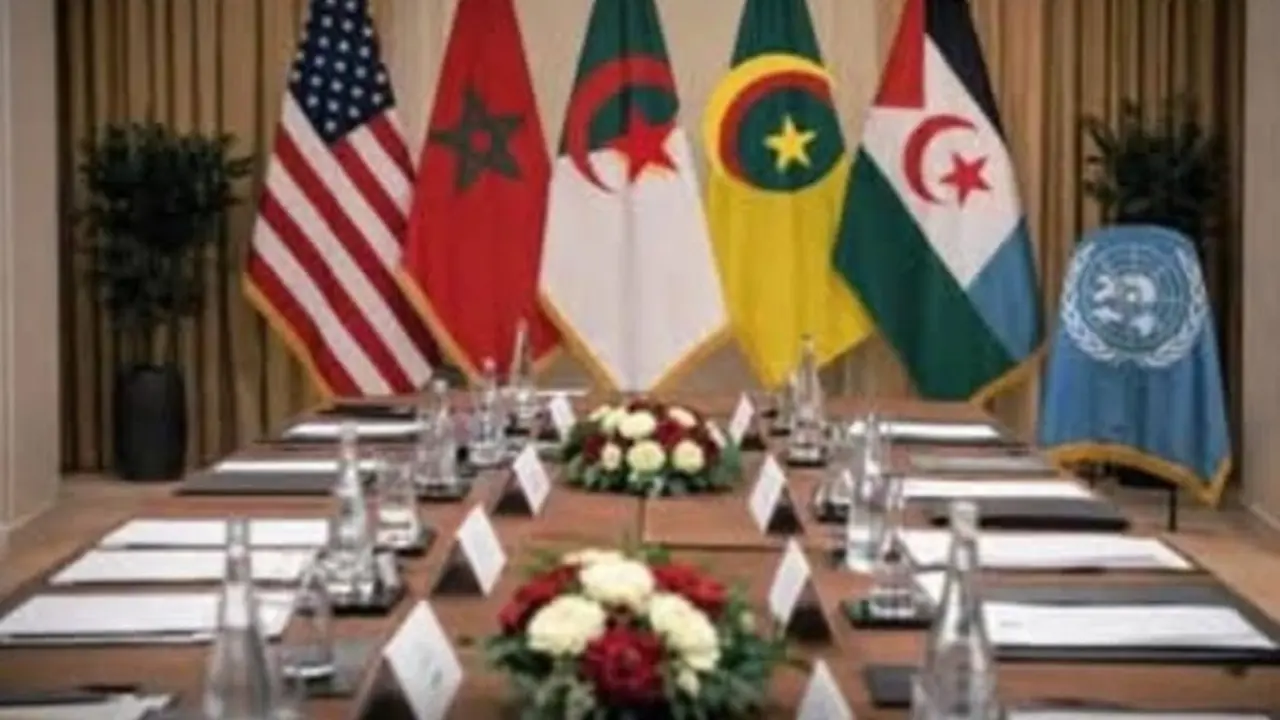
In recent years, numerous analysts and experts in international law have pointed out—in line with United Nations practice—that the treatment of the file has evolved towards the consideration of an artificial regional dispute, sustained by Algeria through the Polisario, and not as a supposed case of unfinished decolonization. This interpretation is based, in particular, on the fact that the most recent Security Council resolutions systematically identify Morocco, Algeria, Mauritania, and the Polisario as parties fully involved in the political process, which implies de facto recognition of their responsibility and negotiating position, beyond their former status as observers.
The explicit support of more than 120 countries for the Autonomy Plan proposed by Morocco in 2007 —considered the only serious, credible, and realistic basis for a lasting political solution—as well as the opening of more than 30 consulates in Laayoune and Dakhla, clearly reflect the international legitimacy of Moroccan sovereignty and the consolidation of institutional stability in the region.
Consequently, the Sahara issue should be understood today not as a legal anomaly, but as confirmation of Morocco's territorial integrity, the strengthening of which contributes to regional stability, Atlantic cooperation, and the development of North Africa. Its final resolution must necessarily be achieved through political and negotiated means, in accordance with Article 33 of the United Nations Charter and the new dynamic established by the resolution of October 31, 2025, which unequivocally confirms the structural relevance of the Moroccan approach.