Morocco helps capture drug traffickers who used drones to smuggle drugs
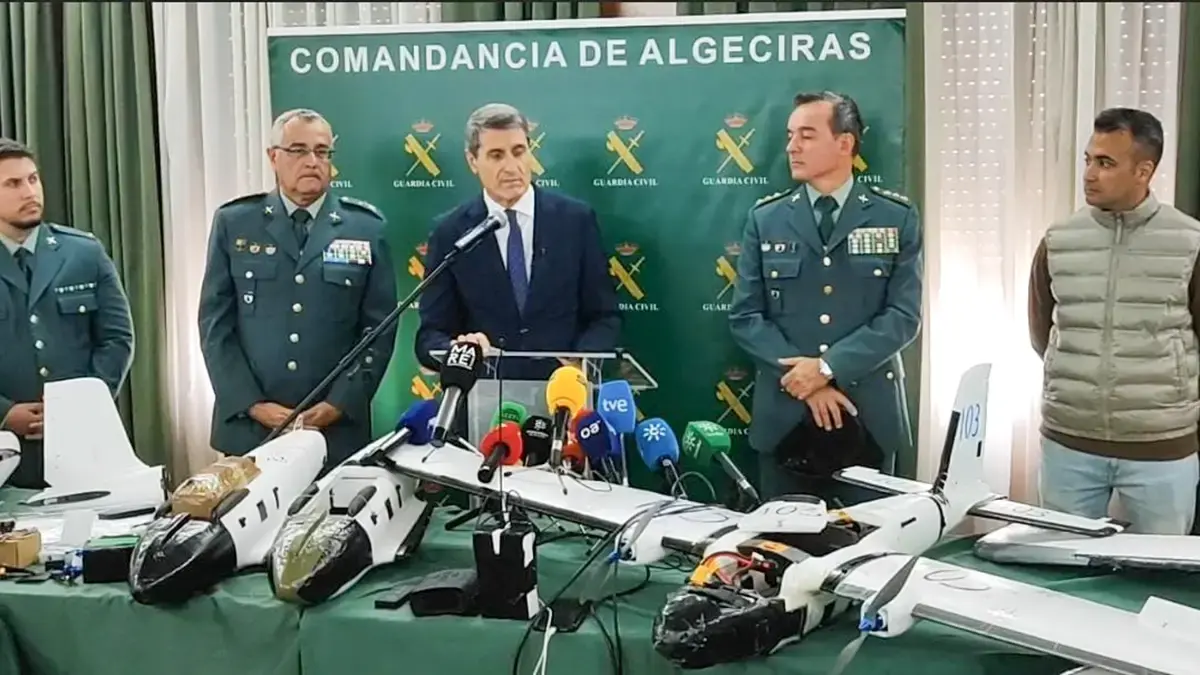
The Civil Guard has arrested a criminal organisation dedicated to smuggling hashish from Morocco across the Strait using homemade drones assembled by the group's own members.
The operation, named ‘Ruche’, was carried out in conjunction with the Royal Moroccan Gendarmerie after several unidentified flights between the two countries were detected. In total, eight homemade drones ready for use and another ten in preparation were seized.
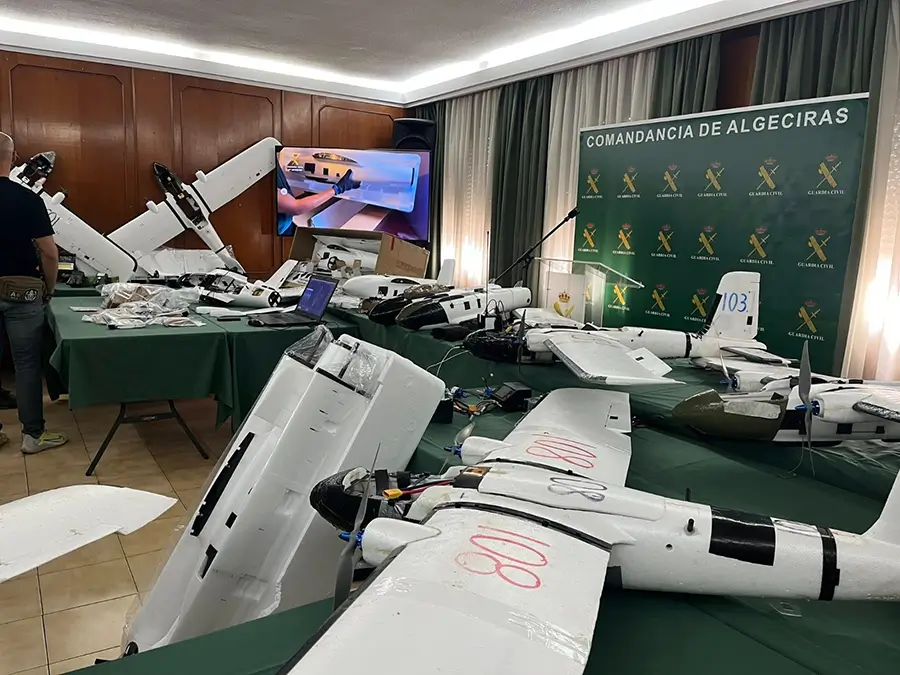
From the beginning of the sightings, the Civil Guard observed that these were fixed-wing drones capable of flying distances of more than 200 kilometres.
The investigation revealed that the drones took off from Alcalá de los Gazules (Cádiz), where the organisation had an operations centre in a private residence. The equipment was stored there and the drones were manufactured, assembled and repaired in a sophisticated workshop.
The criminal group usually operated in the early hours of the morning, taking advantage of favourable weather conditions and poor visibility. From a remote area in the countryside in the same town of Alcalá de los Gazules, up to ten drones were launched simultaneously, flying to Morocco to be loaded with drugs.
#OperacionesGC | Detenidas 9 personas, incautados 210 kg de hachís y más de 320.000 € en efectivo a una organización criminal que utilizaba drones de ala fija para el tráfico de drogas en el Estrecho.
— Guardia Civil (@guardiacivil) November 12, 2025
Intervenidos 8 drones artesanales listos para ser usados en el narcotráfico y… pic.twitter.com/nUHXYqbToB
On the return journey, the drones released their cargo in the area of Vejer de la Frontera and Tarifa thanks to mechanisms manufactured by the organisation's specialists that allowed the hashish to be released during flight. The released packages were fitted with fluorescent lights and a geolocation system linked by radio frequencies to a remote control that emitted sound signals when it was nearby.
Due to the poor visibility at dawn, those responsible for collecting the drugs used night vision goggles to more easily detect the fluorescent lights attached to the packages. The substance was then transferred to rented rural houses, used as temporary storage facilities to avoid suspicion and ensure subsequent distribution.
After releasing the cargo, the drones continued their flight until they reached the landing point back in Alcalá, where they were recovered by other members of the organisation stationed in the area.
High operational capacity and technical expertise
The criminal organisation smuggled drugs on an almost daily basis, adapting its operations to weather conditions. On days with light winds, the group activated its logistical infrastructure and carried out continuous night flights between Morocco and the province of Cádiz.
During each of these days, up to ten drones remained in the air simultaneously, making several successive trips to transport the drugs from Moroccan territory. In this way, the organisation managed to smuggle around 200 kilos of hashish in a single night.
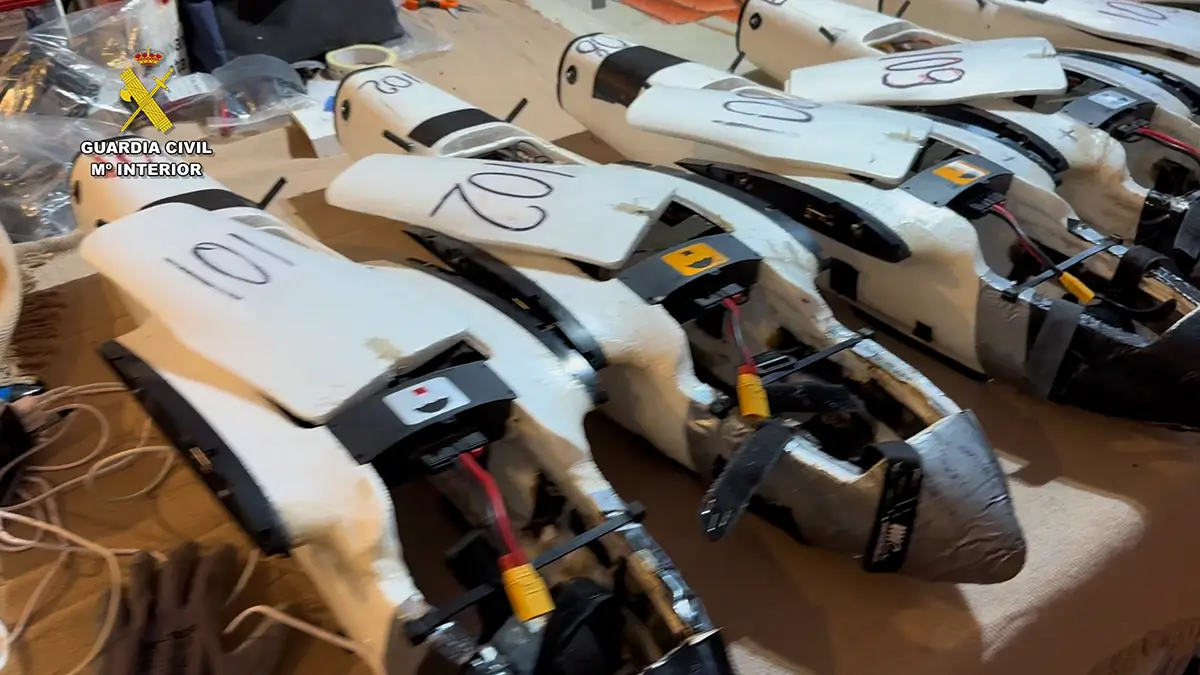
Although the generic structure and main components of the aircraft were purchased from Asian companies, they were subsequently modified in the organisation's workshop in Alcalá de los Gazules to give them greater autonomy, resistance and load capacity. The organisation's technical specialists adapted the electronic systems and reinforced the fuselages with lightweight materials, creating unique, highly efficient models for transporting drugs.

Furthermore, when the operation was carried out, it was found that those responsible for the logistics and maintenance of the drones had acquired a large number of new devices, still in their original boxes, awaiting assembly and tuning. Another 10 new drones were currently in the process of being assembled.
The officers found that those primarily responsible for the manufacture and maintenance of the drones were highly skilled in remote flight systems, component assembly and structural modification. The organisation has been able to develop handmade devices with great autonomy, precision and load capacity, far superior to conventional commercial models.
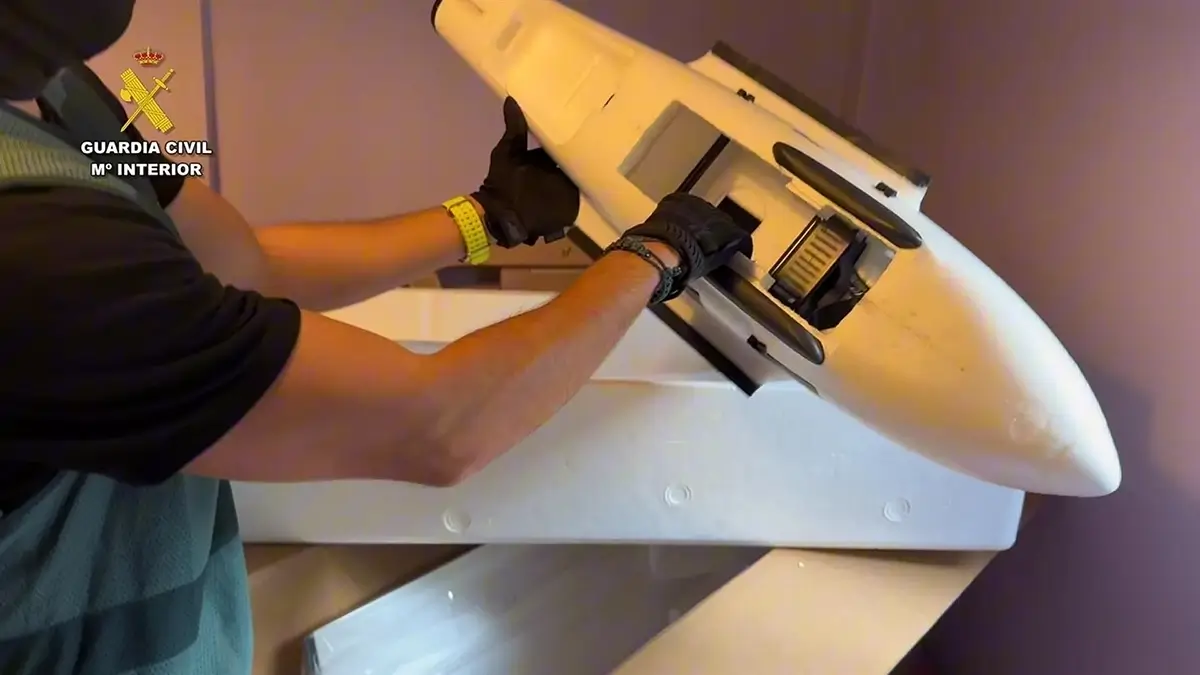
First apprehension
During the investigation phase, and in order to corroborate the evidence obtained, on 22 October, a device was set up that allowed the interception of a vehicle belonging to the organisation that was transporting a consignment of hashish that had previously been transported by drone from Morocco.
The driver, who tried to evade the police checkpoint, was arrested after a chase. Inside the vehicle, 57.2 kilos of hashish were found. During the chase, there was an accident in which several officers suffered injuries of varying degrees, with one of them requiring surgery.
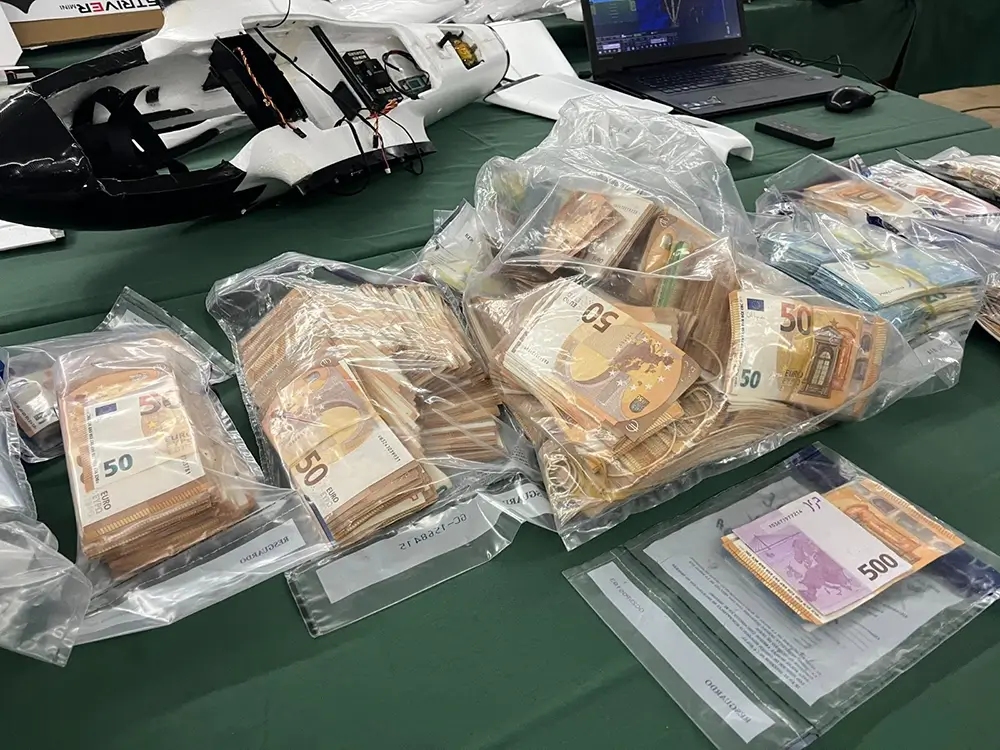
Exploitation phase
With these results, and once the locations and infrastructure of the network had been identified, the exploitation phase of the operation was carried out on Monday 10 November 2025, with five searches in the towns of Alcalá de los Gazules, Vejer de la Frontera, Algeciras and San Roque.
The operation resulted in the arrest of eight other members of the organisation and the seizure of more than 150 kilos of hashish, 320,000 euros in cash, eight complete homemade drones and ten others in the process of being assembled, along with spare parts, tools and electronic equipment for their assembly and control.

The investigation was led by Investigating Court No. 4 of Algeciras and coordinated by the Campo de Gibraltar Anti-Drug Prosecutor's Office.
The operation was also coordinated with the European agency Europol, which allowed for the exchange of information throughout the investigation with different countries of the European Union.