Putin does not contemplate a ceasefire: without conditions, the war continues
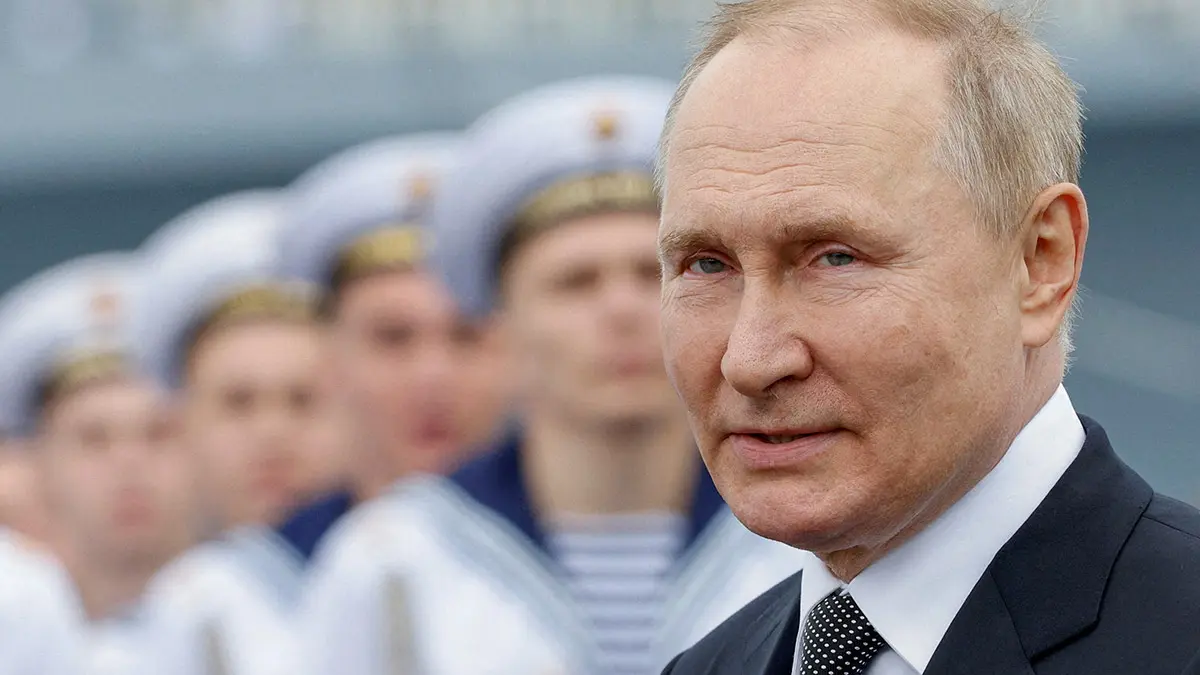

María Senovilla, a journalist who contributes to Atalayar, discusses in this interview the latest statement by Russian President Vladimir Putin, in which he rejects a ceasefire and maintains his territorial demands.
Faced with the possibility of an agreement involving territorial concessions, she analyses the risks of a peace without guarantees, the reaction of the Ukrainian soldiers interviewed, and the dilemma of millions of citizens trapped in occupied areas. Senovilla also reviews the internal tensions within the Ukrainian government and the international pressure on its leadership.
Putin insists that he wants what he wants, his territorial claims, and assures that there will be no ceasefire until Ukraine agrees.
That's right, the Russian president appeared yesterday at a press conference in Kyrgyzstan, where he was visiting, and said that if Ukraine withdraws, the war will end, that is, if the Ukrainian army stops defending Ukrainians, the fighting will end. I don't know whether this president's statements make you laugh or cry, but what seems clear is that they put us back at square one in terms of negotiations. You said there would be no concessions for Putin; he wants all the territories he currently occupies and is not even considering returning Zaporizhia and the part of Kherson where Russian troops are stationed, which could be the proposal that Zelensky takes to Washington when he goes to meet Trump.
There are currently multiple drafts of this peace agreement, but the most plausible option is for the Ukrainian government to give up Donbass in exchange for Russia withdrawing from Zaporizhia, where Europe's largest nuclear power plant is located, and from the occupied part of southern Kherson. However, Putin emphasised from Kyrgyzstan that his army currently has significant numerical superiority, which is true, and that Ukraine is unable to recruit enough men to maintain the front line. So, Putin said, if they do not hand over the territories in a negotiation, the military campaign will continue.
Maria, you have been able to talk to experts about how this could be managed if it happens, if the surrender of these territories is really considered.
We can hear from Oleksandr Krayev, an expert in international relations and director of the North America programme at the Ukrainian Council on Foreign Relations, on the Ukrainian Prince programme. Basically, what Krayev says is that the main concern of Ukrainians, in view of the agreement being signed at this time, is that if there is no concrete support from the West, what will happen with the signing of the agreement is that the current support will disappear.
Krayev says that, at a time like this, if the Europeans and Americans say, ‘very well, there is peace now, we are leaving’, they will leave the Ukrainians alone, who are certain that Russia will attack again.
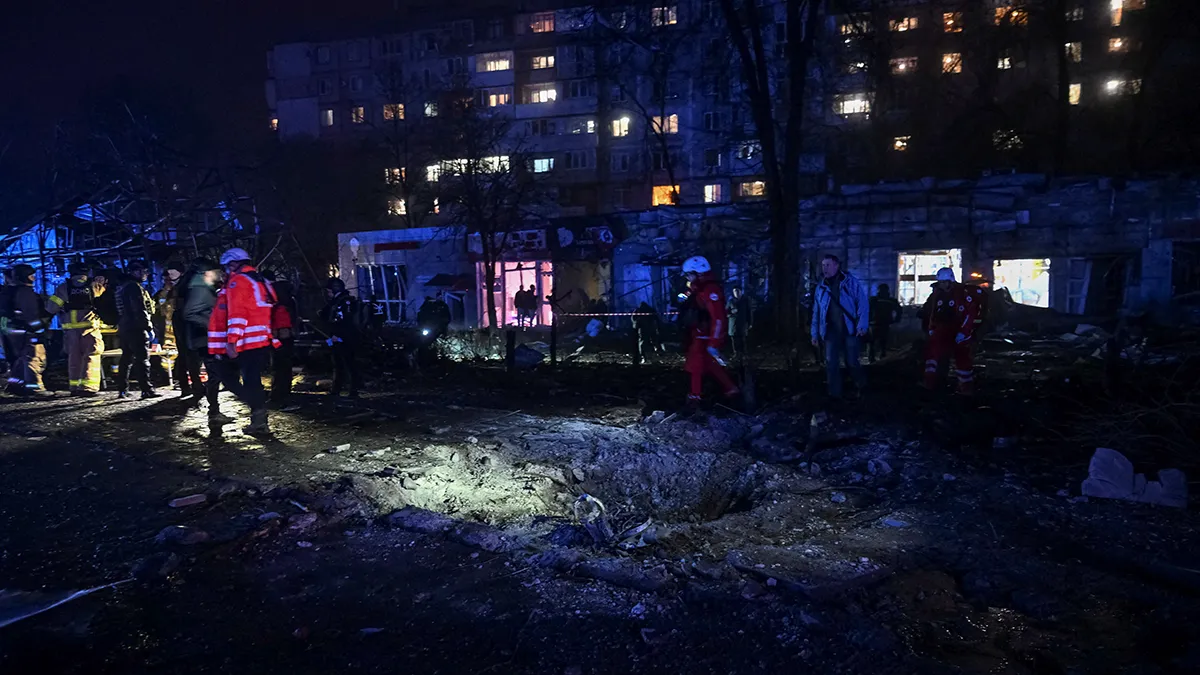
What you were saying, Maria, is that if not enough is done, if what needs to be done is not done, a new Russian aggression is possible.
That's right. I continued the interview with this expert in international relations, who is an academic, and he told me that, of course, it is possible to sign an agreement without security guarantees from the West, but that it will be useless and will be invalidated because Russia will commit further acts of aggression against Ukraine. And he told me something very important, that an agreement without the West will simply give Russia more opportunities to exert pressure, not only on Ukraine, but also on the rest of Europe.
María, you also spoke with Ukrainian soldiers. What do they think about the possibility of having to capitulate, of having to surrender?
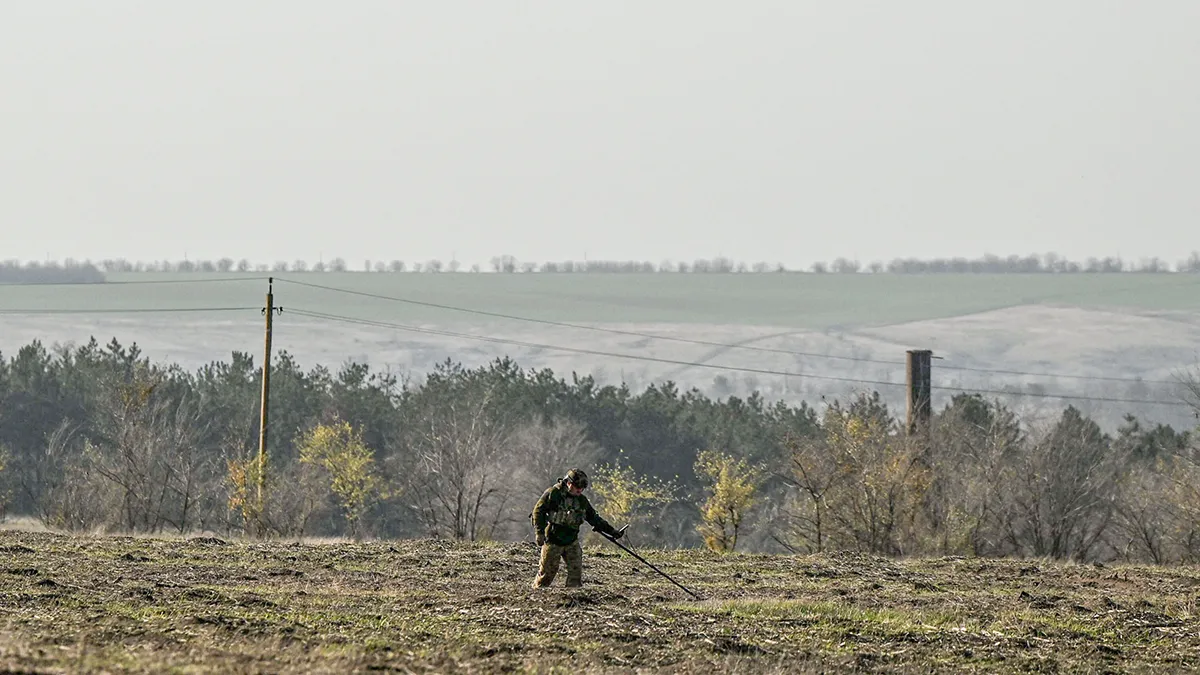
The soldiers I interviewed while they were at their positions on the front line were considerably less diplomatic than Krayev. Let us remind our listeners that Zelensky published that speech opening the door to a possible capitulation late on Friday, and over the weekend the news spread like wildfire. I took advantage of those days to talk to soldiers who were stationed on different fronts, from the north-east to the Zaporizhzhia front.
Not a single one of them said they thought capitulation was a good idea or that they wanted to surrender. They said that at this point, after almost four years of invasion and hundreds of thousands of lives lost because of this unilateral Russian invasion, there was no turning back and they did not want to surrender. If surrendering meant ceding Ukrainian territory.
They asked me if it meant giving away Ukraine. Some pointed out that this forced peace would divide the country in two, which would then lead to a civil war between Ukrainians. Between Ukrainians who had lost their parents, their children, their brothers and sisters, their friends on the front line and those who were perhaps further away from the front line and just wanted this to end.
But in any case, it was not going to be a lasting peace, nor a first step towards a real reconstruction of the country. I asked one of them and he said Zelensky has given us a choice between the 28 points presented by the US government or the harshest winter of our lives. And he didn't even let me finish the sentence.
He told me, let it be the harshest winter of our lives, but right now there is no turning back. Another, from the Zaporizhzhia front, told me that he had a young son and that what he did not want was for his son to have to go back to war in 10 or 15 years' time, because if the war in Ukraine did not end in victory, it would continue in Europe. He did not know when, but this expert in international relations also said that no one trusts Russia.
Everyone is convinced that Russia will attack again and that this aggression will not be limited to keeping the territories it currently occupies. And then we must not forget, even though we cannot interview them on a daily basis, those five million Ukrainians living in the occupied territories. Because when we talk about giving Russia the occupied territories, we are not talking about land, we are talking about people.
Five million Ukrainians who will lose their identity, their freedom and perhaps even their lives if they express their Ukrainian sentiment, for which they are already being arbitrarily detained when they declare that they are Ukrainian. And those people are currently living under Russian occupation.
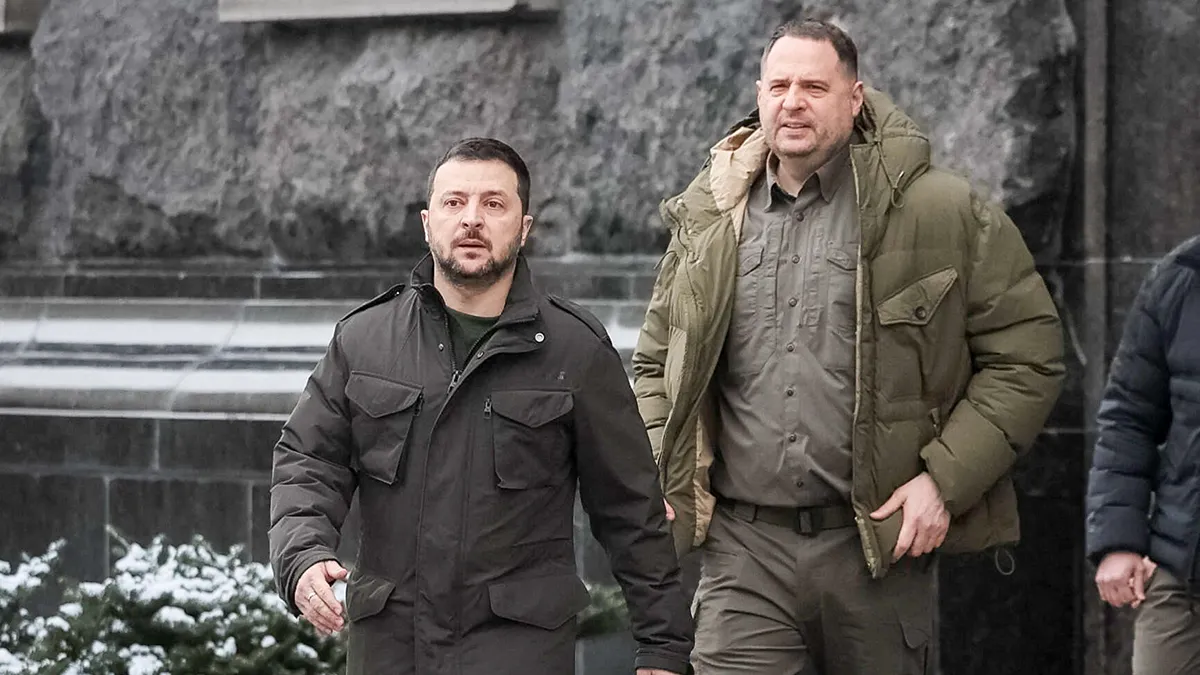
Meanwhile, today we have received news that the Ukrainian Anti-Corruption Prosecutor's Office has searched the home of Andriy Yermak...
There, the Europeans, especially the German Chancellor, have asked Zelensky to be absolutely forceful against corruption. Europe insists on claiming a seat at the negotiating table, and in the meantime, that European unity is breaking down or not breaking down. Some people think that maintaining that link between Russia and the European Union through the Hungarian president, who visited Moscow today and visited Putin, is a good idea.
Of course, Viktor Orbán has gone to Moscow to secure gas and oil supplies. Viktor Orbán's support for Russia is nothing new; we have commented on it here countless times, and he was not going to miss this opportunity. But it is true that the rest of the European Union has asked President Zelensky to take a firm stance on this very serious case of corruption.
A case of corruption that everything points to having been exploited by both Russia and the United States to put even more pressure on Zelensky, to present him with that initial 28-point plan that grants absolutely all of Russia's demands, which will hand over the territory and reduce its army by almost half. All the concessions demanded by Russia were included in that 28-point programme, and what Zelensky has done now, by joining the European Union, is to try to negotiate those conditions in order to draw up a plan that is acceptable to the Ukrainian people. Because we are talking about a citizenry here; this is not Russia, Ukraine is not Russia.
In Russia, Putin's decisions must be accepted, because those who do not accept them go to prison. Not in Ukraine. In Ukraine, we have already spoken on other occasions about the demonstrations by an active citizenry that does not accept government decisions that go against their own rights.
This initial plan presented last Friday was unacceptable to the public, and even though there is currently a corruption case underway, even though Zelensky's government is now in a more vulnerable position than ever since the invasion began, what is being said in forums, what people are saying is very good, we will sort out our corruption, our internal affairs, but that does not mean that we should relax our interests as a country and give up, not only the territory, but also deprive the people living in their occupied territories of Ukrainian citizenship.
María, one last question... today you are in Gijón, you have returned from Ukraine for a few days...
Yes, it's going to be a very short visit, on Tuesday I'm going back to Ukraine, but I think what you're saying is also important, to take a break to come here and spread the word about what we're doing there, because sometimes when I come back I don't spend much time in Spain, but when I do come back I get the feeling that people are increasingly distant from the conflict we have at home, because the war in Ukraine, which is in Europe, Ukraine, is three and a half hours by plane from Madrid, we have it at home and I understand that, of course, after almost four years of conflict, it is fading away, the media focus is also shifting to other conflicts that are ravaging the world, which we also cover here on the programme, but it is important to remind people what is happening, because at the moment, from these microphones, we have not stopped reporting on it for a single week, and we have been following the news and what is happening, but there are people who do not know that right now the war in Ukraine is probably at its worst since the invasion began, because of Russia's numerical superiority that we talked about, because of the emergence of drones as a weapon of war, which currently do not discriminate between civilians and military personnel, because of the political pressure being put on Zelensky to give away the occupied territories, and because of the intensification of the fighting on the front line, which we discuss here so often and explain.
It is also good to come, stop, take advantage of a forum such as the Gijón photography meetings, with great professionals, such as César Lucas, Rafael Navarro, Castro Prieto, Lua Ribeiro, the Magnum photographer, and also to show these images and highlight the importance of having photographers on the ground, documenting the war so that they can then tell the world about it.