Tension between Russia and NATO reaches new heights
NATO alerted the presence of a Russian IL-20M reconnaissance aircraft flying through international airspace over the Baltic Sea, using a visual identification system. The aircraft, built during the Soviet era, was escorted to Sweden by two German Air Force Eurofighters that took off from the Rostock-Laage base.
‘Once again, our rapid reaction force, consisting of two Eurofighters, was tasked by NATO to investigate an unidentified aircraft with no flight plan or radio contact in international airspace,’ the German Air Force explained in a statement.
This case does not appear to be an isolated one, because a few days before this incident, Estonia (a NATO member country) raised the alarm when three MIG-31 fighters entered its airspace.
‘The incursion took place in the Gulf of Finland, where three MIG-31 fighters from the Russian Federation entered Estonian airspace without permission and remained there for a total of 12 minutes,’ reported the Estonian Ministry of Foreign Affairs. This is the fifth time Russia has entered Estonian airspace so far this year. ‘This is unacceptable,’ said Foreign Minister Margus Tsahkna.
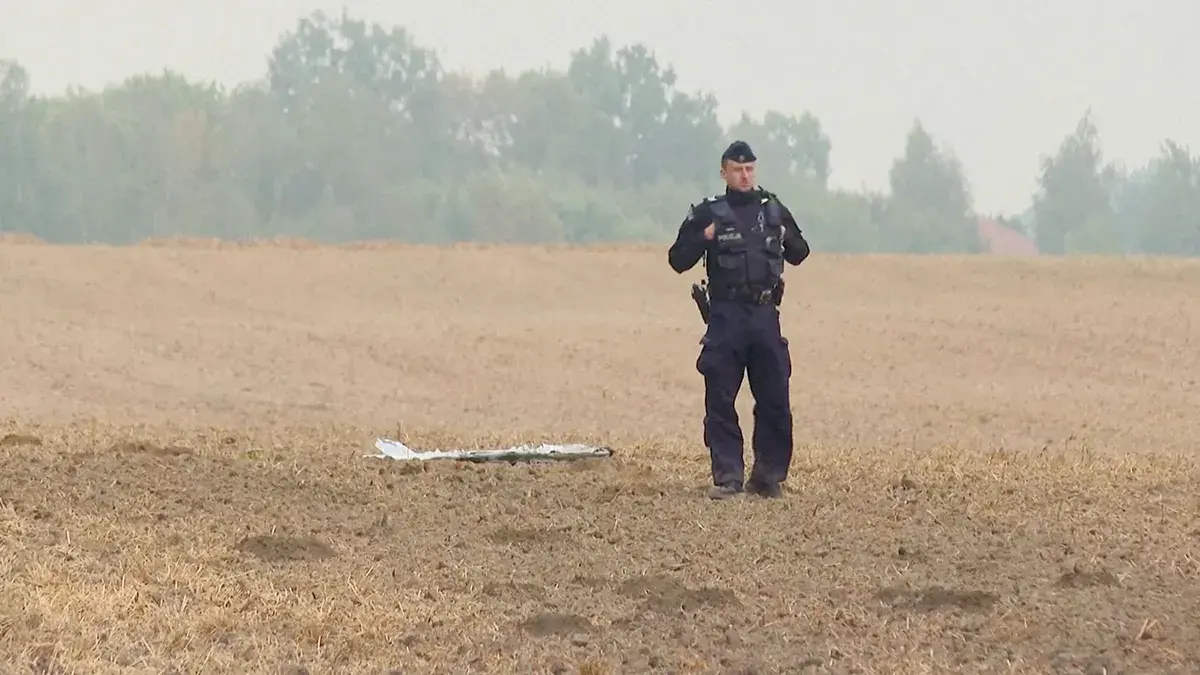
The week before these incursions by aircraft from Moscow, 19 Russian drones entered Polish airspace, which were shot down by the Polish Air Force and some NATO partners. They also entered Romanian territory.
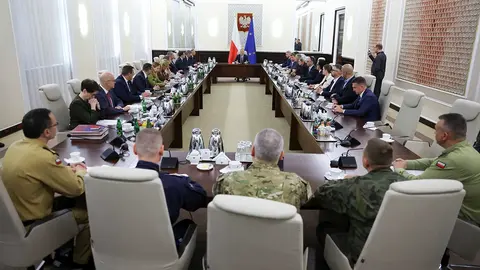
Against this backdrop, according to BBC News, Italy, Finland and Sweden have deployed fighter jets to protect NATO's eastern flank. And the organisation's members will meet to discuss the provisions of Article 4 of the NATO Treaty at Estonia's request.
And according to Al Arab, the ‘Eastern Guardian’ initiative has already been announced, in which Denmark, France and Germany will participate while help arrives from more countries in the defence of the eastern side of the airspace.
The UN Security Council is also holding an emergency meeting because Russia is a member and, according to Minister Tsahkna, ‘is undermining principles that are essential to the security of all UN members’.
US analyst Max Boot, a senior fellow at the Jean J. Kirkpatrick National Security Foundation, believes these incidents are part of a strategy by Moscow to test NATO and deter Europe. He offers two ideas to support his position: either Russia is seeking to intimidate Europe, or it is testing Article 4 of the NATO Treaty.
Ursula von der Leyen demanded that the EU have more independence in defence matters, as almost all members are European: ‘By strengthening the European pillar within NATO, we are also strengthening Europe's military strength and defence capabilities.’

As expected, given Russia's presence in NATO countries' airspace and the war in Ukraine, all members are on alert and see the need for a response as soon as possible.
Things have been going badly since the negotiations began, with Fox News reporting that US President Donald Trump is ‘disappointed’ with Russian President Vladimir Putin over the failure to reach an agreement to end the conflict.
For expert Boot, the lack of action by the United States, despite its criticism, is becoming a cause for concern. This is because the president downplayed Russian incursions and never took practical measures to curb Russian escalation. He therefore explained that the White House should impose tougher sanctions on Moscow.
‘Russia is testing NATO again: dozens of drones in Poland last week, drones in Lithuania, Latvia and Estonia, and now fighter jets in Estonian skies. These are deliberate provocations,’ Lithuanian Defence Minister Dovile Sakaliene told Fox News.
The minister went on to say that NATO, apart from being militarily prepared, must show unity in the face of Moscow and deter the possibility of ending up in a world war. A situation that Donald Trump does not rule out.
Moscow, for its part, denied all accusations through Kremlin spokesman Dmitry Peskov: ‘We consider such statements to be empty, unfounded and a continuation of the country's totally unstoppable policy of increasing tensions and provoking an atmosphere of confrontation.’
He argued that all incursions ‘operate strictly within international norms’ and accused NATO of wanting to increase tensions.