The fake assassination of White Rex: the intelligence operation that fooled Moscow and financed the war in Ukraine

Ukrainian President Volodimir Zelensky said on Thursday that his country's entry into the European Union is part of the security guarantees that Kiev is seeking as part of international efforts to end the war of aggression against the Russian invasion.
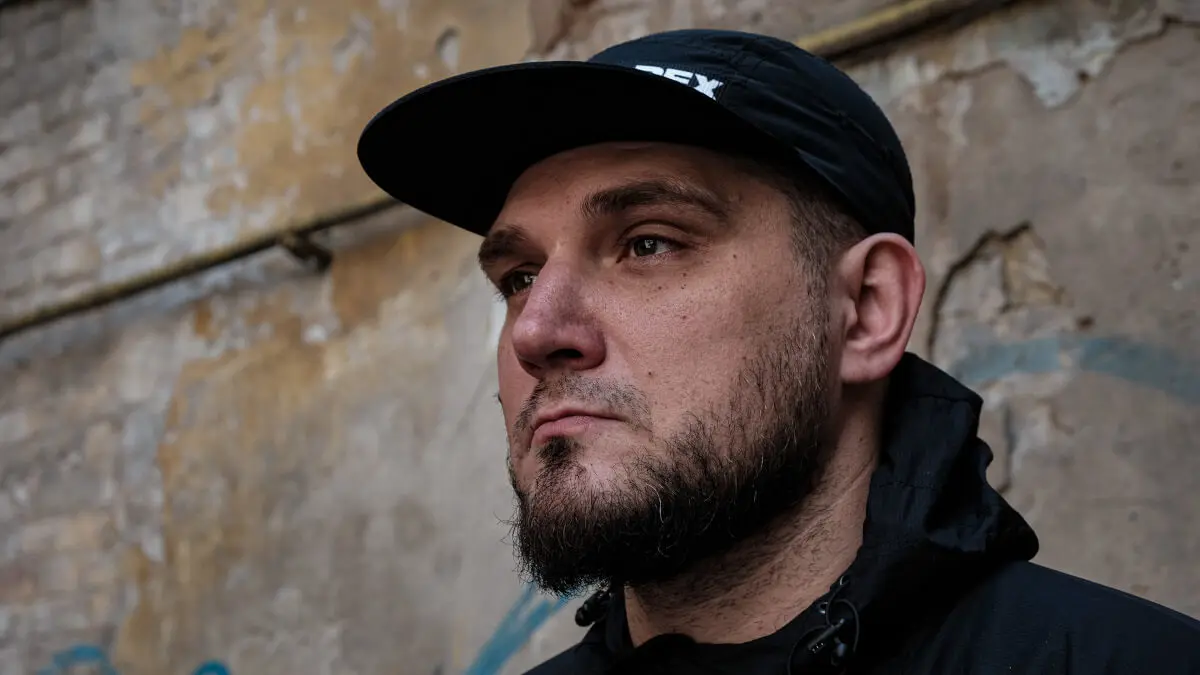
An unexpected turn of events to kick off 2026 has occurred with White Rex. He wasn't dead. It seems that the GUR faked his murder and charged the Kremlin for it.
You interviewed Denis Kapustin, White Rex, in Kiev for Atalayar. He was the commander of the Russian volunteer corps made up of Russian dissidents fighting on Ukraine's side against Putin. But, in the end, María, he is alive, a case straight out of a film.
A case straight out of a film, because the war in Ukraine is providing us with material to write a lot of literature and many scripts, precisely for films, thanks to intelligence operations such as the one that has taken place in recent days.
Five days ago, the Russian volunteer corps, the RDK, is one of three battalions made up of fighters with Russian citizenship who are fighting in the ranks of the Ukrainian army. This is the oldest of them. This corps announced through its press service that Russia had assassinated its commander, Denis Kapustin, nicknamed White Rex, in an attack operation on the Zaporilla front line and that he had been killed by a drone strike.
The Ukrainian press quickly reported on what had happened, as did part of the Spanish press, and we published it. This case, that the commander of this unit had been killed. What happened? On New Year's Day, five days after all this media coverage, they published a video showing Denis Kapustin wishing everyone a Happy New Year, wishing everyone good health and explaining that it had actually been an intelligence operation by the GUR, the Ukrainian Army's intelligence services, which had detected that the Kremlin had put a price on the head of Denis Kapustin, a Russian dissident whom Putin considers a personal enemy.
Russian intelligence was trying to set up a plot to assassinate him, as it had done with other Ukrainian figures, especially in the political sphere. The GUR intercepted this request to find people, Russian intelligence was looking for a way to kill this man and they offered to do the job for which, incidentally, they charged the Kremlin half a million dollars.
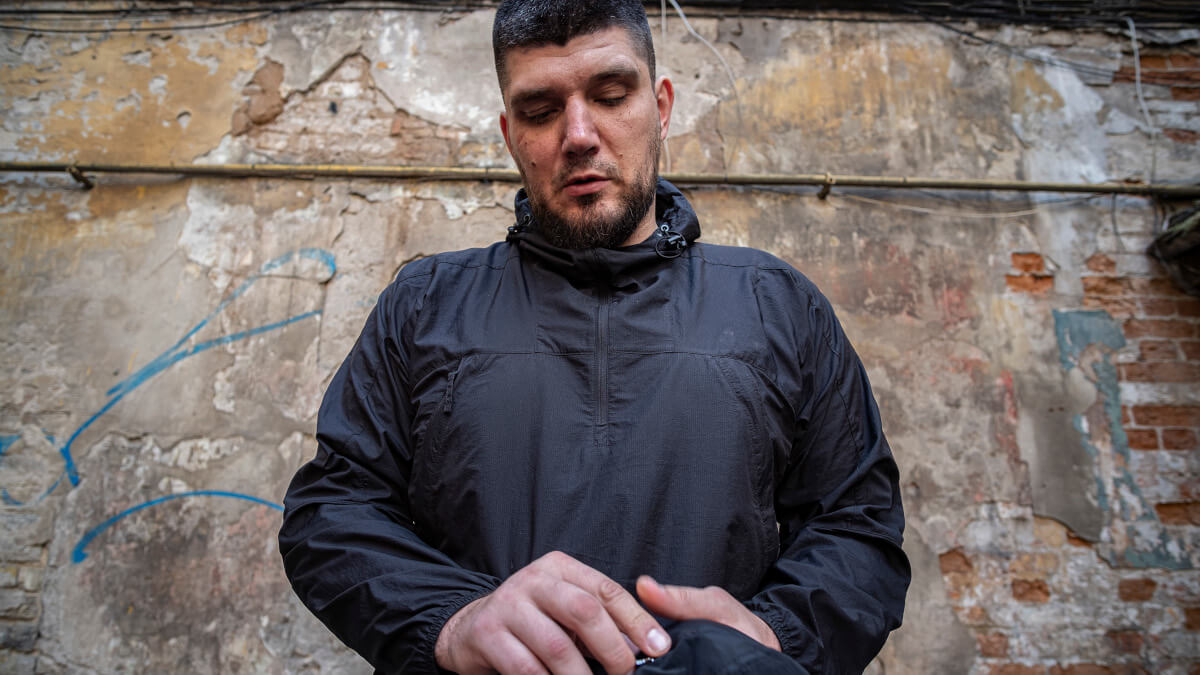
Once they had concocted the deception and publicly announced that Kapustin had died, that he had been killed on the Zaporizhzhia front, and that they had been paid for the job a few days later, they published this video ridiculing the Kremlin and its intelligence services and explaining that the operation had served to dismantle this network, which is constantly trying to recruit people within Ukraine to carry out these attacks, which had, also identified how the network operated and that the £500,000 they had been paid for the job, which obviously never happened, was going to be used to finance the war, obviously on the Ukrainian side.
As we say in the film, in Atalayar we published an interview with this commander in the summer of 2023, a character who, it must be said, is also very controversial for his links to neo-Nazi groups in Germany, where he emigrated from Russia when he was very young, but who, in this case, is now fighting on the Ukrainian side. He told us in that interview that his concern, his goal in joining the Ukrainian Armed Forces, was not only to help the country defend itself against this Russian invasion, but that they were going further, that he and the dissidents who, like him, had left Russia and many of whom were now fighting in Ukraine, their aim was to directly overthrow Putin's regime, which they described as fascist. They said that, although they were aware that they were not very numerous, there are three battalions of Russian fighters fighting under the umbrella of the GUR, because it is the intelligence services that directly control these fighters. They said that among their strategies was also the issue of propaganda, explaining what the Russian system was really like and carrying out these small campaigns, although this one in particular was not so small, as it was published in the international press. They also had the aim of raising awareness of the situation Russia was going through and how Putin's government was, let's say, subjecting the population to a kind of dictatorship, which he described as practically fascist.
In a war, we always say that the first casualty is the truth, but what is also true is that information is another weapon in the hands of each of the contenders, and a weapon with a great deal of influence. How is the war affecting the creation of a labour force in Ukraine, a demographic issue? It has been reported that 10 million immigrants will be needed to rebuild the country, and there are already places where it seems that teams of people from Bangladesh are being hired.
It is estimated that when this war ends, a workforce of up to 10 million immigrants will be needed to fill the jobs that now exceed demand within the country.
The truth is that after almost four years of war, this is one of the consequences that the armed conflict is having on the country's industrial production. Seeing how Russian bombing of Ukrainian cities has increased over the last year, and seeing the consequences that these bombings have had on the country's energy capacity, with daily power cuts, it seems a miracle that jobs are still being created and that businesses are continuing to hire staff. But what we had not noticed until now was how the workforce had also been reduced, with many people fleeing the country and others being mobilised on the front line.
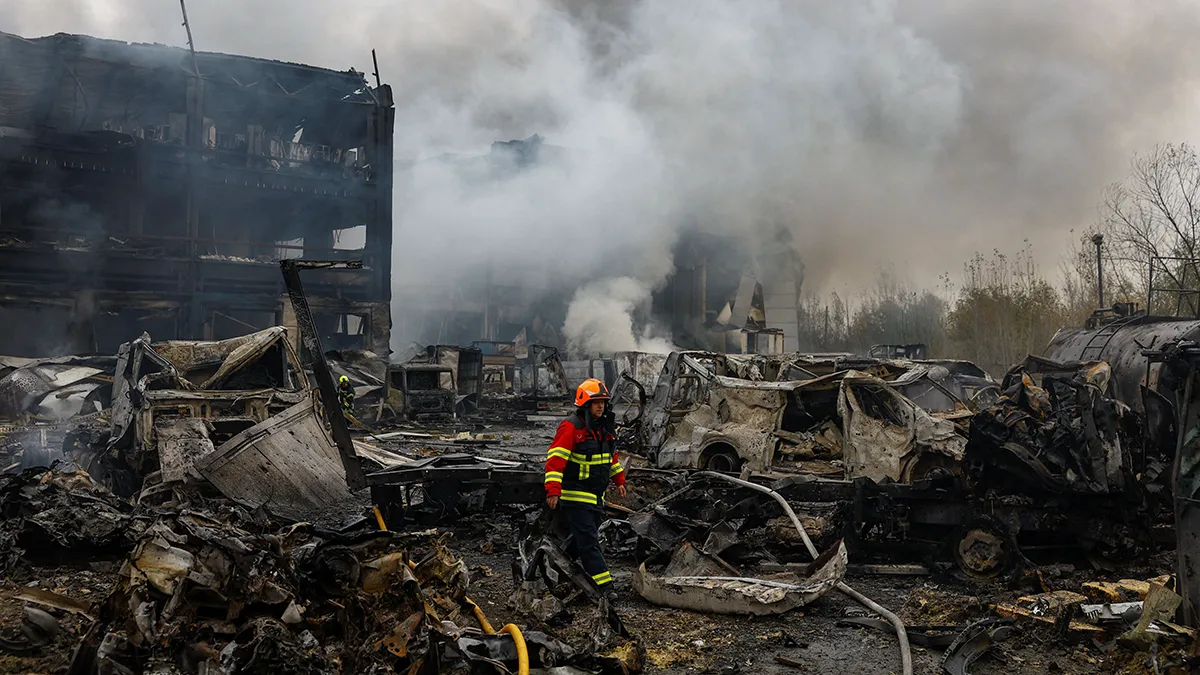
According to the Ukrainian State Employment Service, which took stock at the end of 2025, more than a third of the jobs offered within Ukraine in 2025 have remained vacant, and this trend is becoming more pronounced. In other words, the State Employment Service explained that it has been more difficult to find workers in the last three months of the year than in the first three.
Sustained Russian attacks, the more than six million refugees living outside the country, the mobilisation of more than a million people in the armed forces and the fear of many others to go to work in the midst of these attacks or near the front line have produced a demographic and structural imbalance that can be seen in the fact that a third of the jobs, as I said, that have been offered in the country have remained vacant.
Against this backdrop, Ukrainian industry is preparing to cut back on production in 2026, which has just begun, and the Ukrainian government's response is, among other measures, to increase training courses for unemployed workers, but they are already warning that it will be very difficult to reverse this trend until the war is over. And one more thing: when this happens, when the war ends, it is estimated that up to 10 million migrants could be needed to generate the necessary labour capacity to tackle the reconstruction of Ukraine. The fear is that in many cases, Ukrainians living as refugees in other countries, mainly in Europe, who have already rebuilt their lives during these four years of conflict, will no longer wish to return to their homes when the war ends.
Some factories are prisons for Bangladeshi workers who were contracted in their home country to work in sectors such as furniture manufacturing.
We are talking about companies located in the westernmost part of Ukraine, in Transcarpathia, very close to Poland and all the European Union countries in that part of the world, where there are indeed fewer attacks and fewer bombings and where immigrant workers already dare to go, but it is unusual that in the midst of armed conflict, teams of immigrant workers are being brought in to meet this demand because the Ukrainian industrial fabric, these factories, these products, these small and medium-sized entrepreneurs who produce jobs do not want to close down and want to keep going so that the country does not gradually shut down.

President Zelensky insists on Ukraine's entry into the European Union as part of the international guarantees, but not into NATO. It seems that this has now been accepted, that Ukraine will not join NATO, but it does demand entry into the European Union.
This has been a direct imposition by President Trump, because let us not forget that he is still in office. And by Putin, that was Putin's first demand, which had never been given any credence until President Trump arrived at the White House.
The truth is that Ukrainian efforts to advance negotiations leading to a peace agreement continue, and yesterday new details were made public about the security guarantees that could be established to prevent Russia from invading the country again once a ceasefire is achieved. Along with the territorial cession, the issue of security guarantees is the most important point in these negotiations, in which the United States is currently acting as the main mediator, leaving the European Union countries in the background, I fear.
However, according to the details that have emerged in recent weeks, it appears that it is the European countries that will be directly involved in guaranteeing Ukraine's security, not only because of the possibility of Ukraine joining the European Union, but also because there has been talk of a possible contingent of international soldiers participating in a peacekeeping mission.
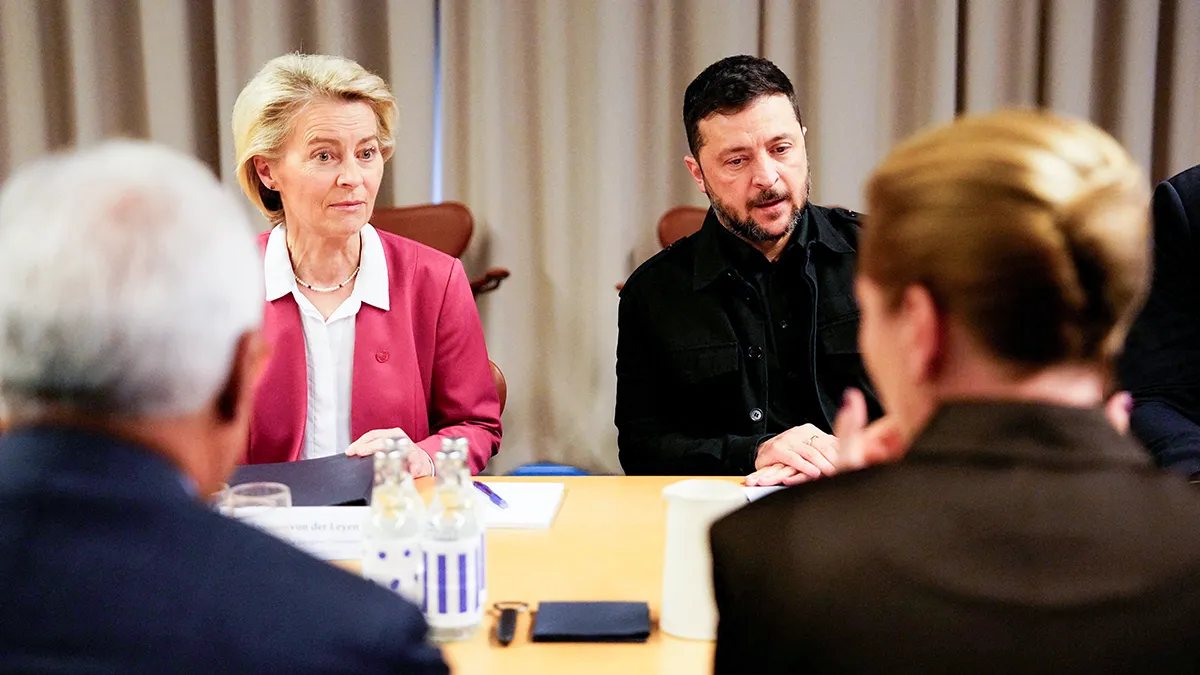
We insist that peace must come first, and that this contingent would be made up of European soldiers, including Spain, as Margarita Robles has already said, opening up the possibility that, if this European contingent is formed, Spain will also participate. It has already been revealed that entry into the European Union is also being considered in the document being drawn up for this new peace proposal.
Ukraine's membership of the European Union is something that Zelensky has been demanding since the Russian invasion began and has always been conditional on the armed conflict first ceasing and, in addition, on certain internal changes taking place, including, for example, reducing the high levels of corruption in Ukraine.
Without revealing further details on these other aspects, Zelensky announced that Ukraine could join the European Union as part of the peace agreement being shaped together with the US negotiating team. He also did so in the context of the inauguration of the President of Cyprus as the new rotating President of the Council of the European Union, so we assume that the other countries of the European Union would also agree to this condition.
But regardless of the agreements that Ukraine reaches with the United States and the countries of the European Union, we must not forget that in the end everything will depend on Russia and on Putin accepting the document that is presented with the conditions of a new peace plan, and to date, I fear, there is no sign that this will happen.