The Moroccan DGED and DGST, two essential poles between "operational efficiency" and "zero tolerance," according to the French news magazine Causeur

- The DGED and the DGST, complementary pillars
- French cooperation and hostile propaganda
- External destabilization
In a region marked by political upheaval and the decline of French influence, these services embody operational continuity and are a decisive asset for stability in the Sahel. Causeur says that Rabat, the new control tower of the Sahel, arouses much jealousy.
Its ability to combine efficiency, discretion, and diplomatic reliability has made Morocco an unavoidable anchor point.
The French magazine Causeur, in an article entitled “Morocco: war between services or external destabilization,” points out that the rapprochement between Paris and Rabat, sealed by France's recognition of Moroccan sovereignty over the Sahara, is not only diplomatic in scope: “It is also part of a more subterranean reality: the discreet rise of the Moroccan intelligence services.”
The weekly magazine adds that in an environment in which France has seen its influence eroded, Morocco “is establishing itself as a credible, and sometimes even unavoidable, partner.”

The DGED and the DGST, complementary pillars
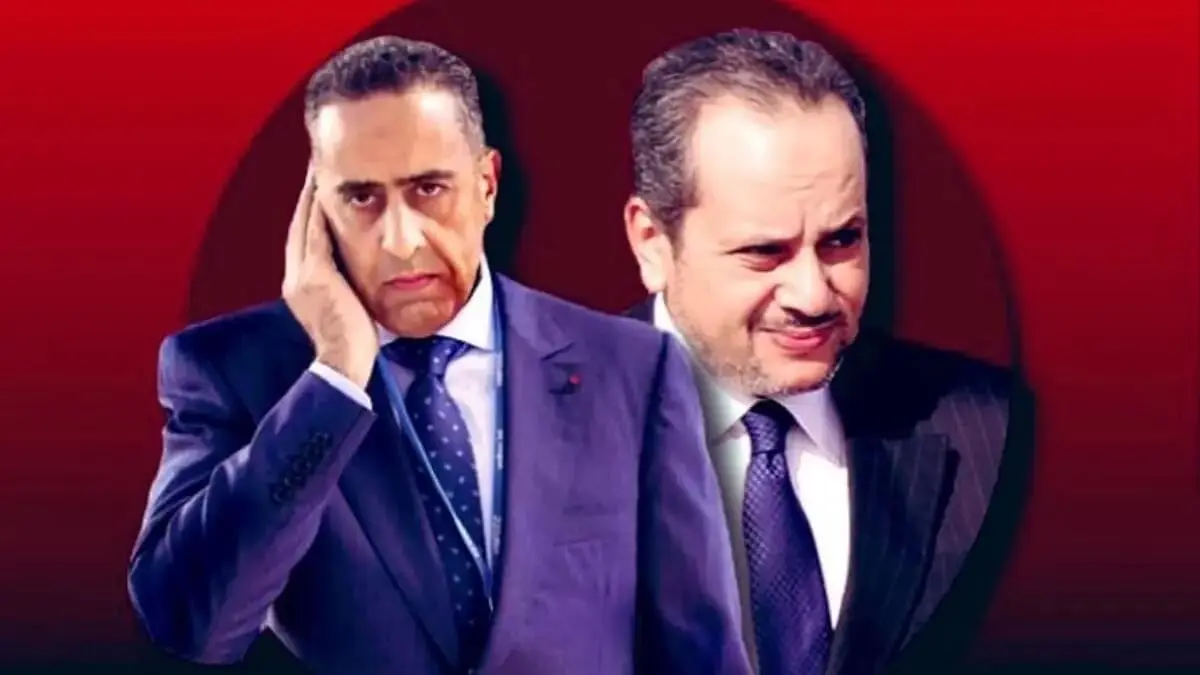
The DGED (Directorate General for Studies and Documentation), a foreign service headed by Mohammed Yassine Mansouri, played a direct role in the fight against Boko Haram. According to Causeur, “it provided crucial assistance to the Nigerian armed forces, which, according to an official statement, executed Ibrahim Mamadou, the leader of Boko Haram.”
The weekly magazine comments that France “can count on this operational strength, which is beneficial to the entire region.”
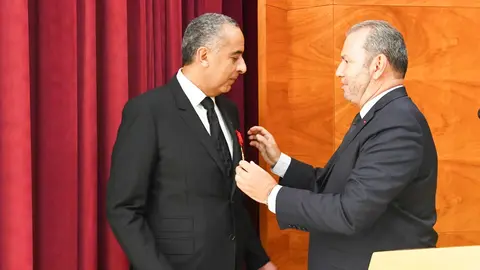
The career of Mansouri, a classmate of King Mohammed VI at the Royal College, illustrates this progressive professionalization. The article emphasizes that “he has built his legitimacy over the long term: first at the head of the MAP, then at the Ministry of the Interior before being called to the DGED in 2005.”
This career demonstrates, writes the newspaper, the desire to “place external intelligence at the intersection of tribal networks, diplomatic channels, and security cooperation.”
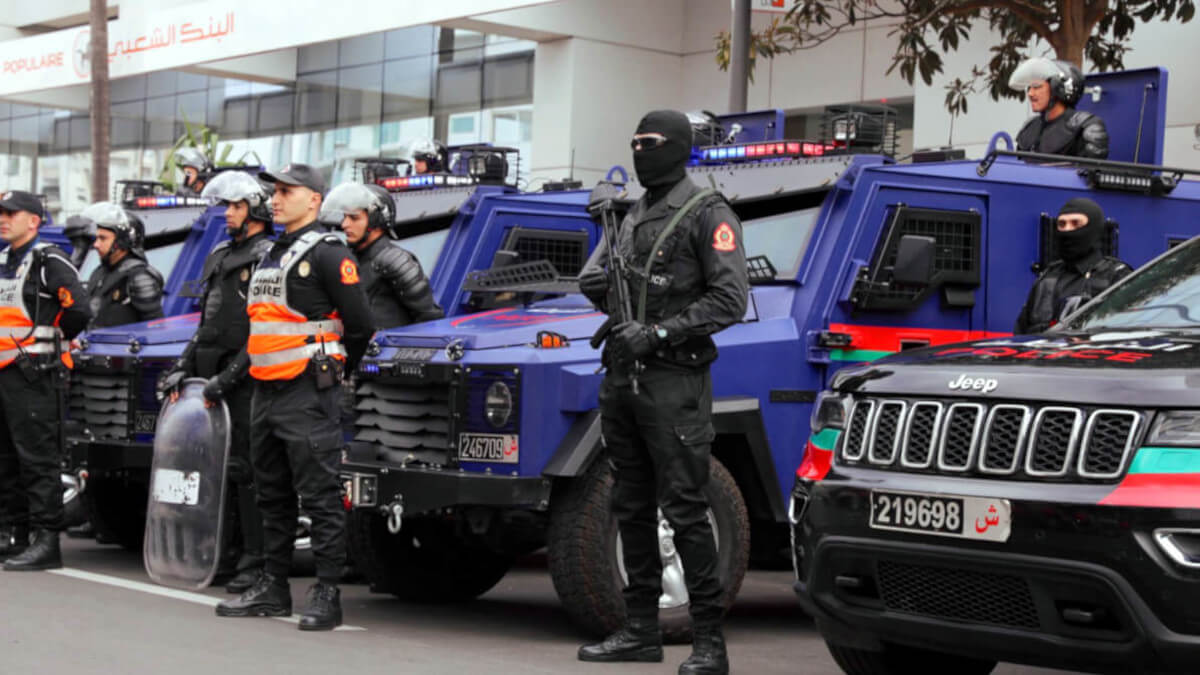
The DGST (General Directorate for Territorial Surveillance), an internal body entrusted to Abdellatif Hammouchi, has established itself on the counterterrorism front. Causeur notes that its director “has imposed iron discipline on his staff over the years and has made the DGST a global benchmark in the fight against terrorism.” By combining, since 2015, the leadership of the DGST and the DGSN (General Directorate of National Security), Hammouchi has made it possible to “merge police and intelligence cultures.”
Concrete results have reinforced this reputation. Causeur cites “the arrest of figures in French drug trafficking, such as Félix Bingui,” and the role played by the DGST in the seizure of three tons of cocaine on the ship Sky White off the coast of the Canary Islands, an operation carried out in August thanks to intelligence information passed on to the Spanish Civil Guard.
The article notes that these successes “have earned its services unprecedented credibility among European partners.”
French cooperation and hostile propaganda
Faced with successive political crises in the Sahel, France is now relying on Rabat. Causeur notes that “our main partner in finding solutions in the fight against terrorism and for stability in the Sahel is now in Rabat.” The weekly magazine emphasizes that “the Moroccans are now able to act as intermediaries” where Paris “can no longer communicate directly with the transitional authorities.”
The release last December of four French DGSE agents detained in Ouagadougou demonstrated this ability.According to the newspaper, it was “the result of direct intercession by King Mohamed VI with the transitional authorities,” a gesture “greatly appreciated by the French services.”
But this regional preeminence fuels tensions. Causeur mentions that “this privileged situation upsets neighboring Algeria.” Media outlets close to the Algerian government are spreading the idea of a “war between spies” between the DGED and the DGST/DGSN.
The case of Mehdi Hijaouy, a former DGED executive who left in 2010 and is now on trial for fraud and aiding illegal immigration, is highlighted, although the weekly magazine specifies that it has “little direct connection with a hypothetical war between services.”
Several Spanish media outlets known for their hostility towards Morocco recently spoke of a “war between services,” while, according to Causeur, “the DGST and the DGED do not have the same missions or the same scope: one operates on national territory, the other abroad.”
External destabilization
The article indicates that, in early August, Mansouri and Hammouchi participated together in a “strategic reflection seminar” dedicated to asymmetric threats and aimed at strengthening the link between departments in the fight against cross-border trafficking linking the Sahel to Europe.
The weekly magazine's conclusion is explicit: “As for a war between the two main Moroccan services, it seems that the external services are trying to sow... What? To ask the question may be to answer it.”
Finally, Causeur emphasizes the weakened diplomatic environment. The weekly recalls “the violent purges in Mali,” France's inability to count on certain African collaborations, the bilateral crisis with Algiers “which reached its peak in early August,” and the growing proximity between Rome and Algiers.
This rapprochement, described by the newspaper as “belly dancing,” has found “a favorable echo from the Algerian regime, trapped in its repressive policy that has led to two of our compatriots being put behind bars: Boualem Sansal and sports journalist Christophe Gleizes.”