Western Sahara: start of negotiations based on Morocco's autonomy plan


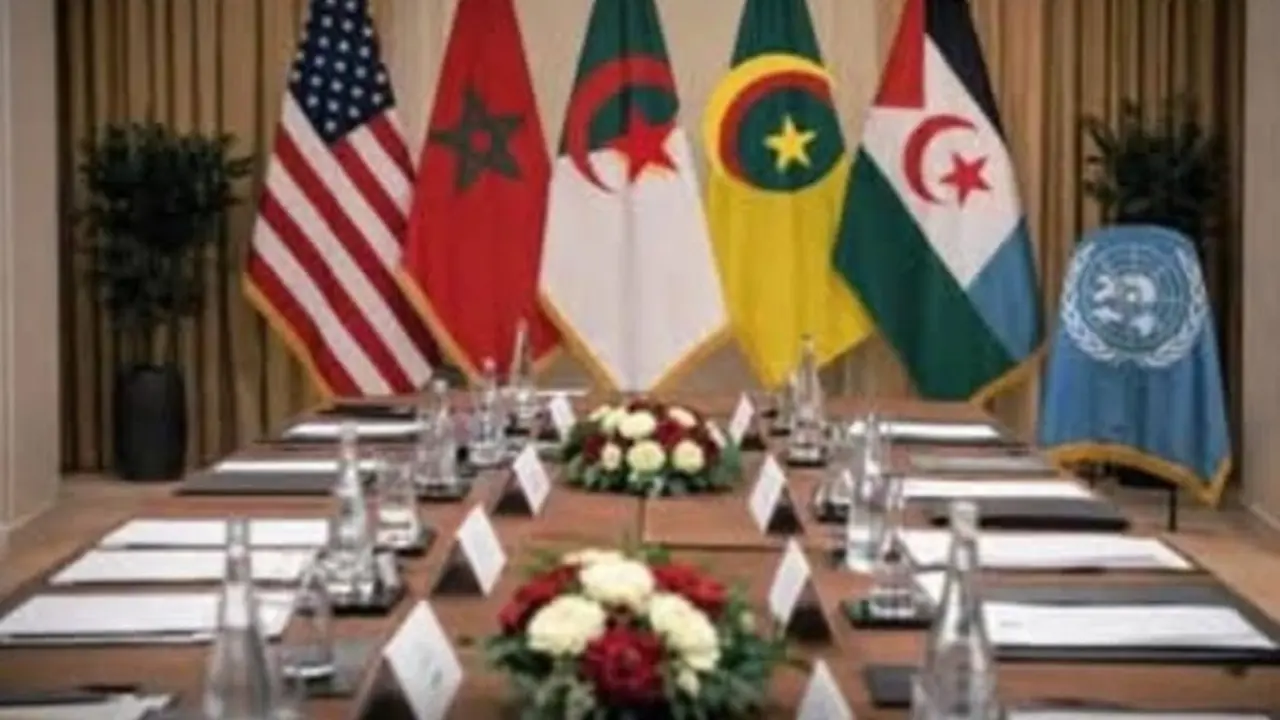
The United Nations (UN) Security Council endorsed Morocco's autonomy proposal for Western Sahara as the most serious and credible basis for concluding negotiations for a negotiated solution for the future of Western Sahara's sovereignty.
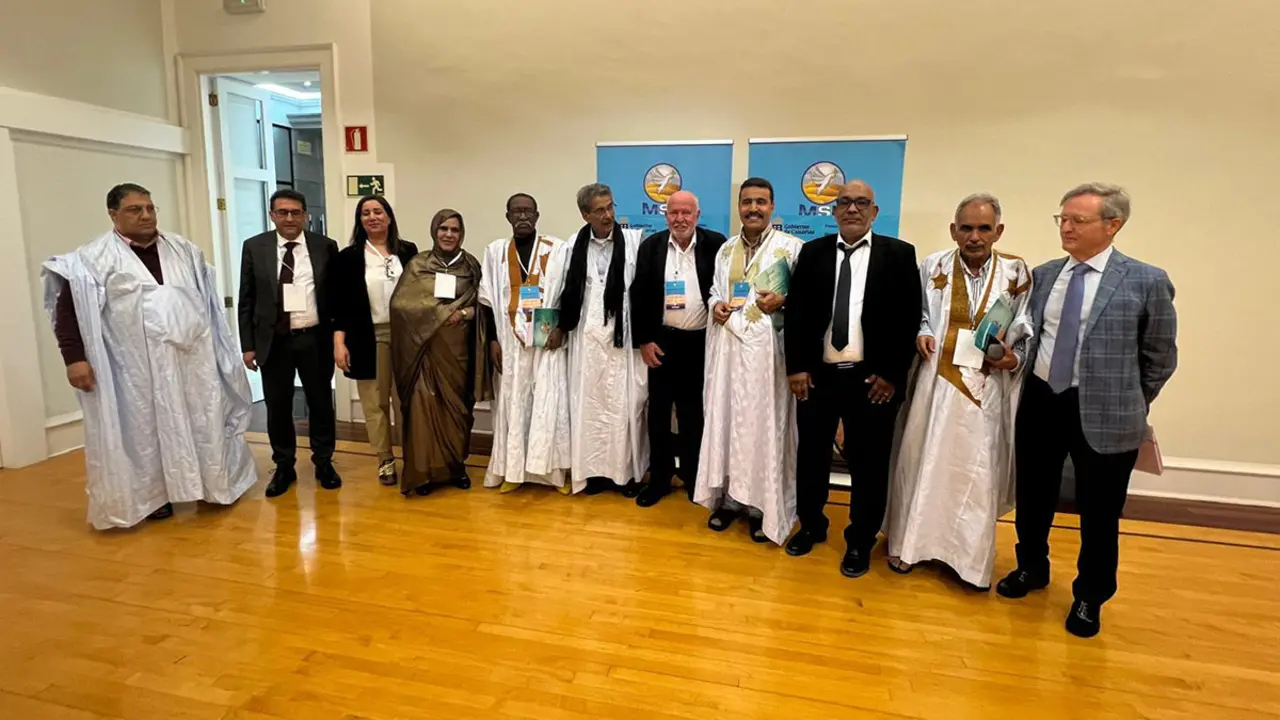
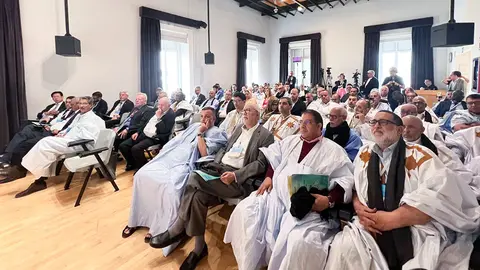
Recently, Dakhla, in Western Sahara, hosted the MD Sahara forum to analyse the mechanisms for implementing regional autonomy in the Sahara under Moroccan sovereignty, in the context of King Mohammed VI's recent invitation to the country's national political bodies, institutions and social forces to participate in the development of a comprehensive vision for the autonomy initiative in the Sahara. In addition, the MD Sahara Forum commemorated the 50th anniversary of the Green March, a symbol of Morocco's national unity and continental ambition.
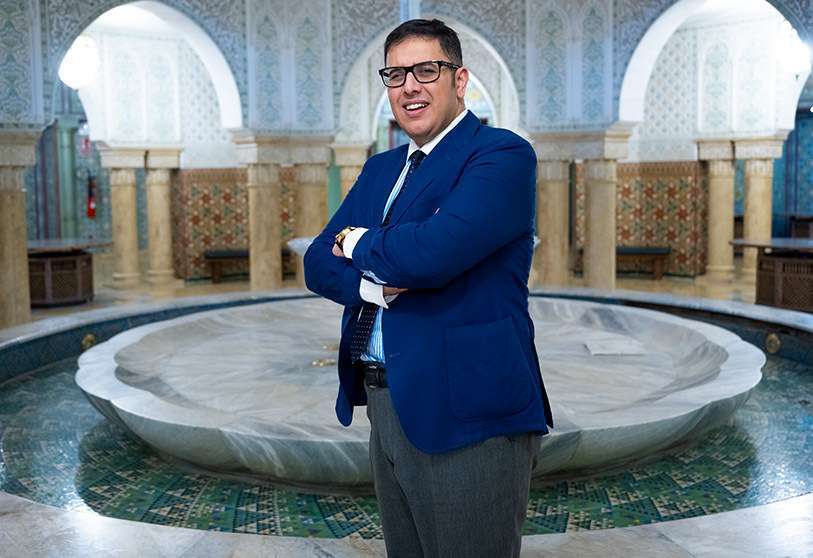
Nourdine Mouati, geopolitical analyst, international cooperation project manager and active member of civil society in Dakhla, spoke to the programme ‘De cara al mundo’ about the key issues in Western Sahara following the United Nations' endorsement of Morocco's autonomy proposal, which had already been supported by more than 100 countries on the international stage, including such important nations as the United States, France, Germany and Spain.
Mr Mouati, United Nations Security Council Resolution 2797, with 11 votes in favour, three abstentions and one country not voting, is clear in calling for the convening of negotiations, where the basis for discussion will be the autonomy plan for the Sahara under Moroccan sovereignty, presented by King Mohammed VI in 2007. What steps need to be taken now?
It was a historic decision. It was also historic because of the abstention of countries that had been supporting Algeria in this artificial conflict, such as Russia and China, but the main issue now, as His Majesty the King said in his speech on 31 October, is to start preparing for the next stages.
The next phases can be summarised as the need to start negotiations on the sole basis of the Moroccan autonomy plan. No other solutions or ideas that the other party, mainly Algeria, may come up with will be negotiated.
Negotiations will begin, as will a process of consultation at the national level, and that consultation process will be directed not only at the inhabitants, who are the majority in the territory, in the southern territories of Morocco, but also at the population of Tindouf, the population that is native to the territory, who are Moroccans, and then the Constitution will also have to be changed and the autonomy plan integrated.
These are the main steps to be taken: negotiations, consultation and also amendments to the Constitution of the Kingdom of Morocco. These are the steps that must be taken. Several countries at the international level insisted that this is the only realistic and viable solution and that work must be done on it.
Sometimes other historical aspects are overlooked, and there are two very important issues.
Morocco was the country that introduced this issue, this artificial conflict, to the United Nations in 1963. In other words, we believe in the United Nations, we believe in international law, in the international legislative framework, and we are a serious country, which is why it was introduced in 1963. In other words, a decade before the creation of the Polisario Front, this issue was already before the United Nations in order to begin the process of decolonisation of this territory, which is of Moroccan origin.
Furthermore, Morocco was the country that, in 1975, approached the International Court of Justice to clarify that this territory, before Spanish colonisation, was under Moroccan sovereignty, and this is implicitly stated in the 1975 ruling of the International Court of Justice, which said that it was not a no man's land, but that there were very important ties between the tribes of southern Morocco and the Sultan of Morocco.
In short, we are entering a very important stage, a stage to resolve this conflict that has lasted for many years, more than 50 years, which has caused so many victims and so much pain, and it is time, as the international powers have understood, to resolve this conflict on the serious basis of the autonomy plan. It should also be emphasised that the autonomy plan was not invented by Morocco, but was the result of a process of consultation with the population of southern Morocco that began in 2004.
In other words, the autonomy plan itself is the result of consultation with the main tribes of southern Morocco, which represent the majority of the population of what they call Western Sahara. And this is evident in the text: it is a very ambitious autonomy plan that guarantees all rights, both political and other rights of access to public services, and the ability to exercise their economic rights, as these are included in the text, and it is the only basis for negotiation.
Mr Mouati, we were going to get to that. The intention expressed by the King of Morocco at that meeting of his advisers with political and social representatives is that the content of the autonomy plan should be developed with the participation of Moroccan society.
Yes, as was already the case in its inception in 2004, this process of consultation began with all the representatives of the tribes of southern Morocco, with the political parties of Morocco and also with civil society. And it is a very ambitious plan, a plan which, I insist, is realistic, has been agreed upon with the local population of the southern regions of Morocco, and which promotes democratic management at the level of these southern provinces of Morocco, granting them legislative powers, that is, an autonomous parliament, executive powers, a regional government and even an autonomous judiciary. I believe that this is the most advanced framework that can be achieved within the framework of Morocco's sovereignty, which will obviously retain aspects related to the protection of national sovereignty against external threats.

It is a proposal that moves the people. Let us now hope that the United Nations special envoy will convene the negotiating table as soon as possible and that Algeria, the Polisario Front, and even, I would dare to say, other Sahrawi representatives, such as the Movement Saharawi for Peace, will participate. Another point addressed in the Moroccan king's speech on the same day as the 31 October resolution is the return of the Sahrawis who are now in the Tindouf camps. A return that requires adjustments to be made within the tribes.
Yes, exactly. One thing must be emphasised. There is a speech by His Majesty the King, Hassan II, from 1988, coinciding with the anniversary of the Green March, in which he said that the state was merciful. In other words, since 1988 there have been returnees, people who have escaped from the Tindouf concentration camps controlled by the Algerian military, and since that year, since 1988, hundreds and hundreds of families who were kidnapped and forced to leave the territory in 1975 and later have returned.
Those returnees who are currently in Laayoune, Tarfaya, Guelmim and Dakhla enjoy all the rights they did not have before in the Tindouf camps, and are part of civil society and political power in Dakhla. Among them, for example, in Dakhla and other regions of southern Morocco. An example of this is the president of the Dakhla Regional Council, who is a returnee.
In other words, the right of return has always existed for the inhabitants or those held in the Tindouf camps, and they will also be an important part of the future of the three regions of southern Morocco, as they are now. I would like to emphasise His Majesty's speech, in which he stressed a very important point, that there are neither winners nor losers, and invited them, as his father did in 1968, to return and enjoy the rights and development that southern Morocco is experiencing. I believe this is a very important point.
There is another point in the autonomy plan which also states that there will be a general amnesty. This is a point that I find very recognisable and complicated. I am from southern Morocco, from the Moroccan Sahara, and I am very familiar with the political, social and tribal reality of southern Morocco.
The general amnesty is going to be a complicated issue. There are many leaders of the Polisario Front, an organisation that many countries classify as terrorist, who have the blood of hundreds of victims from southern Morocco on their hands. And the families of the victims continue to demand justice and reparation.
I think we need to take into account, and very seriously, the opinion of the victims of the Polisario Front, of the people who have suffered kidnappings, murders, attacks... What are we going to do with them? And the tribes are emphasising this. That is the most critical point, I would say, of the autonomy plan. The right of victims and their families to be compensated and to have justice. That is the only point that I see as complicated.
Otherwise, in southern Morocco and in Dakhla, for example, people enjoy all their political and economic rights and live well, unlike in the Tindouf camps, where people are held in very deplorable conditions.

Without a doubt, every day we return to Dakhla – I have been there about eight times this year – we see that the city and the region are improving day by day. Another point in the speech is reconciliation with Algeria. Is this reconciliation possible? Can Algeria yield to pressure or interests or to the current situation on the international stage and what has happened at the United Nations in order to restore relations with Morocco?
Morocco has always reached out to Algeria, and the King of Morocco, in all his speeches, has reached out to the Algerian regime. The problem is that, unfortunately, our neighbours and brothers to the east are governed by a military oligarchy that understands no language other than that of hostility and belligerence. I believe that the US administration has made it clear, Donald Trump has made it clear through his special envoy for the MENA region: Algeria must return to the negotiating table, it is an essential part of this artificial conflict, and it must accept what the countries of the world decide.
In other words, the decisions of the United Nations also involve Algeria, and Algeria must be involved in this process. But Algeria, as we well know, is not interested in the autonomy plan, because they also have a serious problem that is not artificial, which is the problem of self-determination for the Kabyle people of the Amazigh in northern Algeria, who have been demanding their independence and statehood for centuries, even before French colonisation. And they know that the Moroccan autonomy plan is going to be a very complicated issue to manage internally.
And then Algeria has spent millions of dollars that it could have allocated to its development on financing a guerrilla group of murderers, if you'll pardon my language, of thugs, to maintain a conflict and divert the attention of its local population. It is time, as the US Administration has said, for Algeria to accept the reality of the situation and stop being a rogue state, and to work with the international powers to find a solution to this problem. It is time to do so, and Morocco has reached out.
In Morocco, we consider the Algerians to be a brother people, even more so now that we are on the eve of the Africa Cup of Nations. All levels of the Moroccan government have welcomed Algerian football fans and the Algerian national team, which is going to play several football matches.
Algeria, unfortunately, has this military oligarchy, the political system in Algeria is not democratic, and therefore it is up to the Algerian people to change things.
I am very pessimistic about Algeria's opinion, and this has been demonstrated in recent days. Algeria continues to insist on an artificial conflict that they have financed, that they have supported, and that has also had, let us not forget, Spanish victims, more than 350 Spaniards murdered by the Polisario Front. Those victims also demand justice and reparation, and Algeria has a hand in this.
Algeria supports the Polisario, and it also supported ETA, let us not forget, and I believe that this is the message that must be conveyed to the Spanish public.

The Trump administration said it hoped to resolve the problem between Algeria and Morocco in 60 days. Let us see if that is possible. We should also analyse and, above all, spread the word that the Sahara is part of Morocco's global strategy. It is related to Atlantic initiatives, regional development policy, within a dynamic of stability and prosperity, not only for the Sahara and Morocco, but also for the whole of North Africa and the Mediterranean, I would say.
Yes, Morocco is an open country, a serious country, which works at an international level and also strives for prosperity and to guarantee peace in various regions, including the Sahel region. That is why the Atlantic strategy is aimed at ensuring prosperity throughout this sensitive territory, which is the Sahel or sub-Saharan Africa, And there, the regions of southern Morocco, mainly in the Dakhla region, play a very important role, because it is our extension or our territory of contact with sister countries such as the Sahel countries or Mauritania, and that is where, for example, the gas pipeline that will link Morocco with several countries, mainly Nigeria, will pass.
A logistics platform open to all countries in the area, especially the Sahel countries, has also been proposed there. Morocco has this vision of opening up a liberal economy that encourages investment and prosperity, because that is the most important thing. We must avoid entering into conflicts, we must avoid encouraging terrorism, and how do we do that? Through social and economic measures, by supporting development, so that young people, both in the Sahel and other regions of Africa, have access to development opportunities.
Morocco has understood this very well. Morocco is the leading player in development cooperation, the leading African player on the entire continent, financing cooperation projects across the continent through the Moroccan Agency for International Cooperation. And I believe that the initiatives promoted by His Majesty King Mohammed VI, such as the Atlantic initiative, which is based in Dakhla, with the Dakhla Atlantic port and free zone, open to all countries in the area and mainly to the countries of the Sahel, will make it possible to create this space of shared prosperity. We hope that the Algerian Government will understand this and also join these initiatives.
This is the only way to guarantee peace and prosperity throughout this region and in other affected regions, such as the Mediterranean or Europe.

Finally, we are seeing the development of the southern provinces and Dakhla. I believe that, politically, the United Nations resolution is a turning point, especially for those businesspeople who may have had some reservations or misgivings about taking advantage of the enormous opportunities offered by the Sahara under Moroccan sovereignty in terms of investment, development and, above all, the creation of a framework for economic activity and quality employment in the sectors of logistics, tourism, agriculture, fishing, renewable energy, etc., where Spain can play a very important role beyond the comments or interests of the far right or the far left, which are not at all in the interests of either Spain or Morocco, two allies with complementary interests, also backed by the European Union and the United States.
Yes, Spain is expected to act and must not miss this opportunity. The Americans have already allocated more than $1.5 billion to their companies to start investing in the south, in the provinces of the Moroccan Sahara. For example, General Electric already has a million-dollar project for the production of green hydrogen.
France, through the French Development Agency, which is a development bank dependent on the French Government, has already allocated more than 150 million euros. Other countries are already setting up there, from Poland to Hungary, and other very important countries such as Great Britain, for example, have entrepreneurs who are already working on green hydrogen projects. Spanish entrepreneurs are also understanding this dynamic, both in the agricultural and fishing sectors.
There are many Spanish companies and entrepreneurs already working in the territory, and there are also multinationals such as Acciona that already have projects underway. Now the Spanish government, through ICEX and other bodies that promote the internationalisation of companies, must open offices in Laayoune, Dakhla and Esmara and start working, because this is a great opportunity that Spain must not miss. Spain, in the Madrid agreements of 1975, committed itself, first, to decolonising the territory and, second, to participating in its development.
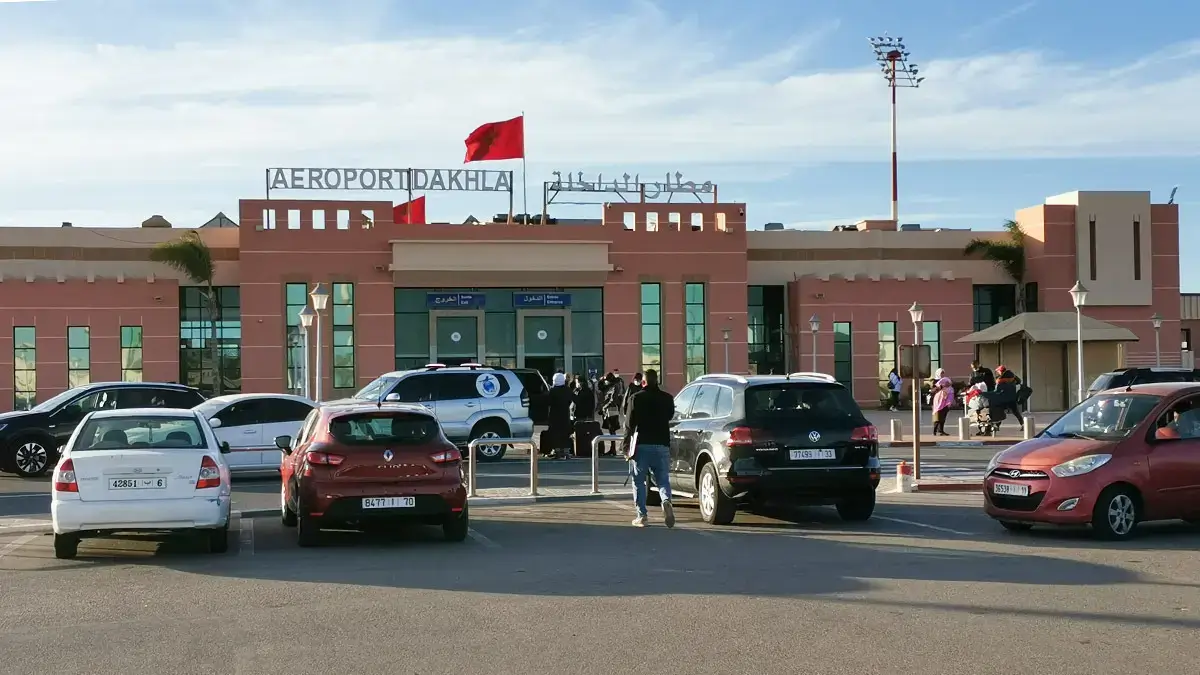
And it is time for the Spanish government to be present and return to the territory in a dignified manner and also in a very open and collaborative way with Morocco, Spain's number one strategic partner in Africa, which is the Kingdom of Morocco. I believe that not only at the business level, but also cultural centres should be opened. We now have a delegation from the Cervantes Institute in Marrakesh in Laayoune, but we also need a Cervantes Institute in Dakhla.
We also need the buildings owned by Spain in the Moroccan Sahara territories to be given attention and to be put to use. And I believe it is time for Spain to return to the Moroccan Sahara and work together with the Moroccan administration for the development of these territories. It is an opportunity that Spain cannot afford to miss.
And that is my message to the Spanish government and to Spanish businesspeople who are already present there. I know of many cases in Dakhla, and we also collaborate with many companies in the renewable energy, fishing and agriculture sectors. It is time for businesspeople to learn about the opportunities offered by the southern regions of Morocco, the regions of the Moroccan Sahara.