Yemen: How are Saudi attacks in southern Yemen hindering attempts to curb Iran's plans?
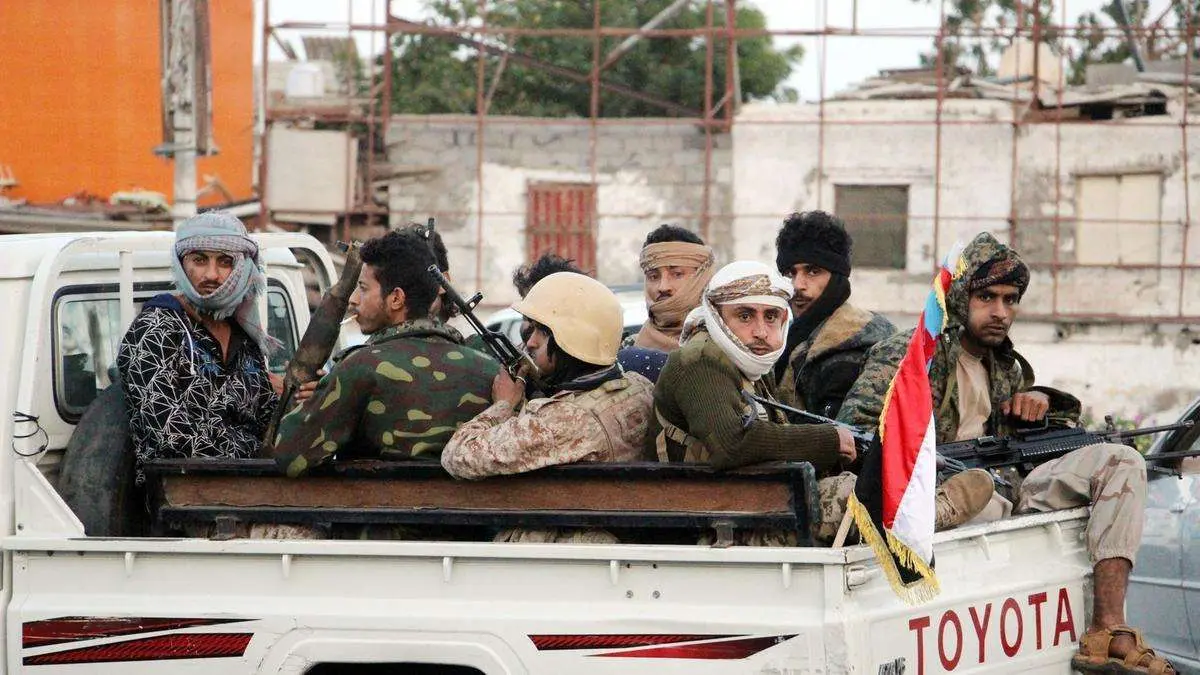
However, this tribal force retreated in the face of the deployment of troops from the Southern Transitional Council (STC), an ally of the internationally recognized government, until Saudi Arabia intervened with airstrikes against those troops, raising questions about the timing of the bombings, the possible connection to oil, and the risks to maritime navigation in one of the most strategic regions for global trade.
For weeks, Yemenis in Hadramaut observed tribal armament operations by an entity called the “Hadramaut Tribal Alliance,” whose main objective was to control oil fields and carry out looting and roadblocks against the forces of the Southern Transitional Council, which in recent years has achieved a high level of stability, thwarted attempts by Houthi militias to execute Iran's plan to divide Yemen, and also fought the terrorist organization Al Qaeda in 2016.
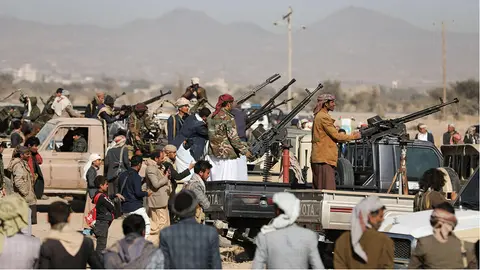
Last Sunday, intense fighting broke out in the mountainous areas of Hadramaut between security support forces—government forces—and tribal fighters belonging to the so-called “Hadramaut Tribal Alliance.” Government forces managed to expel the rebels, and the situation calmed down slightly after intense contacts, but escalated again when Saudi aircraft launched air strikes against southern forces' positions in the Al-Abr area of Hadramaut province.
According to Yemeni media citing military sources, the bombing was intended to “hinder the southern forces, force them to retreat, and prevent them from completing their control over the 23rd Brigade in the Al-Abr area,” a brigade linked to the Muslim Brotherhood organization.
A worrying contradiction
Yemeni analysts describe the Saudi airstrike as a dangerous and unacceptable escalation, especially since it targeted forces that are part of the armed forces allied with the internationally recognized government. Furthermore, it clearly contradicts Saudi Arabia's stated role as a mediator to reduce tension, raising fundamental questions about the duplicity between the political and military approaches to managing the conflict in Hadramaut.
Experts warn that attacking allied forces in southern Yemen is perceived as a sign of disorder in the management of alliances, undermines trust between local and regional partners, and undermines stabilization efforts. Likewise, supporting tribal groups to destabilize the area demonstrates a dangerous pattern of strategic confusion that pushes the region into recurring cycles of chaos.
Other Yemeni experts, quoted by the Ajel News platform, fear that Al Qaeda will exploit the chaos caused by the Saudi-backed tribal uprising and try to take advantage of the security vacuum in the oil-producing areas. This raises serious alarm about the potential effects of instability on the province of Hadramaut and on the regional balance of power.
Experts also point out that attacking southern forces could weaken trust between the internationally backed government and its allies, and pave the way for the Houthis to execute tactical moves in sensitive areas that undermine efforts to counter Iran's plans in Yemen and the Middle East. Any offensive against the south, they say, is a “betrayal of the national partnership” and serves the interests of the Houthis and the Muslim Brotherhood.
Intelligence information published by the Chinese agency Xinhua indicates that some tribal factions have secretly coordinated with elements linked to Al Qaeda in the Arabian Peninsula to destabilize Hadramaut and undermine the government's allied southern forces.
What most concerns the experts cited by the same platform is that recent events in Hadramaut reveal Saudi Arabia's limited ability to implement a coherent plan to reduce tensions, which weakens the chances of moving to a comprehensive political process and further complicates the security landscape in the strategic Hadramaut Valley.
The significance of the timing
A report in The New York Times states that the relative political stability in Yemen is on the verge of collapse, making the country's immediate future uncertain. The newspaper also notes statements by Amr Al-Beidh, special envoy of the president of the Southern Transitional Council for foreign affairs, who said that the Council is consulting with Yemeni and international partners on launching a coordinated ground operation against the Houthis.
Al-Beidh confirmed to the US newspaper that the Council made the decision to deploy southern forces after the so-called “Hadramaut Tribal Alliance” launched a military uprising at important oil sites. “We are acting because the Hadramaut Valley has become a hub for smuggling terrorist cells—Al Qaeda—and figures linked to the Houthis, who transport weapons, money, and fighters without sufficient oversight,” he said.
He indicated that the CTS seeks to “stabilize the oil-producing areas in Hadramaut,” stressing that restoring security in these areas is essential not only for local stability, but also for energy security and for the maritime shipping routes connecting the Arabian Sea with the Red Sea and the Suez Canal, the main route between Asia and Europe.
On the significance of the moment, expert Farea Al-Muslimi of the London-based think tank Chatham House says that the Houthis are the main beneficiaries of what is happening in the south, noting that “the Houthis are concerned that a unified force has finally emerged in the south.”
Reuters explains that the “Yemeni Tribal Alliance” is a tribal formation known for its opposition to the Southern Transitional Council and seeks to establish self-government in the province—a back door to the division of Yemen—following an approach similar to that of the Houthis and Al Qaeda. It currently has a military force in several areas of Hadramaut that is not under the control of the Ministry of Defense.
Last January, tribal fighters linked to Saudi Arabia seized oil fields in the interior of the province, cut off supplies to the government, and demanded a larger share of Yemen's oil wealth. This provides another explanation for the repeated armed actions in an oil-rich area that is strategically key to global trade.
The increase in armed tribal conflict in Hadramaut poses a direct threat to one of the most important maritime routes for global trade and energy. Disruption of oil ports or export routes in the Arabian Sea could raise maritime insurance costs and affect the flow of up to 3.8 million barrels of oil per day through Bab al-Mandeb and the Suez Canal, a key corridor between Asia and Europe. In addition, any expansion of the conflict by the Saudi-backed “Hadramaut Tribal Alliance” would increase the risks to global supply chains.
Analysts fear that Hadramaut could become a scene of armed tribal conflict that would pose a direct threat to global trade, especially as the escalation of the “Hadramaut Tribal Alliance,” roadblocks, and assaults on oil facilities pose a serious risk to the Masila, Attouf, and Khlakout fields, Yemen's most important oil fields and closely linked to international supply chains.
It should be noted that the number of companies—both local and global—operating in oil investments in Yemen reaches 88; there are 114 oil fields in production and some 1,585 oil-producing wells. Crude oil reserves are estimated at around 50 billion barrels, according to a previous report published by the media and research foundation “The Eighth Day.”