2025 International Journalism Awards: for freedom, social commitment and the right to information
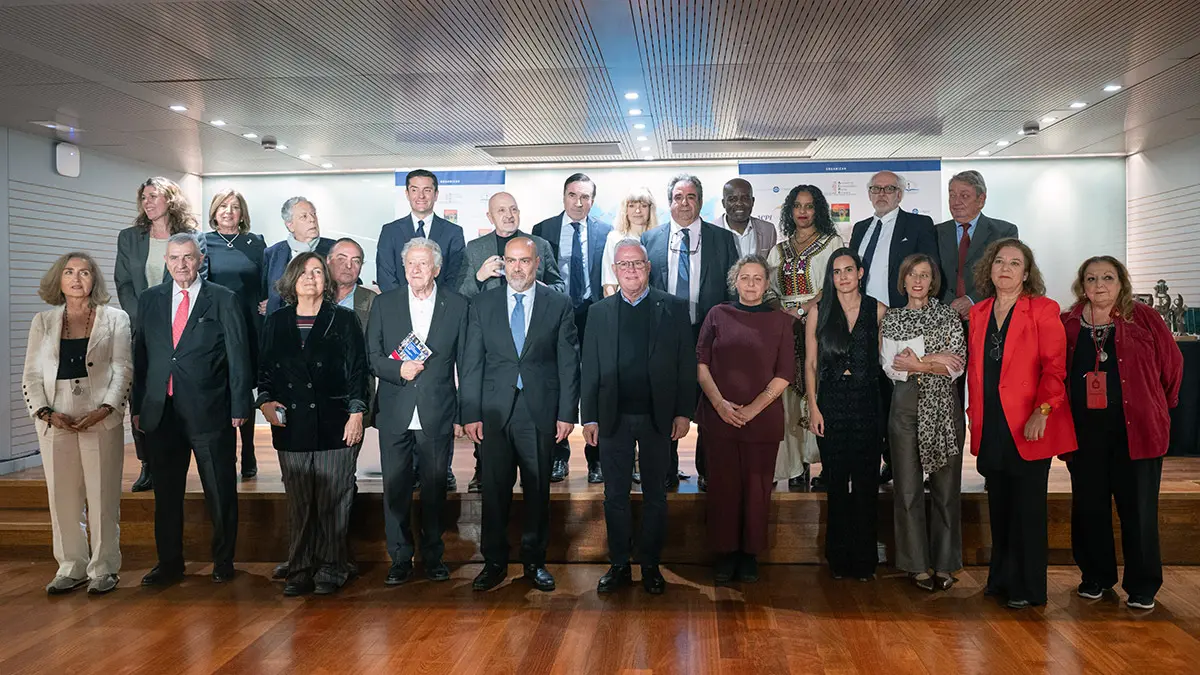
The 2025 International Journalism Awards, presented by the Association of Foreign Press Correspondents (ACPE), the International Press Club (CIP), the Association of Arab Journalists and Writers in Spain (APEAE) and the African Press Association (APA), were presented on Thursday, 30 October, at the Cecilio Rodríguez Gardens Pavilion in Madrid's Retiro Park.
As the event's presenter, Telemadrid journalist Cristina Ortega, pointed out, the journalism profession seeks to ‘help democracy’ and ‘promote values’, although it is sometimes a ‘sacrificial and dangerous’ profession.
The Mayor of Madrid, José Luis Martínez Almeida, apologised for his absence due to other commitments, but wanted to leave a message of support for the awards, demonstrated in practice with institutional backing and the provision of such a ‘traditional and representative’ venue as the Cecilio Rodríguez Gardens Pavilion.
After the formal opening ceremony, the Mayor of Salou, Pere Granados, took the floor, as the City Council he represents was promoting the event together with Banco Santander, the European University, Madrid City Council, 959 Ibéricos, Territorio Tarón Rioja Alta and Atalayar entre dos orillas. Pere Granados acknowledged that it was an honour to be at these awards ‘surrounded by so many voices that use journalism as a tool for freedom, truth and social commitment’.
The mayor sent a ‘very special greeting from Salou, a land open to the sea and the world, where we believe in the power of communication to build bridges and bring cultures closer together by promoting understanding’.
‘Journalism requires courage and insight. Reporting is not just about transmitting data, but also providing context and humanity, and those of you here know what we are talking about. Without free journalism, there is no full citizenship, and without dialogue, there is no progress,’ said the mayor of the Catalan town.
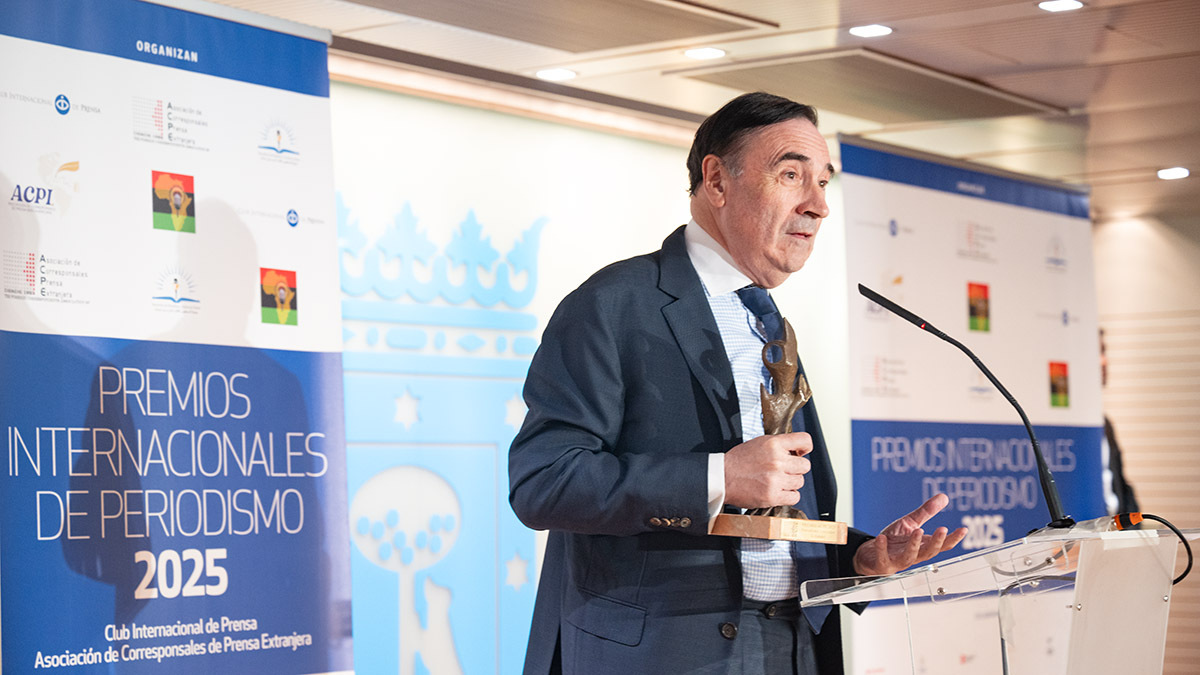
The awards ceremony began with the awards from the Foreign Press Correspondents' Association, chaired by Armelle Pape Van Dyck, who presented the 2025 Journalism Award to El Español, an independent digital newspaper founded in 2015 and born in Madrid, which has positioned itself as the audience leader in the generalist digital press in Spain, with an editorial line described as ‘moderate and high-quality’ under the direction of Pedro J. Ramírez. Pedro J. Ramírez himself collected the award from Armelle Pape Van Dyck, who defended the independence of the journalistic profession and criticised the abuses of power in attempting to control it.
Pedro J. Ramírez noted that this is a ‘collective award to El Español’, a media outlet that has created 250 jobs over the last decade, most of them journalists, making it the ‘leader’ in this area in the Spanish press. All this after a 45-year career directing national newspapers such as Diario 16, El Mundo and now El Español.
He also denounced the attack suffered in Pamplona by a reporter for El Español, José Ismael Martínez, who had to be hospitalised while covering the political tension surrounding the announcement of an event by a far-right activist at the University of Navarra, which was disrupted by far-left activists.
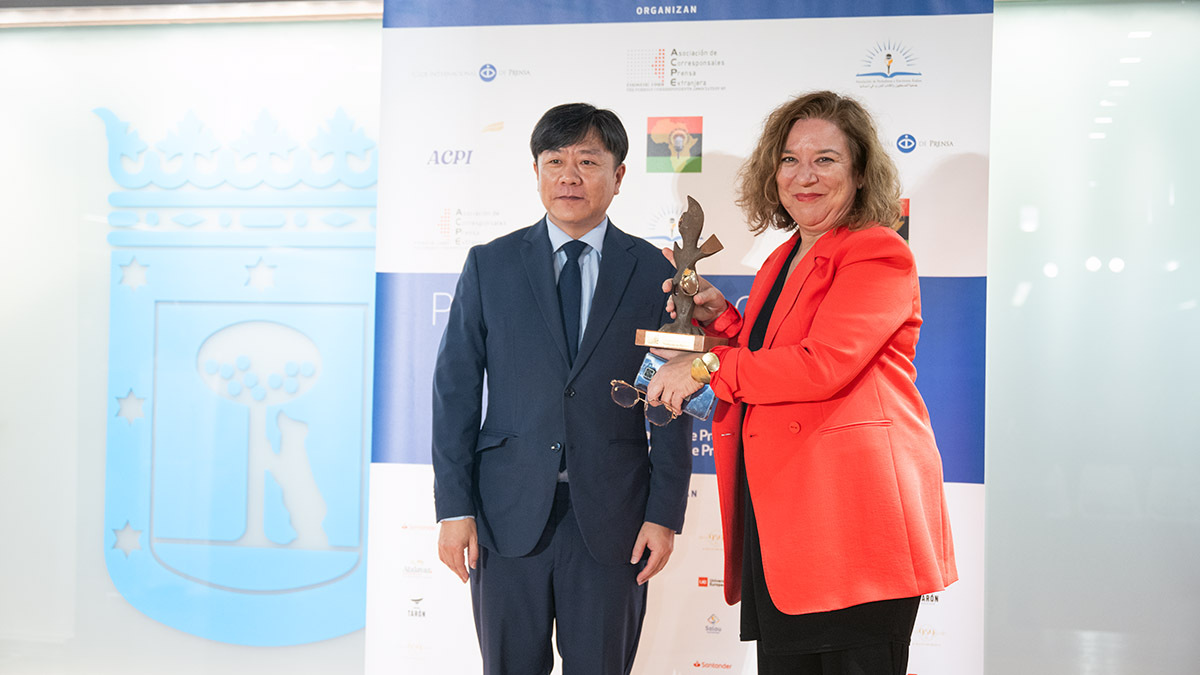
The ACPE Culture Award went to El Teatro de la Zarzuela, a meeting point for different generations of audiences and all those who are interested in Hispanic culture. In this venue, where Spanish lyrical music has always been cultivated, the best works in its repertoire continue to be sung and heard, and what is now the zarzuela of the 21st century is premiered.
Weixian Wang, member of the ACPE Board of Directors, presented the award to Isamay Benavente, director of the Teatro de la Zarzuela, who expressed her gratitude for the recognition received because ‘zarzuela is our lyrical genre and the one that best defines us as Spaniards’. ‘We need allies so that the world can get to know us, which is why this award is so important,’ she said.
The ACPE Sport and Achievement Award went to the Spanish Paralympic Team, which represented Spain at the 2024 Paralympic Games in Paris with a delegation of 259 people, winning a total of 39 medals, six of them gold.
Carmen Chamorro García, member of the ACPE Board of Directors, presented the award to Alba García, world champion in long jump for the blind, and Alberto Durán, head of the Spanish Paralympic Committee. The Paralympic athlete wanted to express her gratitude on behalf of the entire Spanish delegation and emphasised the role of the press in giving ‘visibility to Paralympic sport’. ‘Thanks to journalists who are increasingly well informed, we have greater visibility,’ she said, also highlighting that ‘the role of the press is to normalise stories about normal people’.
For his part, Alberto Durán stressed that the press is also part of the ‘Paralympic family’ and urged people to talk about the Paralympic world because there are stories that ‘deserve to be told’.
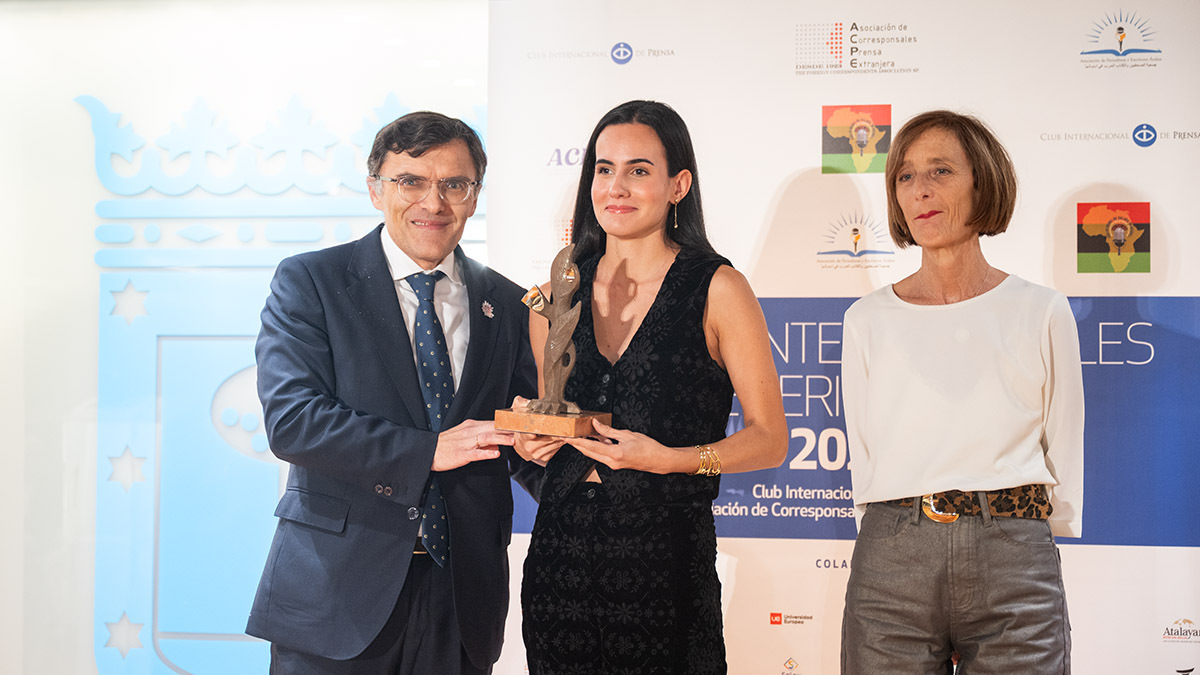
The ACPE Tourism Award went to Guía Repsol, which since 1979 has been dedicated to observing the trends and habits of diners in order to discover the projects that best suit them, highlighting the richness of Spanish cuisine.
Enrique Sancho Blanes, secretary of the ACPE Board of Directors, presented the award to María Ritter, director of Guía Repsol, who highlighted her publication as very enjoyable because it contains a lot of positive news about tourism and gastronomy, sectors that are currently experiencing a ‘brilliant moment’. ‘Being a spokesperson for this process is wonderful and a privilege,’ she added.
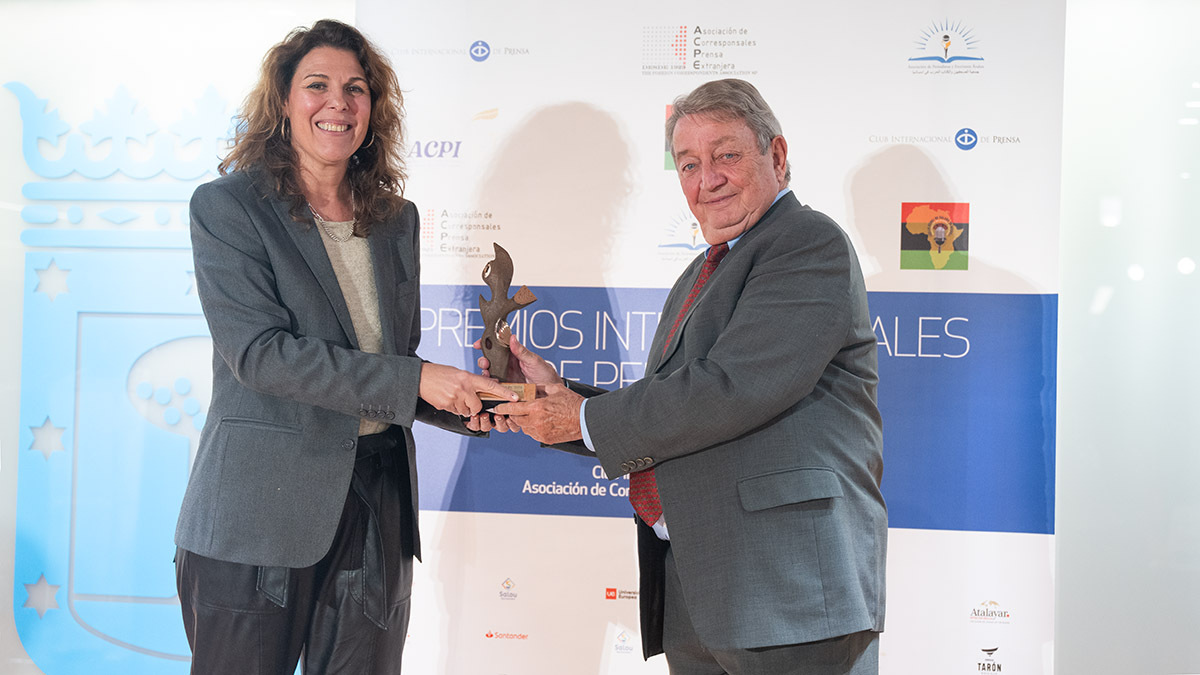
Next came the awards from the International Press Club (CIP), chaired by Javier Fernández Arribas, director of Atalayar entre dos orillas. Javier Fernández Arribas expressed his ‘enormous satisfaction and gratitude’ to Madrid City Council for providing the Cecilio Rodríguez Gardens, highlighting the full support of Mayor José Luis Martínez Almeida. The director of Atalayar indicated that journalists must ‘seek fairness by avoiding confrontation’ and recalled the ‘need to defend democracy and freedom’ with the journalistic profession, which is more necessary than ever in the face of the ‘avalanche of rubbish on social media and other platforms’.
The International Press Club awarded David Alandete the Best Spanish Correspondent Award. Salou Playa de Europa, for his brilliant multimedia coverage in Washington, before and after Donald Trump's arrival at the White House, for the ABC newspaper, the COPE radio station and Telemadrid. With more than twenty years of experience, he is a specialist in international politics and disinformation, has reported from conflict zones such as Syria and Afghanistan, and has interviewed numerous world leaders.
The mayor of Salou, Pere Granados, presented the award to David Alandete, who said he does not believe in journalism as an expression of political, social or cultural will. ‘Journalists cannot go to demonstrations, they cannot be active in political parties, they cannot sign manifestos,’ Alandete said. The Valencian journalist pointed out that the situation of the press in Spain is poor due to attacks by various powers and indicated that the fact that there are presidents hiding from the press or calling journalists ‘unpatriotic’ is certainly alarming.
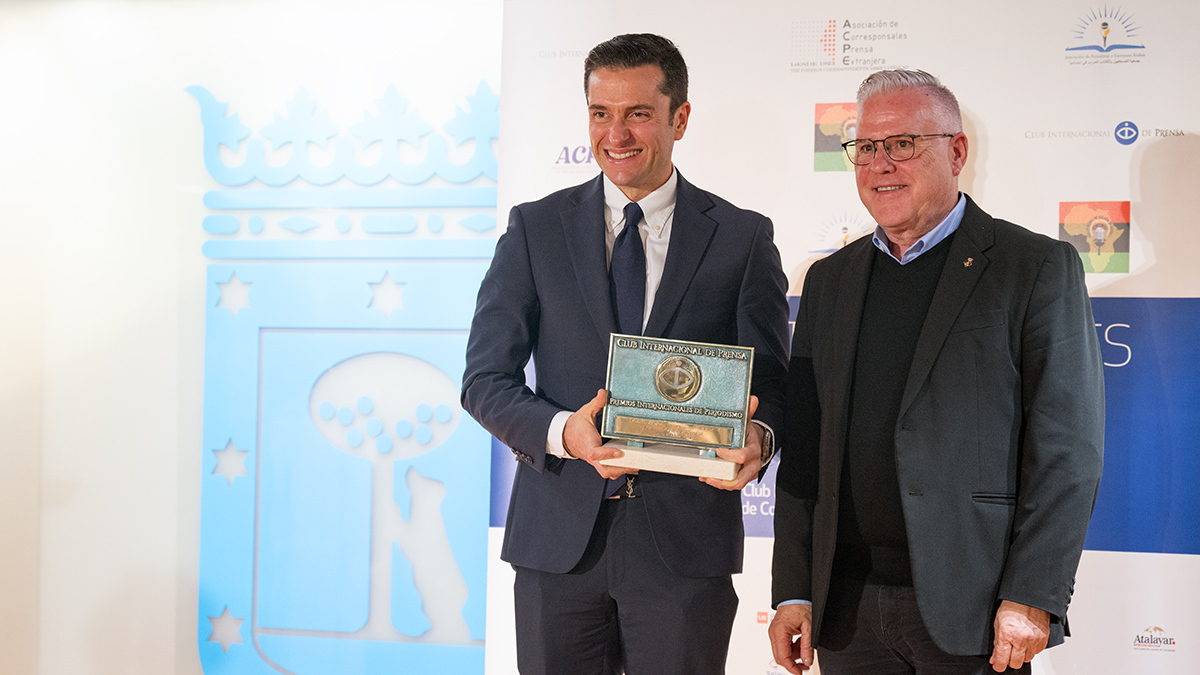
The Journalism at the Limit Award from the European University went to Sebastián Álvaro, director of the Radio Televisión Española programme ‘Al filo de lo imposible’ (On the Edge of the Impossible), in which he himself has narrated events and phenomena beyond the imaginable, becoming a guide for millions of television viewers who, thanks to his mediation, have had access to knowledge of the most incredible and remote places on the planet.
José María Peredo, professor of Communication and International Relations at the European University of Madrid, presented the award to Sebastián Álvaro himself, who dedicated the recognition first and foremost to his parents, who taught him to act with honesty and equanimity, trying to be ‘good people’. He wanted to remember all his colleagues, those who are here and those who are no longer with us. ‘In 30 years of Al filo de lo imposible, I lost 33 close friends,’ he said, working with ‘people who believed in a dream and made it possible.’ Sebastián Álvaro stressed that Al filo de lo imposible was a direct result of the freedom that Spain experienced after the Constitution, with a society that was freer and more cultured than it had ever been. He highlighted the ‘spirit of freedom and curiosity that transformed Spanish society and shaped the unique story of my life.’ ‘I was able to do my work and make the Al filo de lo imposible documentaries with complete freedom thanks to the freest RTVE in history,’ he said.
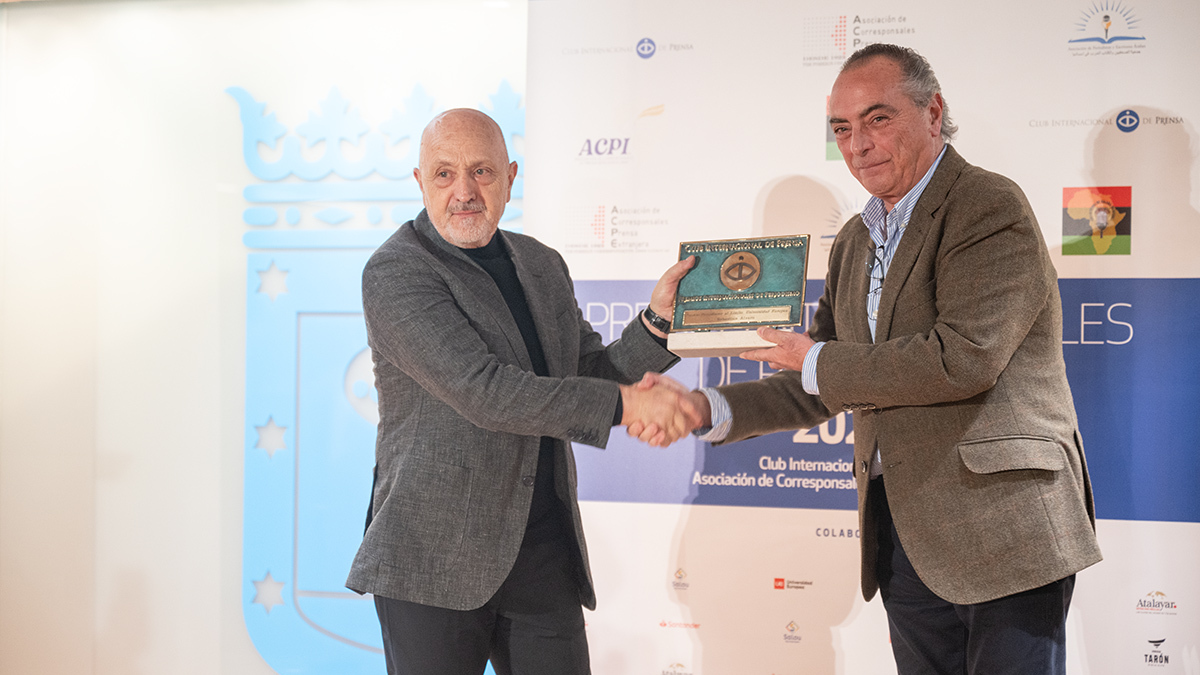
The Association of European Journalists received the International Impact Award for its tireless work over almost half a century in favour of the construction of Europe, also promoting the work of numerous Spanish and foreign journalists inside and outside Spain through seminars, exhibitions, debates, books and the awards it organises every year.
Javier Martín Domínguez, former president of the International Press Club, presented the award to Miguel Ángel Aguilar, secretary general of the Association of European Journalists, who recalled how the press was ‘gagged’ during Francisco Franco's dictatorship in Spain, making it essential at that time for ‘someone to defend us, such as foreign correspondents’. Miguel Ángel Aguilar pointed out that ‘the powers that attack the press are political, sporting, religious, economic... and that the first thing those in power want is good press’, which is why they seek to control journalists. ‘Do not desert, freedom must always be defended. Long live the freedom that commits all journalists,’ exclaimed the secretary general of the Association of European Journalists.
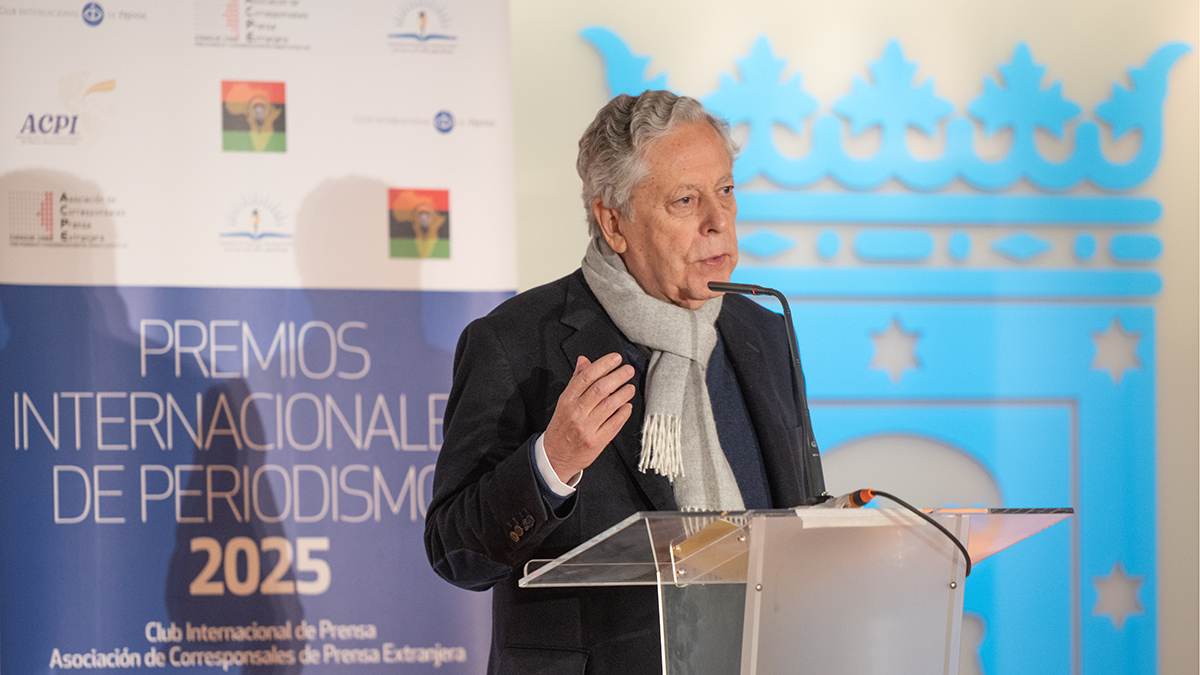
Cécile Thibaud received the Best Foreign Correspondent in Spain Award for her work over more than 24 years in Spain as a correspondent for Les Echos, L'Express, La Tribune de Genève, Sud-Ouest and Planet-Labor. Thibaud also contributes to Challenges, Liaisons Sociales and Fashion Daily-News, among others.
Elisa Loncan, member of the Board of Directors of the International Press Club, presented the award to Cécile Thibaud, who pointed out that, as a correspondent, she has received ‘all kinds of assignments for all kinds of readers’. Cécile Thibaud explained that the journalism profession leads to extraordinary and exciting moments and pointed out that France's view of Spain has changed, as Spain has gone from being ‘Europe's economic weak link’ to being ‘the engine of growth’ at the moment.
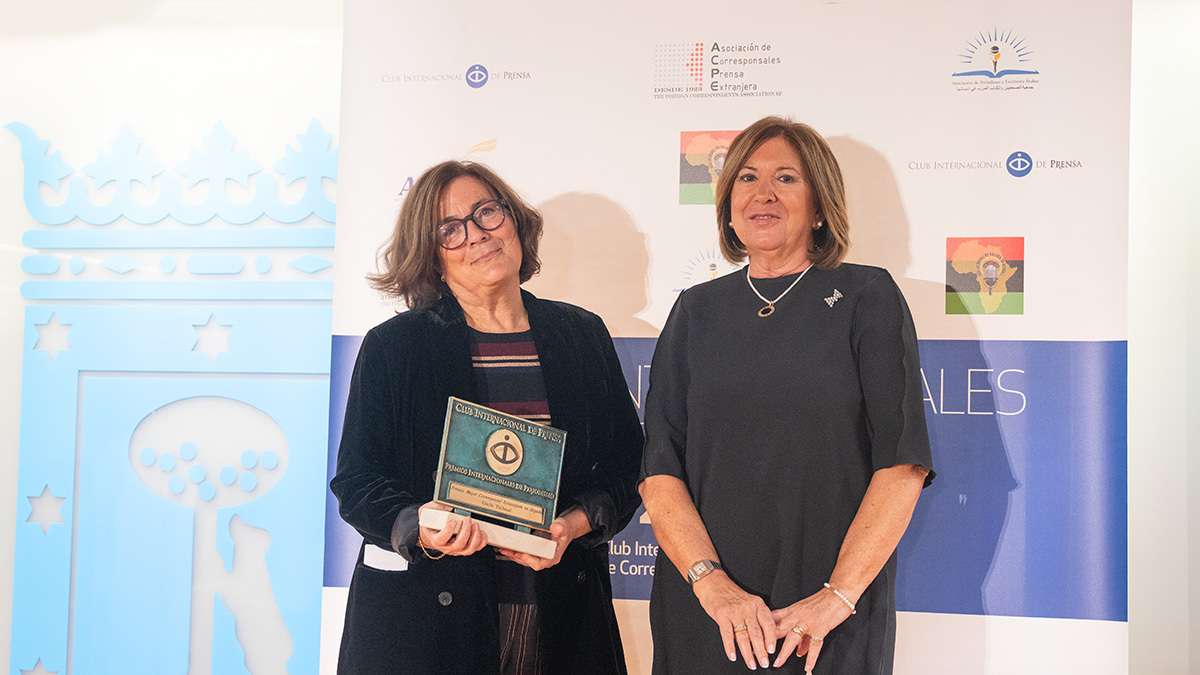
The Documentary Journalism Award went to the documentary ‘Mortal y rosa’, directed by Sonia Tercero Ramiro, with the participation of María España, widow of the writer Francisco Umbral, which glosses over the figure of the master of columnists, as well as novelist, poet, biographer and essayist, who died 18 years ago. It is, in fact, a short film based on the work of the same name by Francisco (Paco) Umbral. This short film commemorates the 50th anniversary of the publication of the novel and was released in May 2025. Umbral's work ‘Mortal y rosa’ is an elegy to his deceased son, in which the author reflects on life, death and grief.
Pedro González, member of the Board of Directors of the International Press Club, presented the award to Sonia Tercero Ramiro, who highlighted the support of the Umbral Foundation and members of her team. ‘Art helps us to understand ourselves better, as in the case of great artists such as Goya or writers and journalists who addressed their own grief in their work,’ said Sonia Tercero Ramiro, who pointed out that the documentary Mortal y rosa about Francisco Umbral teaches us that ‘words heal’. ‘Umbral captured the pain of losing his son, which is only comparable to the tenderness he inspires,’ she explained.
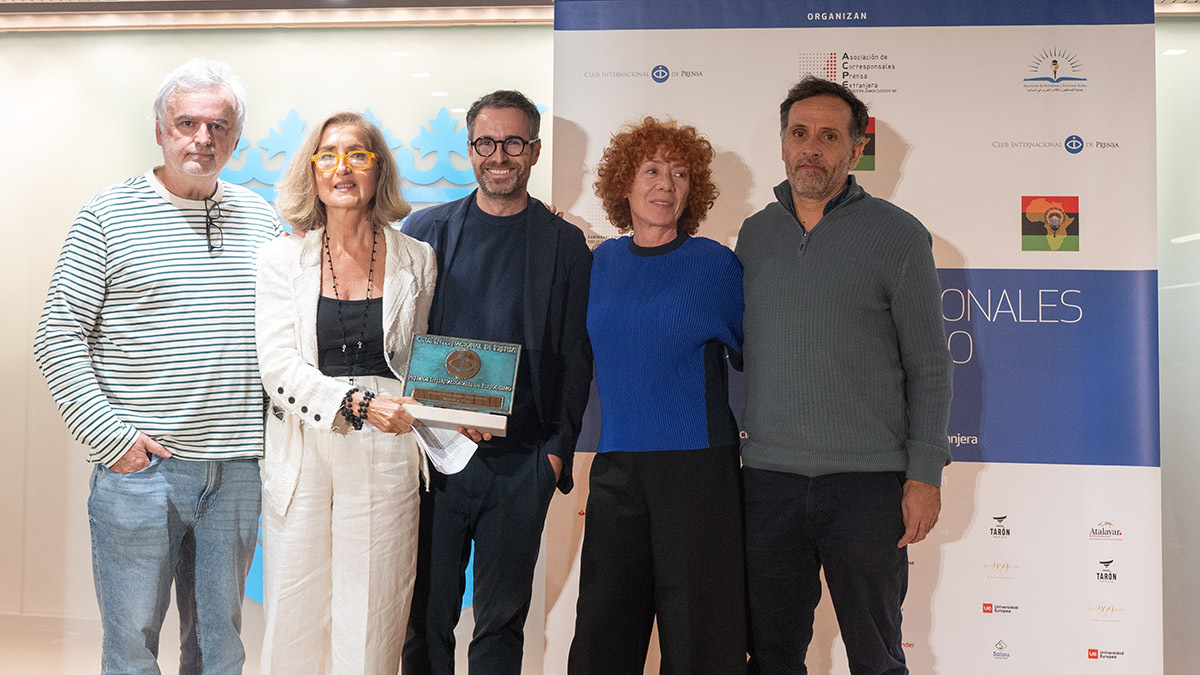
To conclude the International Press Club awards, Antonio Pelayo received the Lifetime Achievement Award for his excellent work as a correspondent in the Vatican for Antena 3, with a long history in this medium since 1990.
A career in which he has accompanied Popes John Paul II, Benedict XVI and Francis on numerous international trips. His work on the death of Pope Francis and his coverage of the Conclave and appointment of the new Pope Leo XIV are particularly noteworthy.
Javier Fernández Arribas, president of the International Press Club, presented the award to Antonio Pelayo, who explained that ‘it is good to be both a priest and a journalist in order to talk about the world we live in.’ He dedicated the award to Pope Francis, who offered him his ‘friendship and closeness.’
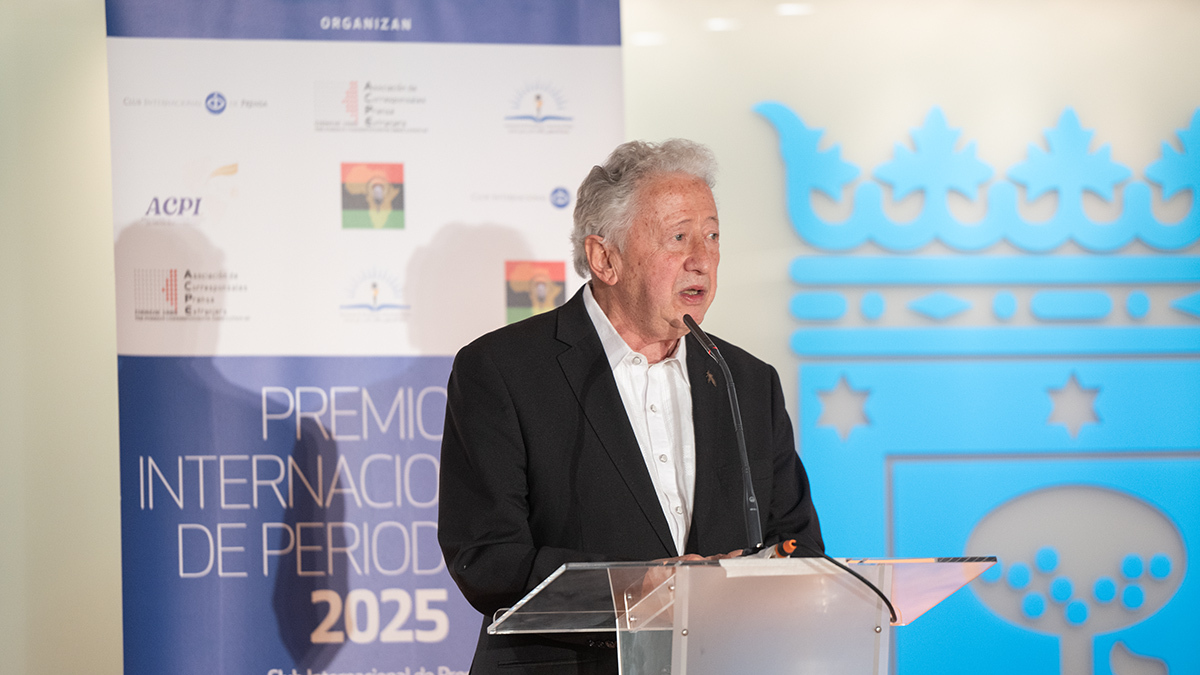
Next came the Award from the Association of Arab Journalists and Writers in Spain, chaired by Tarek Khedr, which went to Médecins Sans Frontières, an international medical and humanitarian organisation that provides vital aid to victims of disasters and conflicts of all kinds in every corner of the world, with special mention of its important role in Gaza.
Tarek Khedr himself presented the award to Paula Gil, director of Médecins Sans Frontières in Spain, who pointed out that they have witnessed how ‘we have been dehumanised’. ‘The Israeli forces humiliate and dehumanise us,’ she said, referring to Nour, head of communications in the Gaza Strip, whose greatest frustration is ‘not being able to tell the stories of all the Gazans who survived the genocide in Gaza carried out by Israel’. Paula Gil said that foreign journalists are not allowed to enter Gaza, nor are Gazans allowed to leave. The head of Médecins Sans Frontières expressed her ‘deepest gratitude’ for the award, ‘in recognition of the silent and persistent work to make voices of suffering and dignity heard’. Paula Gil reported that more than 68,000 people have died in Gaza, including 565 humanitarian workers, 15 colleagues from Médecins Sans Frontières and 250 journalists, as a result of Israeli attacks.
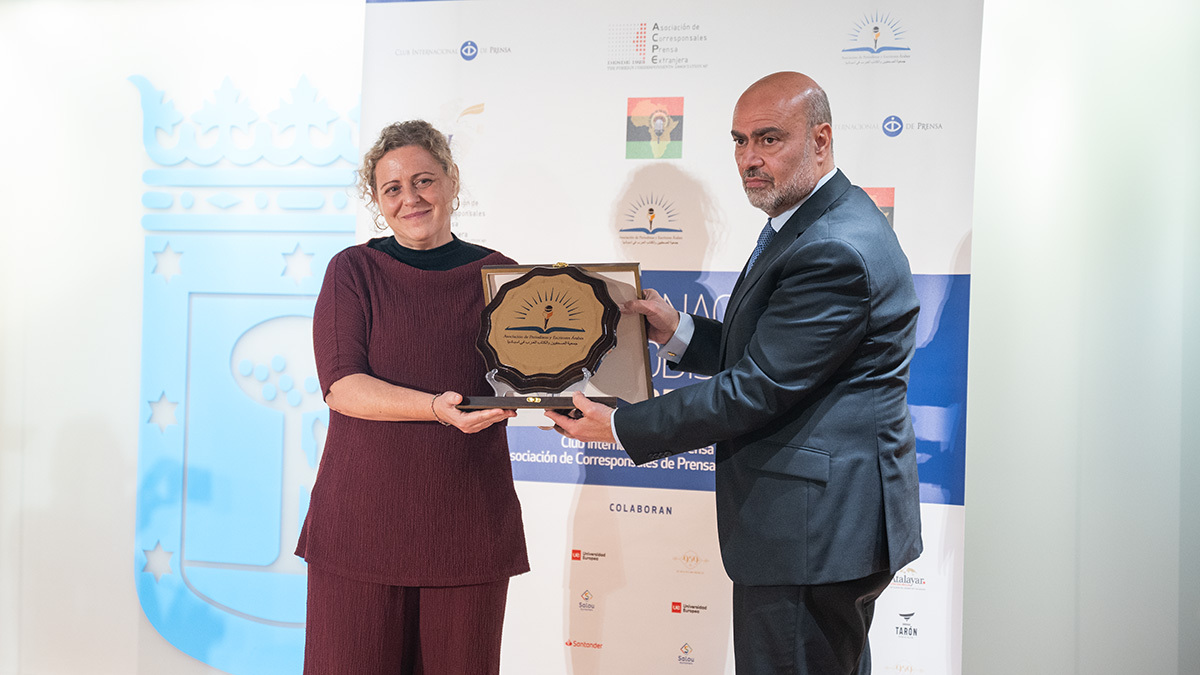
To conclude the ceremony, the African Press Association, chaired by Abuy Nfubea, presented its award in the ‘Africa Positive’ category to Ethiopian Airlines, Ethiopia's flag carrier and one of the largest and most active airlines in Africa.
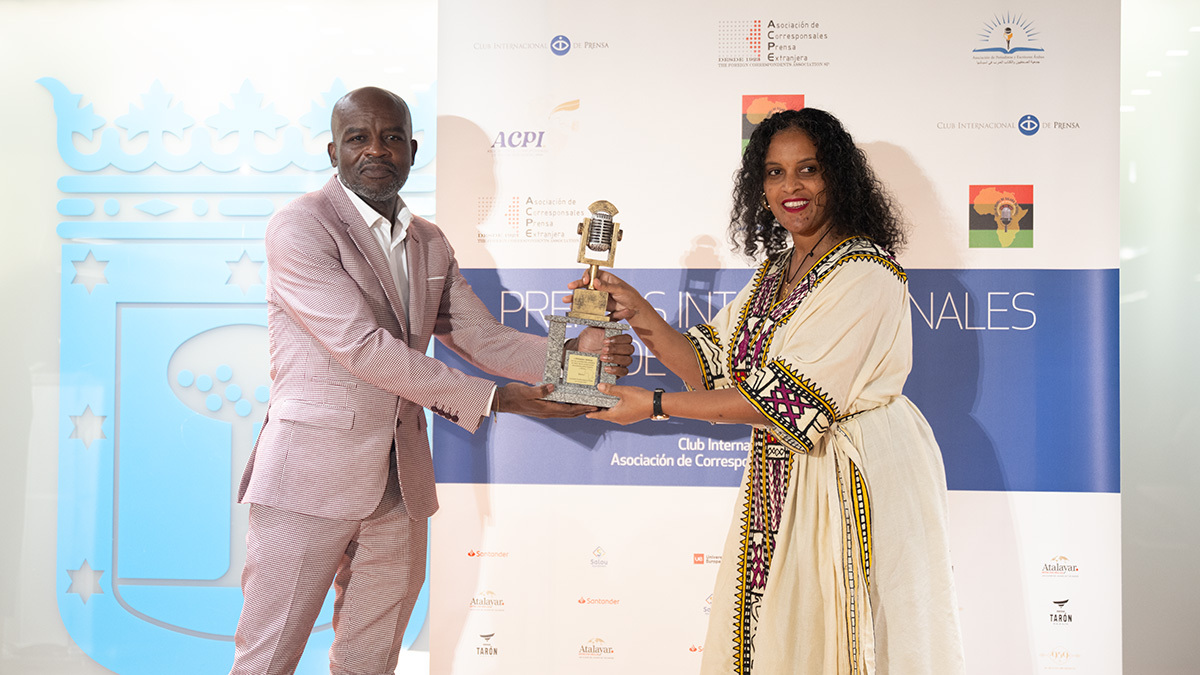
Abuy Nfubea himself presented the award to Meseret Tsegaye, executive director of Ethiopian Airlines in Spain and Portugal, who said that they are a ‘symbol of African achievement’ and who assumed the ‘responsibility’ to achieve more. Meseret Tsegaye also urged journalists to continue to showcase African success.