Goal fest in Saudi Arabia: Barça strikes first and awaits the winner of the derby

- The Super Cup in Saudi Arabia since 2020: agreement and debate
- Revenue, global visibility and the federation model
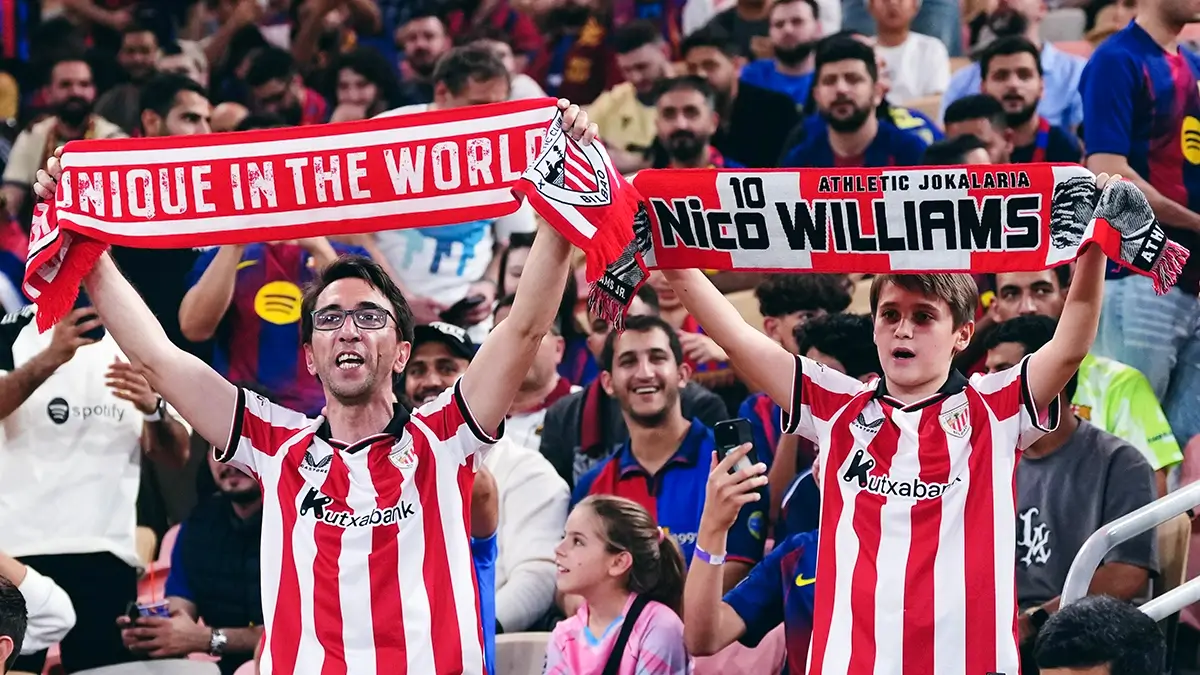
Barcelona qualified for the Super Cup final without any surprises. The Azulgrana team dominated the first half, leaving the match practically decided before half-time, in a tournament that has been a fixture in Saudi Arabia since 2020.
Barça controlled the game from the start with possession, high pressure and quick passes that wore down Athletic. The result was soon reflected on the scoreboard. Ferran Torres scored the first goal in the 21st minute after a defensive lapse. That goal gave the team more confidence and highlighted Athletic's doubts.
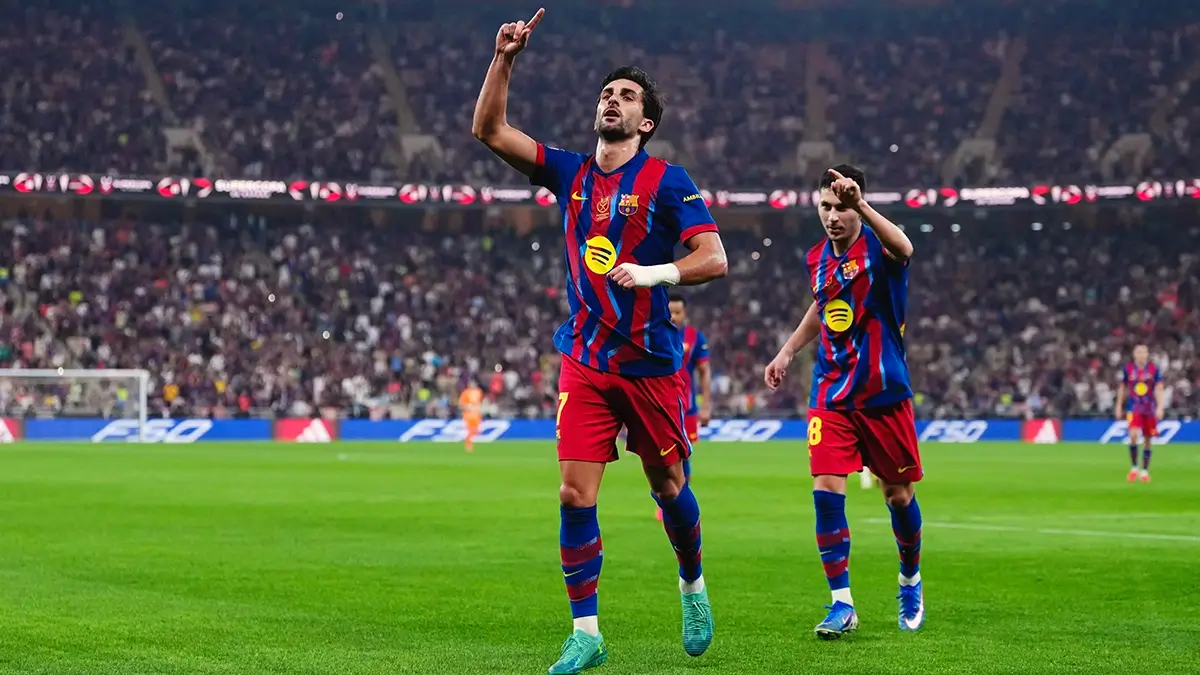
As the minutes passed, Barcelona's superiority became more apparent. Fermín López extended the lead in the 30th minute, appearing from behind to finish off a well-worked move in midfield.
Just three minutes later, Roony Bardghji broke through the defence with a precise run and scored the third, leaving the semi-final all but decided. Just before half-time, Raphinha put the icing on the cake with the fourth goal, finishing off a counter-attack with a shot close to the post. Athletic tried to react, but without creating any real danger.
Barcelona went into the break with a clear advantage and now await the winner of the match between Real Madrid and Atlético. In the second half, the Azulgrana team slowed down the pace of the game, with an eye on Monday's final.

The Super Cup in Saudi Arabia since 2020: agreement and debate
The Spanish Super Cup in Saudi Arabia since 2020 is a fundamental part of the Royal Spanish Football Federation's economic strategy. The agreement with Saudi Arabia generates more revenue than the previous format in Spain, being one of the main sources of funding for the RFEF. This has had a direct impact on the federation's structure and how resources are distributed in Spanish football.
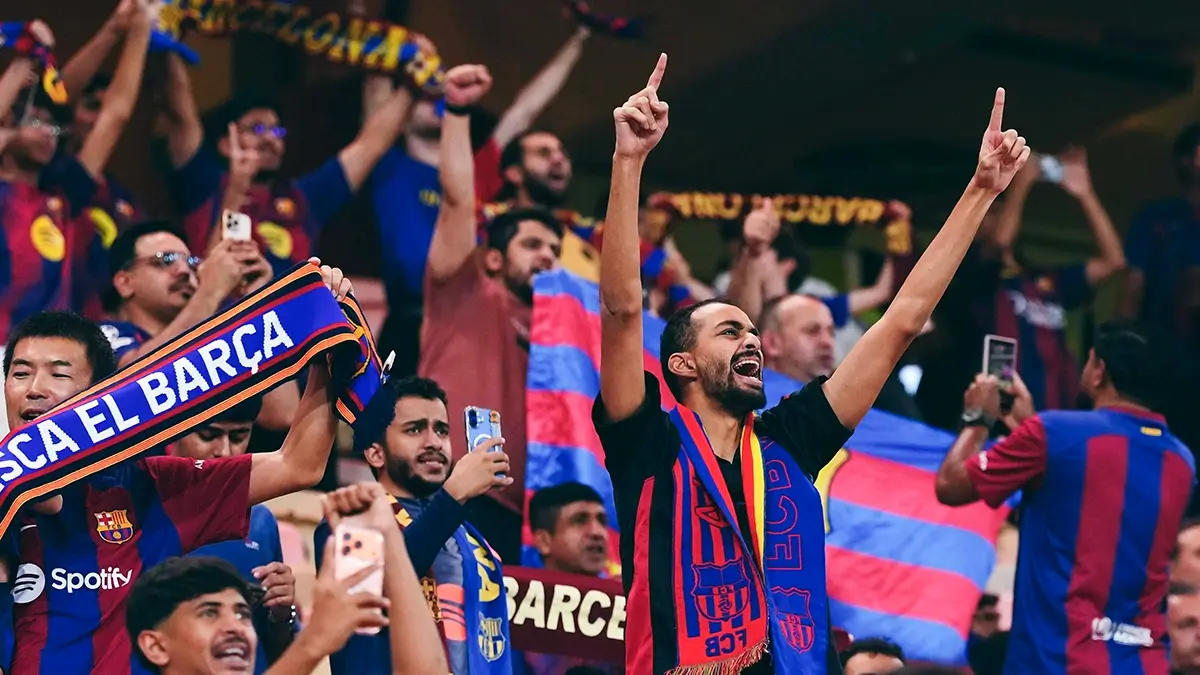
This model, however, is not without controversy. The fact that the tournament is held outside Spain has attracted criticism due to the loss of territorial roots and the political and social context of the host country.
Revenue, global visibility and the federation model
But if we focus purely on the economic aspect, the agreement has allowed the RFEF to invest more and depend less on other, more unstable sources of income. It has also positioned the Super Cup as an international product with greater global visibility, which has reinforced its commercial value and media impact.
In this context, matches such as the semi-final between Barcelona and Athletic not only determine who will play in the final, but are also part of a financial mechanism that underpins much of the federation's current organisational model. Saudi Arabia has established itself as a permanent and strategic venue, where sporting, economic and institutional interests converge, shaping the present and future of Spanish football.