The Dakar Rally continues its demanding course in Saudi Arabia
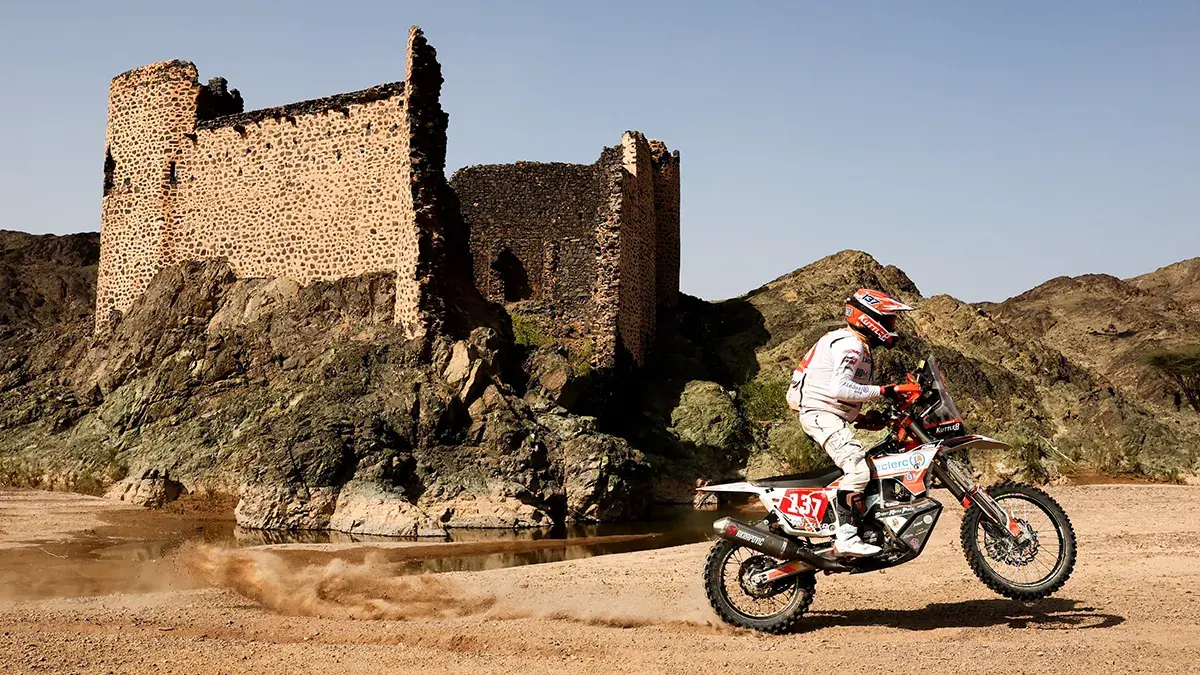
The 48th edition of the Dakar Rally is being held in Saudi Arabia this year, 2026, and is scheduled to take place between 3 and 17 January, with a duration of 14 days of racing. This year's route includes a prologue and 13 competitive stages, covering 8,000 kilometres of demanding and very tough terrain full of sand dunes, rocky roads and exhausting days, completing a circular route that begins and ends in Yanbu.
The seventh edition organised in the Saudi kingdom brought together 787 drivers of 49 nationalities, competing in 421 vehicles of multiple categories. The complete list includes 72 Ultimate cars, 45 trucks, 115 motorcycles, 7 Stock vehicles, 37 Challengers, 41 Side-by-Side vehicles, 75 Classic cars, 22 Classic trucks and six Mission 1,000 motorcycles, as well as one truck in this hybrid category, underscoring the international scope and competitive diversity of the rally.
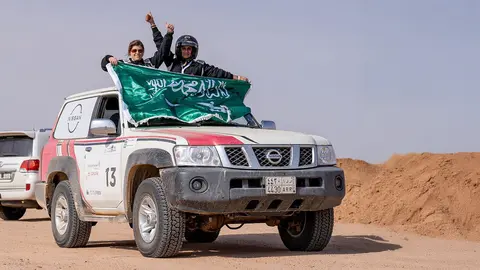
In addition, the new 2026 route has provided a challenge worthy of the prestige of the Dakar Rally, the toughest motor race on the planet. Each Saudi region presents its own pace and demands, rewarding those who can adapt and stay focused during two intense weeks. As the rally unfolds, the diversity of the terrain and the scale of the competition reflect the enduring spirit of the Dakar Rally and Saudi Arabia's increasingly important role as a key venue for what is considered the toughest rally in the world.
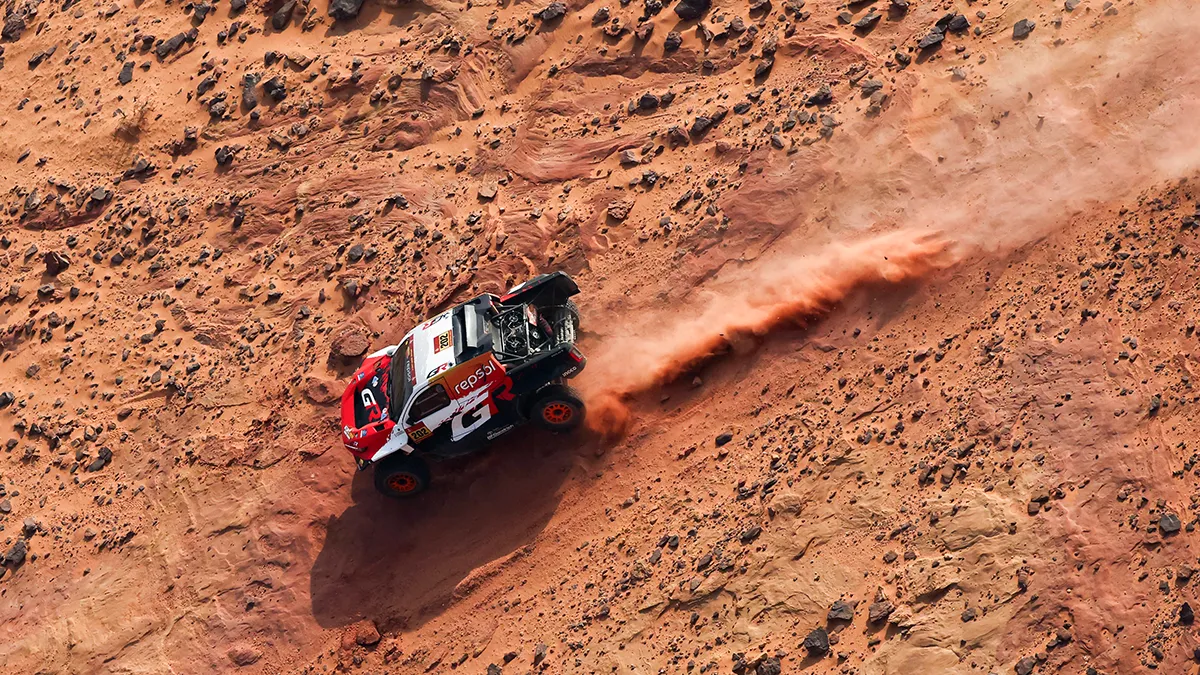
In the main car category, South African driver Henk Lategan of the Toyota Gazoo Racing team currently leads the overall standings, having achieved an uncontested victory in Wednesday's stage ahead of Qatar's Nasser Al-Attiyah, five-time Dakar Rally winner and Dacia Sandriders driver, and Frenchman Sebastian Loeb, Dacia Sandriders, who has fallen to eighth place in the overall standings. Spanish driver Carlos Sáinz, Ford driver and fourth overall, also succumbed to Lategan's dominance on the final day.
In the motorcycle category, Spanish rider Tosha Schareina secured his second consecutive victory and is now the leader of the Dakar, although with the same time as American Ricky Brabec, both riders from the Monster Energy Honda HRC team. It was a tough special stage for Spaniard Edgar Canet, who is still in contention.

Route
The 2026 Dakar Rally consists of a prologue and 13 stages.
- Prologue (Yanbu) - 23 km timed and 75 km liaison (total of 98 km). Already completed.
- Stage 1 (Yanbu - Yanbu) - 305 km timed and 213 km liaison (total of 518 km). Already completed.
- Stage 2 (Yanbu - Al Ula) - 400 km timed and 104 km liaison (total of 504 km). Already completed.
- Stage 3 (Al Ula - Al Ula) - 422 km timed and 244 km liaison (total of 666 km). Already completed.
- Stage 4 (Al Ula - Al Ula) - 451 km timed and 75 km liaison for motorcycles (total of 526 km) and 417 km timed for cars and 75 km liaison (total of 492 km for cars). Already completed.
- Stage 5 (Al Ula - Hail) - 356 km timed and 61 km liaison for motorcycles (total of 417 km) and 372 km timed and 56 km liaison for cars (total of 428 km)
- Stage 6 (Hail - Riyadh) - 589 km timed and 331 km liaison (total of 920 km)
- Rest day in Riyadh
- Stage 7 (Riyadh - Wadi Ad Dawasir) - 462 km timed and 414 km liaison (total of 876 km)
- Stage 8 (Wadi Ad Dawasir - Wadi Ad Dawasir) - 481 km timed and 236 km liaison (total of 717 km)
- Stage 9 (Wadi Ad Dawasir - Bisha) - 418 km timed and 122 km liaison for motorcycles (total of 540 km) and 410 km timed and 121 km liaison for cars (total of 531 km)
- Stage 10 (Bisha - Bisha) - 371 km timed and 46 km liaison for motorcycles (total of 417 km) and 421 km timed and 48 km liaison for cars (total of 469 km)
- Stage 11 (Bisha - Al Henakiyah) - 347 km timed and 535 km liaison (total of 882 km)
- Stage 12 (Al Henakiyah - Yanbu) - 310 km timed and 408 km liaison for motorcycles (total of 718 km)
- Stage 13 (Yanbu - Yanbu) - 105 km timed and 36 km liaison for motorcycles (total of 141 km)
Various categories
Various categories were set up for this edition to continue to give the Dakar Rally more prominence and competitiveness.
The T1 (Ultimate) Cars category is the main one in the Dakar Rally in Saudi Arabia. As the first Saudi Dakar champion in his own country, Yazeed Al-Rajhi was defending his title with Toyota after his success in the previous edition, but he is still recovering from injuries sustained in an accident last year. The difficult conditions he faced in the race were evident, and on Wednesday 7 January he was forced to retire, becoming the first of the favourites to win the Dakar in the top four-wheel class to drop out. The Saudi driver suffered three punctures during Wednesday's stage and, with no spare wheels left, was unable to continue. It was a disappointment for the Saudi driver, who in 2025 completed a perfect race in which he had demonstrated a huge change in mentality, combining high speed and good driving management.
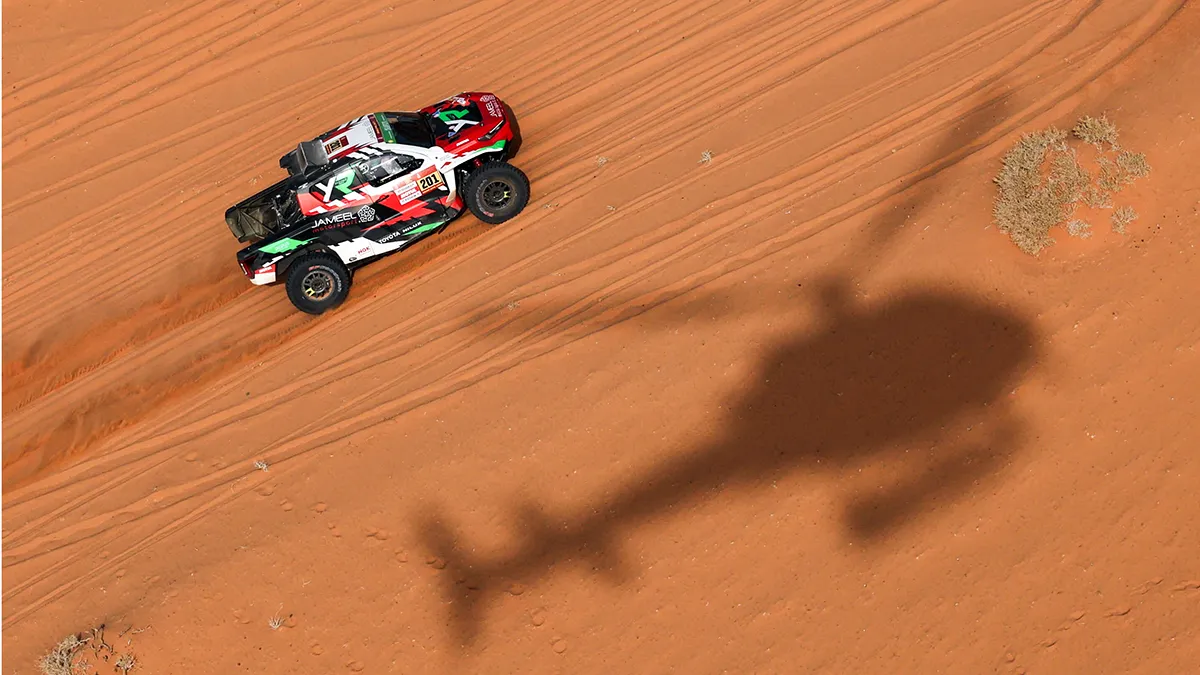
Of the 73 high-performance off-road vehicles, including 4x4 and 4x2 prototypes, one of the favourites for victory was Ford's V8-powered Raptor T1+, with former winner Carlos Sainz competing for success alongside his teammate Mattias Ekström. The other star-studded team is the Dacia Sandriders, led by five-time Dakar winner Nasser Al-Attiyah, with Sébastien Loeb also in contention for victory, although he has fallen behind in the standings after Wednesday's stage. All of them are watching South African Henk Lategan dominate the car competition.
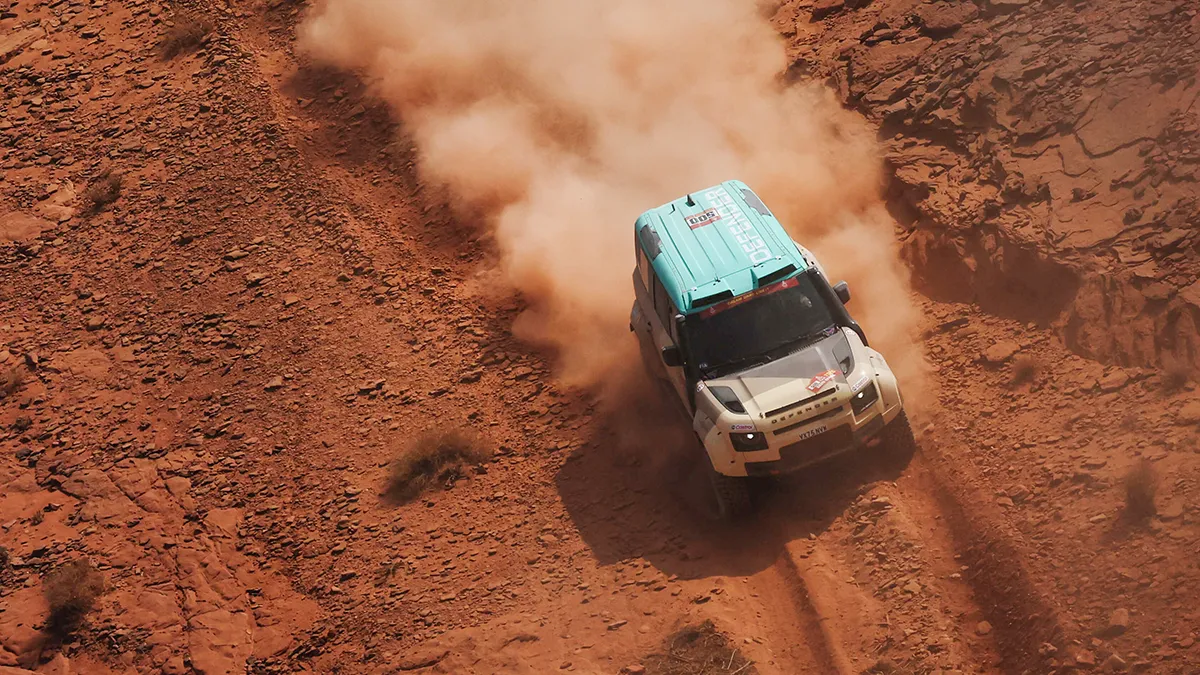
As for the T2 (Stock) category, there was a lot of excitement as the regulations for production cars have allowed for a number of modifications to improve performance. As a result, British manufacturer Land Rover is entering three Defenders in the 2026 Dakar, led by 14-time Dakar Rally winner Stéphane Peterhansel.
The Light Prototype (Challenger - T3) category is geared towards lightweight prototype vehicles designed specifically for off-road racing. Of the 38 that started in Yanbu, much of the attention was focused on Saudi Arabia's Dania Akeel, who has shown breathtaking speed in the run-up to this year's event. Last year, she finished third in the overall standings of the FIA World Rally Raid Championship and took victory in the Abu Dhabi Desert Challenge. She also secured a stage victory in last year's Dakar and is one of the stars to watch. However, she is experiencing qualifying difficulties in this edition of the Dakar Rally due to time losses.
In the Side-by-Side Vehicles (SSV - T4) category, among the 43 SSVs (side-by-side vehicles close to series production with modifications adapted to rally conditions), Francisco ‘Chaleco’ López Contardo was one to watch. A Dakar veteran with two decades of experience, the Chilean was a constant protagonist during the South American era of the event. He returned to the dunes with the aim of continuing his success at the wheel of Can-Am's Maverick R.
In the Motorcycles (Bikes) category, there were 118 entries from the International Motorcycling Federation (FIM) in the motorcycle category, which is divided into three divisions: RallyGP for professional riders and factory teams; Rally2 for private and semi-professional riders; and Original by Motul, for riders who compete without technical support and are responsible for their own maintenance and repairs.
The Trucks (T5) category is divided into two classes: T5.1 for competition trucks, both prototypes and production-based, modified for the race; and T5.2 for assistance trucks that provide logistical and mechanical support during the rally.
As for the Classics category (special category), the sixth edition of the Dakar Classic features a total of 97 historic vehicles (75 cars and 22 trucks). Cars and trucks from the 1980s and 1990s, as well as vehicles registered up to 2005, are eligible to participate. This category uses a regularity rally format, focusing on consistency rather than pure speed, and is contested over a new total distance of 4,292 kilometres. The 211 competitors, including 18 women, represent 26 nationalities.
The special Mission 1,000 category (special category) returns for the third year, for vehicles using alternative or zero-emission propulsion systems, showcasing innovative technology. The grid has been made up of seven fully electric motorcycles and a hybrid truck that runs on hydrogen and biodiesel. They compete in 13 stages of about 100 kilometres each, with a total of 1,071 kilometres of special stages.