
Nuremberg: the conflict of souls between the executioner and the psychologist


The film Nuremberg not only reconstructs the events following World War II, but also invites us to explore the psychology of those who wield power and the conscience of those who analyze them, showing that evil can hide behind the appearance of civilization and rationality.
Evil does not arise instantly. It manifests itself in the ability to transform mistakes into daily rituals and to convince one's own conscience to serve a higher cause while perpetrating destruction. The film reflects this dynamic, becoming a mirror for understanding the human mind in the face of power, narcissistic arrogance before the law, and pride in the face of conscience.
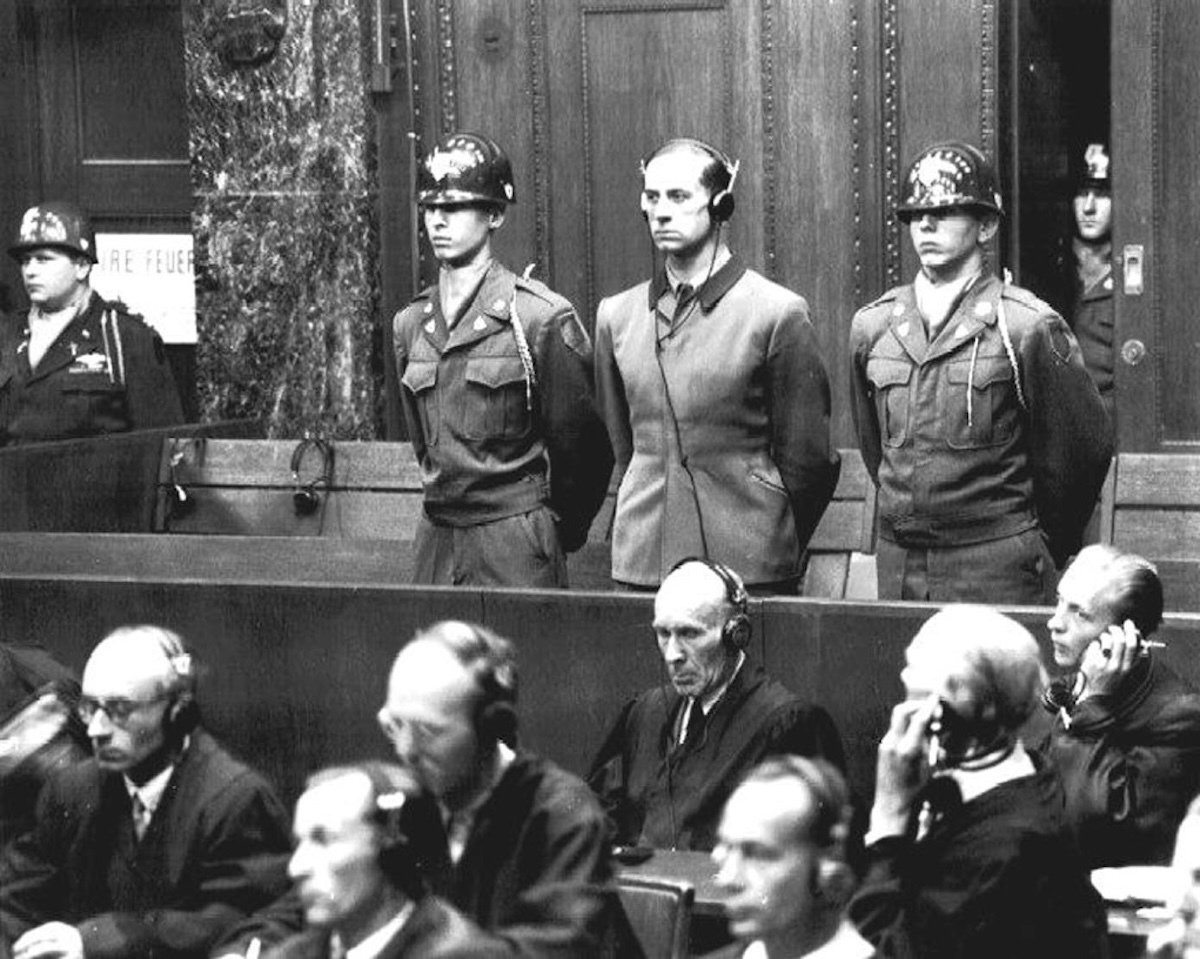
The interaction between Hermann Göring, second in command of the Reich, and American psychologist Douglas Kelley, tasked with analyzing the motives of the defendants, transcends dialogue. It is a challenge to read the human mind, recognize its weaknesses, and measure the magnitude of evil in personalities that appear to be balanced. From Göring's first appearance, clinging to his belongings as if the whole world belonged to him, his destructive narcissism is laid bare. Every word and gesture becomes proof of power and conscience, a precise calculation of evil beneath the surface of control.
The confrontations between Kelley and Göring unfold as intellectual duels, balancing between silent tension and contained excitement, without resorting to dramatic outbursts. The strength of the story lies in showing that evil is integrated into daily routine and that confronting it requires deciphering the human mind and recognizing the subtleties of manipulation.
Russell Crowe, in the role of Göring, manages to make his character transcend history: his physical and psychological presence dominates the scene, transforming gestures and glances into symbols of absolute power.
Kelley, under that shadow, maintains a discreet but empathetic profile, showing that the confrontation is not only between good and evil, but between imposing presence and understanding the human mind.
A key moment occurs in the dialogue between Kelley and Judge Robert Jackson, who points out that the major crimes began with anti-Semitic laws before the war, and that their inevitable outcome is found in the courtroom. This passage adds an ethical dimension to the story, balancing psychological analysis with historical and legal reflection.
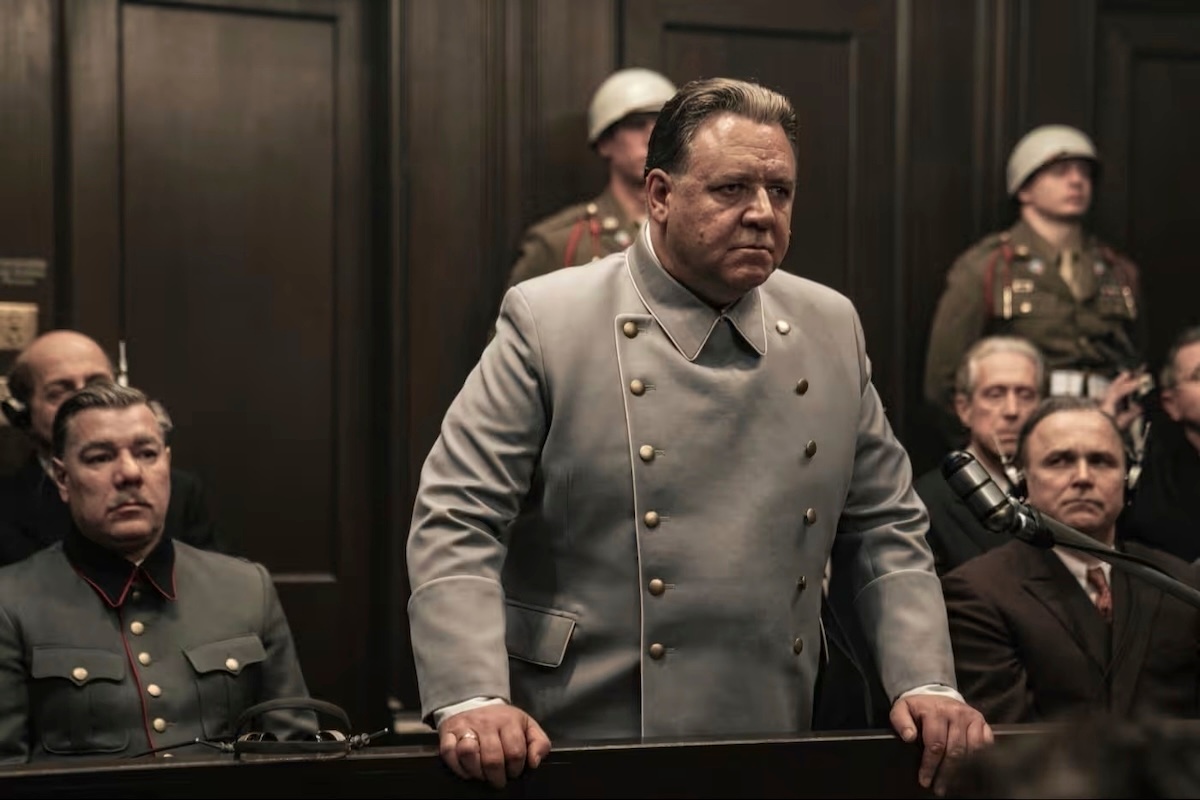
Although the film sometimes draws historical parallels, it never loses focus on the psychological conflict. The slow pace, consistent with the years 1945 and 1946, suggests that the real war did not end with surrender; it moved to the courts, to the souls, and to the details of victory and defeat. Every move by the leader who does not acknowledge his mistakes and every effort by the justice system to dismantle his legend reflect the psychological warfare that persists after the physical war.
Rami Malek, as Kelley, controls his emotions without artifice, lending credibility to his character. Michael Shannon, as the prosecutor, brings obvious moral weight. The film thus becomes a study of the nature of evil, the understanding of the human mind, and the balance between strength, cunning, and conscience.
Nuremberg demonstrates that evil is not an isolated act, but the accumulation of small decisions combined with narcissism and arrogance at precise historical moments. Its strength lies in showing how it is formed, interpreted, and analyzed, and how it is integrated into the human consciousness, not through dramatic outbursts, but through the constant tension between presence and power, arrogance and order, between executioner and psychologist, between history and perception.

Here, the trial is not only legal: it is a lesson in power, an exploration of the nature of the human soul, and an invitation to reflect on how to resist evil. Crowe represents absolute domination; Kelley, introspection and analysis of motives.
The film is, above all, a journey into the human mind, a testament to cinema as a tool for psychological impact, and a reflection on the nature of evil in every moment of calm within the courtroom.
Abdelhay Korret, Moroccan journalist and writer