
Western Sahara: when the debate is no longer binary

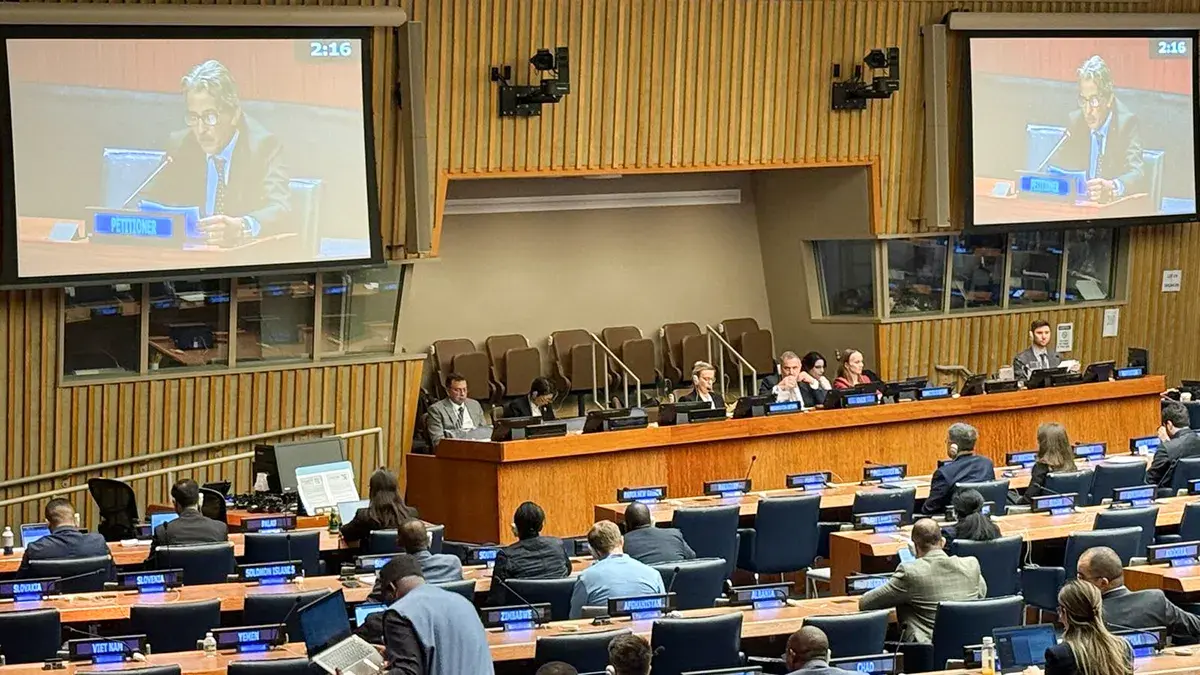
- Polisario Front: legal stability
- Morocco: sovereignty and pragmatism
- Sahrawi Movement for Peace: the third way
- Security Council: preserved ruling
- Controversy in the implementation of the transformation
For decades, this issue remained stuck in a double confrontation between Morocco and the Polisario Front. Except that this deadlock began to break down today. In addition to demands for independence and Moroccan assertions of sovereignty, a third voice has emerged from the desert, representing the Sahrawi Movement for Peace (SMP), while the UN Security Council continues to violate its policy of calculated secrecy. It is no longer possible to explain the conflict along a single axis.
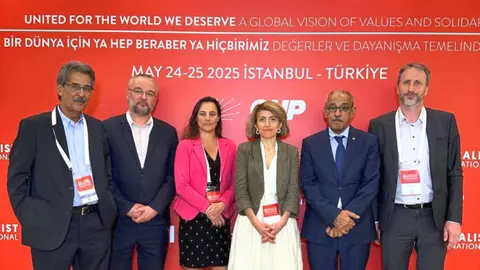
Polisario Front: legal stability
The Polisario Front continues to defend a strict legal interpretation of the conflict. For it, Western Sahara remains a region that does not enjoy self-government and is undergoing an incomplete process of decolonisation, and any solution that does not include the option of independence is, in its view, a violation of international law.
In a recent letter to the President of the Security Council, the Front's spokesperson said that Resolution 2797 does not recognise any Moroccan sovereignty over the region and cannot be interpreted as approving unilateral proposals. These positions are based on historical decisions by the United Nations and the advisory opinion issued by the International Court of Justice in 1975.
However, this legal harmony increasingly clashes with the evolution of the international approach. In a multiparty system that prioritises stability and risk management, the Polisario Front faces the risk of being compromised in defending legal legitimacy without providing an immediate political escape.
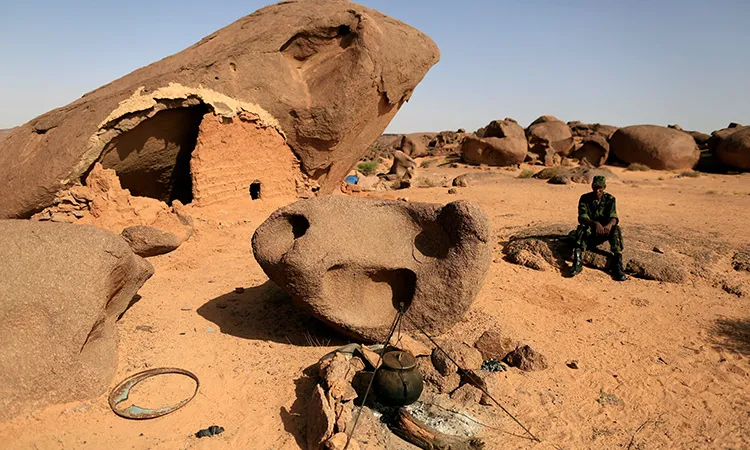
Morocco: sovereignty and pragmatism
In contrast to this view, Morocco maintains a clear line: the Sahara is an integral part of its territory and the question of sovereignty, in its opinion, is completely out of the question. From now on, the self-government project, proposed in 2007, is presented as the only viable political solution, which Rabat describes as ‘serious, credible and realistic’.
Morocco highlights the economic and social development of the southern regions, as well as the growing international support for its initiative, especially from countries that prioritise regional stability in Morocco and the coastal region. For these countries, self-government seems a pragmatic solution to a long-standing dispute.
However, the Moroccan attitude leaves no clear boundaries. Resolution 2797, like previous resolutions, avoids any explicit recognition of sovereignty. The insistence on self-government as the only option also leaves limited room to accommodate other sensibilities in the Sahara that are not fully reflected in either the Polisario Front's discourse or the official Moroccan proposal.
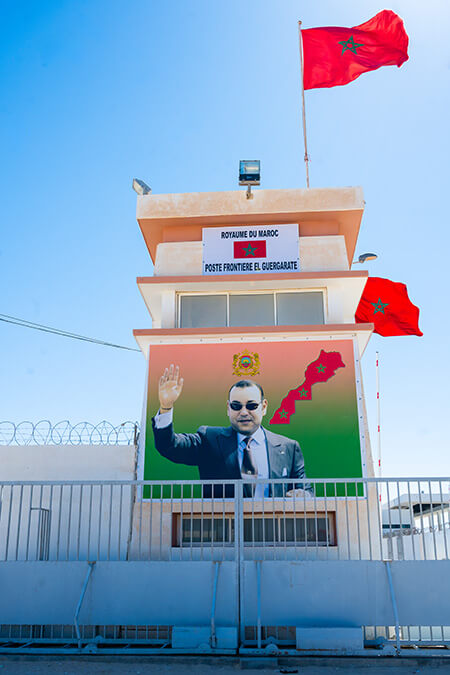
Sahrawi Movement for Peace: the third way
In this intermediate space, the Sahrawi Movement for Peace emerges. It is a relatively modern movement that seeks to break with the logic of confrontation inherited from the past. Its discourse focuses on ending the conflict, local governance and the social disruption that a distracted resident has experienced for almost half a century.
The movement does not deny the principle of informing about the destination, but interprets it as a political outcome rather than a closed-door procedure. Self-government is seen as a possible option, a condition that is comparable to genuine institutional guarantees, pluralistic representation and real power for the desert dwellers. And this approach, although limited in its spread, is beginning to find resonance in some diplomatic circles, in accordance with the spirit of Resolution 2797.
Security Council: preserved ruling
Faced with these contrasting situations, the Security Council chooses deliberate mystery. Resolution 2797 reaffirms the principle of reporting on the destination, without identifying its mechanisms or institutional models, and addresses a political solution ‘acceptable to all parties,’ without imposing specific funds.
And this approach reflects not so much frequency as a conscious strategy. In the context of instability in the coastal region and growing geopolitical tensions, the Council's priority remains to avoid escalation and maintain a minimum of harmony among its members.

Controversy in the implementation of the transformation
According to him, the most important updates in the post-Resolution 2797 phase are the multiple votes within the debate. Western Sahara is no longer just a struggle between independence and sovereignty, but has cleared an intersection where the legal orthodoxy of the Polisario Front, Morocco's sovereign pragmatism, the growing reality of the Sahrawi Movement for Peace, and the cautious diplomacy of the Security Council are all present.
The question remains open as to whether this reorganisation will result in a permanent solution or prolong, in new forms, a long-frozen dispute. Except that one thing is clear: Western Sahara has entered a phase of transition, in which the decision will be less related to historical slogans and more related to the real capacity to build an acceptable settlement.