
Third day of protests in Iran exposes regime's fragility

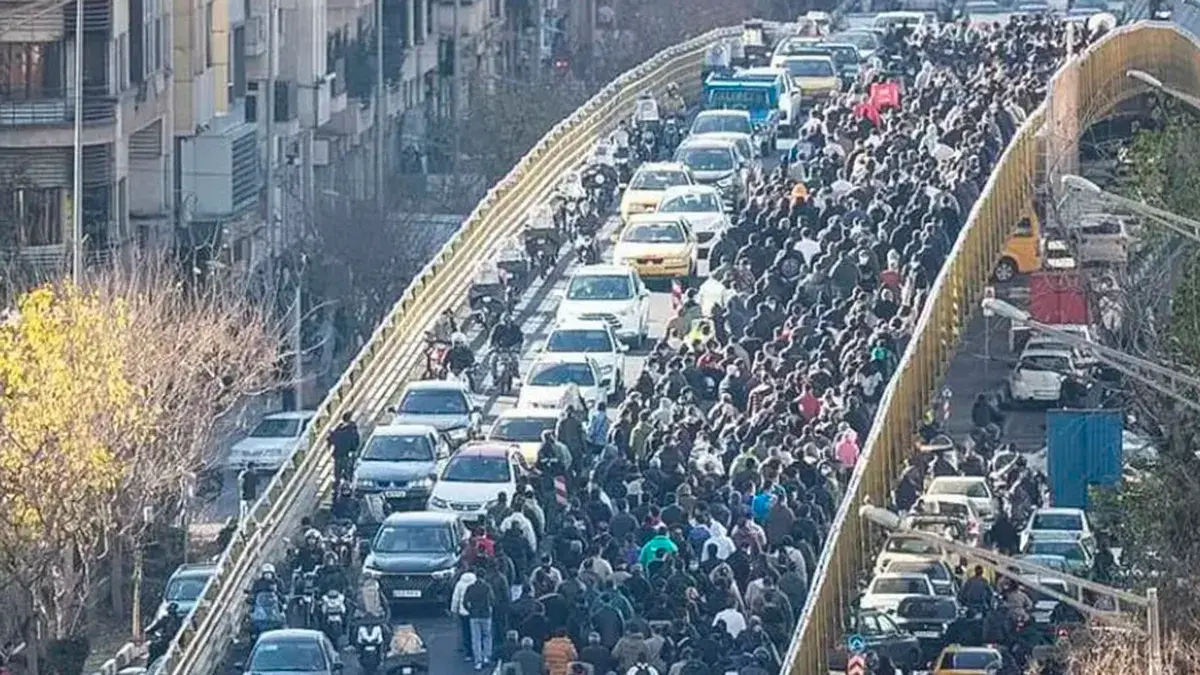
Universities and bazaars join a national uprising marked by slogans against the dictator, massive deployment of repressive forces and a power that oscillates between dialogue and threats
- Spread of the strike and response by security forces
- Statements by leaders and official warnings
- Closures due to low temperatures and energy measures
Protests and popular uprisings in Iran entered their third day. Students from several universities in Tehran and many other cities joined the movement. Among the slogans chanted by protesters were: ‘Death to high prices, we will continue until the regime falls’ and ‘Death to the dictator’.
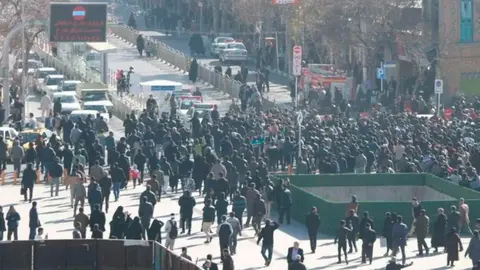
Many shopkeepers closed their shops in different neighbourhoods of Tehran. In Shush and Yavadiyeh, special forces attacked protesters with tear gas.
Spread of the strike and response by security forces
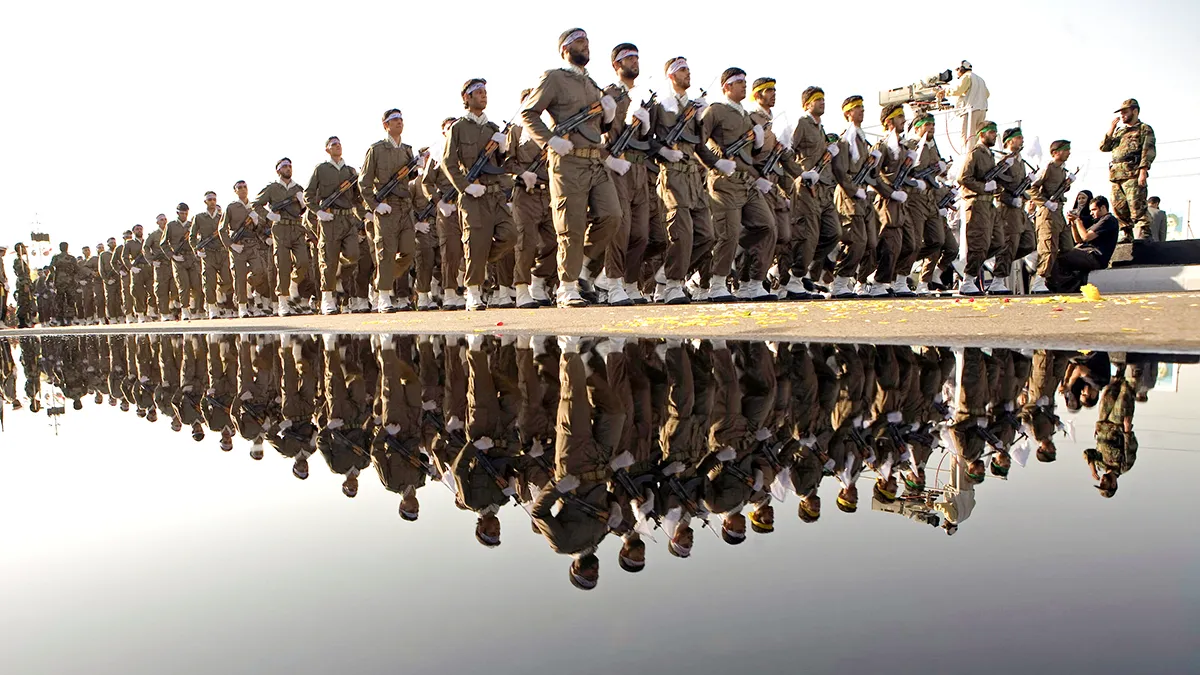
The strike and protest movement spread to other cities such as Shiraz, Isfahan, Mashhad and many others. The repressive forces — the Revolutionary Guard, the national police, the Ministry of Intelligence, plainclothes agents and other security forces — are on high alert and have been deployed en masse in several regions.
Many universities organised rallies and marches, chanting ‘Death to the dictator’ in support of the merchants' uprising. At the National University (Beheshtí) and Jajeh Nasir University, students resisted the Basiyí militia and plainclothes agents by shouting ‘Shame!’. In Tehran, during a demonstration on Mellat Street, special units fired tear gas to disperse the crowd, but the young people continued their protest.
Statements by leaders and official warnings
Maryam Rajavi, leader of the Iranian opposition and the National Council of Resistance of Iran (NCRI), said that the uprising of merchants and other social strata reflects the anger of tens of millions of people overwhelmed by the rapid collapse of the national currency, rising inflation, unprecedented recession, discrimination and systemic corruption of the regime.
President Masoud Pezeshkian, on 28 December 2025 (8 Dey 1404), stated: "The welfare of the people is my daily concern. Fundamental measures to reform the monetary and banking system and preserve the purchasing power of the population have been included in the agenda. I have instructed the Minister of the Interior to engage in dialogue with representatives of the protesters in order to listen to their legitimate demands and enable the government to act responsibly to resolve the issues.‘
Ali Mohayerani, spokesperson for the president, stated on 29 December 2025: ’We see how people are struggling today to make ends meet. It is the duty of the government and the state to listen carefully. Where there is pain, there is also a cry. We see, hear and recognise the crises and difficulties. Even if some voices are virulent, the government will listen to them patiently. Because we believe that when a people raises its voice, it is a sign that it is under intense pressure."
Iran is burning: The people are taking to the streets against Khamenei and the repressive regime.
— Gameover🎗️🇮🇱🇦🇺 (@EricS2075) December 29, 2025
Today, unprecedented protest chants are being heard across Iran against the regime and Ali Khamenei. The Iranian people are saying loud and clear: enough is enough pic.twitter.com/8ydeGHyV42
Bajshayesh, a member of the Parliamentary Security Committee, said: ‘I hope this situation is not a prelude to future unrest. The current slogans are not economic, but political. If economic expectations turn into political demands, serious problems will arise. We must review our economic policies so that, if demonstrations occur, other citizens do not feel concerned and do not support them.’
Mohammad Bagher Qalibaf, Speaker of Parliament, said: ‘Enemies and organised networks are trying to divert any legitimate demands of the people towards chaos and violence by using their trained agents on the ground. The people will prevent their protests from being diverted towards disorder, which is the planned objective of the enemy.’
Gholamhossein Ejeí, head of the judiciary, on 28 December 2025: ‘Anyone who acts with the intention of harming the regime will be considered a “corrupter on earth” and will be sentenced to death.’
Closures due to low temperatures and energy measures
The Energy Consumption Management Group of Tehran Province announced that, in response to the sharp drop in temperatures and in order to ensure a stable energy supply, all government offices, public institutions, shopping centres, schools, universities, higher education institutions, banks and town halls in Tehran Province will remain closed on Wednesday 31 December.
(10 Dey). The same closure measures have been announced for the provinces of East Azerbaijan, Alborz, Ardabil, Isfahan, Ilam, Chaharmahal and Bakhtiari, Khorasan Razavi, North Khorasan, Zanjan, Fars, Qom, Kurdistan, Kerman, Kermanshah, Kohgiluyeh and Boyer Ahmad, Gilan, Lorestan, Mazandaran, Markazi, Hamedan and Yazd. The ISNA news agency, in a report published on Tuesday 30 December (9 Dey), specified that medical centres, emergency services, police units and bank branches on duty are not affected by the closure. In addition, university examinations will be held as scheduled, and the closure of higher education institutions does not include examinations that have already been scheduled.