
Morocco's resounding victory; the facts are clear

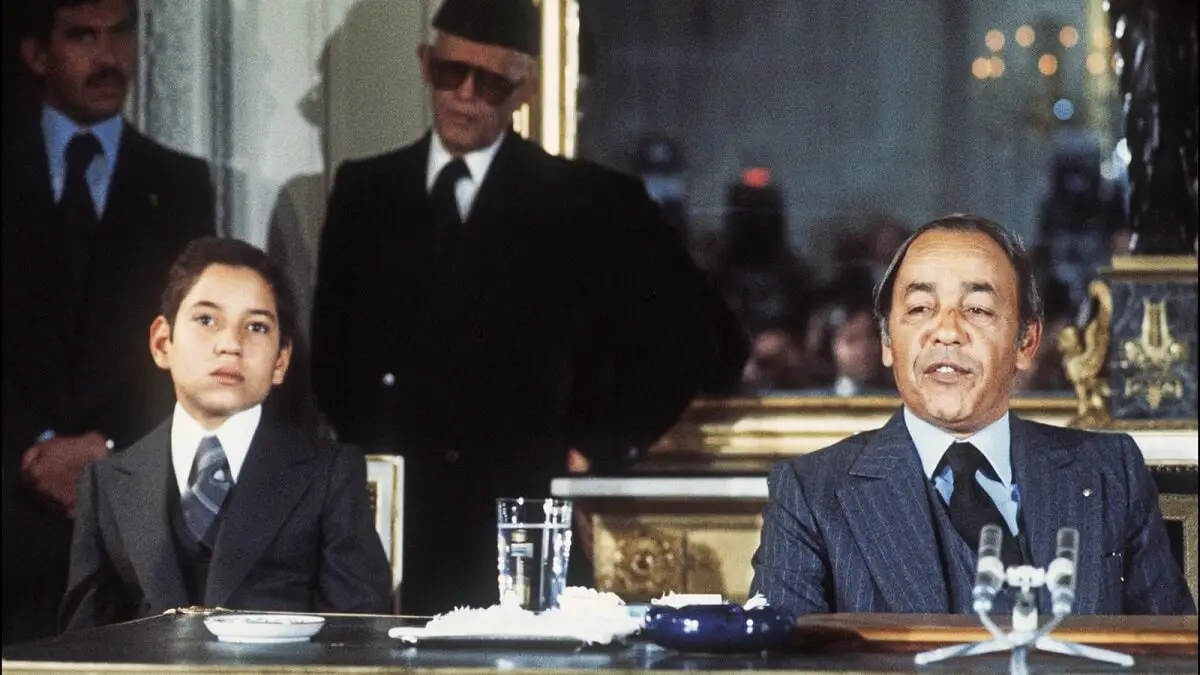
By endorsing, approving, recognizing, and thus legitimizing Morocco's national cause in the Sahara, the United Nations Security Council has paid a fine tribute to the moral qualities of King Hassan II and his son King Mohammed VI.
With its vote on October 31, 2025, Morocco's diplomatic victory is resounding and complete. Its resolution, adopted by 11 of the 15 members of the Council—with three abstentions and Algeria refusing to participate in the vote—validates the advanced autonomy plan proposed to the United Nations by Morocco in 2007.
Algeria's refusal to vote is also significant. The country simply contests the fact that the resolution makes Morocco's proposal the basis for future negotiations. Its representative, in a beautifully delivered speech, had no choice but to appeal to the anti-colonial ideals long developed by the United States. But this speech reminds us above all of a cock's crow. If Morocco's victory is indisputable, Algeria's defeat is clear and complete. The fact remains that Algeria does not recognize the peace process under the terms of the resolution, which was passed by a very large majority.
This is due in part to the skillful penmanship of the United States. While it is important to know and be able to do, it is also important to know and be able to say. The renewal of MINURSO for one year served as a decoy for those who were still hesitant. But that is not the main point. What matters now is the reinforced concrete foundation of the Moroccan project on which discussions will be based.
The evolution of the law is now so firm that it is possible to envisage a lasting and peaceful solution. It is therefore necessary to build a community of interests based on this geopolitical reality.
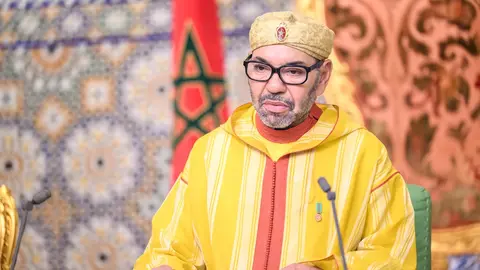
King Mohammed VI, who conceived and promoted the diplomatic strategy of advanced autonomy, knows better than anyone that this victory will only be complete when trust has replaced hostility. That is why, in the minutes following the vote, he reached out to the hostages in Tindouf and to his brother, President Tebboune. This generous initiative, which fully expresses the moral strength of the king, compels Algeria to join this majority position.
In these moments of jubilation, however, Moroccans all know that they also owe their optimism to the thinking and actions of King Hassan II.
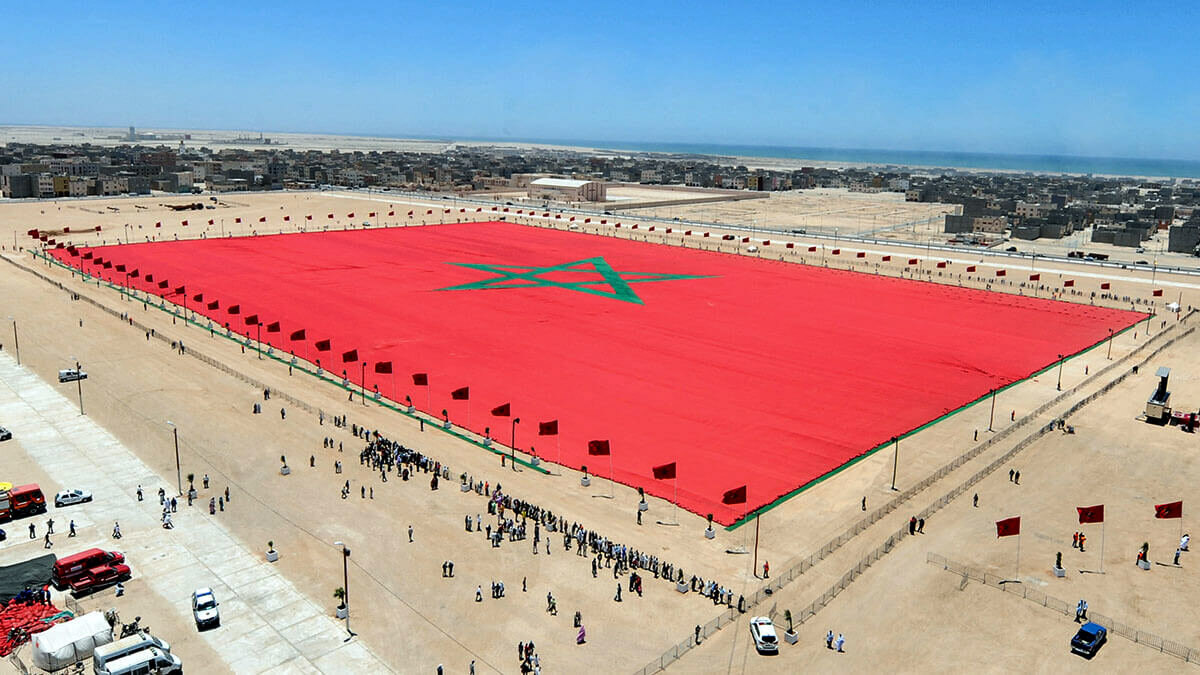
In 1975, when Spain withdrew from its colonies in the Saharan part of Morocco, the king did not hesitate: he decided to call on his people to set out for Laayoune. The people, who had been waiting for this invitation, responded beyond all expectations. This national response was given a name: the Green March.
Armed with the facts provided by history and geography, and as a keen observer of the regional political context, the king was convinced that one should not waste time putting forward arguments in good faith to people acting in bad faith. He clarified his thinking by saying that the battles of life are not won by the strongest or the fastest, but by those who never give up.
A man of great culture, the monarch was closely involved in the world of ideas of the time. He knew his enemies, but he had some decisive advantages over them.
First and foremost, he had the support of his people, who were as uncompromising on the issue of the Sahara as the French were on Alsace-Lorraine.
Then there was his mastery of the law. He was well aware that the law is nothing more than an artifact when deprived of the corresponding facts. He had learned from Kant that it is, in itself, nothing more than a beautiful head without a brain. He could only view the UN rules exploited by his neighbors eager for territory in this light.
His historical knowledge of his old Morocco, which was essential in the dispute with his neighbors. He had his classics, and Cicero obviously counted when he said that “it is the witness of time, the light of truth, the life of memory, the teacher of life, the messenger of antiquity.”
His philosophical culture. He knew that when the profound reality of the facts, marked by space and time, expresses as an obvious truth the Moroccan nature of the Sahara, any questioning of it is fallacious and absurd. “No one has ever disputed that it is daylight at noon,” Voltaire might have said.
That of his resolute spirit, which enabled him to clearly set his intentions. His strategic vision inspired and motivated his people, his diplomacy, and his defense. The results came quickly. This desert, which the Spanish had left after exploiting only its phosphates and fishing resources and where only some 80,000 people lived according to the 1974 census, has undergone rapid social and economic development, particularly since 2007 and the advanced autonomy project.
Morocco is now reaping the rewards of the royal decision of the Green March.However, for fifty years, it had to face a controversy unparalleled in the already turbulent history of decolonization.
But facts are stubborn.
· What is true cannot be hidden or ignored indefinitely.
· True facts are objective truths.
· Therefore, they cannot be hidden or ignored indefinitely.
The Security Council thus urges Algeria and the Polisario to agree to this. The Great Right of space and time can no longer be disputed by the lesser right of obsolete and outdated rules born in the context of decolonization. It is high time for them to admit this inevitable destiny of the Sahara.
We expect them not to obscure the truth of the facts with new lies.
The Council's words of truth must carry weight throughout the world.
Otherwise, to paraphrase Solzhenitsyn, we can say to all those who refuse to accept it We know you are lying. You know you are lying. You know we know you are lying. We know you know we know you are lying. And yet you continue to lie.
Hubert Seillan
President of the France-Morocco Foundation for Peace and Sustainable Development
Author of the book The Moroccan Sahara: Space and Time