
The reality of Spain and Morocco


It is legitimate for each country to defend its interests with respect, loyalty, and confidence, but with a commitment to safeguarding stability, security, collaboration, and common projects that affect all sectors of society in both countries.
Sound, strong, committed relations will yield good results for both countries and will discourage either party from acting unilaterally.
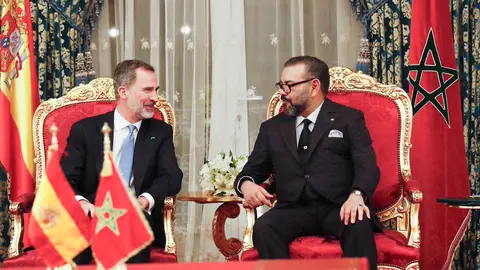
Relations with Morocco are a matter of state, with a very prominent role for the royal houses, that should have the consensus of the two major governing parties, as with all foreign policy, and with the corresponding information and transparency in Parliament, overcoming the obsolete clichés of the extremes.
There are issues that are not easy to resolve between the two countries, but the importance of relations and the significance of preserving complementary interests require calm, prudent, and firm dialogue, without a doubt, but with the aim of achieving the best possible solution for both parties.
Furthermore, these relations are part of a regional and international context in which actors such as the European Union and the United States, among others, also play a role.
It would be very positive if Algeria were to accept King Mohamed VI's outstretched hand to restore relations and bring greater stability and consistency to North Africa in defense of its interests and to address the threat emerging in several Sahel countries. The Algerian regime may consider taking some steps to break out of its isolation and improve the precarious situation of the Algerian people.
Joint declaration
The joint declaration of the 13th High-Level Meeting between the governments of Spain and Morocco held in Madrid contains 119 points addressing highly relevant elements of relations between the two neighboring countries in all sectors.
It is not so much a question of quantity as of quality, because each of the points specifies important aspects of the will and intentions of the two governments that directly involve the two countries, their citizens, and their institutions.
This joint declaration goes far beyond the usual clichés of those who seek only to foment confrontation between the two neighboring countries.
While there are problems to be overcome through dialogue, consensus, and negotiation, the relations have clear strategic elements, such as political, economic-commercial, social, security and anti-terrorism cooperation, irregular migration, tourism, culture, sports, and stability on the African continent, which is the stability of Europe.
The declaration is structured around four areas: governance of the bilateral partnership, diplomatic and strategic dimension, economic dimension, and cultural dimension and human ties. It includes the signing of 14 specific cooperation agreements within the framework of a modernized relationship based on the pursuit of progress and well-being for the populations of both countries, as well as the promotion of regional prosperity and stability, according to the first point.
The following are the sectors that will receive the most attention in the coming years: education, culture, and sports, which are essential for strengthening human ties; scientific research, artificial intelligence, and cybersecurity; commitment to the environment and the global fight against climate change and its effects; energy and the transition to a clean, sustainable, and resilient energy model.
Media headlines do not give the space they deserve to the real content that directly affects relations between people, large, medium, and small businesses, institutions, public and private organizations, and associations that maintain ideas, initiatives, events, and all kinds of actions that manifest an unquestionable reality of neighborliness with their lights, which are mostly unremarkable, and their shadows, exaggerated by those who thrive on confrontation and fear.
Reality is the commercial exchange between Spain and Morocco of €22.6 billion in 2024 with the creation of thousands of jobs; the control of irregular migration; cooperation in security and the fight against terrorism; Atlantic stability and development in the face of threats in the Sahel; the million tourists in both countries; the organization of the World Cup in 2030; and strategic and complementary interests in all sectors.
The reality is the support of Spain and 120 other countries around the world, as well as the United Nations Security Council, for the autonomy plan for the Sahara under Moroccan sovereignty as the basis for negotiations to end the dispute.
The reality is the need for respect, trust, and loyalty to address the problems that, logically, two neighbors have, in order to solve them through dialogue, consensus, and negotiation to avoid false rumors regarding the Canary Islands, for example.
The challenge is to ensure that the points contained in this declaration are complied with in all sectors, above destructive interests that need confrontation and division for their own benefit.
To understand the reality between the two neighboring countries, it is highly recommended, indeed essential, to visit, to really find out what is happening in each place, to talk to the people and to see for yourself what is happening on the ground.