
Power Export: Morocco's new showcase
A name that seems to have been taken from a marketing manual, but which hides more than just a slogan. The country wants to present itself as an energy and industrial supplier with sufficient maturity to sit at the same table as its European partners.
The program offers what many entrepreneurs seek and few find: a one-stop shop. It promises to simplify procedures, accompany companies in their foreign ventures, and put money on the table. In practice, this means that a company that has been in business for two years and has a certain turnover can access an export diagnosis and an action plan that is almost entirely subsidized. For more established companies, the aid amounts to more than two million dirhams. This is no small thing in a country where financing has always been the first wall that industrial projects hit.
But every political program has its nuances. They appear here too. Bureaucracy, ever-present in these latitudes, lurks behind good intentions. Not all companies are eligible: the smallest ones, those that do not yet meet the minimum requirements, are left out. And above all, a structural risk remains: Morocco continues to look almost exclusively towards Europe. Seventy percent of its exports cross the Strait. This is a comfortable but dangerous dependency, because diversifying markets is not a matter of decrees, but of strategy and time.
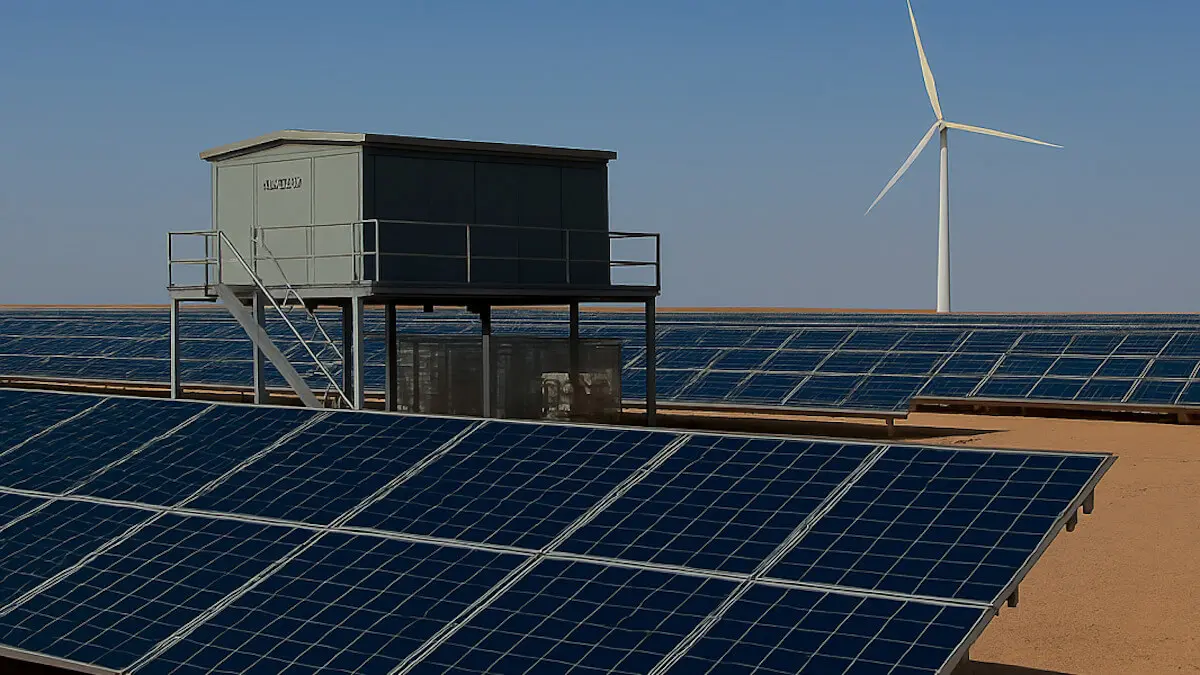
The commitment, however, has a component that deserves attention. Morocco wants to be an exporter of clean energy: electricity, green hydrogen, industrial solutions associated with the energy transition. And in this area, the country has an advantage. It has plenty of sun and wind. The electrical interconnections with Spain reinforce this ambition and lend weight to the idea of becoming an energy supplier beyond its borders. For those who manufacture components, such as semi-finished products for wind turbines, this scenario opens up an obvious horizon: a growing local market and, at the same time, a springboard to Europe.
The real challenge lies not in the program itself, but in the companies themselves. It will be up to them to prove that they are not simply beneficiaries of subsidies, but players capable of competing on equal terms in terms of regulations, quality, and deadlines. If they succeed, Power Export will not be just another campaign, but the beginning of a path in which Morocco ceases to be solely a destination for offshoring and begins to count as a source of added value.
In the end, the initiative boils down to the same old story: a country trying to carve out a place for itself, with its strengths and weaknesses, on a playing field where there is no longer room for the naive. Morocco offers the key. The question is whether companies will know how to open the door and, more difficult still, keep it open when the wind changes direction.
Juan Antonio Vidal. Plant Manager, InCom Composites Morocco SARL