
Chavista infighting facilitates US plans for Venezuela
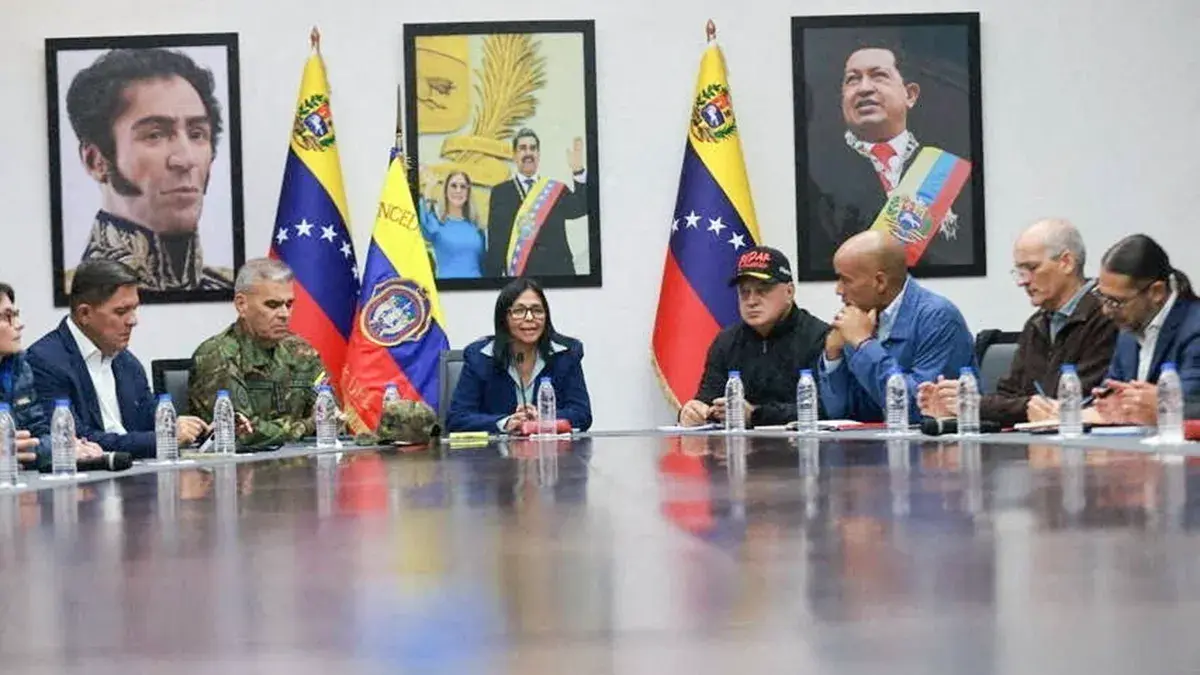
The difficult temperament of Diosdado Cabello, the self-important powerful interior minister of Chavista Venezuela, who in the past felt firsthand the deep pain and rage caused by Hugo Chávez's public dispossession of the succession of power in the country that he believed was his right, once he learned of the profound deterioration of the then-president of Venezuela's health that ended in his death, is now showing his recalcitrant attitude towards the United States and is fighting with Delcy Rodríguez, the vice president of Nicolás Maduro's de facto regime, whom the Supreme Court of Justice entrusted with the leadership of real power, confirming the dictator's removal to New York.
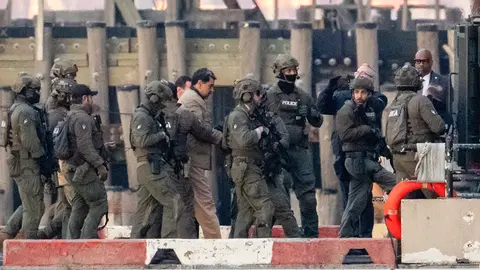
Between the two is Vladimir Padrino, the most devious of the three, a master of complete hypocrisy, who will surely act like Delcy Rodríguez, who talks all day with Marco Rubio, the U.S. Secretary of State, both of them scared to death just looking at the photo of Maduro and his wife Cilia Flores in prison while they await a trial that will sentence them like Manuel Antonio Noriega, the then-powerful dictator of Panama, also involved in illicit drug trafficking, or Mexican drug lord Joaquín “El Chapo” Guzmán.
Confusion, secrecy, and uncertainty dominate the three, who until recently, each from their own positions and quotas of power or influence, supported the dictatorship of Nicolás Maduro.
The scenario of confusion is ideal for Washington's plans, which it has always sought, as the greatest consequence of this nebulous context will be betrayals and even death within this trio that continues to command real power that still holds, albeit now on a house of cards.
I am convinced that foreign intelligence is doing a delicate job to ensure that the transition in Venezuela allows, first, the imperative change of personnel in the military chains of command—the highest priority for the White House at this time—and once that is secured, then, only then, should the emergence of Edmundo González, legitimately elected at the polls to be sworn in as president of Venezuela, and María Corina Machado, supporting him in the executive branch, take place.
But this second moment has not yet arrived, and the aforementioned opposition politicians who, on the other hand, did take a chance for their country in the 2024 elections, will have to wait until the first moment has been cleared up, that is, the one relating to the struggles that do not seem to bode well for a peaceful immediate future.
The first of the three who wants to get around any agreement with Washington will be rebuffed by the Americans without hesitation, and I say this from a position of political realism, because not everything about Venezuela can be explained by international law, and that does not mean that the world of international norms is dead, as some mistakenly claim.
On the contrary, if they play fair, the agreement they reach with Trump will be respected by the United States. Maduro's example is more than enough.
Miguel Ángel Rodríguez Mackay. Former Foreign Minister of Peru and Internationalist