
Donald Trump's peace plan

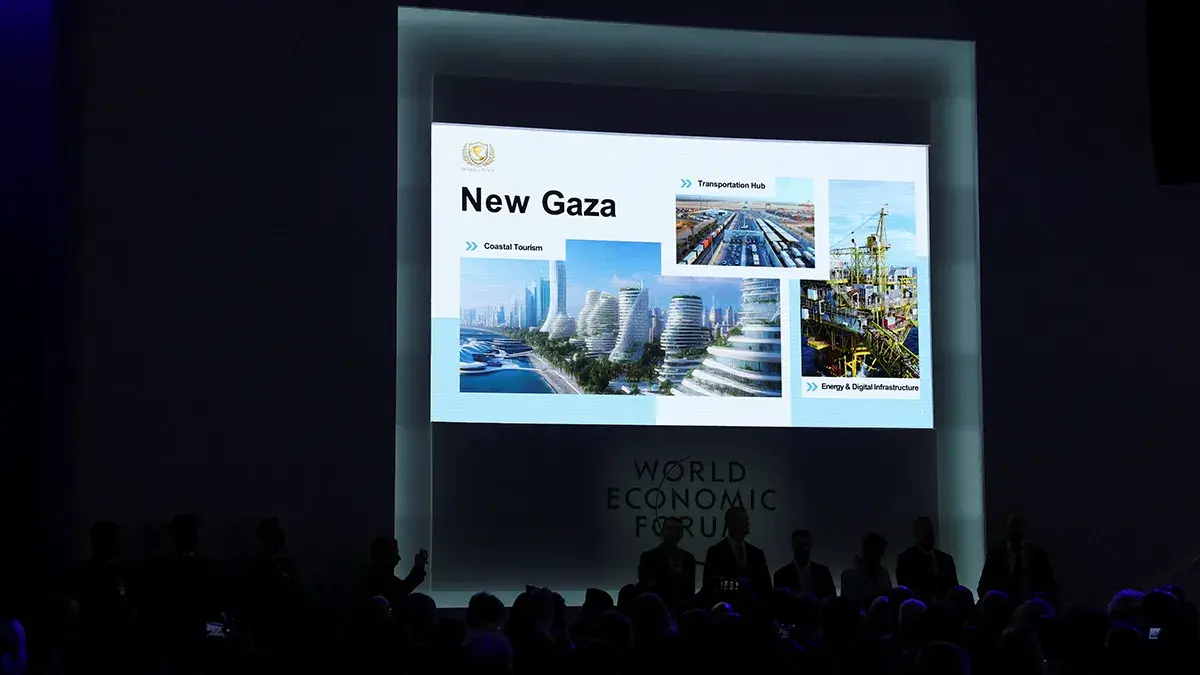
I agree that a peace plan must allow for the material resurgence of a devastated city and its people, such as Gaza; however, I believe that nothing will be better if, before or in parallel, the underlying problem between Israel and Palestine is not resolved
Once the ceasefire in Gaza was in place, and hostilities between Israel and Hamas had therefore ceased, the announcement by US President Donald Trump of a peace plan for this part of the Middle East, completely decimated by the war that began on 7 October 2023 with the massacre of terrorists killing more than 1,000 Israeli civilians, became a matter of great interest to some and enormous rejection to others. Donald Trump's announcement of a peace plan for this part of the Middle East, completely decimated by the war that began on 7 October 2023 with the massacre of more than 1,200 Israelis by terrorists and the ensuing response that led to the deaths of nearly 70,000 Gazans at the hands of Israeli forces, according to data provided by Hamas.
This plan initially emphasised reconstruction – infrastructure (today there is talk of building around 180 skyscrapers) – which, in order to gain international approval, led Trump himself to ask the Security Council, of which his country is a member, to provide the support he was seeking, always within the framework of the UN, which, translated into the rules of international coexistence, is called international legitimacy, an indispensable condition for carrying out a variety of processes that have global approval.
There is no doubt that the United States and its president have entered a phase of unprecedented global empowerment, allowing Trump to impose tariffs wholesale and at will. Part of the crowning achievement of the hegemon's enormous power has been the removal of Venezuela's former dictator, Nicolás Maduro, carried out in the very heart of Maduro's power base and under the astonished gaze of Russia and China, among others.
With this in mind, a few days ago, at the Davos economic summit in Switzerland, the US president emphasised his particular vision of Greenland, an issue that disrupted the temporary political tranquillity in Europe, whose countries reacted erroneously to Trump's vociferous claims, believing that the New York leader wanted to annex the Arctic territory under Danish sovereignty.
We have already seen that what Trump really wants is to secure this northern space for the security and defence not only of the US, but mainly of the European Union, which reacted naively by opposing Trump, but has since corrected its attitude, recognising that the only security for its existence will be to be strongly allied with the US.
However, all of the above is not the best context for Trump's ambitions, given his peace plan, which now seems to have broadened and strayed somewhat from what he initially said about Gaza, generating new criticism. I agree that a peace plan must allow for the material resurgence of a devastated city and its people such as Gaza; however, I believe that nothing will be better if, before or in parallel, there is no resolution of the underlying problem between Israel and Palestine, and with it, in parallel, Israel completely withdraws its troops from Gaza, and Hamas completely relinquishes control of that city, which it has held since 2007.
First, the underlying issue must be addressed so that future efforts are not in vain.
Miguel Ángel Rodríguez Mackay. Former Foreign Minister of Peru and Internationalist
Article published in the Expreso newspaper in Peru