
Spain and the day of syncretism with America

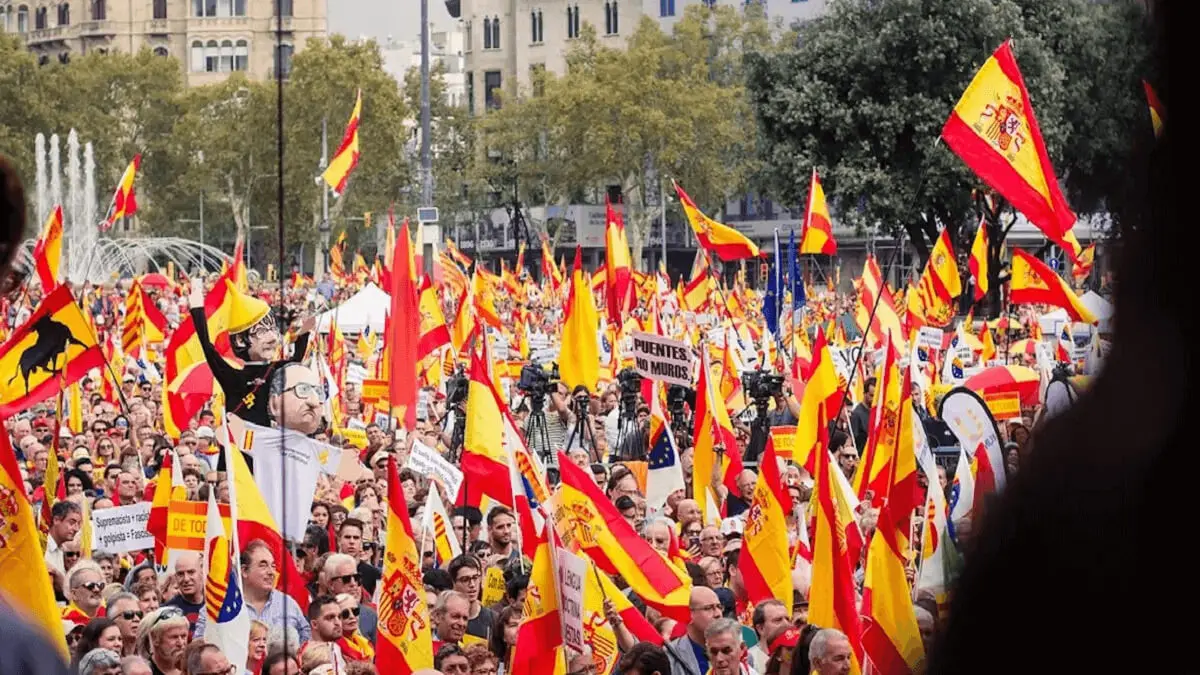
Today, October 12, marks the 533rd anniversary of the discovery of America, the event in world history that changed the paradigms that had been in place until then
The ancient Ptolemaic theory that the Earth was static and the center of the universe was buried forever, replaced by that of Nicolaus Copernicus—heliocentric, later defended by the no less famous Galileo Galilei—which held that the Sun was the center of the cosmos and the Earth, on the other hand, revolved around it, confirming the roundness of the planet.
The great voyages of circumnavigation were irrefutable proof of this enormous step taken by humanity. The discovery, then, in the midst of the Modern Age, produced the first great globalization—the second being the one we are experiencing today.
It could have been Portugal, but the Catholic Monarchs, especially Isabella, had more perspective and daring than those of the House of Lisbon, despite the fact that they had in Henry the Navigator, founder of the famous School of Sagres, one of the greatest promoters of overseas voyages.
Spain was unleashed by the Arab invasion—little is said about the fact that "...the Jews were also expelled by edict on March 31, 1492 (in GENERAL HISTORY OF SPAIN, Volume SEVEN. Barcelona, MONTANER Y SIMÓN, EDITORES, 1930, p. 22)—who had settled on the Iberian Peninsula for eight centuries.
Their power was reflected in the Treaty of Tordesillas, signed with Portugal, dividing the world. Spain loaded onto the Niña, the Pinta, and the Santa María, in addition to religion, the law of Castile, and its discoverers in the service of the Crown. Upon contact with the American natives, they imposed the law of conquest and later, once the viceroyalty was established, Indian law.
Although there is no conquest in universal history that was not violent, the Aztecs, Incas, Mayans, Chibchas, Collas, Araucanians, etc. of America entered into a relationship of syncretism with Spain.
Just as we must never deny historical processes—as was also the case with Spain and the Arabs—but rather conclude from them, their greatest and richest legacy: the rich heterogeneity of Ibero-American society that forms America with Spain or Spain with America. We must also condemn intolerable or recalcitrant statements that insist, erroneously, on speaking of a Spanish invasion of America, even calling the Incas, Aztecs, and Mayans, considered advanced pre-Columbian cultures, “tribes.”
The other side of the coin is alignment, and we must be careful with this because, as in the viceroyalty, there are those who act with hyperbolic discourse towards Spain.
Everything must be done with balance, and in that context, I am a Hispanist by definition, and in that capacity, I say upfront and without reservation that the excesses on one side and the complexes on the other regarding the process of the discovery of America must be censured, whether they come from right-wing or conservative sectors, or from the left or progressives.
With all of the above, let us not lose sight of the fact that the indigenous peoples of our America—such as those of Peru—must be dignified in the permanent collective memory of our countries.
Miguel Ángel Rodríguez Mackay. Former Foreign Minister of Peru and Internationalist
Article published in the Peruvian newspaper Expreso