
Resolution 2797 and Algerian absenteeism

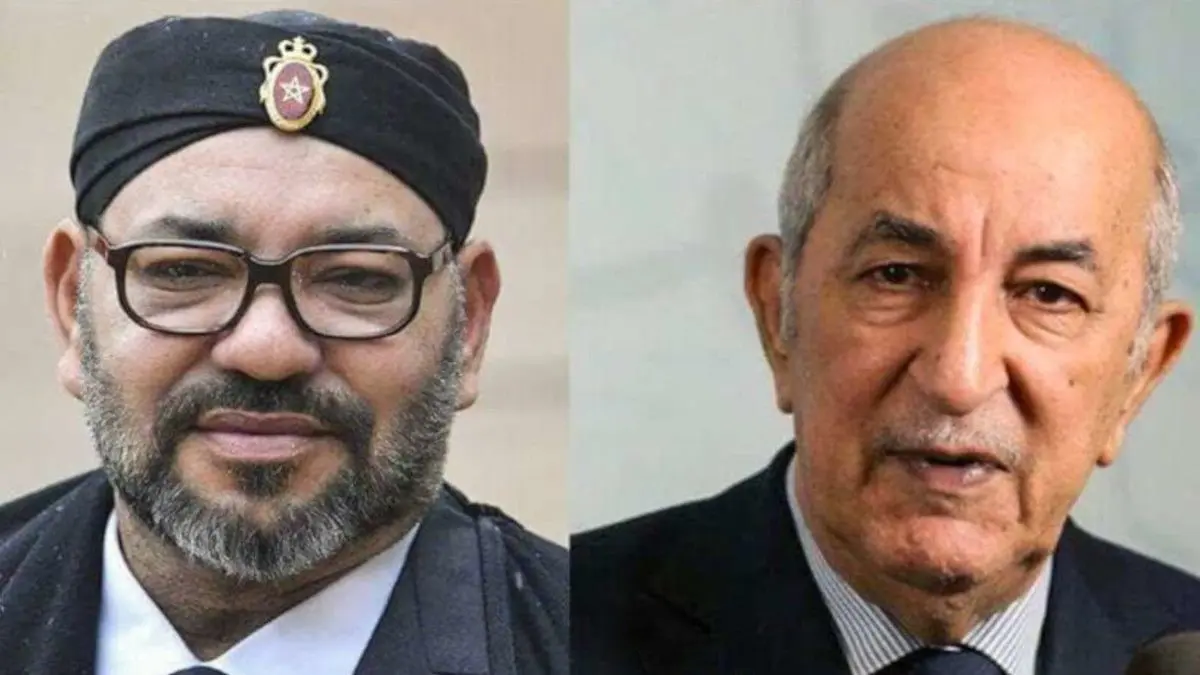
On Friday, October 31, 2025, the United Nations Security Council adopted a historic resolution on the Moroccan Sahara, explicitly recognizing the Moroccan proposal for autonomy as the serious and credible basis for a lasting political solution. This resolution won broad support with 11 votes in favor, 3 abstentions, and no votes against. However, one of the non-permanent members, Algeria, chose not to participate in the vote, an absence laden with political significance. How, then, to understand this Algerian non-participation, which seems less related to the text than to its context.
"I'll give you a scoop, quite honestly, Algeria was about to vote in favor of the resolution. The night before the vote, we asked for the removal of the provision relating to Moroccan sovereignty in the preamble, and we would then vote in favor of the text. But this reference was not removed. Technically, that is what motivated Algeria's decision not to participate in the vote, especially since the fundamentals of the Western Sahara issue are preserved in the text..."
A technical point that causes annoyance
If we are to believe the Algerian Minister of Foreign Affairs, Ahmed Attaf, Algeria was going to vote in favor of the text, but boycotted the vote because of that small mention in the preamble, even though the final version proposed for the vote no longer caused any problems. The problem was rather a small technical point, which emphasizes autonomy under Moroccan sovereignty, which really bothered the El Muradia palace.
Therefore, if we have correctly followed Algeria's reasoning, Algeria would be in favor of Resolution 2797, which duly mentions the Moroccan proposal for autonomy once in the preamble and twice in the body of the text. But beware, this autonomy would not be under Moroccan sovereignty! Perhaps the head of Algerian diplomacy was subtly hinting that it should be placed under the sovereignty of a third country? As if Catalan autonomy, according to Algerian logic, could be imagined under Canadian sovereignty! This is truly a scoop. However, everyone knows that Morocco is proposing autonomy under its own sovereignty, but Algeria seems to be selling us “independent” autonomy without Moroccan sovereignty, which defies all diplomatic and legal logic. A true masterpiece of ambiguity and demagoguery!
But Algeria, as is its custom, is playing diplomatic tightrope walker, maintaining a well-measured ambiguity that reassures no one, except that it signals a real coup de théâtre consisting of defending a Moroccan autonomy that is not, here is a truly remarkable scoop. A scoop that would undoubtedly make Aristotle turn in his grave, for if he saw such a contradiction, he would not fail to protest against this flagrant denial of the principle that a thing must be what it is, and not its opposite. Aristotle's logical rigor, which refers to the principle of non-contradiction, suggests that it is impossible for the same attribute to belong and not belong at the same time and under the same aspect to the same subject; in other words, it is impossible for a thing to simultaneously possess a property and its opposite.
To claim that Algeria boycotted the vote on Resolution 2797 because of a technical point related to the mention of Moroccan sovereignty in the preamble and that the final version, with the exception of this point, does not cause it any problem, is tantamount to saying that Algeria was prepared to vote in favor of the Moroccan proposal for autonomy on condition that it was not under Moroccan sovereignty. However, the resolution explicitly states, twice in the body of the text and once in the preamble, that the autonomy in question is indeed the Moroccan proposal, which implies that the Sahrawi provinces remain Moroccan provinces while enjoying a special status of autonomy.
This position reveals a flagrant contradiction: how can one support Moroccan autonomy without recognizing Moroccan sovereignty? When the Moroccan project clearly places this autonomy under its sovereignty? It is a logical, diplomatic, and legal nonsensicality that seems to want to deny the evidence, which can only highlight the gap between Algerian discourse and UN reality.
The text and the context
First, it should be remembered that in the UN Security Council voting system, the difference between “abstention” and “non-participation” in the vote is that abstention is when a member country voluntarily decides not to cast a vote either ‘for’ or “against” a draft resolution. This choice is counted and signifies a reservation or neutrality with regard to the decision taken. Abstention does not prevent a decision from being adopted, as it is not a negative vote, but it expresses an active choice not to support without opposition, which is in fact the true meaning of the abstention of Russia, China, and Pakistan. Non-participation or absence from the vote means that the member does not take part in the vote because it chooses not to participate in the ballot. This does not correspond to a vote that is either cast or counted. Non-participation can be considered a form of inaction or temporary withdrawal from the decision-making process.
In practice in the Security Council, abstention is recorded and recognized, while non-participation may correspond to an absence or a refusal to vote. Both have in common that they do not block a decision, except that abstention is a deliberate act of reservation, while non-participation is a withdrawal or absence from voting (without explicit expression of opinion). Thus, abstention is a neutral vote, while non-participation is a non-action in the voting. This distinction is important because, in certain circumstances, abstention by a permanent member does not block the decision (unlike a veto), while non-participation often corresponds to an absence from the act of voting itself.
Is it possible to surmise that Algeria wanted to take a position based more on the geopolitical and diplomatic context than on the precise content of the resolution, and that this stance reflects a diplomatic strategy to mask its isolation in the face of an international consensus now consolidated around the Moroccan proposal? This question raises broader issues in understanding the regional and international dynamics surrounding the resolution of a decades-old dispute.
Algeria's absence from the vote on this resolution can be interpreted in several ways, particularly given its political, diplomatic, and strategic context. This absence of an active vote may reflect a position of reserve, a willingness not to take part in the decision, while avoiding explicit opposition that could be perceived as severe isolation. A negative vote by Algeria in this context, where a clear majority (11 members) voted in favor of the resolution and only 3 abstained, would have effectively shown Algeria as an ultra-minority voice, or even isolated (1 out of 15 members). This position could have reduced its political weight and the visibility of its opposition, confining it to a marginal role in decision-making.
By abstaining from participating, Algeria probably wanted to avoid acting or rejecting the new dynamic governing this resolution, which may constitute a form of silent protest against the way it was adopted. This complex strategy of non-participation may also serve Algeria to maintain a certain line of conduct in order to preserve its diplomatic and political options, while avoiding appearing isolated in its opposition to the resolution, but also aggravating the crisis with a negative vote that would have led to outright opposition with certain members of the Council, in particular the United States, the resolution's sponsor. On the other hand, abstaining could have given the impression of neutrality or a lack of commitment, which would also not have been in line with Algeria's desire to take a firm stance against the proposal for autonomy under Moroccan sovereignty.
This political strategy would consist for Algeria in not committing itself to a negative vote that would risk showing visible isolation in a Security Council where the overwhelming majority clearly supports the resolution, while at the same time expressing broader disagreement, marked by non-participation in the vote. This position thus allows Algeria to express a critical distance more in relation to the global context than to the text itself, without exposing itself to obvious diplomatic marginalization.
But what essentially characterizes this global diplomatic and geopolitical context surrounding United Nations Security Council Resolution 2797, and explains Algeria's insistence on showing a clear and firm demarcation through its absence from the vote?
A paradigm shift
The answer to this question about the specific context that prompted Algeria not to participate in the vote can be found in King Mohammed VI's speech to the nation following the Security Council's vote in favor of Morocco's plan for autonomy in the Sahara. The royal speech captured the historical dimension and symbolic weight of this event by emphasizing that “We are living through a pivotal stage and a decisive turning point in the history of modern Morocco: From now on, there will be a before and after October 31, 2025.” This historic break was clearly already in the air, it was felt coming, the resolution only came to enact a strategic reconfiguration and formalize a paradigm shift.
Friday night's Security Council meeting was therefore a major event in that it constituted a historic moment, bringing about a decisive transformation and a new direction in the Sahara conflict. It is in this sense that the Royal speech highlights the UN's endorsement of the Moroccan autonomy plan, perceived by the serious international press as symbolizing a new approach to the resolution of this geopolitical conflict, which profoundly changes the course of events and paves the way for a new phase, a “before and after” as expressed by His Majesty the King.
Specifically, in speaking of a “before” and “after,” the Sovereign emphasizes that the latest Security Council resolution constitutes a foundational moment that changes the rules of the diplomatic game, redefines the geopolitical challenges of this conflict, and legitimizes the Moroccan proposal for autonomy at the multilateral level. It is a new phase that paves the way for a lasting and serious solution, validated by the international community.
For the first time in more than 50 years, i.e., since the beginning of the conflict in 1975, and 18 years after the presentation of the Moroccan proposal for autonomy in 2007, the latter is officially and multilaterally enshrined in a UN text, bringing about a major paradigm shift, which consists of enshrining the Moroccan identity of Western Sahara in international legitimacy, thus overcoming the usual bilateral support, while definitively rejecting the separatist thesis promoted by Algeria.
When Resolution 2797 explicitly enshrines the Moroccan autonomy plan as the central reference for the resolution of this conflict, it aligns the UN approach with a pragmatic resolution inscribed in a Moroccan territorial framework, rather than a process of self-determination through a referendum, which now guides the negotiations exclusively around the Moroccan plan, and completely changes the political dynamics of the conflict.
Yuha's fables
Historically, the Algerian regime has always refused to recognize the Moroccan plan, calling it “Yuha's fables” and claiming that it does not respect the right to self-determination. President Tebboune states in this context that “only international legitimacy counts” and that “Algeria will accept and obey any UN decision”. However, Algeria itself is now faced with a major contradiction in rejecting the autonomy plan, now enshrined by this international legitimacy, thus creating a diplomatic impasse that is difficult to overcome. Security Council Resolution 2797 therefore obliges Algeria to respect the international legitimacy that it has been proclaiming tirelessly for half a century, making it difficult to perpetuate a demagogic, opportunistic, and worn-out discourse centered on the repeated claim of international legitimacy.
It is worth recalling that Algeria not only was conspicuously absent during the vote on Resolution 2797 in October 2025, as well as Resolution 2756 in October 2024, but has long shunned the round tables that the United Nations has patiently organized in order to reach a lasting solution to the Sahara conflict. Through this prolonged avoidance, it has preferred to escape the responsibilities and challenges of an inescapable geopolitical present.
Like a lazy student who falls into truancy and finds himself stuck between the difficult resumption of classes and definitive abandonment, or even dropping out of school, which leads to unemployment and precariousness, Algeria today finds itself completely disoriented, trapped in its chronic absenteeism, wavering between the desire to return to the negotiating table and the inability to regain its footing in the current geopolitical context, much like that student who, having been away, finds it difficult to reintegrate into a class that has become foreign to him. This disconcerting spectacle reveals a regime lost in its own labyrinth of repeated absences and political absenteeism, designating, in the metaphorical sense of the term, withdrawal and isolation, as well as disconnection from the real world and the contemporary geopolitical context.