
Peace and hope for a future without conflict between Palestinians and Jews

- Historical context of the Israeli-Palestinian conflict
- Hamas' actions and Israel's disproportionate response
- Historical and religious roots of the conflict
- Territorial claims and the role of Jerusalem
- Palestinian internal division and peace efforts
- Current status of the conflict and peace proposals
Historical context of the Israeli-Palestinian conflict
It is fair to say that we are witnessing a historic moment in the long history of conflict between Israel and the Palestinian people. Not only in the Gaza Strip, where the war has been concentrated for the last two years, but throughout the Palestinian territory not yet recognised by Israel, within defined borders.
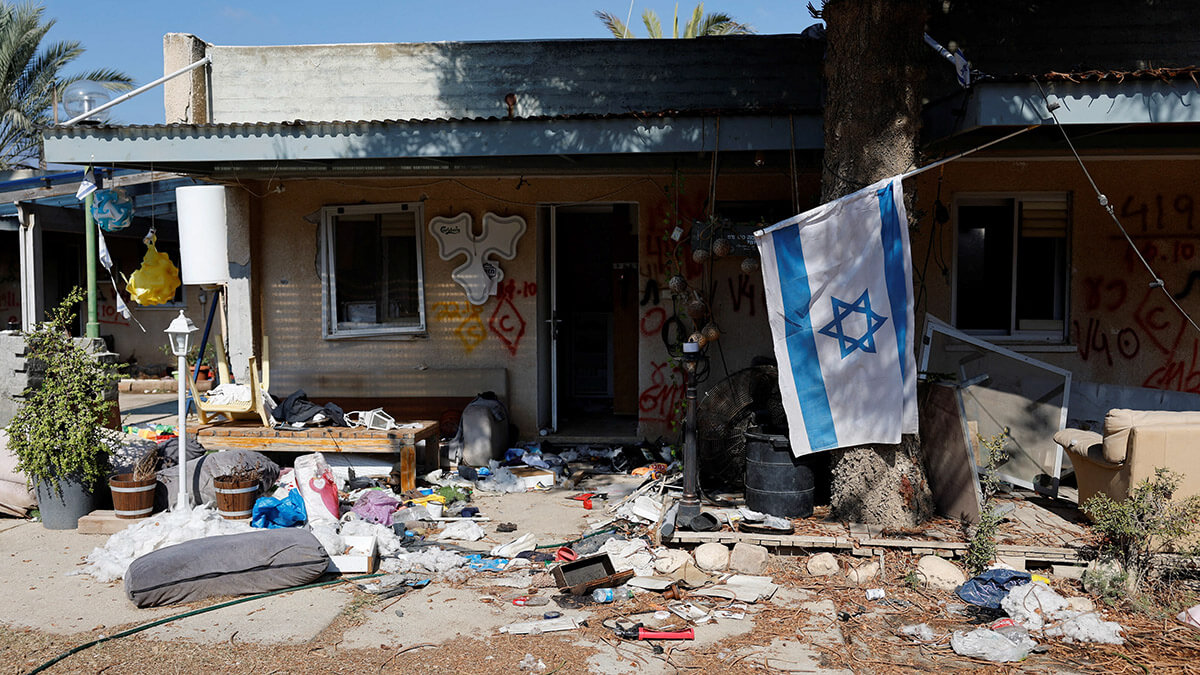
Both the terrorist group Hamas and Benjamin Netanyahu's government have exceeded their respective powers and military forces since that traumatic 7 October 2023. First, when Hamas massacred hundreds of Jews: men and women of all ages, including pregnant women, on Israeli territory.
Hamas' actions and Israel's disproportionate response
It was another terrorist attack against Jewish society. Hamas has ruled the Gaza Strip since 2007 and has sown terror and hatred, unlike the Palestinian Authority, which has essentially sought dialogue rather than arms.
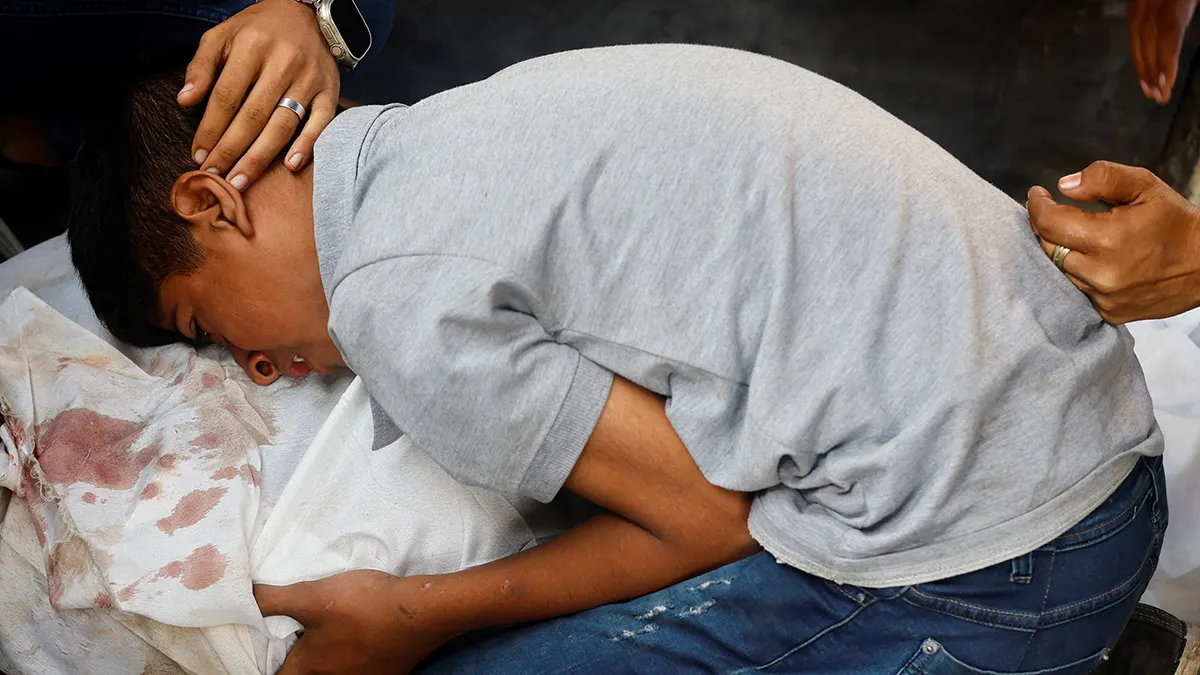
Secondly, Israel's response was disproportionate, and the anger of a far-right government perpetrated another massacre against the Palestinian people in Gaza.
Benjamin Netanyahu did not care about taking thousands of lives, including those of children, in order to destroy the terrorist group, who, in their misery, used their own people as human shields.
Historical and religious roots of the conflict
Of course, these events must be contextualised within a history full of sadness and despair. Its roots date back to the late 19th century, when the Zionist movement promoted Jewish migration to Palestine, then under the rule of the Ottoman Empire, with the idea of creating a Jewish national home.
But before that, Jewish history dates back to ancient Canaan, where the Kingdom of Israel arose. Jerusalem was its capital and Solomon's Temple its spiritual centre. According to the Bible, God promised that land to the Jewish people. Then came the destruction of the Temple by the Romans in 70 AD, and from that point on, the Jewish diaspora began to multiple parts of the world.
Meanwhile, the Palestinians are Muslim and Christian Arabs who descend from the peoples who lived in that region of the Middle East. Islam arrived in the 7th century when the Arabs conquered Jerusalem. For Muslims, Jerusalem is the third most important holy city, because of its Al-Aqsa Mosque and the Dome of the Rock, from where the prophet Muhammad is said to have ascended to heaven. At the same time, Palestinian Christians also consider this geographical area to be the Holy Land, because of the life and death of Jesus.

Territorial claims and the role of Jerusalem
History has filled this area with paradoxes and challenges. While for Jews, Israel is their ancestral land promised by God, for Palestinians, it is their historic home, inhabited by generations before the creation of Israel. Both claim the same land, and especially Jerusalem as the centre of their identity, faith and history.
Therefore, the conflict is not only political, but also historical, religious and deeply emotional.
Palestinian internal division and peace efforts
After the Second World War and the Holocaust, international pressure led the UN to propose in 1947 to divide Palestine into two states: one Jewish and one Arab. The Jews accepted the plan, while the Arabs rejected it.
In 1948, Israel declared its independence. Immediately, several Arab countries invaded the new state, starting the First Arab-Israeli War. More than 700,000 Palestinians fled, an event that Palestinians remember as the Nakba or ‘catastrophe’.
Over the following decades, there were several wars: the Suez Canal Crisis, the Six-Day War, and the Yom Kippur War.
At the same time, there have been several attempts to seek peace, for example, the Oslo Accords (1993-1995), signed between Yasser Arafat and Yitzhak Rabin. This led to the creation of the Palestinian National Authority and the establishment of the idea of two states. Other attempts failed.
However, there has also been a strong internal division among Palestinians. In 2007, Hamas took control of Gaza, while the political group Fatah retained power in the West Bank, dividing the Palestinian leadership.

Current status of the conflict and peace proposals
Therefore, the current conflict between Israel and Hamas, although part of the tortuous history between Jews and Palestinians, must be treated separately in that it is not against all Palestinians. Hamas is considered a terrorist group by the United States, the European Union, the United Kingdom, Canada, Australia, and Japan. And, of course, by Israel.
Today, Donald Trump's 21-point plan for peace has emerged. They have been embraced by virtually all parties involved, as well as by the West and Arab countries.
Crucial details are currently being reviewed in order to achieve peace. For now, Hamas has agreed to surrender its weapons. For its part, Israel is obliged to finally recognise a Palestinian state with which it coexists in the area and respects the traditions of both sides. Peace is within everyone's reach.