
The Chinese wall and its nine staunch supporters

After seven months of dizzying actions, it remains unclear where Donald Trump wants to go. But perhaps he is beginning to understand that he does not rule the world alone, and that his blunders have outweighed his achievements. Nevertheless, his impulses have already caused other powers to shift their strategies and tactics toward a counterattack against what is still the world's greatest power.
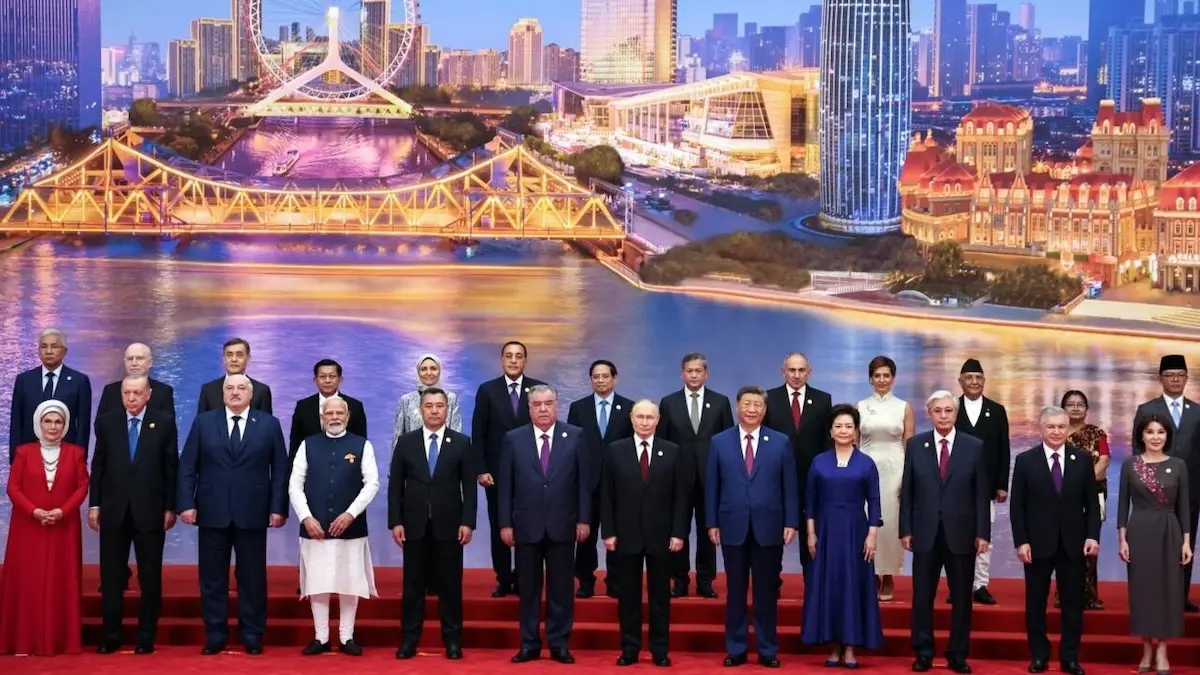
China and its allies have erected a wall of anti-Trump containment, with patience and pragmatic analysis. This wall stretches from Eastern Europe to Asia. This was evident at the recent meeting of the Shanghai Cooperation Organization (SCO), founded in 2001 with a front of 10 countries, although its roots go back much further. It was an extension of the “Shanghai Five” group (China, Russia, Kazakhstan, Kyrgyzstan, and Tajikistan), formed in 1996 to resolve border disputes and foster military ties.

Today, the wall is made up of 10 member states: Belarus, India, Iran, Kazakhstan, Kyrgyzstan, Pakistan, Russia, Tajikistan, Uzbekistan, and, of course, China. In addition, there are two observer states: Afghanistan and Mongolia. It also has 14 “dialogue partners,” including Egypt, Armenia, Qatar, Turkey, the United Arab Emirates, Myanmar, Kuwait, and Saudi Arabia, among others.
The SCO represents the world's largest regional bloc, accounting for 40% of the global population and 25% of global GDP. Since its inception, it has evolved from a regional security mechanism into a geopolitical platform with global ambitions.
Now, more than ever, with war raging in Ukraine and the Middle East, they have positioned themselves as a counterweight to Western alliances, particularly NATO and the G7. And, very importantly, they are promoting multilateralism from their trenches, something that Donald Trump's administration, with its tariffs and protectionist measures, has begun to reverse, a trend that is deeply rooted in the Cold War.
Before the meeting began, they clearly stated that they “support an open, transparent, fair, inclusive, and non-discriminatory multilateral trading system, with the central role of the World Trade Organization, and (...) an open global economy.”
The results of this 25th SCO meeting were numerous and significant, allowing us to visualize their intentions and the contrasts with what Donald Trump has enacted since January 20. They addressed key development perspectives in the areas of politics, security, trade, investment, energy, industry, sustainable development, and new technologies.
These actions allow us to conclude that there is an ongoing interest, as a bloc, to consolidate itself as a relevant player in global trade, especially at a time when geo-economic and geopolitical tensions between traditional and emerging powers are reshaping the routes of international exchange.
Despite the many issues discussed and joint statements made, one of the most contradictory was that related to ongoing armed conflicts. On the one hand, SCO members were categorical in condemning “the humanitarian disaster” in the Gaza Strip. On the other hand, they did not criticize what is happening in Ukraine, siding with the invading party, Russia. Russia claimed that it was the West that instigated a coup in Ukraine in 2014.
Moving on to regional conflicts, they also categorically condemned the attack on another of their members, Iran, after the United States and Israel sought to eliminate its “civilian” nuclear facilities.
At the same time, China has been the only country to provide economic support to Russia following the sanctions imposed by the United States and Europe. Without a doubt, the Chinese-Russian axis makes it clear that the meetings between Trump and Putin have been nothing more than staged events that Vladimir Putin has used to strengthen his image and legitimize his power. Nothing is known about the promises and peace agreements that Trump has promised so much; he is now looking to Venezuela as his next publicity stunt.
Among the agreements that promise a real counterweight is the one referring to China's urgency in establishing a development bank and an international platform for energy cooperation and green industries. To this end, he promised $1.4 billion in loans over the next three years to SCO member states, in a clear move to counter Trump's tariff imposition. As if that were not enough, the Chinese leader guaranteed to open up his BeiDou satellite system, an alternative to the GPS controlled by the United States.
Xi Jinping was emphatic in his conclusion: “The world has entered a new period of tumultuous change, and global governance has reached a new crossroads.” All this, he said, is compounded by the threat posed by the United States with its Cold War mentality.
Omar Cepeda. Host at @ElFinancieroTV. Columnist at @ElFinanciero_Mx and @lasillarota
Article previously published in El Financiero de México on September 3, 2025