
Abolition of privileges in republican France

Despite appearances, and despite having raised and universalised its slogan of ‘Liberty, Equality, Fraternity’, republican France has accumulated privileges for both certain elite groups and its political leaders. When prosperity is widespread and social mobility is functioning more or less at full capacity, most inequalities are overlooked, and the most common desire is to aspire to one day join groups whose members enjoy exclusive privileges. However, this is not the case when progress stagnates, incomes stop rising and expenses and taxes increase, increasingly eating into savings before directly affecting first the necessities, then even the essentials for living and making ends meet.
That France is in crisis is so public and notorious that President Emmanuel Macron sees how the inability to get even palliative savings measures accepted in the enormity of his public spending is devouring one after another the prime ministers he appoints and whom he uses as last resorts before stepping down from power himself.
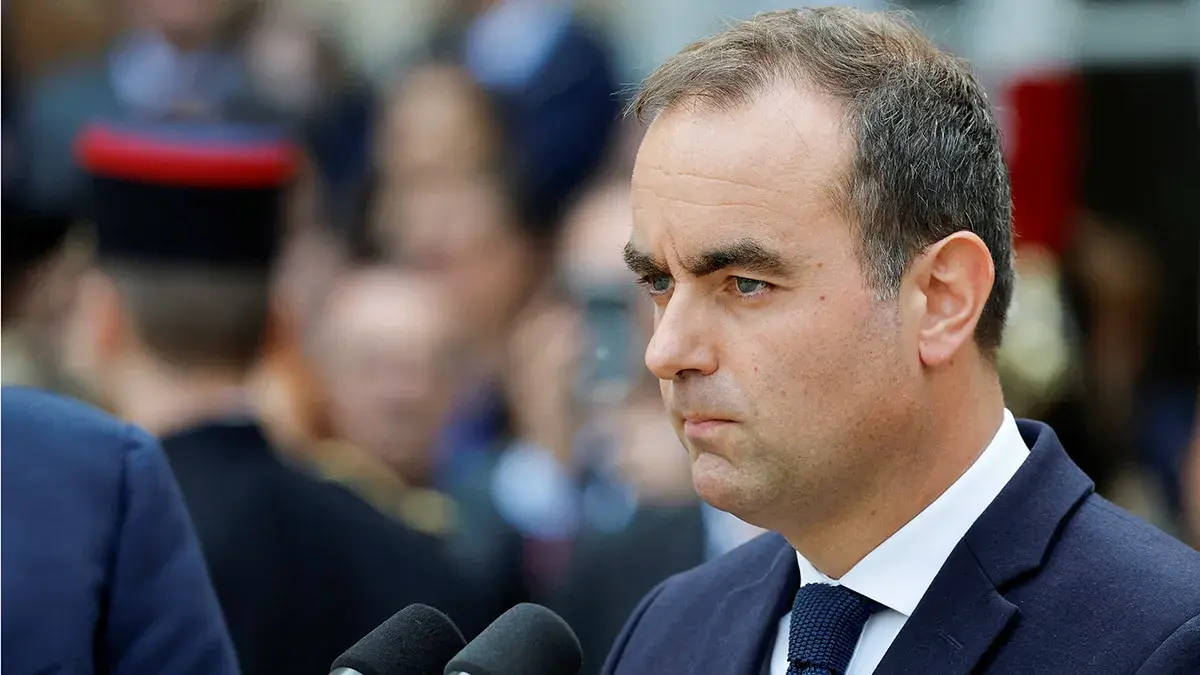
The newly appointed Sébastien Lecornu, who was already Minister of Defence and has just replaced François Bayrou, who lost a vote of confidence, has made a proposal that, if not entirely unprecedented, is at least striking: to abolish most, if not all, of the lifetime privileges currently enjoyed by all former prime ministers and some former ministers. This proposal seeks to silence the growing popular outcry accusing the political class of protecting their salaries and perks while trying to impose heavy sacrifices on citizens in order to halt the diabolical spiral of public budget deficits, which have been steadily accumulating year after year for more than half a century.
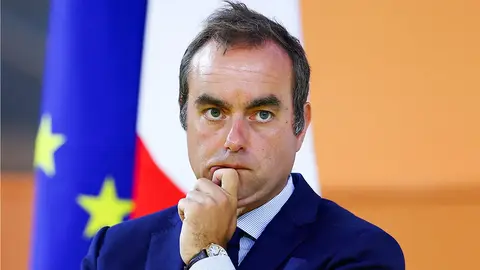
Today, there are no fewer than 17 former prime ministers alive who, according to Lecornu's proposal, will no longer enjoy their traditional privileges from the first day of 2026. The project aims to generalise a single compensation payment of three months' salary once they leave the Matignon Palace (the prime minister's office), provided they do not receive any other public income, including pensions or compensation of any kind. This incompatibility will be closely monitored by the High Authority for Transparency in Public Life (HATYP), which is also responsible for checking their income and asset declarations.
Former prime ministers may, however, retain a personal secretary paid for by the public purse for a maximum of ten years and never after reaching the age of 67. This explains why the last two to hold the position, Michel Barnier and François Bayrou, both aged 74, have not even been able to enjoy this privilege for a single day. Nor will the measure apply to those who, because they hold other public office, have their own secretarial staff. This is the case for former ministers Jean Castex, now president of the Paris Transport Authority (RATP), and Edouard Philippe, current mayor of Le Havre.
Only two of the seventeen former heads of government, Edith Cresson, who was the first woman in French history to hold such a position, and Edouard Balladur, both now over 90 years of age, still retain their secretarial staff for life, which will in any case come to an end if they are still alive in 2029, in accordance with the first reform in this regard promoted by President Macron himself during his first term of office.
On the other hand, these former leaders could retain an official vehicle with a driver for life, as well as a police escort. The latter, which is also enjoyed by former interior ministers, would be reduced to a minimum based on the risk analysis carried out by the state security services each year.
As for the numerous ministers who have held such positions, they do not enjoy any of these privileges, which has given rise to the popular saying that ‘you arrive as a minister in an official car in the morning and leave in a taxi, paid for out of your own pocket, in the afternoon’.
According to the hackneyed expression that the current combined cost to the state of these former senior officials is peanuts – €4.4 million in 2024 – their abolition, even if only partial, at least allows us to preach with some example in these lean times and drastic belt-tightening measures demanded of the citizen-taxpayers.
Of course, in France, as in all European democracies, with the incredible exception of Spain, there is no such thing as immunity, a privilege which, in some countries, is limited to the head of state during their term of office and a few other high-ranking authorities, especially judicial ones, but in Spain has been extended to include members of any regional parliament. In some regions, such as Catalonia, the lifetime privileges of former presidents of the Generalitat far exceed those of the French Republic.