
Between diplomacy, reforms and social cohesion: Istiqlal sets the course for 2025

- Propaganda and resistance: an old front
- 2025: The opportunity to crystallise a consensus
- Electoral reform: legitimacy as a strategic resource
- Social cohesion: the silent foundation of stability
- Overall vision
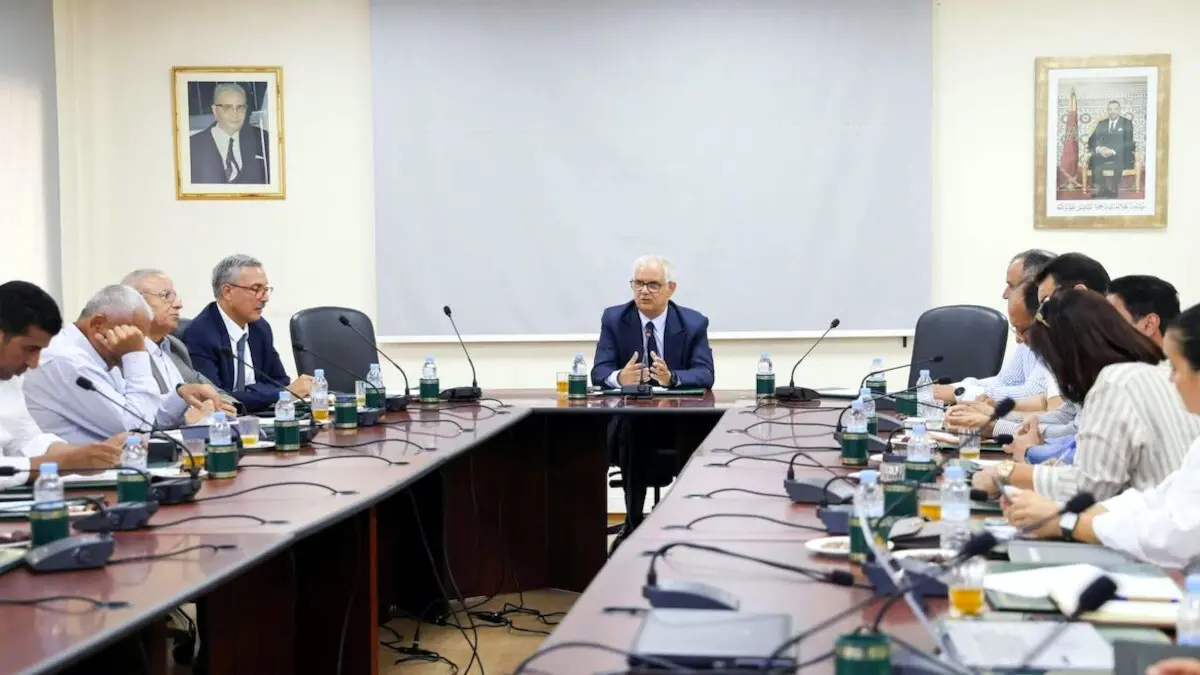
In a statement, the Istiqlal Party Executive Committee outlined a two-pronged strategic approach that transcends the current situation: on the one hand, consolidating internal democratic legitimacy through far-reaching electoral reform; on the other, setting 2025 as the decisive year for the political resolution of the Sahara conflict within the framework of Moroccan autonomy.
Although different, both axes refer to the same logic: Morocco's international strength depends on the solidity of its internal institutions and the social cohesion that underpins its foreign policy.
Propaganda and resistance: an old front
In a context marked by disinformation campaigns, Istiqlal denounces the reactivation of propaganda manoeuvres against Morocco. The strategy of its adversaries is well known: to erode Rabat's achievements in diplomacy and development in order to curb the growing international acceptance of its proposal for autonomy.
From an analytical point of view, what is relevant is not so much the recurrence of these campaigns – predictable in the dynamics of a long-running conflict – but the internal political reaction: reaffirming that diplomatic prestige is based on the trust accumulated by the Moroccan state, both in its institutional stability and in its ability to offer a clear vision for the region.
2025: The opportunity to crystallise a consensus
Istiqlal's most daring move is to set 2025 as the “year of decision”. This timeline did not come out of nowhere. The Moroccan autonomy plan is no longer a unilateral proposal but has become the most cited reference by influential international actors. The United States, Spain, Germany, the United Arab Emirates and Senegal, among others, have explicitly recognised its seriousness and credibility.
What the party is proposing is to transform this political and diplomatic support into formal validation within the framework of the United Nations. In analytical terms, this is equivalent to moving from a phase of growing legitimacy to one of international institutionalisation. For Morocco, this qualitative leap would be the definitive closure of a cycle that began in 1975.
Electoral reform: legitimacy as a strategic resource
The second focus of the Executive Committee meeting is not incidental: electoral reform. Istiqlal points out that Morocco's ability to sustain its international narrative depends on the strength of its internal democracy. In this sense, the royal initiative to review the legal system for legislative elections becomes a key element.
It is not just a question of ensuring greater transparency or improving political competition. It is about strengthening the link between citizens and the state, generating political capital that reinforces external credibility. In other words, democratic stability functions as a soft power asset, in that it projects Morocco as a country that not only demands international recognition, but also backs it up with consistent internal practices.
Social cohesion: the silent foundation of stability
The section on livestock counting may seem anecdotal, but it contains a strategic message. In Istiqlal's narrative, social and economic development—with a special focus on small producers and food sovereignty—is placed on the same level as diplomacy and institutional reform.
This emphasis reveals a comprehensive conception of national security: sovereignty is not guaranteed solely through international agreements or military mechanisms, but also by ensuring equity, social justice and economic sustainability. Internal stability thus becomes the silent core of external strength.
Overall vision
Istiqlal's statement should be read as more than just a partisan declaration. It is the articulation of a vision in which three dimensions—territorial sovereignty, democratic legitimacy, and social cohesion—reinforce each other.
In perspective, Morocco seems to be heading towards a potentially historic year in 2025, not only because of the possible international consolidation of its autonomy plan, but also because of the opportunity to deepen a renewed social contract capable of sustaining its external projection.
The real challenge lies not in the propaganda of its adversaries, but in the Moroccan state's ability to maintain this strategic coherence: combining diplomacy and democracy, territorial firmness and social justice. If it succeeds in doing so, Morocco will not only resolve a regional dispute, but also strengthen its position as a model of stability in a fragmented Maghreb.